The Pentagon’s UAP-hunting office has published its latest tally, and the headline number is 240: that’s how many new reports of unidentified anomalous phenomena the All-domain Anomaly Resolution Office (AARO) says it received from military and government sources over the reporting period.
That sounds like a lot. It is a lot. But the more interesting story is buried in the resolutions.
What the numbers actually say
Of the new cases, a solid majority were run down to fairly mundane origins — a familiar cast of balloons, commercial drones, birds picked up on infrared, and the occasional Starlink train mistaken for something rather more exotic. This is, if we’re honest, what a functioning investigative body is supposed to do: explain the explicable and narrow the field.
Put the figure in its series and it looks less like a headline and more like a data point. The Office of the Director of National Intelligence’s first preliminary assessment, in June 2021, dealt with 144 reports. By August 2022 the catalogued total stood at 510. Fiscal 2023 brought 291. Fiscal 2024 brought 757 — a number that alarmed people until you noticed that roughly 392 of them arrived from the FAA in a single tranche, representing essentially everything the agency had accumulated since 2021. Fiscal 2025 came in at 319 new reports against total case holdings of 1,870.
Against that background, 240 is unremarkable. Which is the first honest thing to say about it: annual counts in this field measure the intake system at least as much as the sky, and anyone treating a year-on-year change as a measurement of phenomena is reading the instrument rather than the object.
How these reports are actually built
It helps to know what you are holding. Since 2022 the annual UAP report has been a statutory obligation rather than a favour, produced by AARO and delivered jointly with the Director of National Intelligence, in an unclassified edition with a classified annex that the public never sees.
The reporting periods are awkward on purpose — they follow the collection cycle rather than the calendar, which is why “new cases” routinely includes incidents from previous years that reached AARO late. Cases are triaged into resolutions (balloon, unmanned aircraft, bird, atmospheric or sensor clutter, satellite) or held in what the fiscal 2024 report called an active archive: 444 reports parked not because they were interesting but because they could not be conclusively analysed with what was available.
And every edition to date has carried the same flat sentence in some form: AARO has found no verifiable evidence of extraterrestrial beings, activity or technology. That is a statement about the evidence AARO holds. It is not, as it is routinely reported, a statement about the universe.
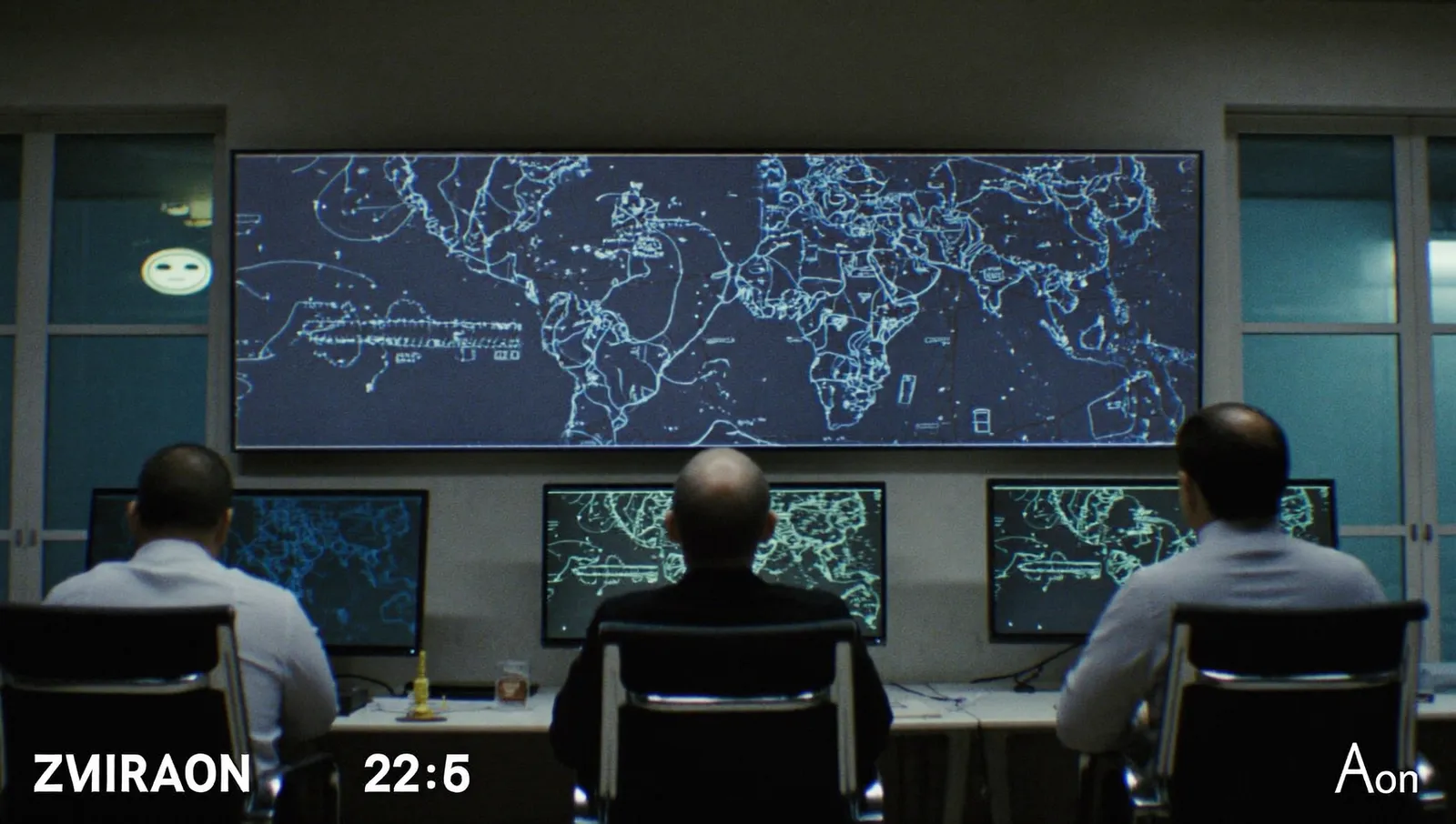
The reports also carry a caveat that almost never survives the news cycle. AARO has said repeatedly, in its own words, that its caseload reflects a geographic collection bias — reports cluster around military ranges, test facilities and special-use airspace, because that is where the aircrew and the sensors are. Its hotspot maps consequently light up the south-eastern United States and the Gulf, the west coast, the Middle East and the waters near Japan and Korea. That is a serviceable map of where American forces operate. It is a very poor map of where unexplained things happen, and treating the two as the same thing is the single commonest error in coverage of these documents.
The resolution rate deserves a closer look
The “it’s all balloons” crowd tend to quote the resolution rate; the disclosure side tend to quote the backlog. Both are quoting real numbers, and both are quoting them badly.
In fiscal 2024, AARO resolved 118 cases, all to prosaic objects. In fiscal 2025 it resolved 370 — 114 from the new intake and 256 from the existing pile — and the single biggest driver was not a change in the sky but a change in the office. A new analytic capability let it recognise satellite flaring, the glint of sunlight off spacecraft in low orbit, and 238 cases fell out at once.
That is a genuinely important lesson, and it cuts against the excitable reading. Resolution rates are a function of analytic tooling, not of what was out there. A case sitting unexplained for three years does not become anomalous by waiting; it may simply be waiting for someone to build the right filter. It follows that the unresolved pile is not a measure of strangeness. It is a measure of the gap between what the sensors caught and what the analysts can currently do with it.
The “we need better cameras” problem
If there’s a recurring theme across every one of these reports, it’s this: the data is rubbish. Not because the witnesses are unreliable — many are trained military aviators — but because gun-camera footage and single-sensor radar hits are a genuinely terrible basis for identifying a fast-moving object at distance.
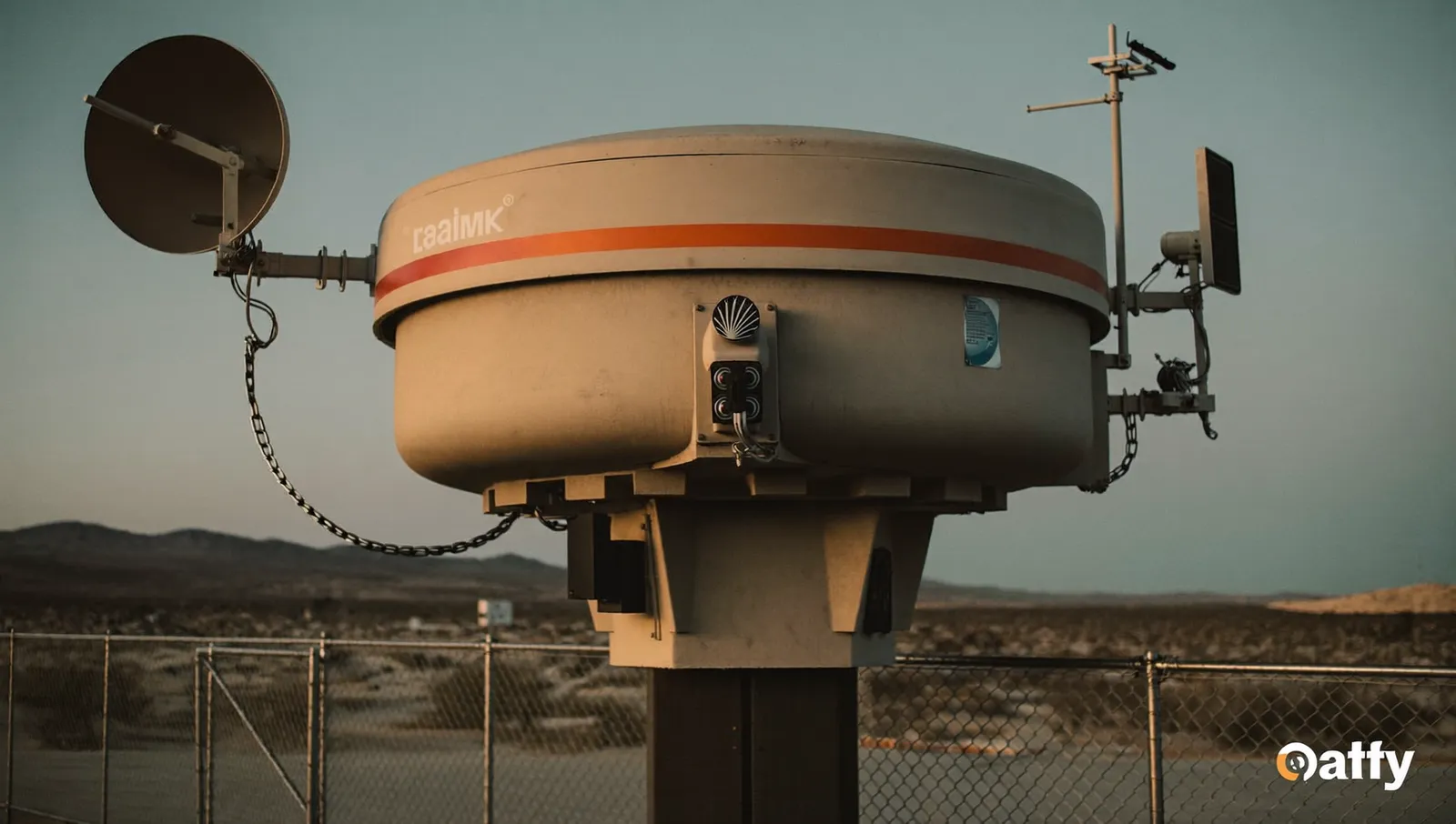
AARO has repeatedly asked for better, purpose-built sensors, and under its current director, Jon Kosloski, it has started fielding some. Its prototype suite, Gremlin — architecture developed by the Georgia Tech Research Institute — pairs long-range electro-optical and infrared sensors with two-dimensional and three-dimensional radar and a radio-frequency spectrum monitor, and has been run as a ninety-day pattern-of-life collection at a national security site. The stated goal is deliberately unglamorous: work out what normal looks like before deciding anything is abnormal.
Somebody outside government has been solving the same problem in public. The Galileo Project’s triangulating observatory network measures the one quantity gun-camera footage can never supply — how far away the thing actually was. Until that kind of data reaches the official pile, the unexplained pile will keep refilling itself, and every annual report will read a little like this one. It is also why the government’s new UAP Science Advisory Council — a panel of statisticians and instrumentation physicists barred from seeing any classified data — starts at such a disadvantage.
The residue, and the history
What keeps the subject alive is what’s left over. A minority of cases remain uncategorised, not because AARO has declared them extraterrestrial — it has pointedly not — but because there simply isn’t enough sensor data to say anything with confidence. And where AARO has had the history to assess a celebrated case in depth — as with the Skinwalker Ranch programme — its verdicts have tended to deflate the legend rather than inflate it.
It is worth being precise about what “unresolved” means here, because the word is doing enormous work in both directions. In AARO’s usage it is an administrative status, not a finding. A case is unresolved when the available material — a few seconds of infrared, a single radar track, a witness statement without corroborating sensor data — does not permit an identification to the office’s evidentiary standard. Some of those cases are genuinely strange. Most, on the historical pattern, are simply thin.
The trouble is that neither side of the argument can currently tell you which is which, and the report does not pretend to. That is a reasonable position for an intelligence office to take and an unsatisfying one for everybody else, which is roughly why each of these publications is followed within days by a fight about what it really said.
The most aggressive version of that deflation was the Historical Record Report Volume 1, published in March 2024, which reviewed decades of US government involvement and concluded that no investigation had ever produced a case of off-world technology, that it could disprove the majority of the reverse-engineering claims made to it by interviewees, and that a piece of metal alleged to have come from a recovered craft was ordinary terrestrial material with no exceptional properties.
Why that report made things worse, not better
You might expect a document that thorough to have settled something. It did the reverse, and the reasons are instructive for how this year’s report will be received.
Christopher Mellon, a former deputy assistant secretary of defense for intelligence and no one’s idea of a fringe figure, called Volume 1 the most error-ridden and unsatisfactory government report he could recall reading, and assembled a rebuttal with other analysts in April 2024. His two substantive objections are worth separating from the noise.

The first is a sourcing complaint: several of the witnesses whose claims the report purports to have assessed declined to speak to AARO at all, on the grounds that they did not trust it. An office cannot disprove testimony it never took.
The second is a logic complaint, and it is the sharper one. “There is no recovered alien technology” and “there is nothing here we cannot explain” are different propositions, and the report — or at least its press coverage — slid between them. You can accept every word of AARO’s crash-retrieval findings and still be left with the unresolved caseload, which is exactly where this year’s 240 lands.
Congress is not satisfied either
The oversight side has been blunter still. Successive House hearings through 2024 and 2025 — including September 2025’s session on restoring public trust — heard members complain that responses from AARO were slow-walked or thin, and witnesses allege a broader executive-branch reticence that leaves Congress guessing. The fiscal 2025 report itself arrived months after its statutory deadline, drawing a pointed statement from Senator Kirsten Gillibrand, one of the office’s original legislative architects.
That frustration is what produced the legislative push: in July 2026 the House adopted a statutory framework that would put AARO’s records under independent review — see The House Just Voted for UAP Disclosure. It is also why the witness-protection argument keeps resurfacing, and why the best-known whistleblower is warning people off the government’s own waiver process.
Two other things are worth holding against this year’s count. The single strangest entry in the unresolved pile has since surfaced: a hundred objects and two apparently uncrewed boats off the Virginia coast. And note what the report does not cover at all — the hundreds of annual incursions over military bases that fall outside AARO’s remit entirely.
What would actually settle this
The scientific bar here is not high, it is just unmet. To move a case from “unresolved” to “anomalous” you need range, and you need it independently: two or more calibrated stations with known geometry and synchronised clocks, so that speed and size stop being assumptions inherited from a guess about distance. You need raw data released rather than conclusions, so that analysis can be reproduced by people who disagree with each other. And you need a baseline — the boring, expensive pattern-of-life survey that tells you how often the sky does something odd when nobody is looking for anything.
Gremlin is a start at exactly that, which is the most genuinely encouraging thing in this year’s report and the thing that got the least coverage.
The UAP Times take
We rate this Credible, four out of five on our scale, and the rating attaches to the reporting, not to the phenomena: this is a statutory document from a named office with a public methodology, which is a very different tier of source from a leak or a memoir. It is also a document with an obvious institutional interest in appearing methodical, and it should be read accordingly.
Nothing here proves anything lands on the lawn. But nothing here debunks the whole subject either, and the “it’s all balloons” crowd should read the resolution rate carefully before celebrating — particularly the part where a year’s worth of mystery dissolved because someone wrote a better satellite-glint filter.
Watch what the office can’t explain, not what it can. And watch harder when it starts being able to explain things it couldn’t last year.
The honest position remains the boring one: a well-funded office is collecting better data, slowly, against a caseload that grows faster than its tooling. On the current trajectory the number that matters in three years’ time won’t be how many reports came in. It’ll be how many of them arrived with a distance attached.
Further reading: for why the raw count is the least informative thing in any of these reports, see Why Commercial Pilots Are Reporting More Sightings. For the one case AARO could not file away, a hundred objects off the Virginia coast; and for the gap in the system nobody owns, the military base incursions authority gap. For what happens when a cabinet officer summarises all of this in one sentence, see Marco Rubio’s “they’re not ours”. And for the report’s least-discussed passage — the handling procedure for recovered material the same document says nobody has — see what the national labs actually found on the bench. And for how AARO’s “no verifiable evidence” is landing with the public, see the record 78% who think the government knows more. And for the mechanism behind the single biggest drop in the caseload — how a satellite catches the sun — see satellite flares, explained.
Source: All-domain Anomaly Resolution Office (AARO)
Follow the file
Every new dispatch from the UAP desk, in your inbox. Sourced, sceptical, and no more than one email a week.