There is a version of the UAP story that requires no exotic physics, no crash retrievals and no one lying to Congress, and it is comfortably the most alarming version available.
It goes like this. Unidentified objects cross restricted airspace over American military installations several hundred times a year. A meaningful number are never attributed to anyone. The reason they are never attributed is not that they are beyond our understanding. It is that the question of who is permitted to point a sensor at them, who is permitted to bring one down, and who is obliged to write up the result afterwards has been the subject of an unresolved bureaucratic argument since 2017.
That argument is now well documented, largely by the Pentagon’s own watchdog. It is worth setting out plainly, because it is the part of this subject where the evidence is strongest and the coverage is thinnest.
What Mellon actually said, and when
On 26 June 2026, Christopher Mellon — Deputy Assistant Secretary of Defense for Intelligence under Clinton and Bush, and one of the small group of former officials who put the 2017 New York Times Tic Tac story into the world — appeared on NewsNation’s Elizabeth Vargas Reports and made a claim that got less attention than it deserved.
Mellon said incursions of this kind have been happening at bases across the United States and overseas, that they number in the hundreds annually, and that they routinely baffle senior military leadership. His summary of the situation was blunt: “It isn’t as widely known as it ought to be.”
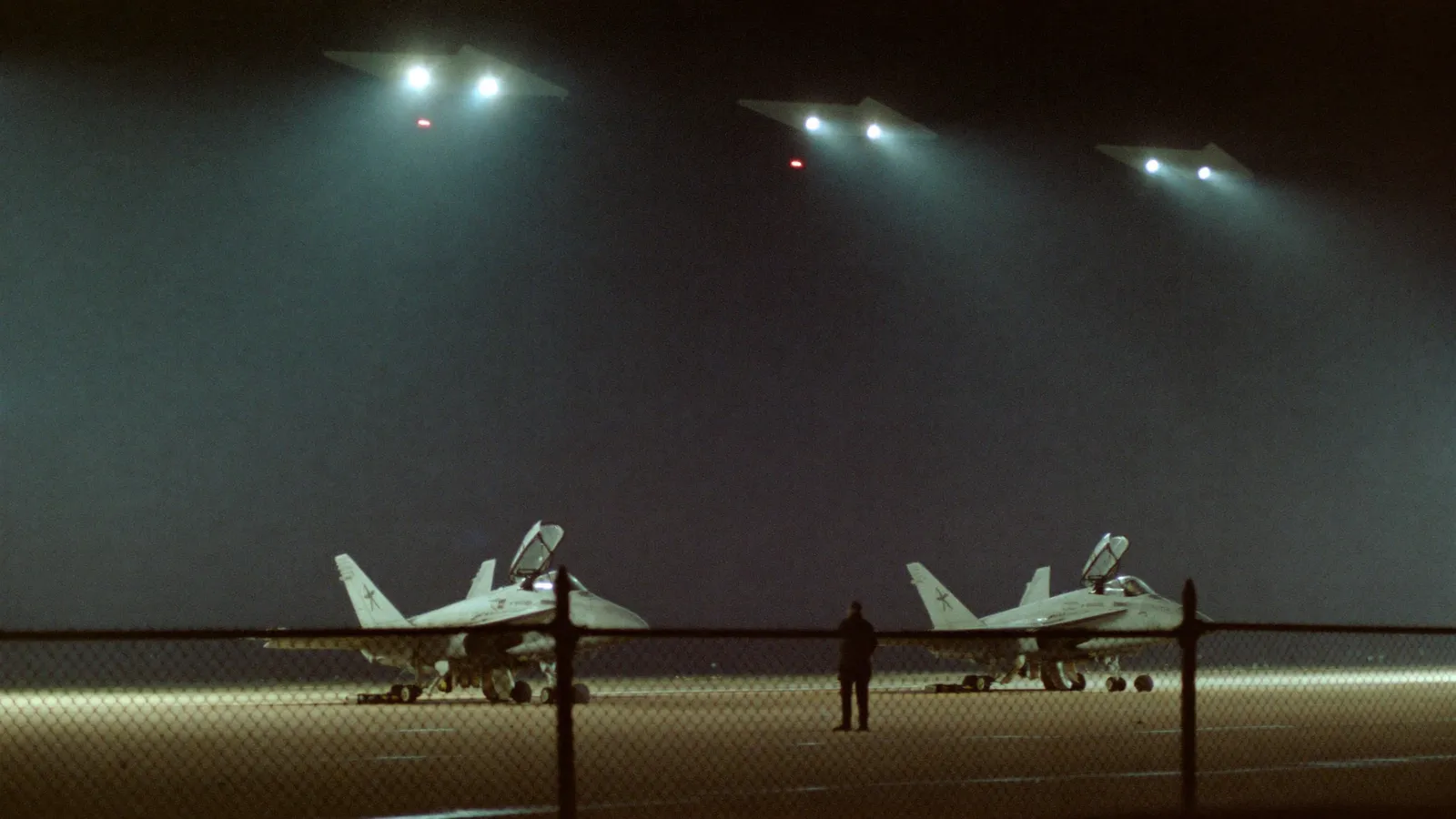
His sharpest line was about Langley Air Force Base in Virginia, where unidentified aircraft entered restricted airspace on 17 consecutive nights in December 2023 — an episode persistent enough that the Air Force moved F-22s to another field rather than leave them sitting under it. “If the air combat command at Langley can’t control its own airspace,” Mellon said, “then you wonder how effectively they could protect Washington.”
Two things are worth separating here. Mellon is an advocate; he believes some fraction of this activity is genuinely anomalous, and that belief is not established fact. But the underlying events he is describing are not his to assert or withhold. They are on the congressional record, confirmed by the Pentagon, and largely uncontested.
The number nobody disputes
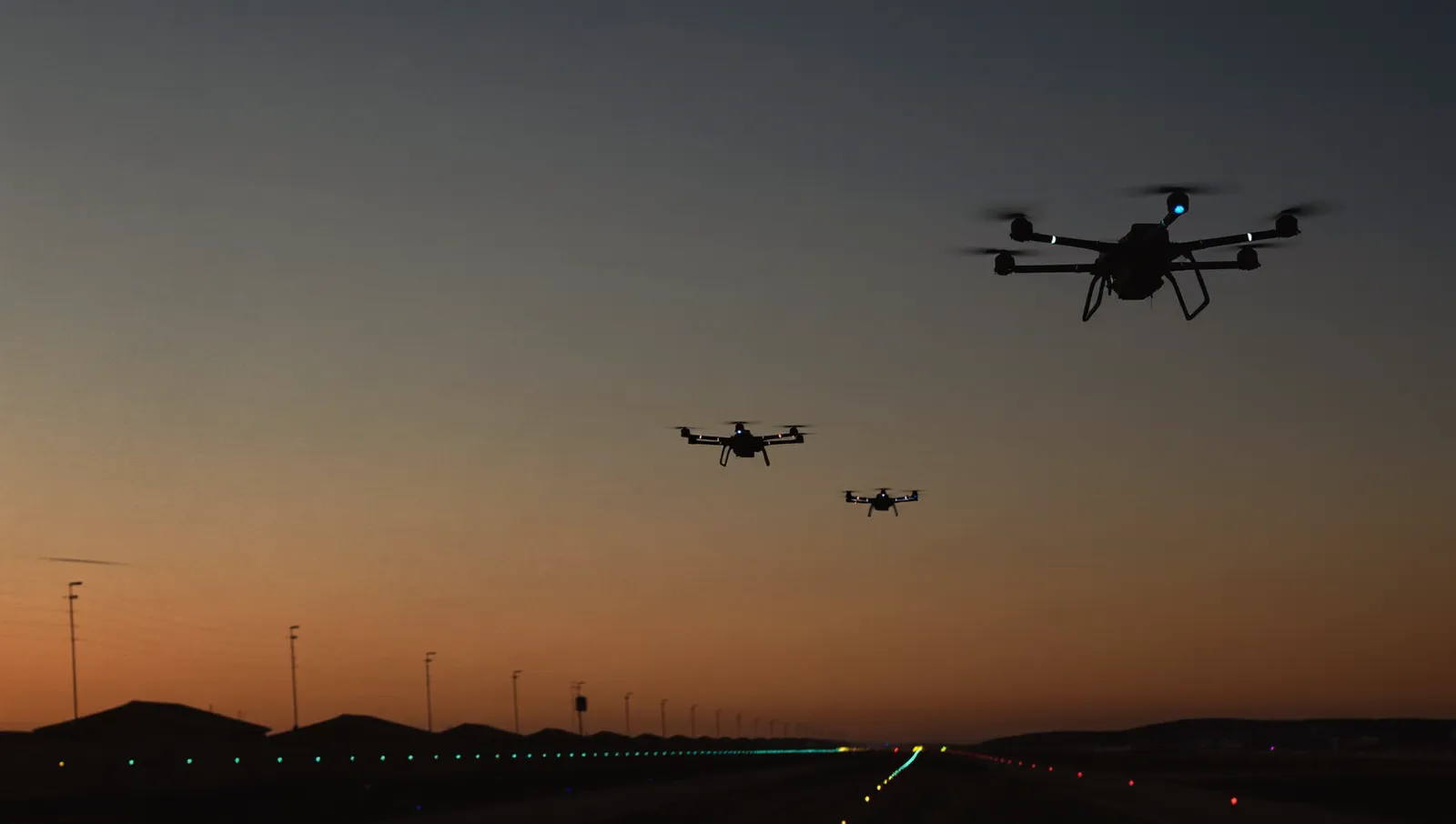
General Gregory Guillot, commander of NORAD and US Northern Command, told the Senate Armed Services Committee that more than 350 drone incursions were detected at roughly 100 military installations in 2024 alone. He also offered the caveat that ought to be the headline: there are, he said, significantly more incursions that go unseen entirely.
That figure is a detection count, not a mystery count. Most of those 350 are almost certainly hobbyists, contractors, journalists and idiots. But “detected” is doing a lot of work, and so is the follow-up. In the Langley case — the best-documented example available — the objects were tracked, discussed by the FBI, Defense Department officials and AARO staff across two weeks of meetings, publicly confirmed ten months later, and never attributed to anyone at all. As far as the public record shows, that remains true today. We covered the Virginia airspace problem in more detail alongside the hundred-object Navy event off the same coast, which lands in exactly the same jurisdictional fog.
The statute that decides who is allowed to care
Here is the mechanism, and it is duller and more consequential than any of the testimony.
Congress first gave the Defense Department authority to counter drones over its own facilities in Section 1697 of the FY2017 NDAA, codified as 10 U.S.C. §130i. The authority is not general. It applies to “covered facilities and assets” — sites the Secretary of Defense has specifically identified, inside the United States, tied to particular missions such as nuclear deterrence, missile defence and national security space.
Everything hangs on that list. If your installation is on it, your commander has options. If it isn’t, an unidentified aircraft over your runway is, legally speaking, an aviation matter for the FAA and a law-enforcement matter for the FBI, and your options run from “watch it” to “write it up.”
This is not an abstraction. It is why a base can log a fortnight of incursions and end up moving its aircraft rather than addressing the thing doing the incursing. The FY2026 NDAA acknowledged the problem in Section 912(b) by requiring the Pentagon to identify how each military department interprets §130i differently — including how each service defines “covered facility or asset” — and report back to Congress. When the legislature has to commission a study into what its own statute means nine years after passing it, the diagnosis is fairly clear.
Who is actually allowed to shoot, and where
The authority question has a precise answer, and the uncomfortable part is that it turns on a person’s duty status rather than on the threat in front of them.
Section 130i is a Title 10 authority, covering service members, Defense Department civilians and contractors whose assigned duties include safety or security. Roughly half of American installations qualify, under nine criteria running from nuclear deterrence and missile defence down to test facilities. Guillot’s ask to the Senate was to extend it to all of them, and beyond a base’s immediate vicinity.
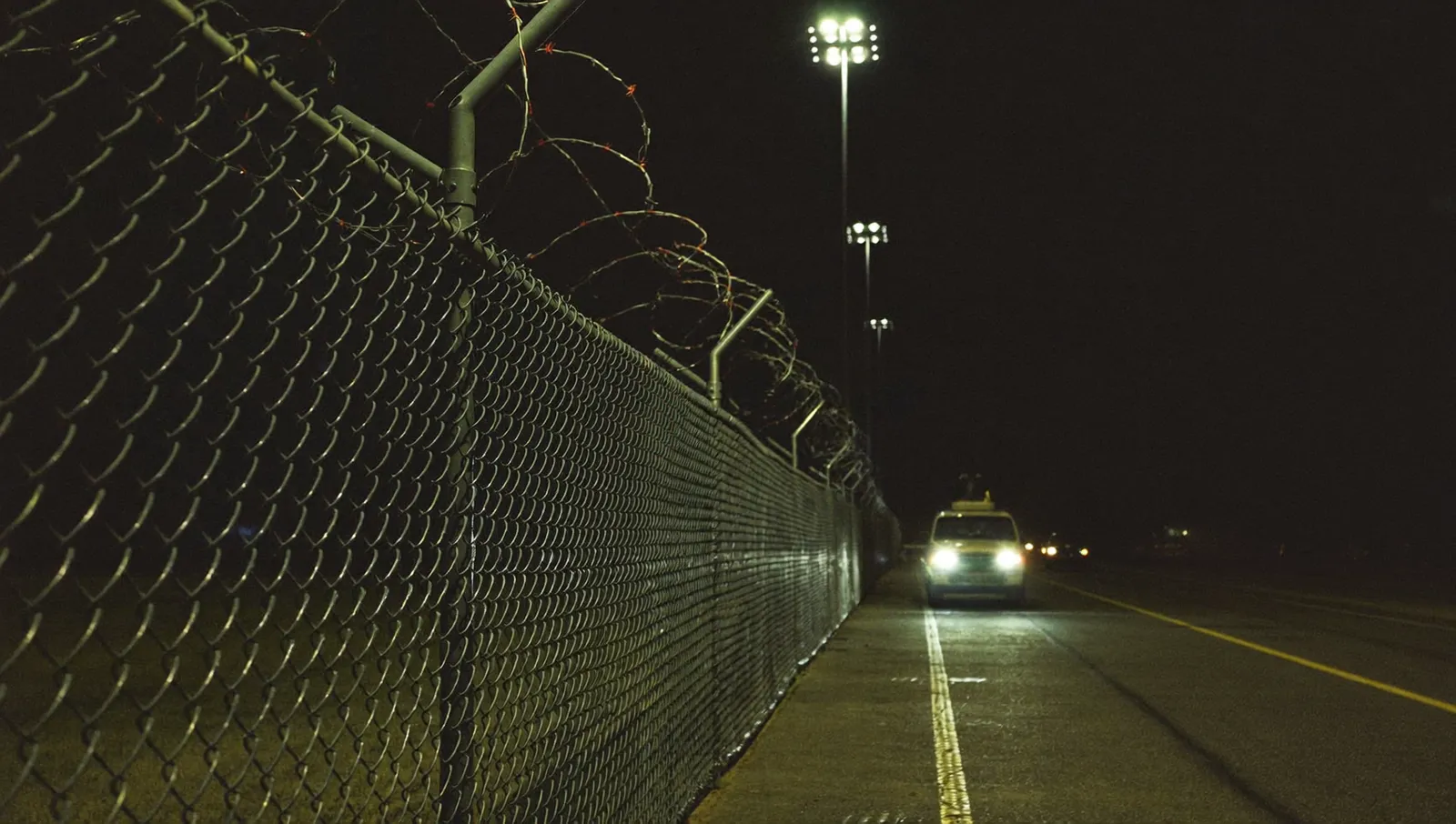
The Guard is worse off. Air and Army National Guard installations are typically secured by personnel in Title 32 status — state-commanded, federally funded — and no statute authorises them to detect, track or mitigate an unmanned aircraft at all. General Steven Nordhaus, chief of the National Guard Bureau, told the Senate in April 2026 that Title 32 personnel do not “have the same protections and benefits as Title 10,” and asked Congress to close the gap. The people first on the scene are, in law, the least empowered ones there.
Above it sits the Posse Comitatus Act, barring Title 10 forces from direct law enforcement in civilian communities — no obstacle to defending your own installation, decisive the moment the object is over the town rather than the flight line. Nor does a base own the sky above it: under 49 U.S.C. §40103 the FAA holds sovereignty over navigable airspace.
Which is roughly why Langley resolved as it did. Activity was first observed on the evening of 6 December 2023, and the commander could engage anything assessed as a threat — but the assessment was that nothing showed hostile intent. General Mark Kelly went to look for himself, and put the first drone he saw at around twenty feet long, three to four thousand feet up, doing about 100mph.
What the Pentagon’s own watchdog found
In January 2026 the Department of Defense Inspector General issued an advisory calling for immediate attention to the protection of military facilities from drone incursions. The investigators had visited ten installations where incursions had occurred and interviewed officials from 31 DoD component offices and four other federal agencies.
What they found was a patchwork. No clear, consistent department-wide policy for counter-drone operations at domestic installations. Confusion at base level about whether responding was authorised at all. And — the detail that should embarrass someone — conflicting lists of which facilities counted as “covered assets” being maintained in different parts of the building.
The Pentagon’s response, later in the winter, was to expand commanders’ authority and flexibility to act above and beyond their own fence lines, clarify how covered assets get designated on a risk basis, and improve data-sharing between agencies. That is a real fix and it deserves credit. It is also, unavoidably, a fix arriving roughly two years after F-22s were relocated out of the way of something nobody could name.
The same institutional shape shows up at sites that unambiguously are covered. At the Pantex Plant in Texas — America’s nuclear weapons assembly facility, about as squarely inside §130i as a site can be — a four-foot object put the plant into lockdown in 2015 and was never identified, with the photographic assessment still withheld eleven years on. Authority was not the constraint there. Attribution was.
What December’s guidance changed, and what it can’t
Authority, unlike attribution, is the sort of thing a policy memorandum can actually move — and in December 2025 the department moved it.
Secretary of War Pete Hegseth signed consolidated counter-UAS guidance under Title 10 that month, announced the following January. It widens the area a commander may act within beyond the installation boundary, states explicitly that unauthorised drone surveillance of a base counts as a threat, permits sensor data to be shared with other federal agencies, and pushes the power to designate a facility “covered” down to senior service leaders.
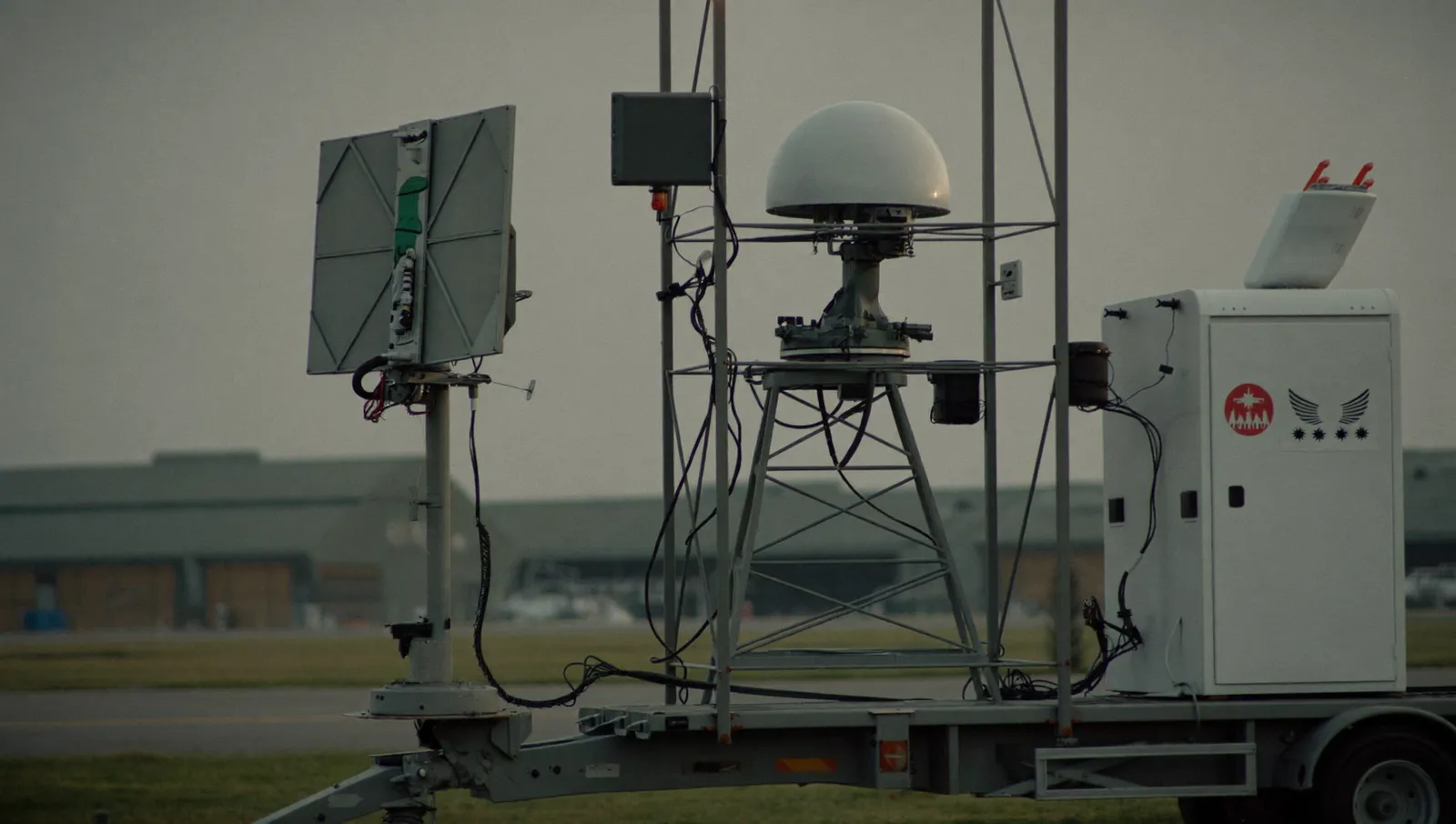
The delivery arm is Joint Interagency Task Force 401, the Army-led counter-drone body Hegseth ordered stood up in August 2025, which has since published a counter-drone handbook, runs a Joint Counter-Small UAS University, opened a commercial solicitation in February 2026 and in July saw an $80m task order awarded for AI-enabled drone defence of Air Force bases.
That is a genuine programme moving at speed. It is also entirely Title 10. It cannot reach the Guard gap, which needs a statute rather than a memo, or alter who owns the airspace — or the fact that the FAA radar which might corroborate an incursion is deleted after 45 days. And devolving the designation power still produces a list, precisely the artefact the Inspector General found the department could not agree on.
Why AARO’s annual report says almost nothing about any of this
If you read the All-domain Anomaly Resolution Office’s FY2025 report, published on 21 July 2026, you will find 319 new cases, 114 of them resolved, a further 256 older cases closed, and a genuinely impressive piece of work in which 238 reports were attributed to satellite flaring through 3D modelling. You will not find a systematic account of hundreds of annual incursions over defended installations.
That is not a cover-up. It is a remit. Standard uncrewed aircraft systems are explicitly not AARO’s mission. AARO resolves anomalies; §130i counter-UAS is base defence, run by the services and coordinated through NORTHCOM. Two different problems, two different chains of command, two different sets of paperwork — and an object that crosses a perimeter fence has to be sorted into one of them before anybody can act.
So the drones over the bases are a security problem that isn’t AARO’s, and the unattributed objects are an anomaly problem that isn’t the base commander’s, and the cases where nobody can tell which is which fall precisely down the middle. That gap is where the interesting ones live. It is also, we would gently note, the strongest practical argument for the records framework the House adopted this month — whatever one makes of its more excitable supporters.
The sceptic’s read, which is mostly right
The deflating explanation covers most of this and deserves to be stated at full strength.
Consumer drones are cheap, numerous, and flown by people with no idea what a restricted airspace boundary is. Foreign intelligence collection against American bases is a real, well-understood activity that predates quadcopters by a century and requires no exotic craft. Detection has improved sharply since 2023, which alone would drive the reported numbers up without any change in what is actually flying. Guillot’s own assessment of the Langley incursions was that none appeared to exhibit hostile intent, and NORTHCOM has said of more recent events that nefarious intent has not been determined.
On that reading, “hundreds of unattributed incursions” means “hundreds of small aircraft whose operators we did not bother to, or could not be bothered to, chase down” — which is a policing failure, not a physics one.
We think that reading is largely correct, and it does not blunt the point. A perimeter that cannot exclude a hobbyist cannot exclude anything else either, and an institution that cannot say who flew over its nuclear-capable units for 17 nights is in no position to tell the public what did or did not happen on the eighteenth.
The UAP Times take
Credible — four out of five on our scale — and as usual the rating is doing two jobs.
The documentary spine of this story is close to a 1. Congressional testimony from a named four-star commander, an Inspector General advisory, a federal statute, and a Pentagon policy change made in direct response to it. None of that requires anyone’s word to be taken on trust, and none of it is seriously disputed.
The anomalous reading is nearer a 4. There is no positive evidence in any of this that the objects over American bases are anything other than terrestrial machines, and a good deal of circumstantial evidence that most of them are exactly that. Mellon’s framing invites a stronger inference than the record supports, and we would not follow him there.
But strip the inference out and what remains is worse, not better. For nine years the question of who may act against an unidentified aircraft over a military installation has been governed by a list that different parts of the same department could not agree on. The Pentagon’s own watchdog had to visit ten bases to establish that commanders did not know what they were allowed to do. Congress has had to legislate a study into the meaning of its own words.
The people who want this subject taken seriously keep asking for the classified files. The more useful ask is smaller and duller: publish the covered-asset criteria, publish the annual incursion figures by installation, and say out loud how many of the 350 were attributed to an operator and how many simply flew away.
If the answer to that last one is “most of them flew away,” we have learned something real about American airspace, and we did not need a single alien to learn it.
Update, 13 August: the Secretary of State has now put the same point rather more bluntly — “there are things flying over our military installations, and they’re not ours”. The attribution problem described above is precisely why that sentence is harder to stand up than it sounds.
Update, 25 August: Germany has now demonstrated the alternative. An explosive drone that failed to detonate at Leipzig/Halle gave investigators an object, a forensic trail and a named suspect agency within days — the attribution chain America’s file never gets.
Follow the file
Every new dispatch from the UAP desk, in your inbox. Sourced, sceptical, and no more than one email a week.