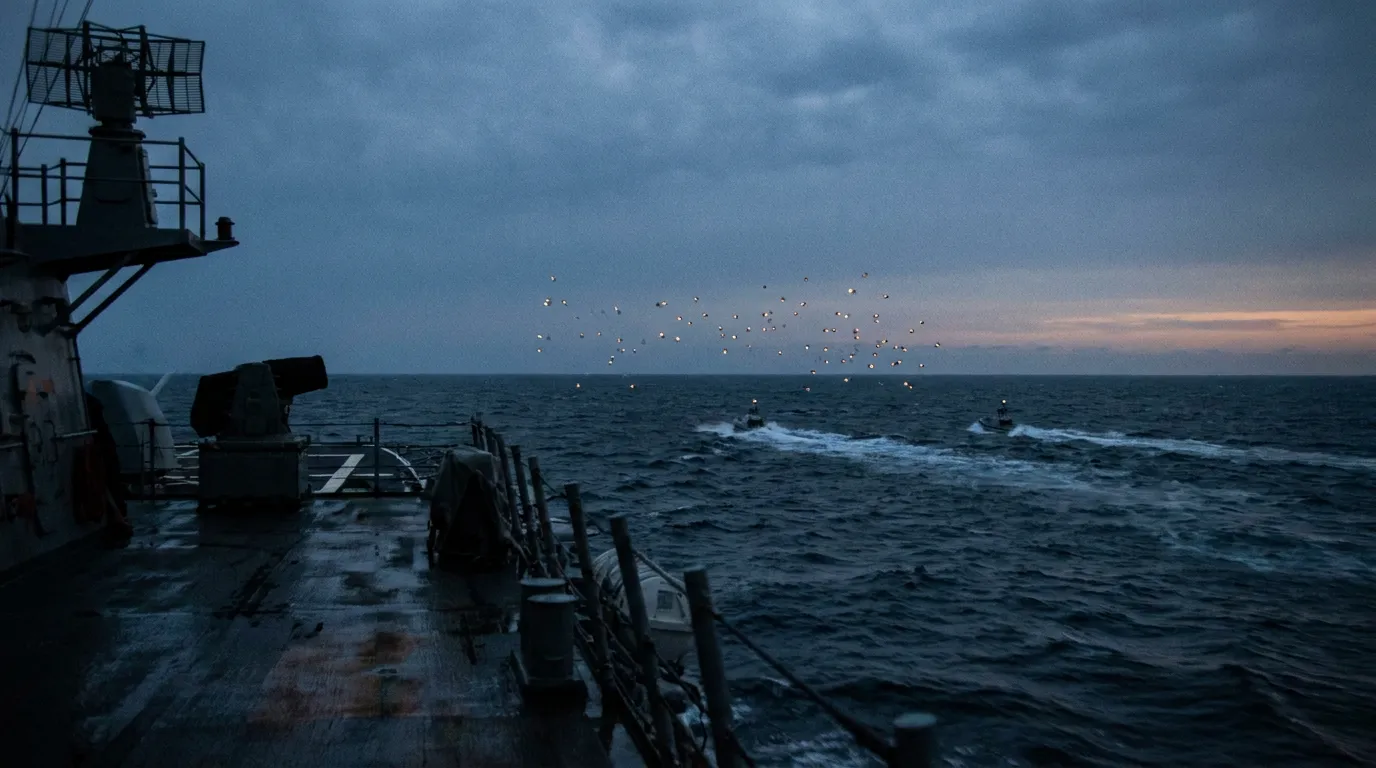
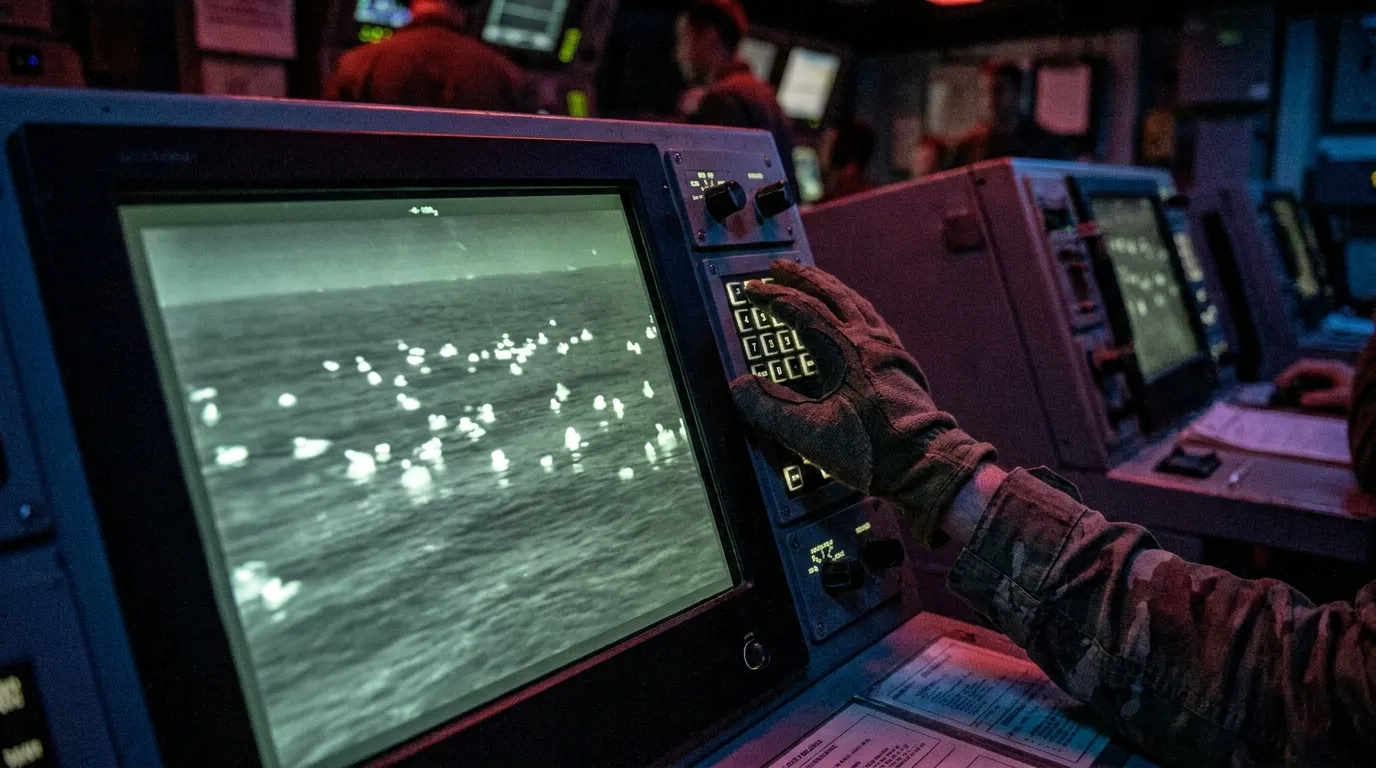
Buried in the Pentagon’s annual UAP report is a single paragraph that does more work than the other forty pages combined. US Navy assets operating off the coast of Virginia reported, in the report’s own careful phrasing, approximately 100 airborne UAP and two, likely uncrewed, surface systems. The All-domain Anomaly Resolution Office says it is still investigating, in coordination with the unit that filed it.
That’s it. That’s the entry. No date. No named platform. No indication of what the sensors were, how long the event lasted, or whether anybody was scrambled. One hundred airborne objects and two boats nobody can account for, in the approaches to the largest naval base on earth, summarised in a sentence and a half.
The interesting thing is not that it’s unexplained. Plenty of things are unexplained. The interesting thing is that in an entire fiscal year of reporting, this is the only maritime case AARO received — and it happens to be the biggest single count of objects in the document.
This piece was expanded on 4 August 2026 with the congressional reaction, the 2019 precedent off California, the Navy’s own uncrewed-boat programmes, and the Coast Guard request that landed three days after the report.
What the report actually says
The document is the FY2025 Consolidated Annual Report on Unidentified Anomalous Phenomena, released in July 2026 and covering reports received between 2 June 2024 and 30 May 2025. AARO logged 319 reports in total: 284 from within the reporting window and 35 older incidents that had never made it into a previous edition.
The domain breakdown is where the Virginia case starts to look strange. Of those 319 reports, 274 were in the air domain and 44 in the space domain. One was maritime. Just the one.
Of the full set, AARO resolved 114 — attributed to the usual cast of balloons, birds, satellites, aircraft and small uncrewed systems, plus a single rocket launch and, magnificently, one manned jet pack. Around two hundred remain open, which is not the same as inexplicable; most will be sitting in a queue waiting for data that will never arrive. Nine cases were flagged as warranting further analysis by intelligence and scientific partners, which is the closest thing the report has to a shortlist. And the office repeats, as it has every year, that it has found no verifiable evidence of extraterrestrial or breakthrough technology.
The satellite section deserves a mention, because it’s the report at its best. Of the 44 space-domain reports, 42 came not from space-based sensors but from FAA civilian pilot reports, with two from US Space Command ground sensors. AARO ran three-dimensional modelling and all-source analysis and concluded the lot were consistent with sunlight reflecting off satellites. That is genuinely good work — dull, methodical, and exactly what the office exists to do. It also rather neatly illustrates a point we’ve made before about why pilot reports are rising without the skies necessarily getting stranger: a pilot seeing a bright moving light is reporting accurately. The light just isn’t a craft.
The same capability did even heavier lifting on the backlog. Alongside the 319 new reports, AARO closed 256 older cases in the same period — and 238 of those were cleared in one sweep as satellite flaring. One analytical method disposed of more of the file than a full year of fresh reporting produced. That is the strongest argument available that this office is a functioning analytical shop rather than a press desk.
So it can resolve things when it has something to work with. Which makes the Virginia paragraph’s emptiness a statement in itself.
The FY2025 file at a glance
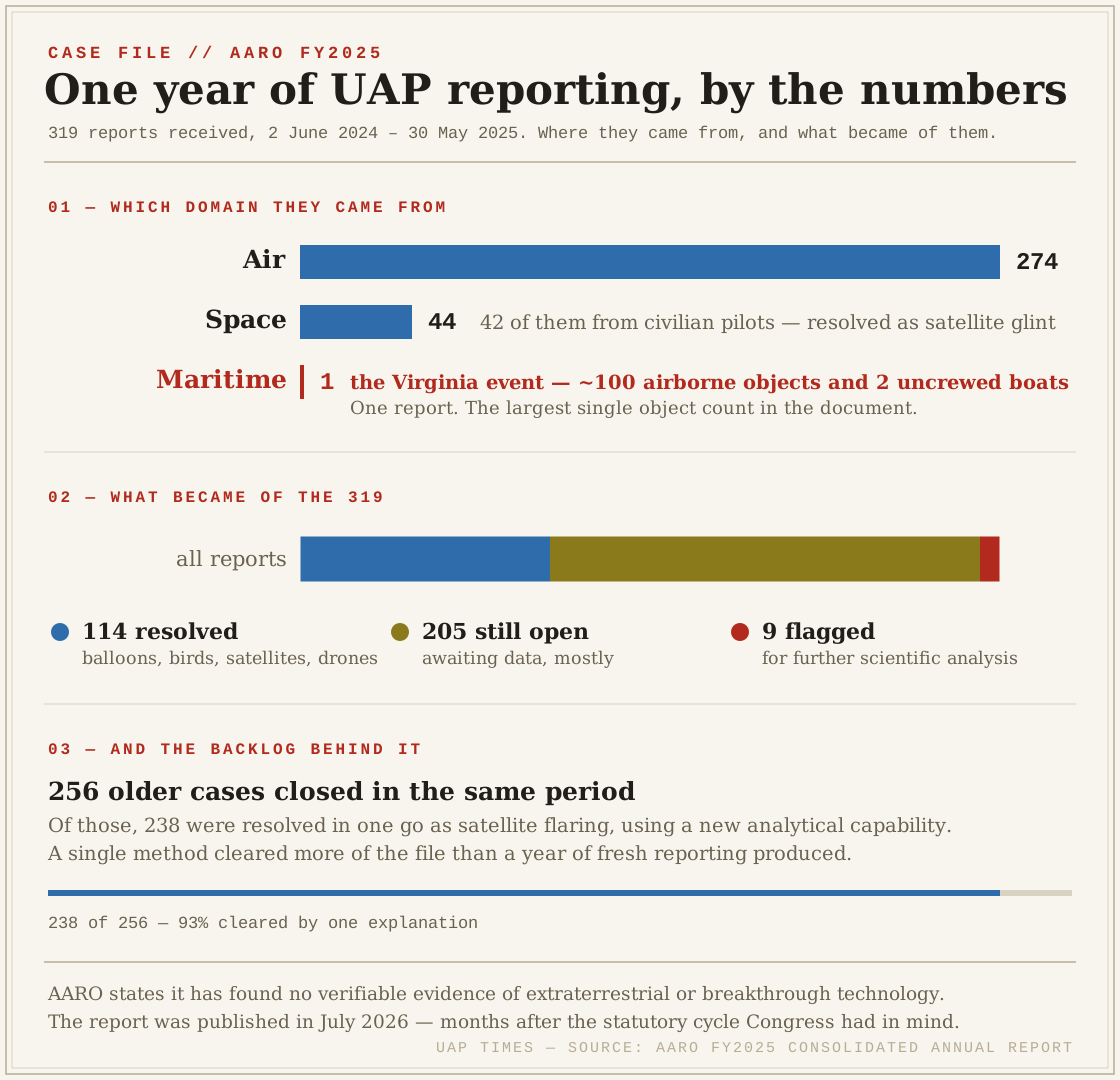
Two things jump out of the numbers. The first is that the resolutions are concentrated: one good idea about satellites accounted for the overwhelming majority of closed cases, while the rest of the pile barely moves. The second is that the maritime channel produced a single data point all year, and that data point is an outlier by an order of magnitude.
Why one maritime case is the odd number
Set aside the hundred objects for a moment and consider the denominator. The US Navy operates continuously off the mid-Atlantic coast. The Virginia Capes operating area — VACAPES, in the shorthand — spans the coastal waters of Maryland, Virginia and North Carolina, and is one of the busiest stretches of military water anywhere: carrier qualifications, air wing workups, submarine transits, live-fire ranges, seventeen military training routes and a permanent liaison arrangement with the FAA. Thousands of watch hours, radar-equipped ships, and trained observers whose entire job is noticing things.
And the reporting system received exactly one maritime UAP report from all of it in twelve months.
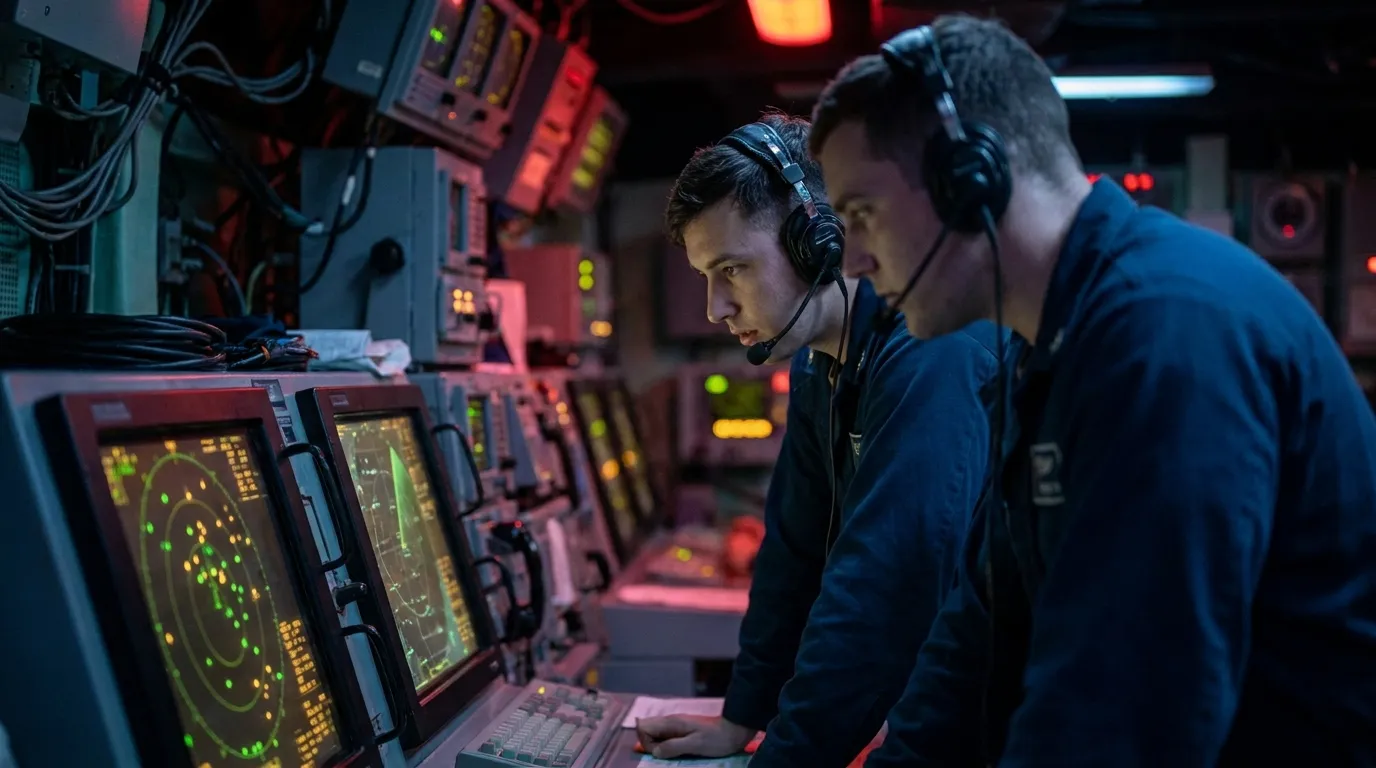
There are two readings, and neither is comfortable. Either the sea genuinely produces almost nothing anomalous — plausible, but hard to square with decades of Navy anecdote — or the maritime reporting pathway barely functions. AARO’s own text gestures at the second: it notes, again, that a lack of timely and actionable sensor data continues to constrain its ability to resolve cases. A reporting channel that yields one case a year isn’t a filter. It’s a blockage.
Which means the Virginia event may not be the year’s only maritime anomaly. It may simply be the only one somebody bothered to write up — or the only one so large that not writing it up became impossible.
It is worth remembering how thin the maritime file has always been. The genuinely useful cases in this category are decades apart and can be counted on one hand: Shag Harbour in 1967, where the Canadian authorities mounted an actual search; the Aguadilla thermal footage in 2013, which survives because a calibrated camera with its own metadata happened to be pointing at it. Set against that, “one report per year” starts to look less like a low base rate and more like a channel nobody uses.
What a hundred objects off Virginia would be looking at
The geography matters here more than the phenomenology. Hampton Roads is not a stretch of empty ocean with a base on it. Within a few miles of each other sit Naval Station Norfolk — the largest naval complex in the world — the Norfolk Naval Shipyard, Naval Air Station Oceana, Joint Expeditionary Base Little Creek–Fort Story, Naval Weapons Station Yorktown, Langley Air Force Base and, just up the James River, Newport News Shipbuilding, the only yard in the United States that builds nuclear aircraft carriers.
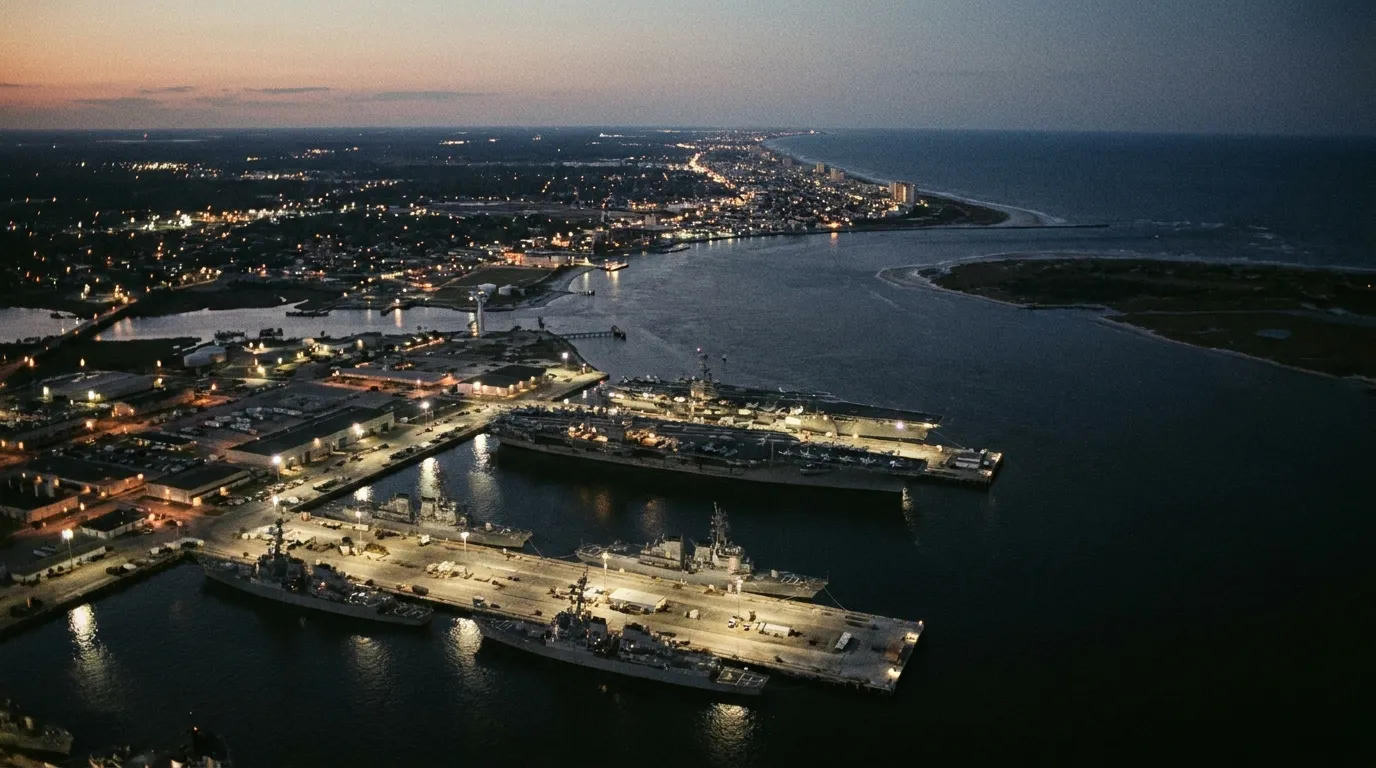
If you wanted to design a stretch of water where a hundred small airborne objects and two autonomous boats would be maximally interesting to a foreign intelligence service, you would design this one. That is not an argument that the objects were hostile. It is an argument that the location removes any luxury of indifference. An unexplained hundred-object event over the Bering Sea is a curiosity. The same event here is a counter-intelligence question that somebody is obliged to answer.
These are not unfamiliar waters
If “unexplained objects swarming Hampton Roads” rings a bell, it should.
Beginning on the evening of 6 December 2023, unidentified drones flew over Langley Air Force Base in Virginia across roughly seventeen days, the last incursion recorded on 23 December. They arrived reliably in the 45 minutes to an hour after sunset. The number fluctuated night to night and the objects varied in size and configuration; the first was estimated at around 20 feet long, moving at over 100 mph at 3,000 to 4,000 feet. Others were spotted over Naval Station Norfolk before crossing the James River toward Hampton and Langley — which is to say, over the world’s largest naval port and the neighbourhood of some of the most sensitive units in the US military.
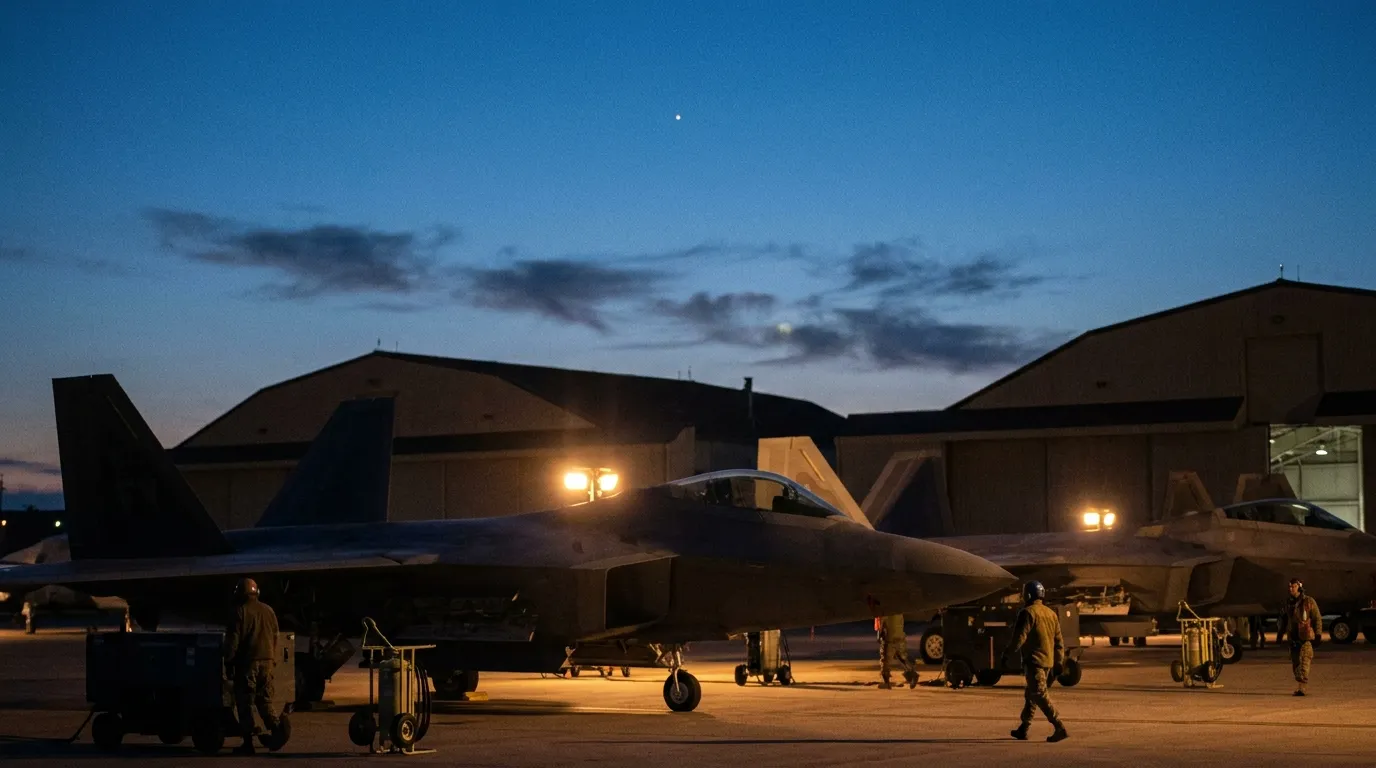
The response tells you how seriously it was taken. Langley cancelled night-time training missions and relocated its F-22s to another base. The FBI, Defense Department officials and AARO staff held two weeks of meetings about it. The incursions showed no obvious hostile intent. The Pentagon only confirmed the episode publicly in October 2024, ten months later, and admitted it still did not know where the drones had come from. As far as the public record goes, it still doesn’t.
There is one arrest in the general vicinity of that story, and it is instructive precisely because it explains nothing. On 5 January 2024, Fengyun Shi, a 26-year-old Chinese national and former University of Minnesota graduate student, flew from Minnesota to Virginia and put a drone up over Newport News Shipbuilding. The drone got stuck in a tree after midnight; Shi asked a local resident for help retrieving it, the resident photographed his identification and called the police, and the SD card turned out to hold footage of Navy vessels under construction. He pleaded guilty and was sentenced in October 2024 to six months under a Second World War-era photography statute — the first case of its kind. It was also, by every available account, unconnected to the Langley incursions. A man who loses his drone in a tree is not the operator of a seventeen-day formation nobody could catch.
That’s the context the new paragraph lands in: the same airspace, the same institutional shrug, a demonstrated inability to attribute a sustained incursion over a defended base. The reason that inability persists is less mysterious than it looks, and mostly a question of which office is allowed to act. Whatever was off Virginia, the relevant precedent is not a 2004 gun-camera video. It’s an unsolved case from two years ago in the same postcode — and one from 2019 on the other coast.
California, 2019: the last time a swarm followed the fleet
The closest analogue to the Virginia entry is not a UFO case at all in the usual sense. It is a Navy incident report.
On the night of 14 July 2019, the destroyer USS Kidd logged unidentified aircraft operating around it in a training area roughly a hundred miles off Los Angeles, in poor visibility. Over the following nights the destroyers USS Rafael Peralta and USS John Finn reported the same thing. As many as six objects were tracked around the ships at once. They kept station, matched manoeuvres and left. The following evening, crew aboard the littoral combat ship USS Omaha recorded infrared video of a spherical object that paced the ship for the better part of an hour before dropping toward the water — the clip that later escaped into public circulation and got attached to every “transmedium” argument going.
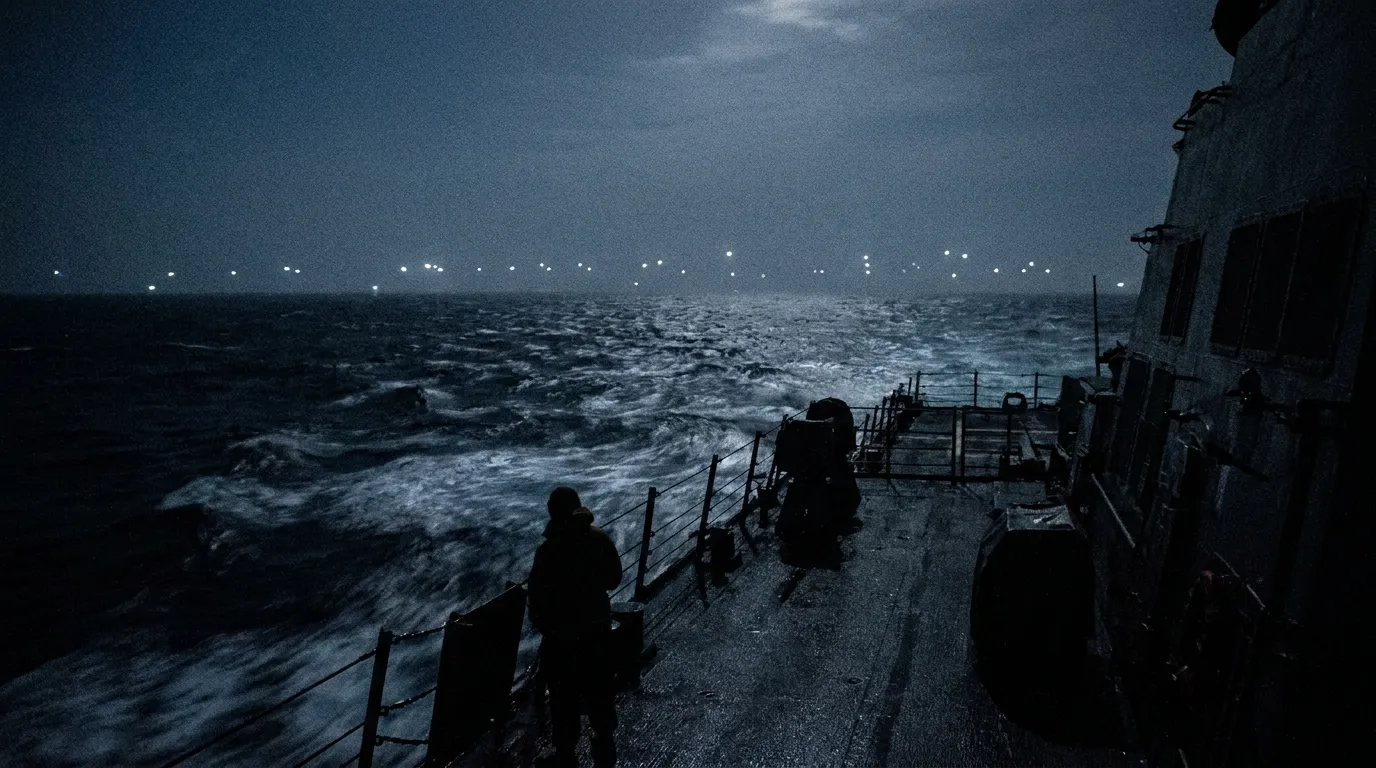
Here is why that case matters for this one. The Navy investigated it hard, and the investigation partly worked. Documents prised out under FOIA showed crews suspected a Hong Kong-flagged bulk carrier, the MV Bass Strait, of launching drones; internal analysis assessed it was “likely using UAVs to conduct surveillance on US Naval Forces”. Other encounters in the same cluster were tracked down to something far more deflating — local fishermen flying consumer quadcopters. And then the explanation frayed: the Bass Strait was documented alongside in Long Beach, a hundred miles away, while some of the encounters were happening. The Navy’s own senior leadership said publicly in 2021 that the drones remained unidentified.
That is the honest shape of a maritime swarm case. Some of it resolves to hobbyists. Some of it resolves to a plausible foreign collector. Some of it doesn’t resolve at all, and the residue sits there for years. There is no reason to expect the Virginia file to behave differently — except that in 2019 the Navy at least produced dates, ship names, timelines and video. In 2026 we have one paragraph.
The boring explanation that should worry you more
Here is the hypothesis that fits the fewest exotic assumptions and the most available facts: this was drones and uncrewed boats, and the question is whose.
The phrase “two, likely uncrewed, surface systems” is doing a lot of quiet work. It is not UFO language. It is procurement language — the vocabulary of a service that is currently awash in exactly that hardware.
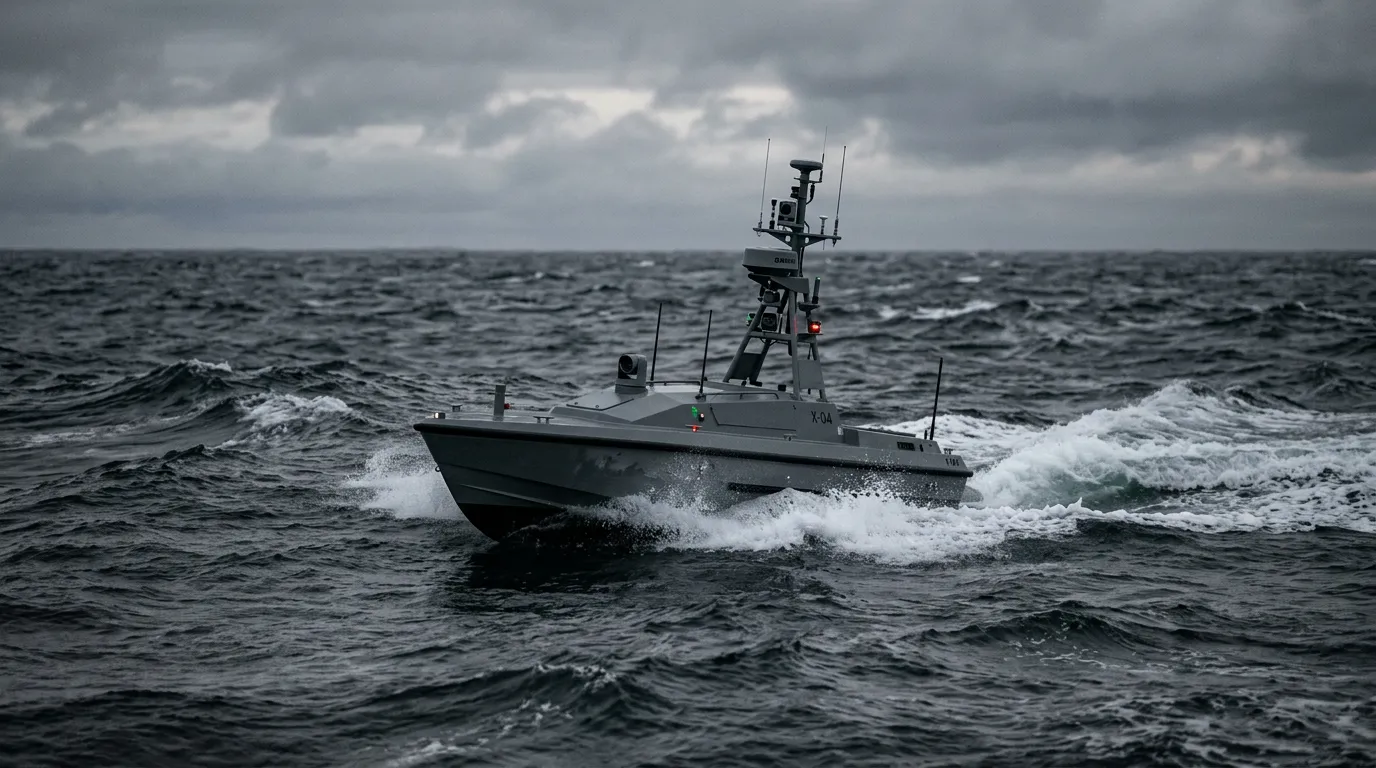
The Navy has been running the Global Autonomous Reconnaissance Craft — a 16-foot aluminium boat built by BlackSea Technologies, carrying up to 1,000lb of payload with a range of around 700 nautical miles at 22 knots. GARCs can be driven manually, given a radar target to follow, or operated as a swarm. They took part in NATO’s Dynamic Messenger 2025 off Portugal, where they were used specifically to counter attacking uncrewed surface vessels, and in UNITAS 2025 along the US East Coast between Naval Station Mayport in Florida and Naval Station Norfolk in Virginia. In that exercise the littoral combat ship USS Cooperstown acted as a hub for robotic and autonomous systems, flying V-BAT and other uncrewed aircraft alongside the boats, as part of a group led by the carrier USS Harry S. Truman.
Read that sentence again with the AARO paragraph beside it. A large number of small airborne systems operating in company with uncrewed surface craft off the US East Coast is not an anomaly. It is a description of a scheduled exercise.
The programme has only accelerated since. In June 2026 the Navy named seven companies to compete in at-sea trials for its Medium Unmanned Surface Vessel effort. On 29 July 2026 — three days after the report became news — a GARC was used in a live-fire training exercise for the first time. The same class of boat has already put a hole in a decommissioned amphibious assault ship during a sinking exercise. Whatever else is true, there are more uncrewed boats in American coastal water every month, and the trend line only goes one way.
So the most likely single explanation is the most deflating one available: a US Navy activity that the reporting watch team hadn’t been briefed on. That would explain both the size of the count and the total absence of subsequent drama. It is also the sort of thing AARO could establish with two phone calls, which makes the continued “under investigation” label a little hard to read.
But there is a third possibility that nobody should find soothing. If a hundred airborne objects and two autonomous vessels can loiter off Virginia and the resulting official record is a single paragraph marked “under investigation”, then the same event conducted by somebody else’s navy would look identical in the paperwork. Sean Kirkpatrick, AARO’s first director, has consistently argued that the unresolved residue — two to five percent of the pile, on his estimate — is most likely prosaic, and has pointed at large spherical drones and at technology being tested by private citizens or other states. He means that as reassurance about aliens. Read it again as a statement about air and maritime domain awareness and it is nothing of the kind. Europe spent much of late 2025 closing airports over drone sightings near sensitive infrastructure precisely because “probably somebody’s drone” stopped being a comforting sentence.
Meanwhile, the Coast Guard went shopping
The most telling document of the past fortnight is not the UAP report. It is a market survey.
On 24 July 2026 — three days after AARO’s report was published — the US Coast Guard put out a request for information seeking commercially available systems that can detect and defeat uncrewed underwater vehicles around American ports, waterways, critical infrastructure and military facilities. It wants technology already at readiness level 5 or above: tested in something resembling real conditions, not a laboratory. Its stated rationale is that the qualities making UUVs useful — versatility, low observability, the ability to work in cluttered water — make them equally attractive for surveillance, smuggling, sabotage and direct attack.
The timing is presumably coincidental. The implication is not. A service that spent the last decade worrying about small boats is now formally shopping for a way to kill robot submarines in its own harbours, and it is doing so because the threat has stopped being theoretical anywhere in the world.
Senator Tim Kaine of Virginia, who sits on the Armed Services Committee, made the same point rather more bluntly when asked about the Navy report. He told reporters the United States is “doing better on the protection against aerial unmanned systems” than it is against “systems that could be deployed by land or water”. That is a sitting member of the defence committee, representing the state in question, conceding a capability gap in the exact domain where the anomaly was logged.
The other congressional reaction was warmer and rather less pointed. Senator Kirsten Gillibrand, the office’s most consistent supporter on the Hill, called the report “another crucial step forward in our understanding of UAPs and toward the transparency that the American people deserve”, noting that hundreds more cases had been resolved and that witnesses “can rest assured that their reports are being taken seriously”. Both things can be true: the analytical machine is working, and the single most striking case in the inventory is a paragraph.
The sceptic’s read, in full
Give the deflationary case its due, because it’s strong.
First, “approximately 100” is not a sensor count; it’s a report, and reports of swarms are notoriously elastic. Sceptics like Mick West of Metabunk have spent years demonstrating how quickly a handful of lights becomes a formation once human pattern-matching gets involved, and how confidently witnesses misjudge number, range and size at sea, at night, with no reference points. A hundred could be a dozen, seen twice. This is the same structural problem the Galileo Project’s triangulating cameras were built to solve: without a known baseline, range is a guess, and once range is a guess, so are size, speed and count.
Second, “airborne UAP” in AARO’s taxonomy means unidentified, not unidentifiable, and not anomalous in performance. Nothing in the entry claims impossible acceleration, no infrared signature, no absence of propulsion — none of the markers that make a case interesting. Compare that with the Nimitz encounter, where the strength was never the object count but the cross-sensor corroboration. Here we have a headline number and nothing behind it.
Third, the ambient drone density around Hampton Roads is already extraordinary. A Virginia study of drone activity published in October 2025 found Norfolk the busiest of the surveyed locations in the state, detecting as many as 205 distinct drone platforms and a peak of some 606 flights. That is the baseline noise floor over the water where this event was logged. Against that background, a hundred small airborne objects is a large number but not an impossible one, and the burden shifts to explaining why these particular ones weren’t attributable.
Fourth, the base rate is brutal. Of everything AARO has ever managed to run to ground, essentially all of it has been mundane, and the categories that dominate — balloons, drones, birds, satellites, aircraft — are precisely the categories that a hundred lights over water would fall into. Our read of the annual figures came to the same conclusion: the resolutions are the story, and the residue is mostly a data problem.
The honest position is that we do not know what this was, that the smart money is on drones, and that “drones” is an answer which raises its own questions rather than closing the file.
The bit that’s AARO’s own fault
There is a process failure sitting underneath all of this, and it isn’t a conspiracy.

The report arrived months after the statutory reporting cycle Congress had in mind — a lateness documented by John Greenewald Jr’s Black Vault, which has been prising these documents loose via FOIA since Greenewald started filing requests as a teenager in 1996. The FY2025 edition therefore describes events up to May 2025 and reaches the public in July 2026. The Virginia case may be fourteen months old or more. Nobody outside the building knows, because the paragraph doesn’t say.
This is how avoidable suspicion gets manufactured. AARO, under Dr Jon Kosloski — a former NSA Research Directorate scientist who took the job in August 2024 — has done demonstrably rigorous work; the satellite analysis that closed 238 backlog cases in a single sweep proves it. Then it publishes the single most striking incident in its inventory as an undated fragment, a year late, with no sensor detail and no commitment to a follow-up date. Lawmakers who have spent three years complaining that the office is opaque are handed a fresh exhibit, and it’s a fair cop. The same instinct is what makes the House’s disclosure push so hard to argue against on the merits, whatever one thinks of its more excitable supporters.
You cannot ask the public to trust your negative findings while rationing the positive ones.
Five questions that would settle it
None of this requires disclosure of anything sensitive. It requires a paragraph with facts in it. Specifically:
What date? A single date would let anyone cross-reference the event against published exercise schedules, notices to mariners and shipping movements. Its absence is the most conspicuous thing in the entry.
Which sensors? Radar, infrared, visual from the deck, or some combination. “Approximately 100” from a surface search radar and “approximately 100” from a watchstander with binoculars are not the same claim, and the difference is the whole case.
How long? Minutes or hours. A brief transit is a very different event from a sustained loiter, and only one of them is hard to explain away.
Was it ours? The simplest question available, answerable by an email to Fleet Forces Command, and the one whose absence from the public record is least excusable.
Where are the boats now? Two uncrewed surface vessels are physical objects with hulls. They were built somewhere, launched from somewhere and went somewhere. Unlike a light in the sky, they leave a trail.
Until those are answered, the entry is not evidence of anything except how little the reporting system is required to say.
The UAP Times take
Credible — four out of five on our scale — and the rating is about the document, not the objects. This is a primary Pentagon report describing an event its own investigators can’t yet close — which is about as solid as sourcing gets in this field, and worlds away from a shaky phone clip. What the event was remains genuinely open, and we’d put our money, without much enthusiasm, on uncrewed systems of terrestrial manufacture, quite possibly American ones.
That’s the deflating part and the unsettling part at once. A hundred drones and two robot boats off Virginia is not evidence of visitors. It is evidence that the approaches to the largest naval base on the planet can host a small mechanised crowd, and that the resulting institutional response is one paragraph, filed fourteen months late, with the word “likely” in it.
The 2019 California case is the template, and it is not encouraging: investigated properly, partly explained, never closed, and still being argued about seven years later. That one at least produced dates and ship names. This one has produced a sentence and a half.
We’d like a date. We’d like to know which sensors saw what. And we’d like to know whether anyone has yet checked the simplest question of all — whether it was ours.
Update: the government’s newly formed UAP Science Advisory Council would be an obvious body to examine this case. On present arrangements it cannot see the underlying data either.
Update, 8 August: for a maritime multi-object case that did get a file — a formal unresolved intelligence report, and video — see the Gulf of Oman gunship encounter released in the fifth PURSUE tranche.
Further reading: What the 2026 Pentagon UAP report actually found and the authority gap behind unattributed base incursions.
Source: AARO FY2025 Consolidated Annual Report on UAP; DefenseScoop; The Black Vault; USNI News; WAVY-TV
Follow the file
Every new dispatch from the UAP desk, in your inbox. Sourced, sceptical, and no more than one email a week.