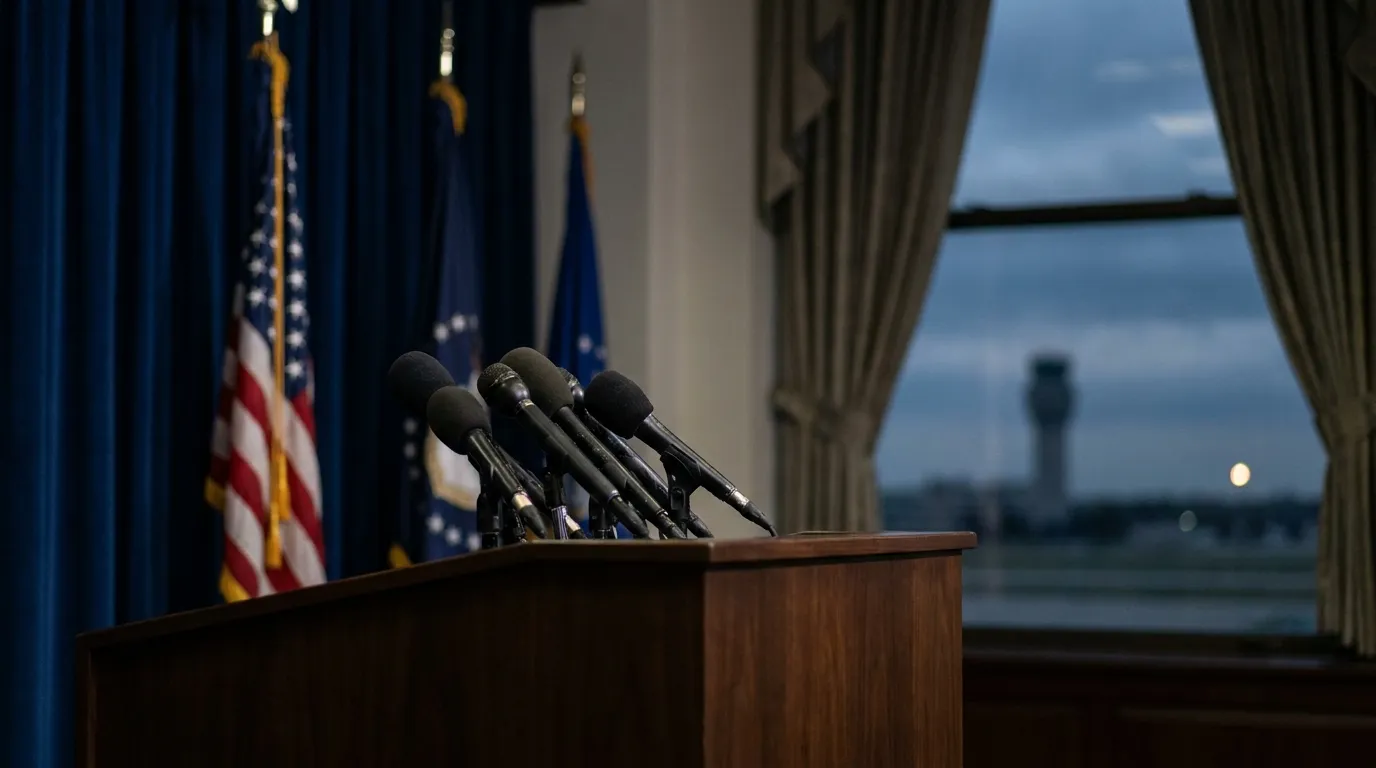
The question Katie Miller actually asked was not about national security. It was a party game: what’s a conspiracy theory that you believe in? She put it to both her guests, one of whom happened to be the Secretary of State of the United States.
Marco Rubio’s answer has been travelling round the internet ever since, generally stripped down to three words. What he said, in full, was this: “I don’t know who it is, I don’t know what it is, but there are things flying over our military installations, and they’re not ours, and we should look into this, be serious about it.”
The clip is real, the transcript is published on state.gov by the Office of the Spokesperson, and the date is 11 August 2026. That is about as clean a chain of custody as this subject ever gets. It is also the point at which most of the coverage stopped reading, which is a shame, because the rest of the answer is more interesting than the headline.
What else was in the same answer
Three things, none of which made the aggregators.
First, a denial. Asked whether the administration is sitting on proof of something non-human, Rubio was blunt: “if we knew, like, the president would be all over it. Like there would be, you know, primetime address. He wouldn’t— oh, for sure, you know, he’d be showing the pictures and the videos.”
Second, a handover. “I’ve sort of surrendered that portfolio to someone else who you know well, who’s very much in charge of the UAP issue.” He does not name them in the transcript. RedState and several other outlets read the reference as Stephen Miller, the White House deputy chief of staff and the host’s husband; that identification is an inference from context, not something Rubio confirmed, and we would flag it as such.
Third — and this is the one worth keeping — an admission about how the subject gets used in Washington.
“Whatever the news of the day was, it was controversial, and a reporter comes up to you and you say to them, ‘look, I don’t have time for these questions about politics. Do you realize there’s things flying over airspace, you know, we don’t know what they are.’ And the reporter’s like, ‘oh, what do you know? Tell me more.’ So it was extraordinarily effective as a diversionary tactic.”
A sitting cabinet secretary has just explained, on the record and cheerfully, that talking about UFOs is a reliable way to get a journalist to stop asking about something else. He immediately added that it is “also a very legitimate topic that we should be covering”. Both halves are probably true. Only one of them is a warning.
Rubio has been saying the first part for six years
The “they’re not ours” line is being reported as a revelation. It isn’t, quite, and the reason matters.
As acting chairman of the Senate Select Committee on Intelligence in 2020, Rubio inserted the report language accompanying the Intelligence Authorization Act for FY2021 that directed the Director of National Intelligence to produce an assessment of unidentified aerial phenomena. That instruction is what produced the nine-page ODNI preliminary assessment of June 2021 — the document that put 144 incidents and the phrase “we lack sufficient information” into the public record, and which is fairly described as the hinge on which the modern American UAP file turns.
When it landed, Rubio said the men and women trusted to defend the country had reported encounters “with unidentified aircraft that had superior capabilities” and had been “ignored and ridiculed”. He has been broadly consistent since.
So the news is not the content of the claim. The news is the altitude of the person making it. A senator on an intelligence committee saying unknown objects overfly American bases is a data point. The Secretary of State saying it — in an administration that has spent the year running a rolling declassification programme — is a different kind of event, even if the sentence is the same one.
“Not ours” is doing more work than the evidence can bear
Here is where we part company with the enthusiasts.
“They’re not ours” is a claim about attribution, and attribution is precisely the thing the American government has repeatedly said it cannot do. The authority gap over base incursions is not a story about exotic craft; it is a story about a 2017 statute, a disputed list of covered assets, and commanders who did not know what they were permitted to do. Objects go unattributed over installations in large numbers every year, and “unattributed” means nobody established whose they were — not that somebody established they were nobody’s.
Rubio, to his credit, front-loads the caveat himself. I don’t know who it is, I don’t know what it is. If you don’t know what it is, you cannot know it isn’t yours, unless you have checked every American programme that might be flying it — and the whole architecture of compartmented access exists to make sure no single official can check that. That isn’t a gotcha. It is the structural reason a cabinet officer’s opinion here is worth less than a sensor file.
Which is also why his denial is narrower than it looks. “If we knew” is a statement about what has reached his desk, from a man who has just told you the portfolio belongs to somebody else now. It is not a statement that nothing is being concealed anywhere in the US government, and it would be unfair to Rubio to pretend he claimed that.
The sceptic’s read, which is the boring one and probably right
Take the sentence at face value and the most likely referent is drones.
The Langley Air Force Base incursions of December 2023 remain the template: seventeen days of unidentified aircraft over one of the most sensitive installations in the country, some of them reportedly around twenty feet long, the episode not publicly confirmed by the Pentagon until October 2024, and — as far as the open record goes — still unattributed. No exotic performance was claimed. Nobody has produced an operator either.
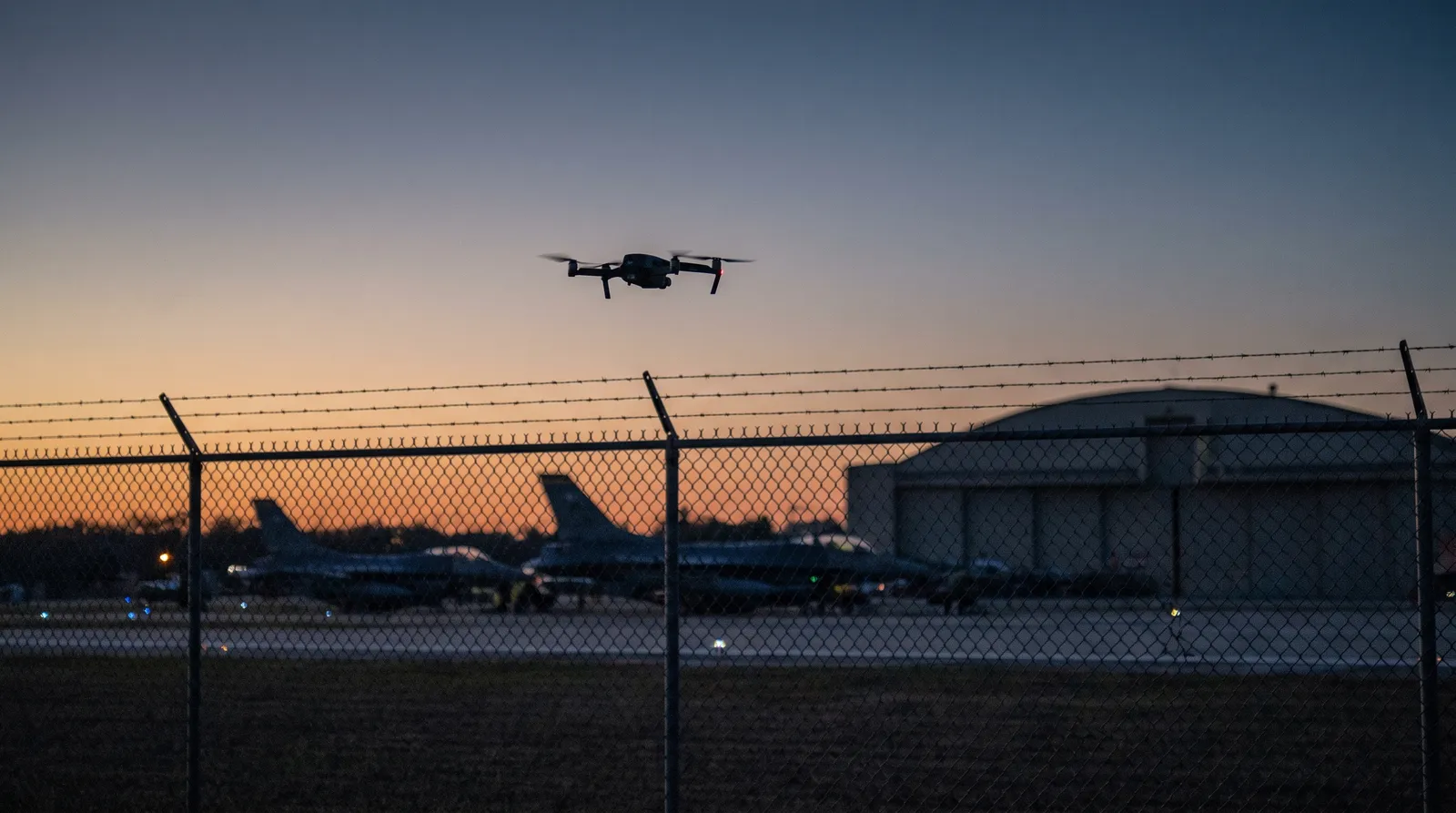
Sean Kirkpatrick, AARO’s first director, has argued consistently that the unresolved residue is small and almost certainly prosaic, and has pointed at commercially available systems, private hobbyists and foreign intelligence collection as the obvious candidates. The 2026 Pentagon report resolves a healthy share of its caseload into balloons, birds, satellites and drones, which is what a functioning analytical office ought to do.
The sceptical position and Rubio’s position are not actually in conflict. A Chinese quadcopter over a fighter wing is “not ours”, is a serious problem, and involves no aliens whatsoever. That reading fits every word he said. It just makes a duller headline.
The week it landed in
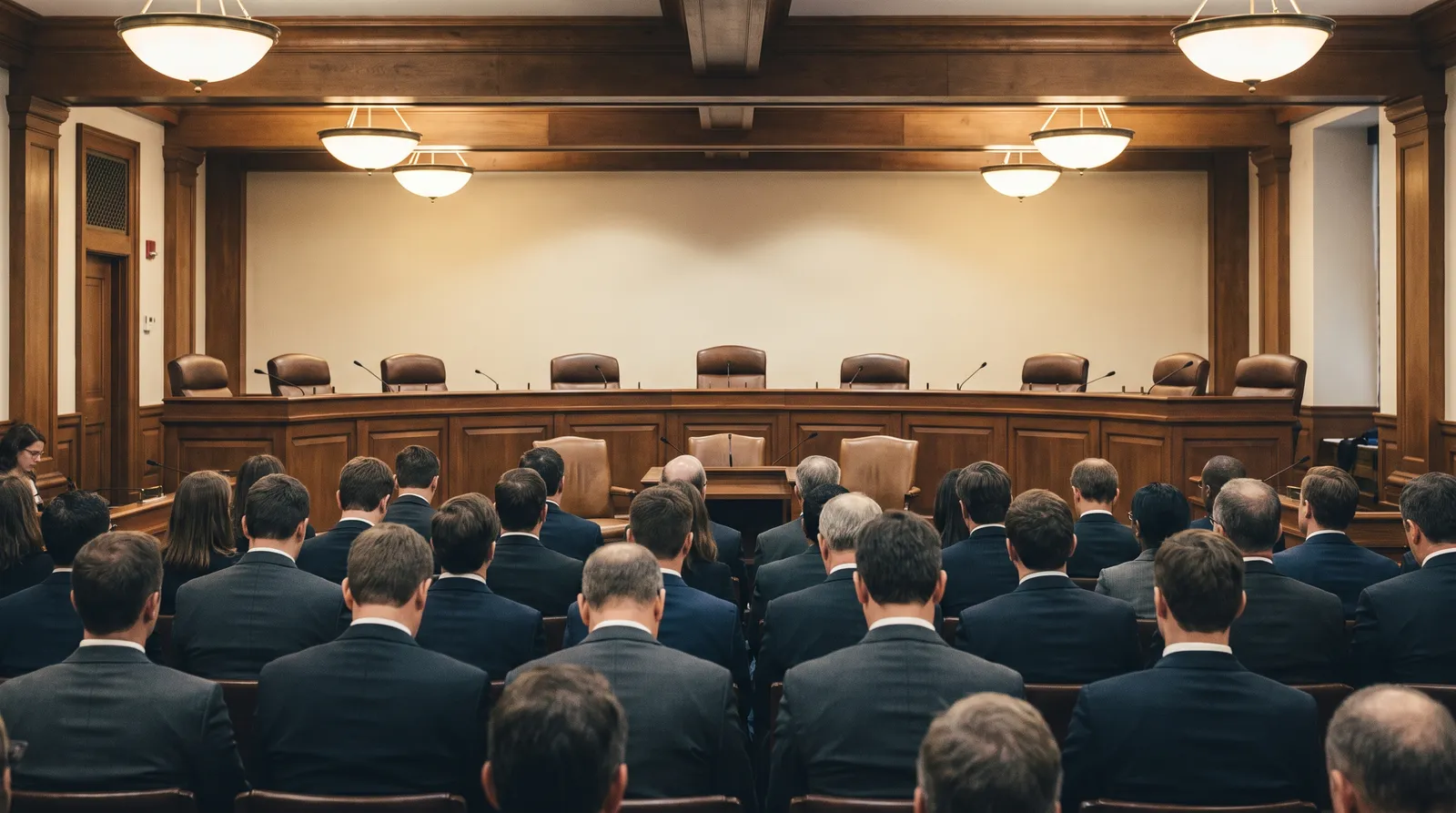
The timing is not accidental, or at least it is not landing in an empty room. Rubio’s remarks came a day before the Disclosure Forum in Washington, where a couple of dozen lawmakers, former officials and researchers — Senator Kirsten Gillibrand, Reps Eric Burlison, Anna Paulina Luna and Tim Burchett, Senator Mike Rounds, Christopher Mellon, Tim Gallaudet and Avi Loeb among them — spent a day arguing for statutory disclosure. Rounds pledged to revive the UAP Disclosure Act; Luna said she was working with the White House on immunity for witnesses claiming knowledge of recovered technology.
It also came a week after the fifth tranche of Pentagon UFO files, which produced a genuinely strong unresolved intelligence report on objects around an AC-130J gunship over the Gulf of Oman — and, characteristically, published it with the measurements taken out.
Set against that, a podcast answer is thin gruel. Documents beat quotes. The hundred objects and two uncrewed boats off Virginia tell you more about American airspace than any cabinet officer’s aside, because that one has a filing reference.
The UAP Times take
We rate this Credible — four out of five on our scale — and, as usual, the rating is about the document rather than the objects.
The provenance is effectively a 5. There is an official State Department transcript, published by the Office of the Spokesperson, and video. Nobody has to trust a summary or a screenshot, and there is no version of this story in which Rubio was misquoted.
The claim inside it is nearer a 3. It is one man’s characterisation, offered with an explicit I don’t know what it is attached, by someone who says in the same breath that he no longer runs the file. It is not a disclosure. It is not new information. It is a senior official repeating, from a more senior chair, a position he first took as a senator in 2020.
What is genuinely new is the framing, and it cuts against the excitement. Asked to name a conspiracy theory he believes in, the Secretary of State named unattributed objects over military bases — and then spent the rest of the answer dismantling the conspiracy theory that usually travels with it. On his account there is no hidden archive of pictures, because a president holding one would broadcast it.
You may find that unpersuasive. We find it unfalsifiable, which is not the same as false.
The line we would keep is the one nobody clipped: that this subject is extraordinarily effective as a diversionary tactic, and the man saying so used it that way for years. Treat every official pronouncement on UAP — including the encouraging ones — as an object that also needs attributing. Ask what it was flying over.
Further reading: why nobody owns the problem of objects over American air bases, what the 2026 Pentagon UAP report actually found, and how Germany answered the same question in eleven days.
Follow the file
Every new dispatch from the UAP desk, in your inbox. Sourced, sceptical, and no more than one email a week.