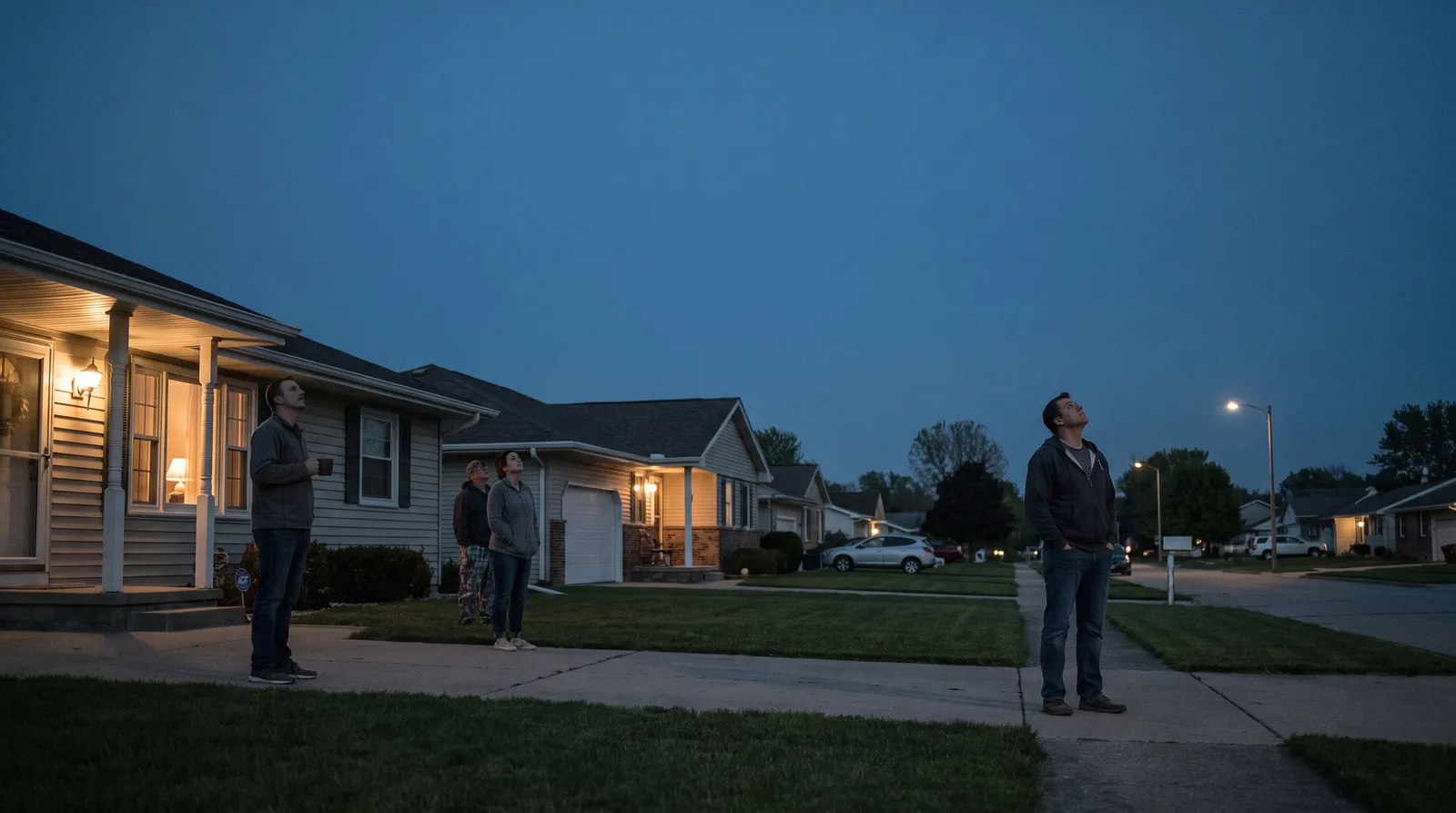
Four months into the most aggressive UFO declassification programme any government has ever run, somebody finally went and asked the public what it made of all this. The answer, published by Gallup on Wednesday, is not the one either side of the argument was hoping for.
Belief that some UFOs are alien spacecraft has gone down. And the proportion of Americans who think their government is sitting on something has gone up to the highest figure Gallup has ever recorded.
What the numbers actually say
Gallup interviewed 1,200 adults across all fifty states and the District of Columbia between 1 and 19 July, by telephone, with a margin of sampling error of ±4.0 percentage points at 95% confidence. The write-up is by Megan Brenan. That fieldwork window matters: it sits after the first three PURSUE document releases and before the fourth and fifth, so it captures a public that had been watching the disclosure story unfold for two months.
Asked whether UFO sightings can all be explained by human activity on Earth or natural phenomena, or whether at least some have been alien spacecraft visiting from other planets, 49% took the earthly option and 37% took the alien one. Thirteen per cent had no opinion.
That is a majority-sceptical country, but only just, and the more interesting figure is the third one. The don’t-knows have nearly doubled since 2019, when just 7% declined to pick a side.
The trend line is the story
A single poll is a snapshot. Gallup’s value is that it has asked this same question, in this same wording, for decades — so you can watch the line move.
In 2019, 33% of Americans said at least some UFOs were alien craft and 60% said everything had an earthly explanation. In September 2021, three months after the Office of the Director of National Intelligence published its preliminary UAP assessment and the subject moved from cable-access to prime-time, alien belief jumped to 41% and the earthly answer fell to 50%. The Skeptical Inquirer covered that eight-point rise at the time as a straightforward media effect: put UFOs on the evening news and more people will tell a pollster they believe.
Five years and a full-blown government disclosure programme later, the alien number has gone backwards, to 37%. The earthly number has barely moved, from 50% to 49%. What has absorbed the difference is uncertainty.
If you were expecting the release of hundreds of previously classified files to convert the public, that is the opposite of what happened. If you were expecting it to produce a wave of debunking that pushed people back toward prosaic explanations, that did not happen either. People got less sure.

The number that moved the wrong way
The finding with the sharpest edge is not about aliens at all.
Seventy-eight per cent of Americans now say the US government knows more about UFOs than it is telling the public. Seventeen per cent say it does not. Gallup asked the same question in 1996, when 71% agreed, and in 2019, when 68% did.
Suspicion of a cover-up is ten points higher after the disclosure programme than it was before it.
Sit with that for a second, because it is genuinely awkward for everyone involved. An administration spends a summer publishing tranche after tranche of formerly classified material, stands up a task force to do it, tells the intelligence community its UAP nondisclosure agreements are no longer in force, and the public response is a record high in the belief that it is being lied to.
Why transparency might produce distrust
There is an obvious and slightly uncomfortable explanation, and it is not that Americans are ungrateful.
Look at what the releases actually contain. The fifth tranche, published on 7 August, ran to 41 files and included a genuinely unresolved intelligence report on 25 objects around an AC-130J gunship over the Gulf of Oman — which is real, interesting and, crucially, still redacted. Names, locations, sensor parameters and unit identifiers are blacked out throughout the collection. A reader who arrives at the Department of War’s UFO page expecting revelation finds instead a large quantity of paper with holes cut in it.
That is defensible on classification grounds and corrosive to trust at the same time. The redaction is the proof of the withholding. Every page released with sections missing is, to a reasonable person, evidence that more exists.
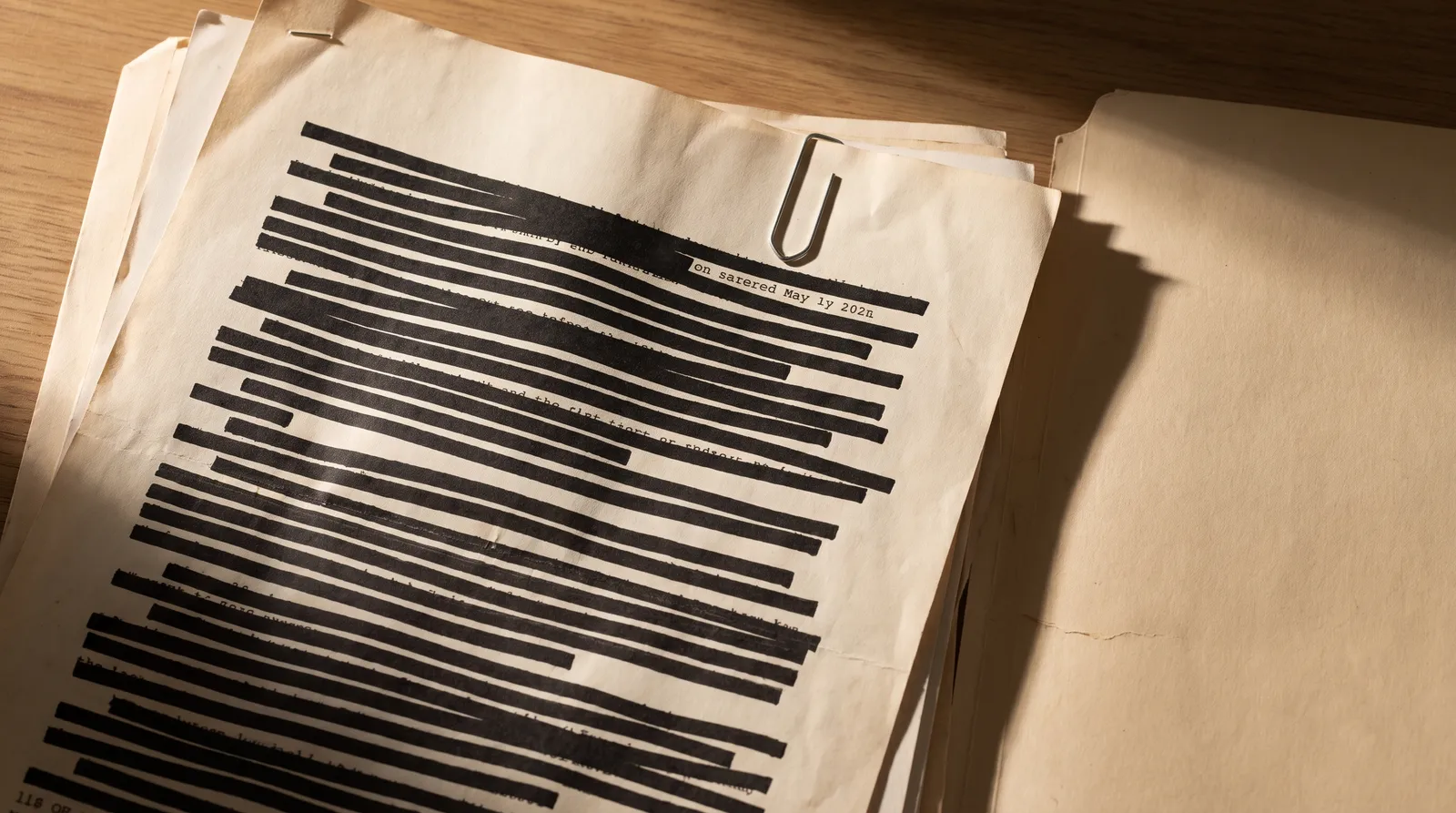
The evidential problem runs deeper than presentation. When two scientists worked through all 112 sensor videos in the PURSUE collection looking for the four quantities you need to convert pixels into an actual speed — the sort of measurement that would settle an argument — they found not one clip contained the full set, largely because of what had been stripped out. You cannot analyse your way to a conclusion from material that has had the analysable parts removed. If the best-documented cases in the government’s own files cannot be resolved from the government’s own releases, “they must be holding the good stuff back” is not a conspiracy theory. It is an inference.
Meanwhile the All-domain Anomaly Resolution Office continues to report, accurately and repeatedly, that it has found no verifiable evidence that any case it has investigated involved extraterrestrial beings or technology — a finding its most recent annual report restated alongside hundreds of cases resolved as balloons, birds, drones and satellites. That is almost certainly the correct scientific position. It is also, to an audience that has just been handed a stack of censored documents, indistinguishable from a denial.
The generational split, with a health warning
A second survey out this month points the other way, and it is worth handling carefully.
Talker Research polled 2,000 American adults online between 1 and 6 July — overlapping neatly with Gallup’s window — and found that 37% say they believe in aliens more than they used to, 54% report no change, and 10% believe less. The generational gradient is stark: 54% of Gen Z respondents said recent UFO coverage had increased their belief, against 45% of millennials, 36% of Gen X and 23% of baby boomers.
Both things can be true, because the two surveys are not measuring the same thing. Gallup asked what you believe now. Talker asked whether news coverage has shifted you. A young person can say “coverage moved me” while still landing in Gallup’s don’t-know column — indeed that is precisely what a fresh, unresolved interest looks like.
But treat the comparison with care. Gallup’s sample is a probability-based telephone survey with a published margin of error; Talker’s is an online panel, which does not carry one and is not directly comparable to Gallup’s trend line. The generational finding is interesting. It is not the same class of evidence, and pretending otherwise is how a good number turns into a bad headline.
The 17% who have seen something
One more figure deserves attention, because it is the closest thing here to a natural experiment.
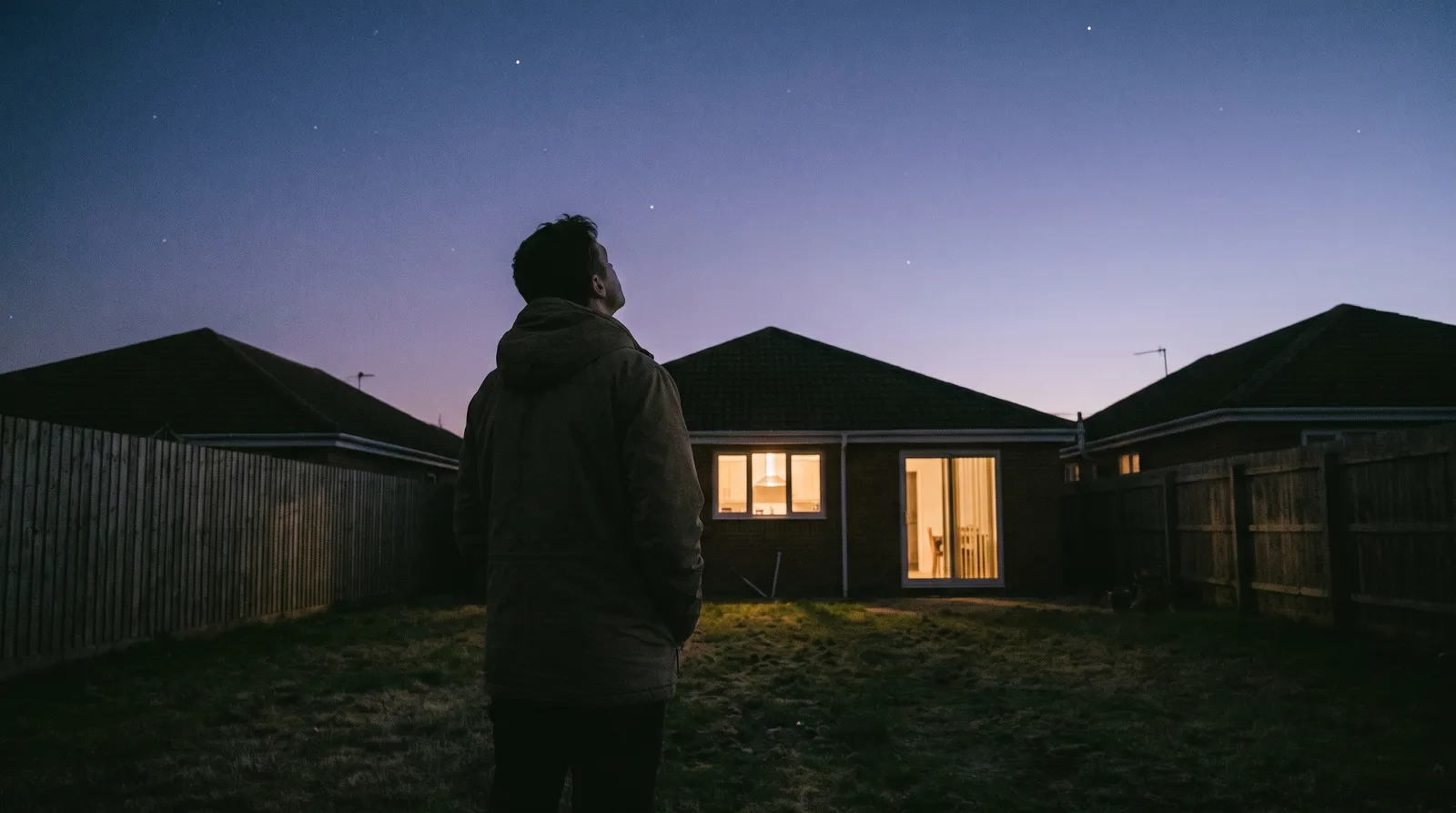
Seventeen per cent of Americans told Gallup they have personally seen something they thought was a UFO — essentially unchanged from 16% in 2019. Among that group, 61% believe at least some UFOs are alien spacecraft. Among everyone else, the figure is 33%.
That is a very large gap, and it is the single most predictive thing in the survey — bigger than party, education or region. It also cuts both ways, which is why nobody quotes it. Believers read it as experience defeating armchair scepticism: the people who have actually looked up are the people who are convinced. Sceptics read it as a textbook illustration of why eyewitness testimony is a poor instrument, since seeing something unexplained and concluding it was interstellar are two very different cognitive steps, and the survey cannot tell you which of those 17% saw a genuine anomaly and which saw Starlink.
Gallup, sensibly, does not adjudicate. The demographic detail is quietly telling, though: the groups most likely to report a sighting — men, middle-aged adults, people without a college degree — are not the same as the groups most sceptical of alien explanations, which include men, under-30s, college graduates, Midwest and Western residents, and Democrats. Men appear in both lists. Whatever is going on here, it does not reduce to a single axis of credulity.
What both camps should take from this
For the disclosure movement, the poll is a warning that publishing documents is not the same as building credibility, and may not even be correlated with it. Four tranches, a presidential directive, a waiver of the NDAs, a White House science council, and alien belief is four points lower than it was in 2021. Whatever the public is responding to, it is not volume of paperwork.
For the sceptical camp, the temptation is to read 49% as a win. It is not much of one. The earthly-explanation number has moved a single point in five years while the confident-sceptic bloc has leaked members into “no opinion”. A country that is less certain is not a country that has been persuaded by better evidence.
And for the government, the 78% is the finding that should sting. Institutional trust is not a resource you can restore by releasing files, because the act of releasing files with redactions in them advertises the existence of everything you did not release. There is a version of this programme that would move that number — full, unredacted release of a small number of complete case files, sensor data included — and it is a version that has not been attempted, in part for legitimate reasons of sources and methods.
The UAP Times take
The poll itself earns a Well-sourced rating, five out of five on our scale, and that rating is about the survey, not about UFOs. Gallup published its fieldwork dates, sample size, mode, margin of error and a directly comparable trend line running back to 1996. This is what solid evidence looks like, and it is faintly funny that in a field this thick with anonymous sourcing the most rigorous document of the month is a public-opinion poll.
What it measures is worth being precise about. This is a survey of beliefs, not of the sky. Not one figure here is evidence for or against anything flying anywhere; 37% of Americans believing in alien craft would not make it so, and neither would 3%. The temptation to write “the public isn’t buying it” as though public opinion were a form of peer review should be resisted.
What the poll does measure, unusually well, is the gap between disclosure as a process and disclosure as an outcome. The US government has spent 2026 doing more or less exactly what campaigners spent a decade asking for. The result is a public that is less certain about the phenomenon and more certain it is being kept in the dark — which suggests the thing eroding trust was never the absence of documents. It was the absence of resolved cases. Files are not answers, and the American public, on this evidence, can tell the difference.
Further reading: what the Pentagon’s fifth tranche of UFO files actually contained and why not one of the 112 released videos can give you a speed.
Follow the file
Every new dispatch from the UAP desk, in your inbox. Sourced, sceptical, and no more than one email a week.