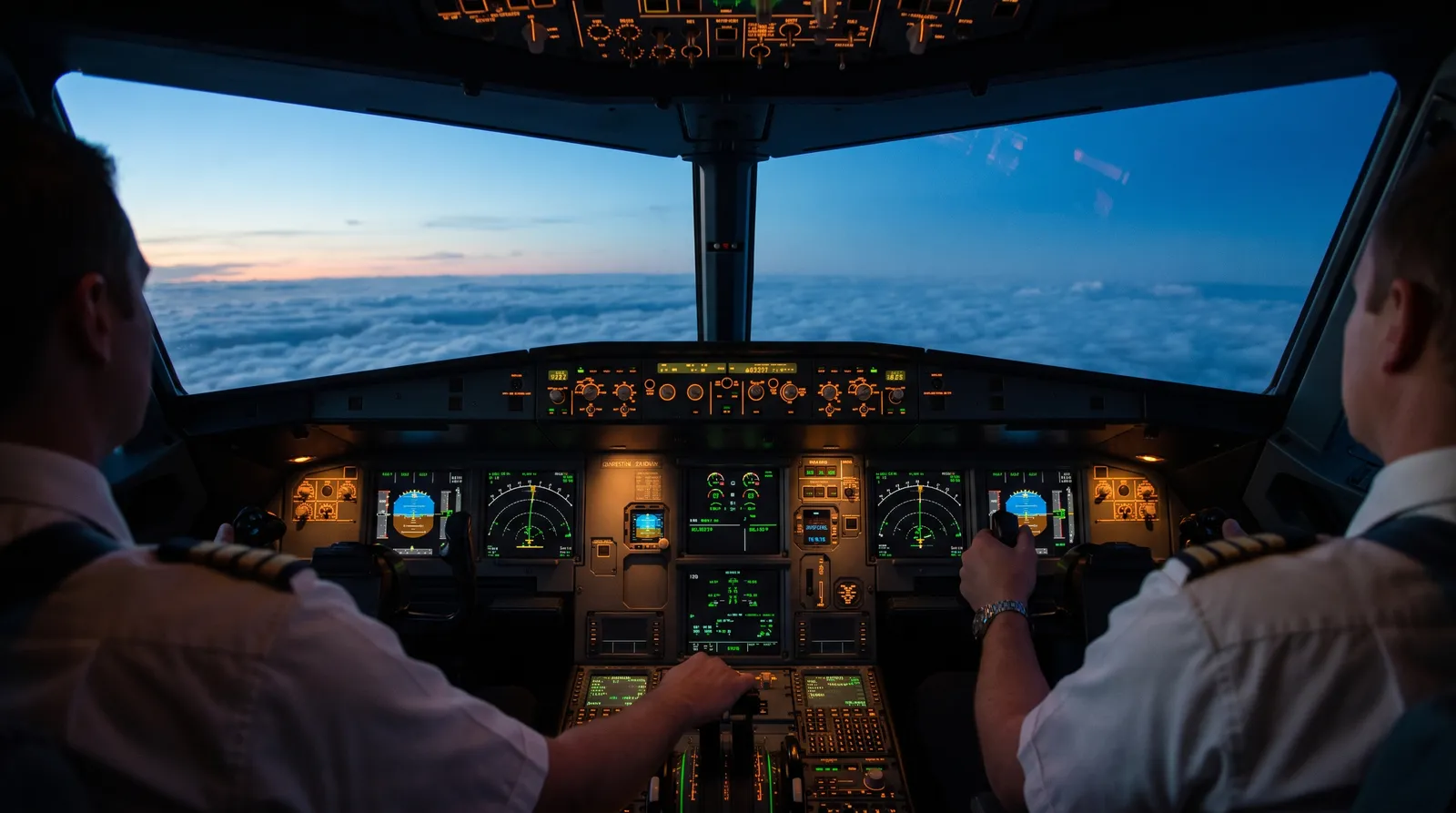
There’s a chart doing the rounds that shows pilot UAP reports climbing steadily over the last few years, and it’s being waved about as evidence that the skies are getting busier with the unexplained. Maybe. But there’s a much less thrilling explanation that deserves equal airtime: the reporting got easier.
This is not a debunk. It is a measurement problem, and measurement problems are where most arguments about this subject quietly go wrong. A report count is a number produced jointly by the world and by the machinery you use to observe the world. When the machinery changes as fast as it has since 2021, you cannot read the output as a clean signal about the sky.
The stigma tax
For decades, a commercial pilot who filed a report about something they couldn’t identify was effectively volunteering for a career headache. The professional cost of being “the UFO pilot” was real, and the rational move was to say nothing. When you make reporting expensive, you get fewer reports — not fewer events.
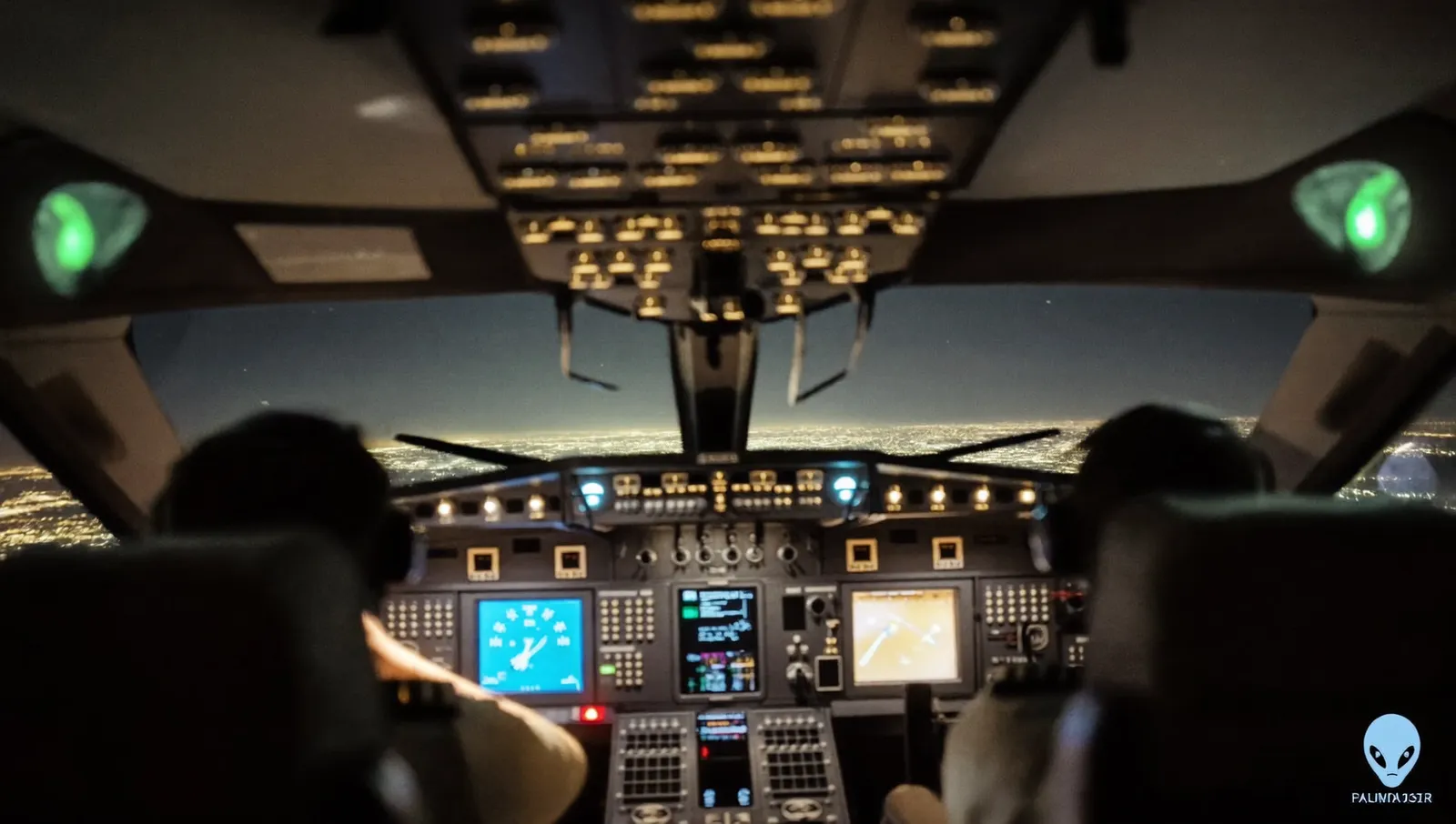
The canonical illustration is Captain Kenju Terauchi, the Japan Air Lines pilot who reported being shadowed over Alaska in November 1986. After he talked publicly about the encounter, JAL took him off flying duties and put him behind a desk; the airline’s medical view, reported at the time, was that pilots who saw such things should not be in the seat. He was reinstated years later. Whatever you think happened over Alaska, the lesson every other line pilot on Earth drew from it was unambiguous.
Over the last few years that stigma has softened considerably, and formal channels for logging these encounters have been publicised and, crucially, de-stigmatised. Lower the cost of reporting and the reports go up. That’s not a mystery; it’s basic incentive design.
What actually changed, institutionally
It is worth being specific about the machinery, because “the stigma lifted” is a vibe and the policy trail is a fact. In June 2021 the Office of the Director of National Intelligence published its preliminary assessment covering 144 reports. In 2022 Congress replaced the Navy’s task force with a standing office, the All-domain Anomaly Resolution Office, and in December that year wrote the term “unidentified anomalous phenomena” into statute at 50 U.S.C. § 3373 — a provision that treats UAP as a potential national-security matter and imposes collection duties on agencies, the FAA among them.
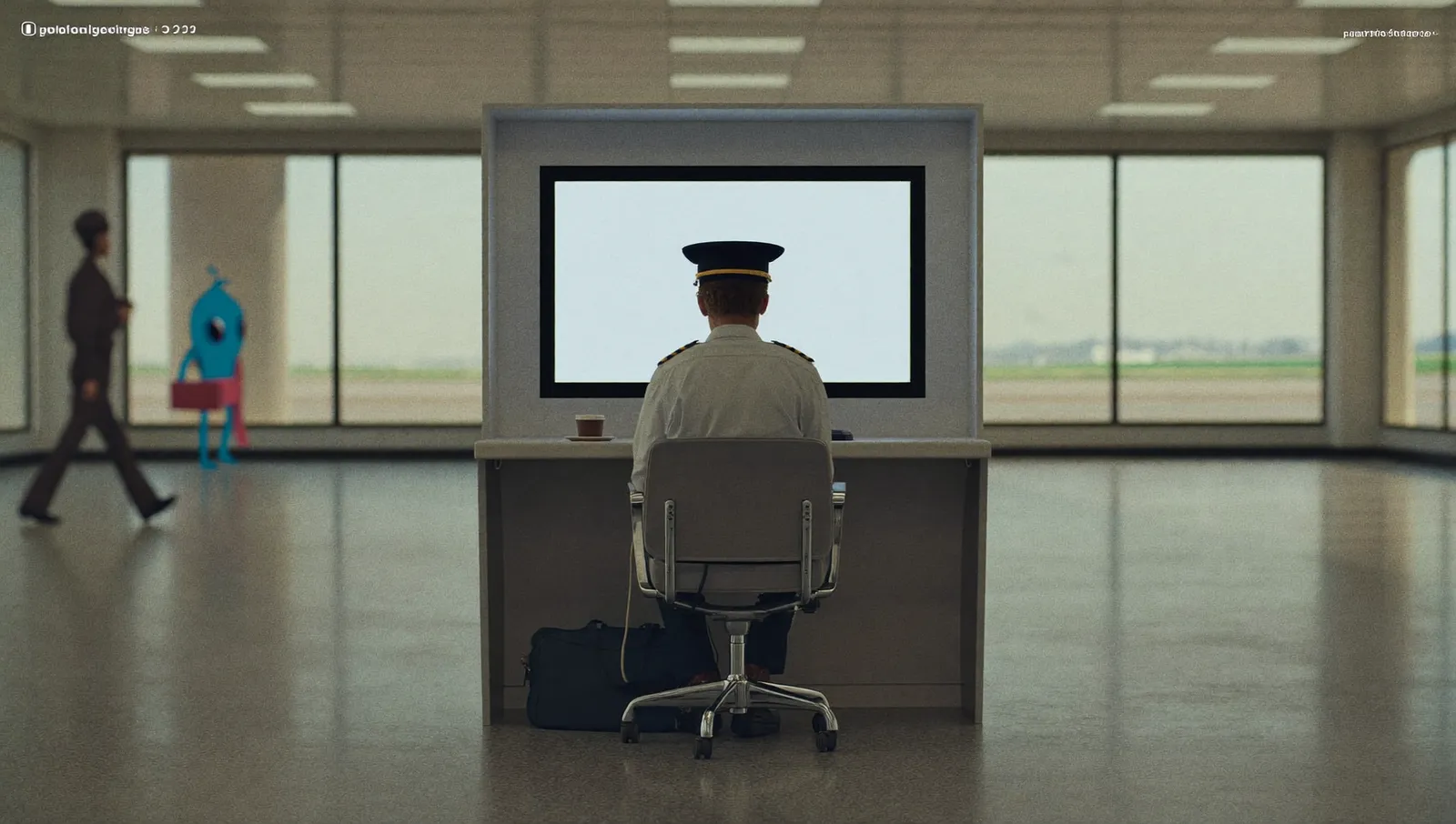
The operational plumbing followed. In September 2025 the FAA issued Notice N 7210.970, retiring “UFO” in favour of “UAP” and directing that pilot reports and controller observations be passed to the air traffic security coordinators on the Domestic Events Network, with AARO’s public site named as the reporting destination. It was folded into the controller’s manual the following month. That is the moment a UAP report stopped being an awkward favour and became a defined procedure — and, as we’ve written before, the same order that finally created the rule also lets the underlying radar be deleted after 45 days, which is a fairly comprehensive way to build a counter and throw away the evidence.
Inside government, the direction of travel is identical: the intelligence community now operates under an explicit duty to report. Every one of these changes should be expected to raise the count on its own, with the sky held perfectly constant.
The denominator problem
Here is the discipline the coverage almost never applies. A report count is a numerator. On its own it means nothing, because you don’t know what it is a fraction of — flight hours flown, crews who know the channel exists, agencies obliged to forward what they hold.
AARO’s own annual figures make the point better than any argument could. Its fiscal 2023 report covered 291 reports. Its fiscal 2024 report covered 757 — an apparent surge of more than 150 per cent. But of those 757, some 392 came from the FAA, and they represented essentially the FAA’s entire UAP holdings since 2021 arriving in one delivery. That is not a busier sky. That is a filing cabinet being emptied into a database.
The fiscal 2025 report landed at 319 new reports, of which 284 fell inside the reporting period and 35 were older cases surfacing late, against total case holdings of 1,870. Read the series naively and you get a spike and a collapse. Read it as an accounting artefact and you get an office slowly absorbing a backlog. Only one of those readings is defensible.
Where the reports come from is not where the things are
The second half of the denominator problem is geographic. AARO has repeatedly acknowledged in its own reports that its caseload carries a collection bias towards restricted military airspace, ranges and test facilities — because that is where the personnel and the sensors are. Its hotspot maps light up the south-eastern United States and the Gulf, the west coast, the Middle East and the seas near Japan and Korea, which is a decent map of where American forces operate and a poor map of anything else.
A 2023 RAND study, Not the X-Files, took the civilian side of this and found the same shape. Across 101,151 public UAP reports mapped to US census places, the most robust and statistically significant association was proximity to military operations areas; reports were less likely near civilian airports and weather stations, and more common in rural areas. Sightings, in other words, track observers and expectations at least as strongly as they track objects.
The genuinely interesting wrinkle is that AARO has noted commercial pilot reporting starting to broaden that distribution. That is a real change in the instrument — and it is exactly the sort of change that manufactures new numbers before it reveals new phenomena.
The sky did get busier, though
None of this means the increase is entirely an artefact. The airspace really has changed, and the competing causes are not hypothetical.
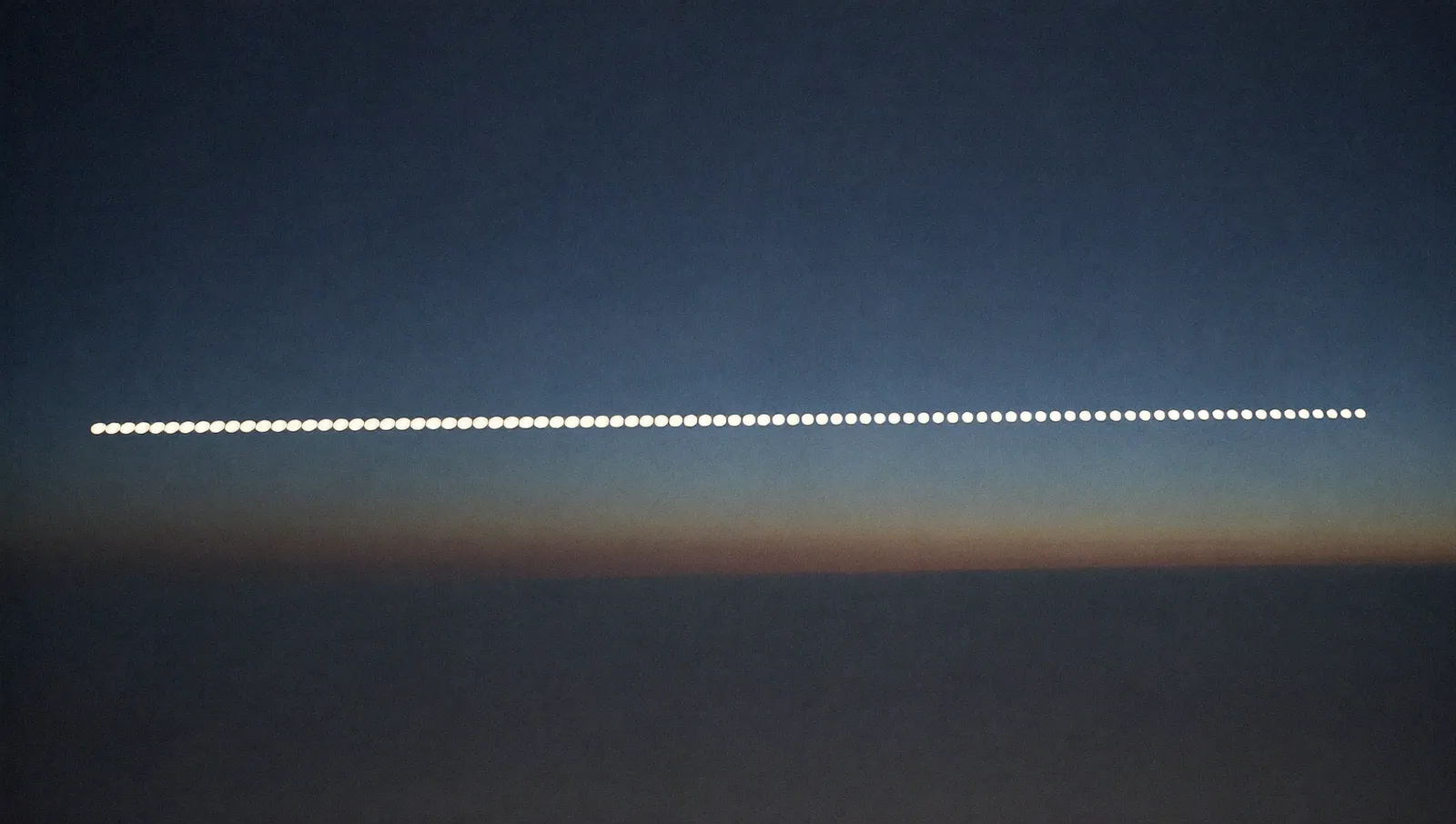
Low Earth orbit now carries thousands of satellites that were not there in 2018, and freshly launched trains of them appear as an evenly spaced procession of lights. Around dusk and dawn, sunlight glinting off a satellite can briefly reach a brightness comparable to Venus — and a crew at 38,000 feet is above most of the haze that would hide it from someone on the ground. This is not a fringe caveat. AARO’s fiscal 2025 report attributed 238 resolved cases to satellite flaring alone, on the back of a new analytic capability that let it recognise the signature at scale.
Add the post-2023 attention to high-altitude balloons, and a drone population that has grown faster than anybody’s ability to identify individual airframes at range, and you have three genuine, growing sources of ambiguous lights. A rising count is consistent with more misidentifiable objects, more willingness to report, and more places to report to — all at once, and mostly without any need for an unknown.
What NASA said about the data
The most useful institutional judgement on all this came from NASA’s independent study team, whose 33-page report in September 2023 concluded the obvious but unwelcome thing: the existing body of observations is not good enough to support scientific conclusions either way. Not because witnesses are unreliable, but because the data lacks calibration, metadata and curation.
Its recommendations went straight at the reporting pipeline — work with the FAA to make better use of the Aviation Safety Reporting System, build systematic acquisition rather than anecdote collection, use crowdsourced multi-observer imaging, and treat destigmatisation as a data-quality measure rather than a courtesy. That last point is the one people miss. Reducing stigma is not a way of finding out whether UFOs are real; it is a way of making the numerator stop lying to you.
The advocate, and how to weigh him
The most prominent voice arguing that pilots are seeing something worth investigating is Ryan Graves, the former US Navy F/A-18F pilot who testified to the House Oversight Committee in July 2023 and founded Americans for Safe Aerospace to take reports from aircrew directly. His core claim is a safety claim rather than a cosmological one: objects are being seen in controlled airspace, crews have nowhere good to report them, and there are no protections against retaliation.
That argument is strong on its own terms, and his firsthand credibility is real. Weigh it honestly, though, and two things are true at once. Graves is describing a genuine gap in aviation safety governance. He also runs an organisation whose relevance grows with the report count — and which is itself a new channel. A new channel produces new reports. That is not an accusation of bad faith; it is the same measurement point applied evenly, and applying it evenly is the whole job.
What a real signal would actually look like
So what would persuade us that the phenomenon, rather than the paperwork, had changed? Four things, none exotic.
A rate rather than a count — incidents per hundred thousand flight hours, published consistently. A rise in places where the reporting channel did not change, since a genuine increase shouldn’t care about which form exists. A resolved fraction that falls as volume rises, rather than resolution keeping neat pace with the new prosaic causes the way satellite flaring did in 2025. And, above all, corroboration from instruments that were never asked to look for anything in particular: calibrated, multi-station, ranged.
That last one is the crux, and it is why we keep returning to the Galileo Project’s attempt to measure how far away things actually are. Distance is the quantity every cockpit sighting throws away, and without it a small nearby drone and a large distant object are the same report. The inverse trap is just as real: when a channel returns almost nothing, that can mean the channel is broken rather than the sky is quiet — which is roughly the problem with the solitary maritime case in AARO’s latest annual report.
The UAP Times take
We rate this analysis Credible, four out of five on our scale, which here means something narrower than usual: we are confident about the measurement argument, and we are making no claim at all about what pilots are seeing. Those are separate questions, and conflating them is how the subject keeps embarrassing itself.
When you see the “sightings are surging” headline, ask one question first: did the number of events go up, or did the number of people willing to fill in the form go up? On the current evidence the honest answer is mostly the latter, with a real and growing contribution from satellites, balloons and drones, and a residue that nobody can size because nobody is measuring the denominator.
A rising report count is a measurement of the reporting system, not a clean measurement of the phenomenon.
The reporting is getting better. That is genuinely good news, and it is also precisely why the next few years of numbers will be almost useless for trend analysis. The honest reporting is the reporting that admits it can’t yet tell you the split.
Further reading: the same logic applies to witnesses inside government, where the cost of speaking up is being lowered by directive and by statute — see The House Just Voted for UAP Disclosure. For the European version of the same argument — a superb occurrence-reporting system with no box to tick — see Brussels and the UAP category EASA won’t create. For what the official numbers look like when someone else does the counting, see the Pentagon’s latest annual report; and for the scientific panel now trying to assess all this without access to the classified pile, the White House UAP Science Council. And for a large and growing share of what those crews are actually seeing, see satellite flares.
Source: Aviation safety reporting analysis
Follow the file
Every new dispatch from the UAP desk, in your inbox. Sourced, sceptical, and no more than one email a week.