
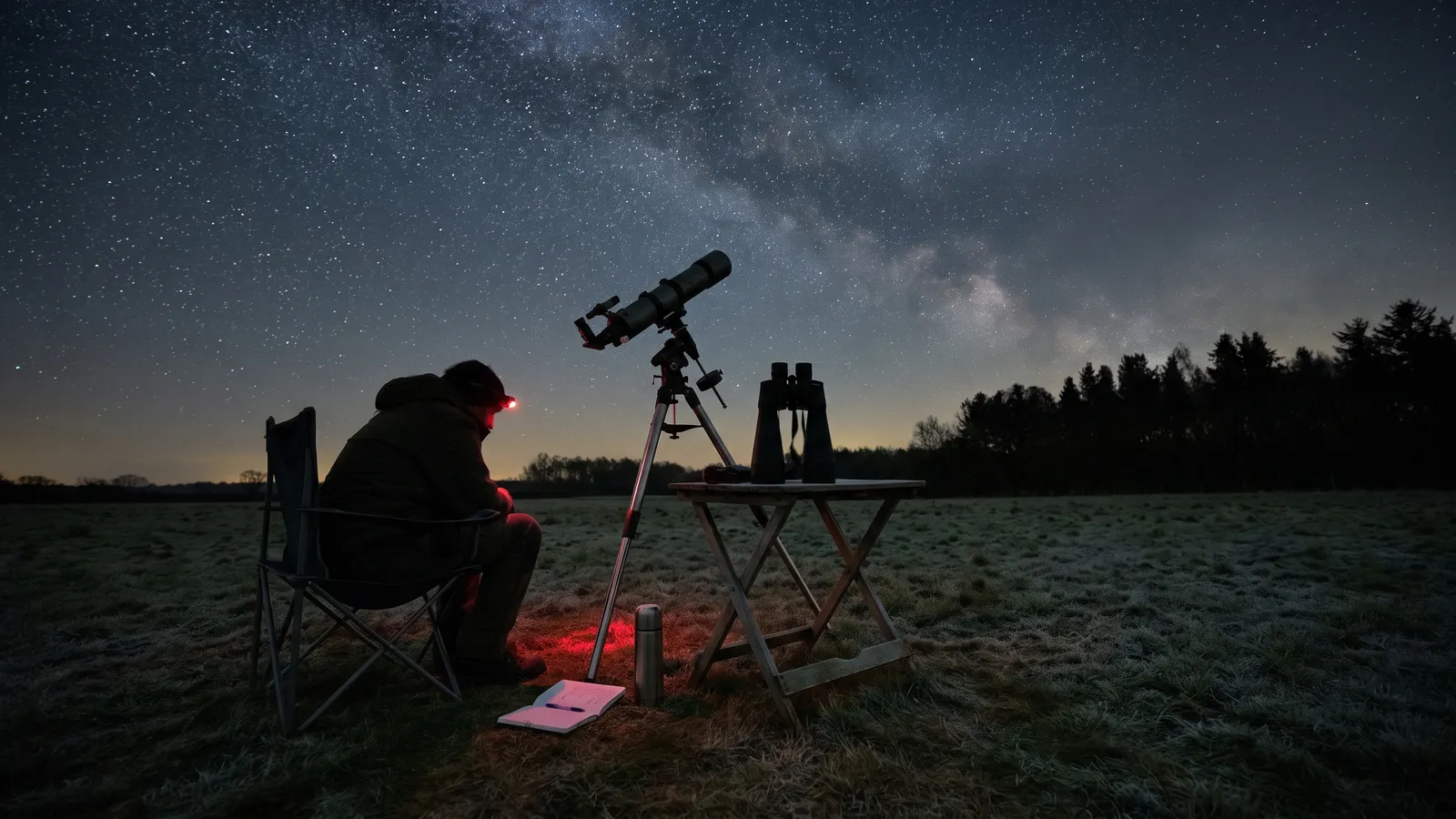
Everyone who gets into this eventually has the same 2am realisation: they are standing in a field, staring at a light they cannot identify, holding nothing but a phone that has just taken forty photographs of a smeared orange blob. The light does something interesting. The phone captures a slightly larger smeared orange blob. This is the moment most "evidence" is born, and it is why most evidence is useless.
So this is the kit we'd actually recommend — the stuff that turns "I saw something" into "here's what it was," which, be warned, is usually a planet, a Starlink train, or a bloke's drone. That's not a disappointment. Ruling things out is the job. The good gear is the gear that helps you rule things out honestly.
Some links below are Amazon affiliate links. As an Amazon Associate, UAP Times earns from qualifying purchases — at no extra cost to you. We only list kit we'd genuinely take out ourselves, and we'd tell you if we wouldn't.
Start here: a decent pair of binoculars
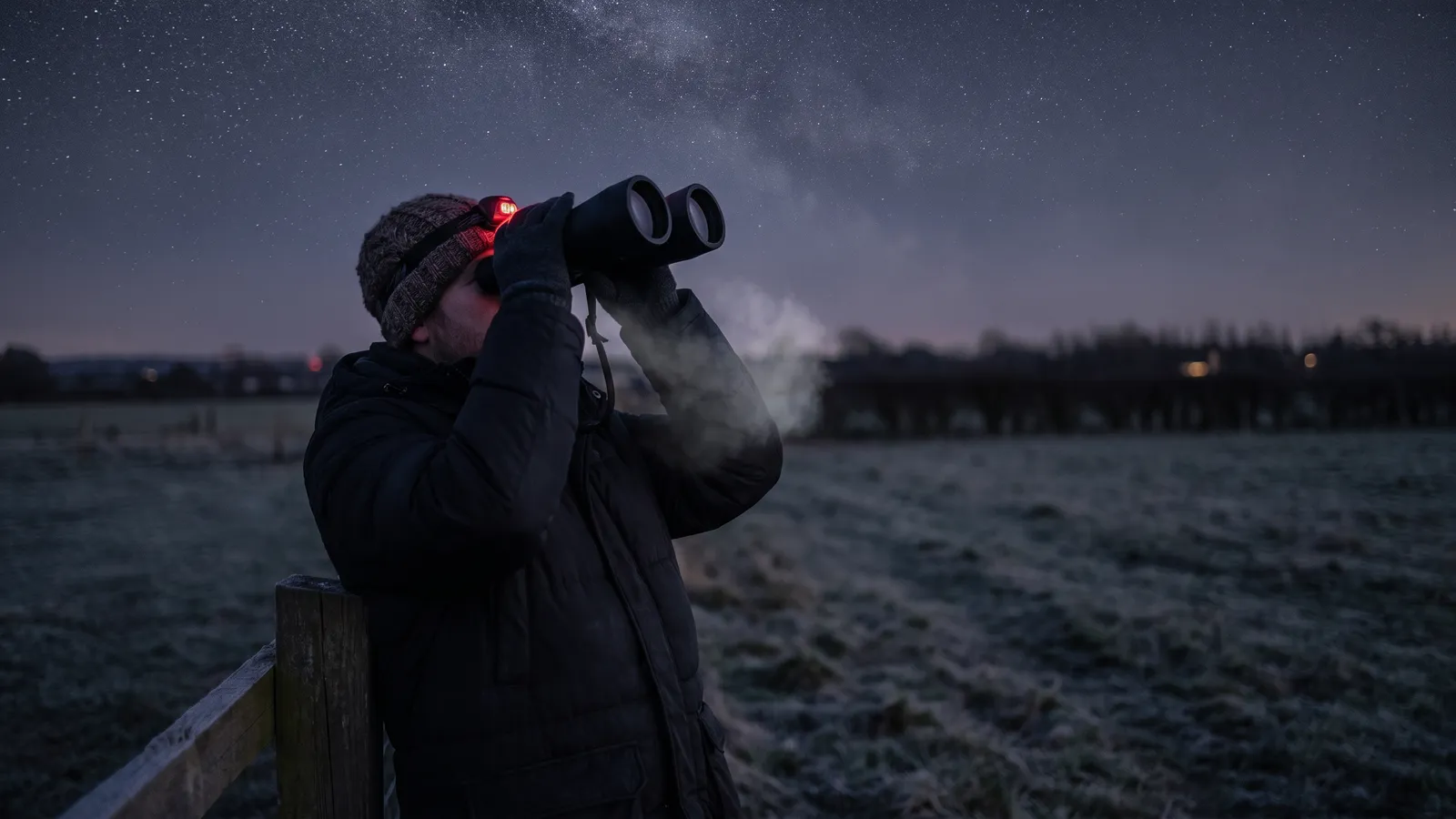
Before anything else, buy binoculars. They do more per pound than any other thing on this list, and a surprising number of "UAP" reports resolve into "oh, it's Jupiter" the moment you put proper glass on them.
The standard first buy is the Celestron SkyMaster 15x70 — big 70mm lenses that pull in enough light to show you the moons of Jupiter and the smudge of a distant galaxy, for roughly the price of a nice dinner. They're heavy enough that you'll want to brace them against something, which brings us to the upgrade: the Canon 10x30 IS, image-stabilised binoculars that cancel out the hand-wobble at the press of a button. Less magnification, far less shake, and genuinely a revelation the first time you use them.
The one that films the dot: a superzoom camera
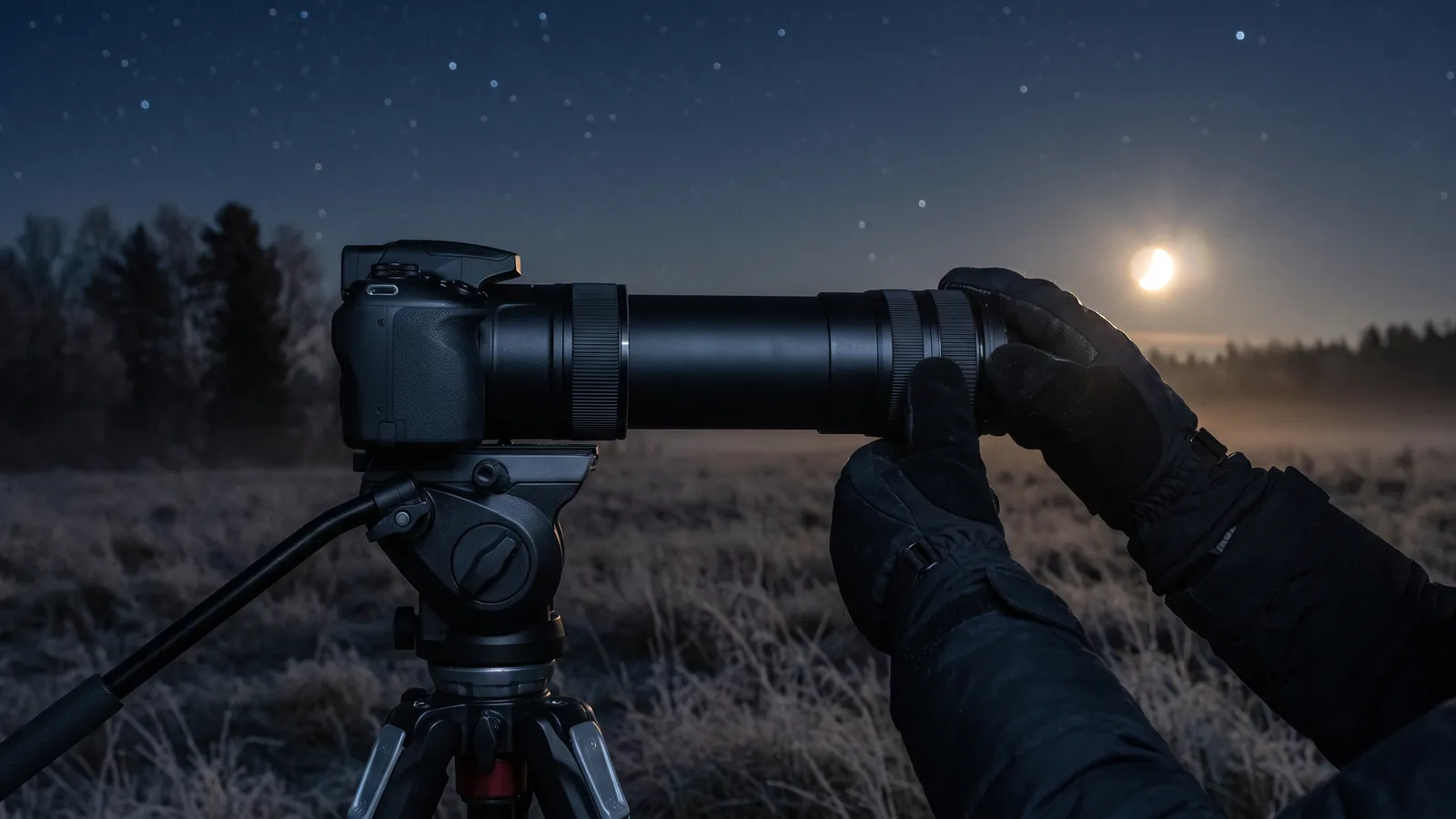
Your phone will never do this. Phone sensors are tiny and their "zoom" is mostly software guesswork, which is exactly why every viral UFO clip looks like a jellyfish in a snowstorm.
The cult favourite is the Nikon Coolpix P1000 — an absurd 125x optical zoom bridge camera that people genuinely use to fill the frame with the Moon's craters handheld. Point it at a distant light and you'll often find it's a helicopter with a landing lamp, which is a far more satisfying result than another blurry orb. If the P1000 is overkill for you, its smaller sibling the Nikon Coolpix P950 does 83x for noticeably less. Either one, on a cheap tripod, will out-shoot 99% of the "footage" you've ever seen shared online.
- Nikon Coolpix P1000 — the 125x zoom people film the Moon with →
- Nikon Coolpix P950 — the smaller, cheaper 83x version →
Seeing in the dark: night vision
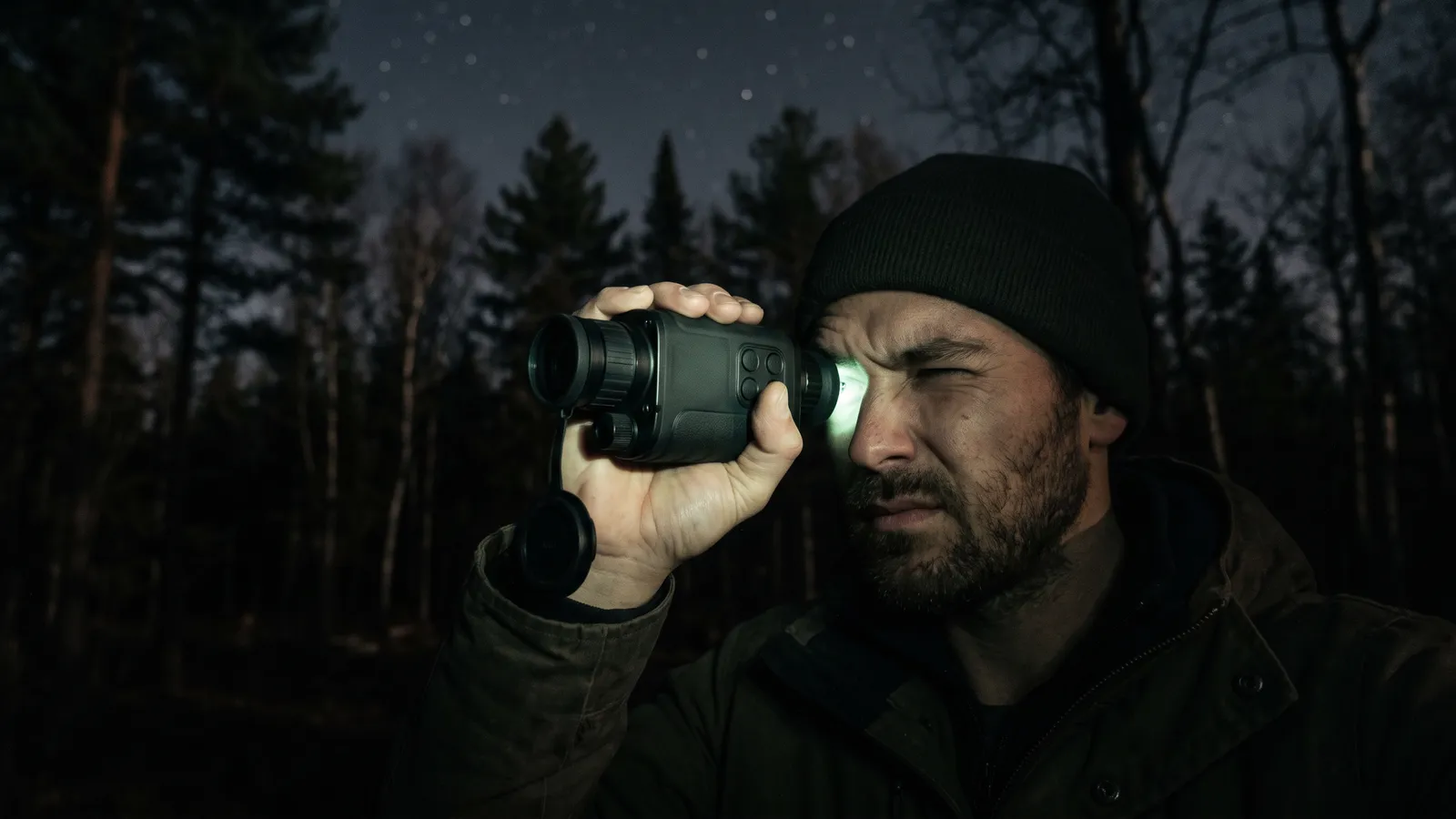
Most of the sky's traffic happens after your eyes have given up. A night vision monocular lets you scan a dark sky and pick out satellites, meteors and the occasional genuinely-hard-to-explain track that your naked eye would sail straight past.
Modern digital units are a fraction of what they cost a few years ago and are more than good enough for spotting and following. Keep expectations sensible — you're identifying movement and shape, not reading number plates — but for the price, it's the most fun single piece of kit in the bag.
The grown-up option: a telescope you'll actually use
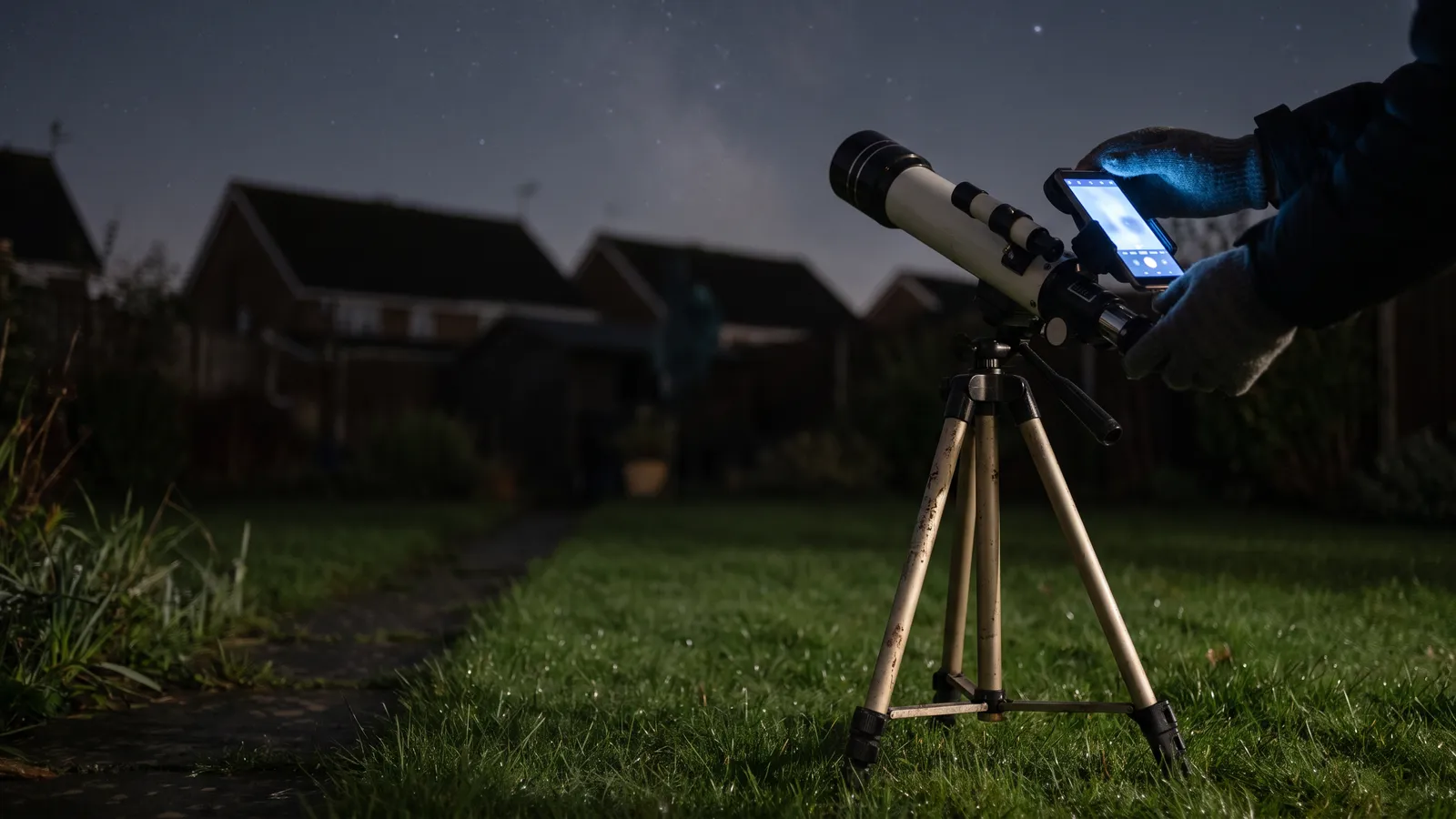
Most beginner telescopes end up in the loft because aiming them is miserable. The Celestron StarSense Explorer range fixes exactly that: it uses your phone to plate-solve the sky and literally walks you to the target with on-screen arrows. It's the difference between "I found Saturn" and "I gave up and went inside."
It won't help much with fast-moving objects — that's binocular and camera territory — but for turning a clear night into an actual observing session, it's the one that gets used rather than shelved.
Listen, don't just look: an airband scanner
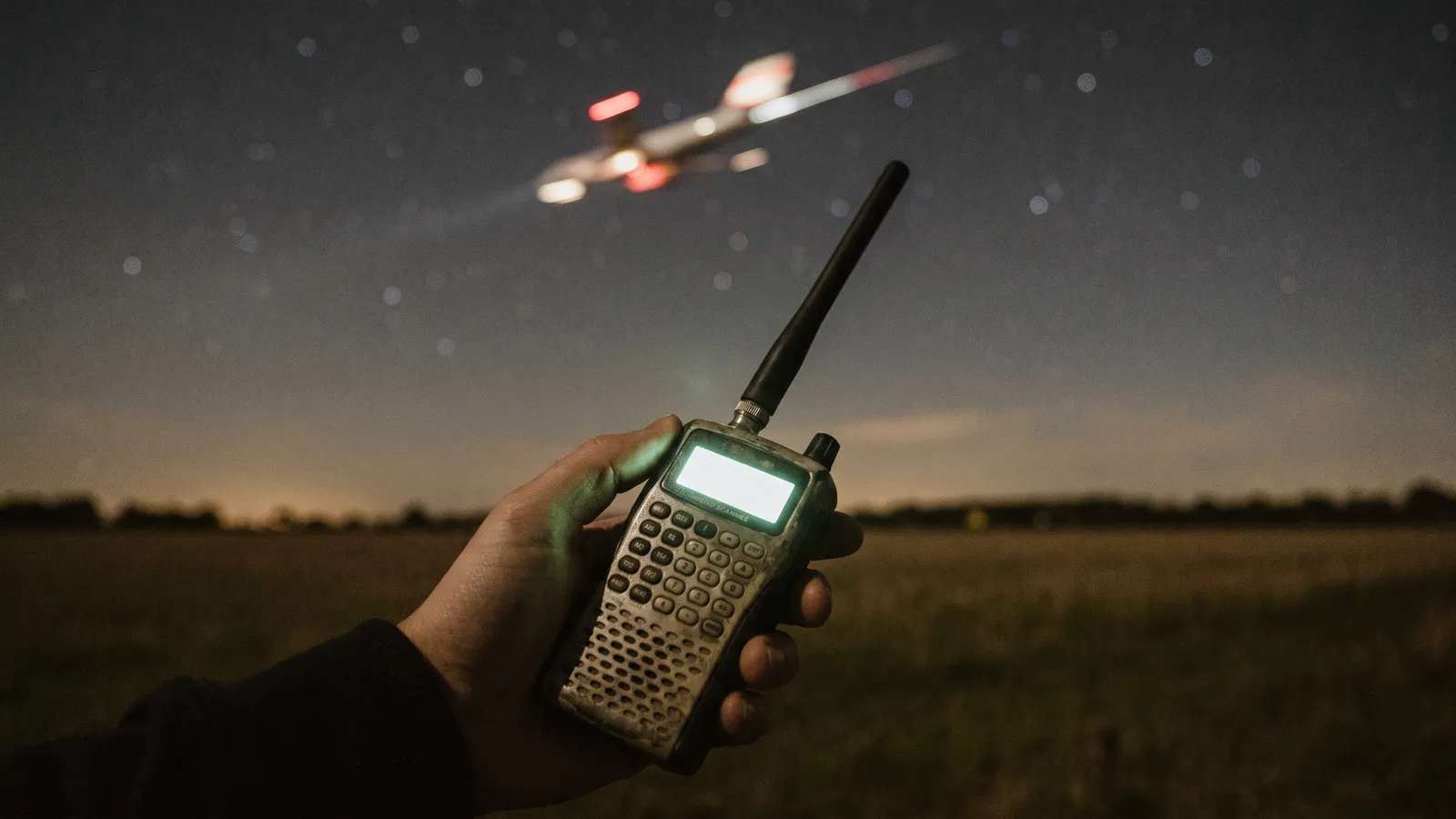
Here's the trick that separates the careful observer from the excitable one. A huge fraction of unexplained lights are aircraft, and aircraft are chatty. A handheld airband/VHF scanner like the Uniden Bearcat lets you hear the air traffic in your patch of sky — so when three lights hold formation overhead, you can often just listen to them being a training flight.
It's the least glamorous item here and probably the one that will debunk the most of your own sightings. That's a feature.
The unglamorous stuff that actually matters
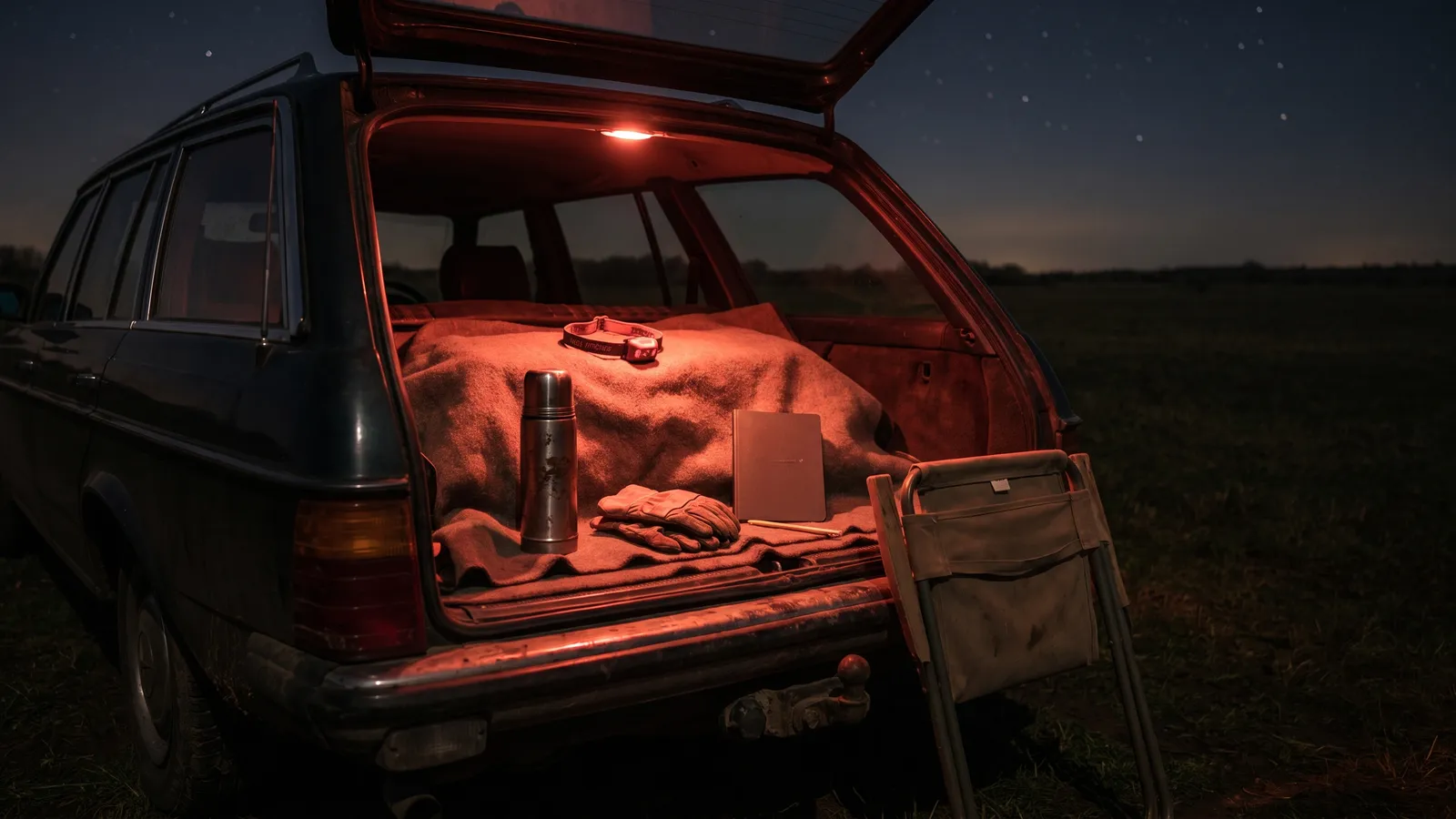
Nobody films a documentary about the accessories, but these are what separate a usable observation from a wasted night.
A red-light head torch keeps your night vision intact — white light blinds you for twenty minutes every time you check your gear. A weatherproof Rite in the Rain notebook and a pen let you log the time, direction, elevation and duration on the spot, because a written timestamp is worth ten "I think it was around midnight-ish" memories. And yes — a reclining camp chair and a flask are legitimate equipment. Cold, cramped, miserable observers stop paying attention and go home early. Comfort is how you're still watching at 3am when the interesting thing finally happens.
- Red-light head torch — save your night vision →
- Rite in the Rain field notebook — log it before you forget it →
- Reclining camp chair — genuinely part of the kit →
- Insulated flask — the difference between staying and going home →
The bookshelf

Gear helps you observe; reading helps you interpret. Three we'd put in any newcomer's hands: Leslie Kean's UFOs: Generals, Pilots and Government Officials Go on the Record for the credible-witness case; Garrett Graff's UFO for the sober, sceptical history; and D.W. Pasulka's American Cosmic for the stranger cultural angle. Read all three and you'll be harder to fool — in both directions.
- Leslie Kean — UFOs (the on-the-record case) →
- Garrett Graff — UFO (the sober history) →
- D.W. Pasulka — American Cosmic →
The UAP Times take
The best kit on this list isn't the night vision or the 125x zoom — it's the notebook and the scanner, because they're the tools that make you honest. Anyone can buy gear that captures a light in the sky. The observers worth listening to are the ones equipped to work out what it wasn't before they get excited about what it might be. Start with binoculars, add a way to record and a way to rule things out, and you'll already be doing better science than most of what goes viral.
Further reading: for what happens when one person in a crowd of thousands actually had a telescope, see the Phoenix Lights; for the same problem attacked with a proper instrument budget, the Galileo Project's distance problem. Know what you're looking at with the field guide to craft types.