
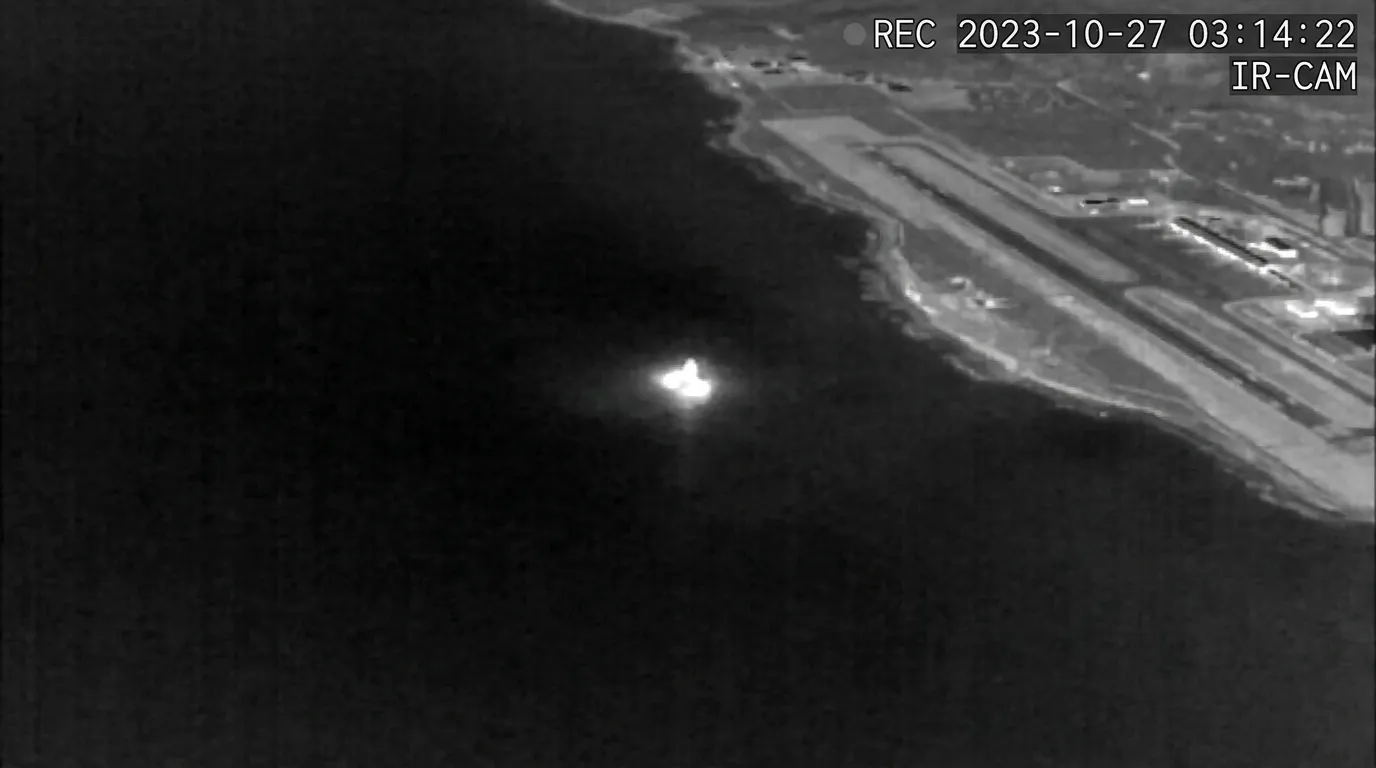
Most UFO videos are a smear of pixels shot on a phone by someone who was already excited. The Aguadilla video is a different animal. It was recorded by a US government aircraft, on a calibrated thermal-imaging system, by an operator whose job is to track things over water — and it runs for nearly three minutes, showing a small object doing things that are genuinely hard to reconcile with anything ordinary. It is also, for exactly those reasons, one of the most fiercely disputed cases of the modern era. Both of those things are true, and a fair account has to hold them together.
A routine flight and an unexpected target
On the night of 25 April 2013, at around 9:20pm local time, a Department of Homeland Security Customs and Border Protection aircraft — a DHC-8 twin-turboprop fitted with a Wescam MX-15D electro-optical and infrared surveillance turret — was operating near Rafael Hernández Airport in Aguadilla, on the north-west coast of Puerto Rico. Its thermal camera picked up a small object, low and warm against the cooler ground and sea, moving across the landscape.
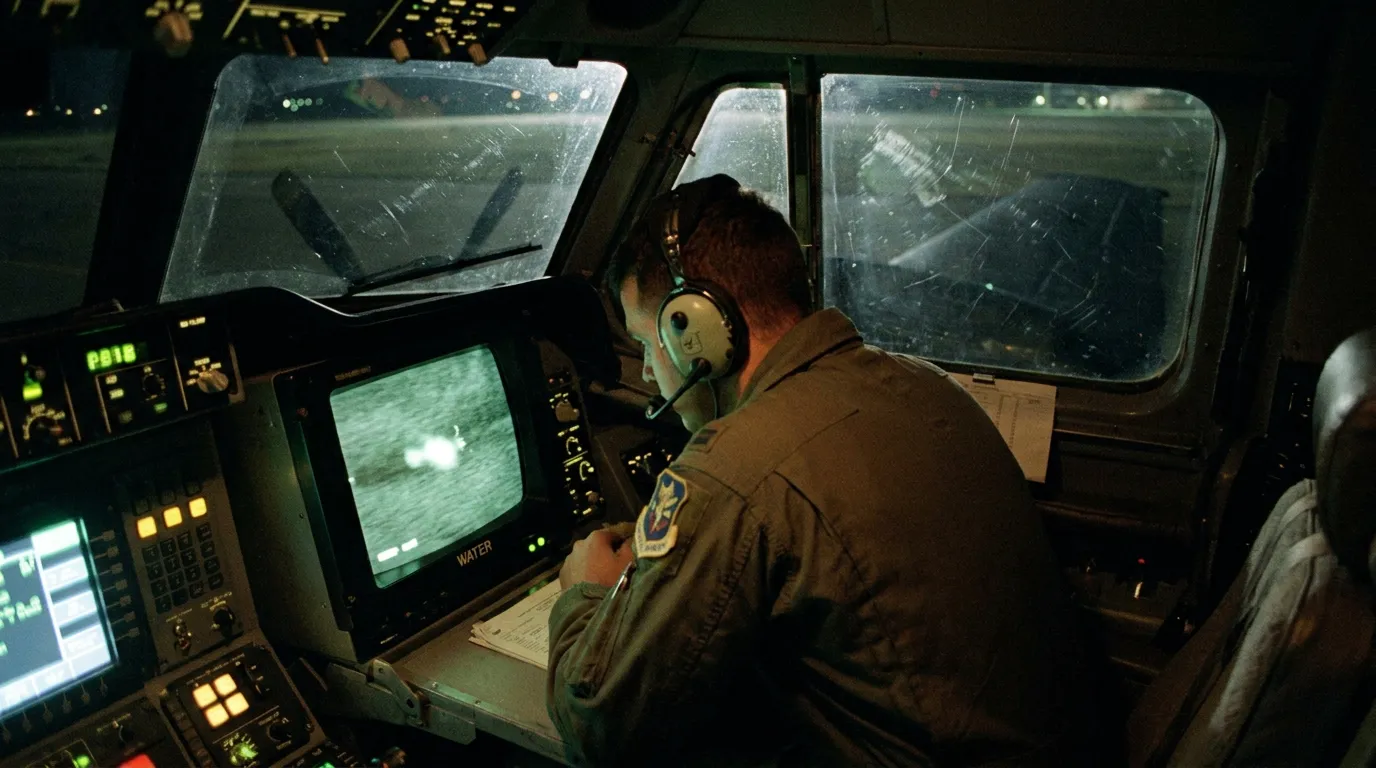
The crew tracked it for roughly three minutes. Because the recording is thermal, it is not a lights-in-the-sky video in the usual sense: the object registers as a heat signature, and the camera’s own data — its angle, its zoom, the aircraft’s position — lets analysts attempt something rare in this field, an actual reconstruction of where the object was and how fast it moved.
What the footage appears to show
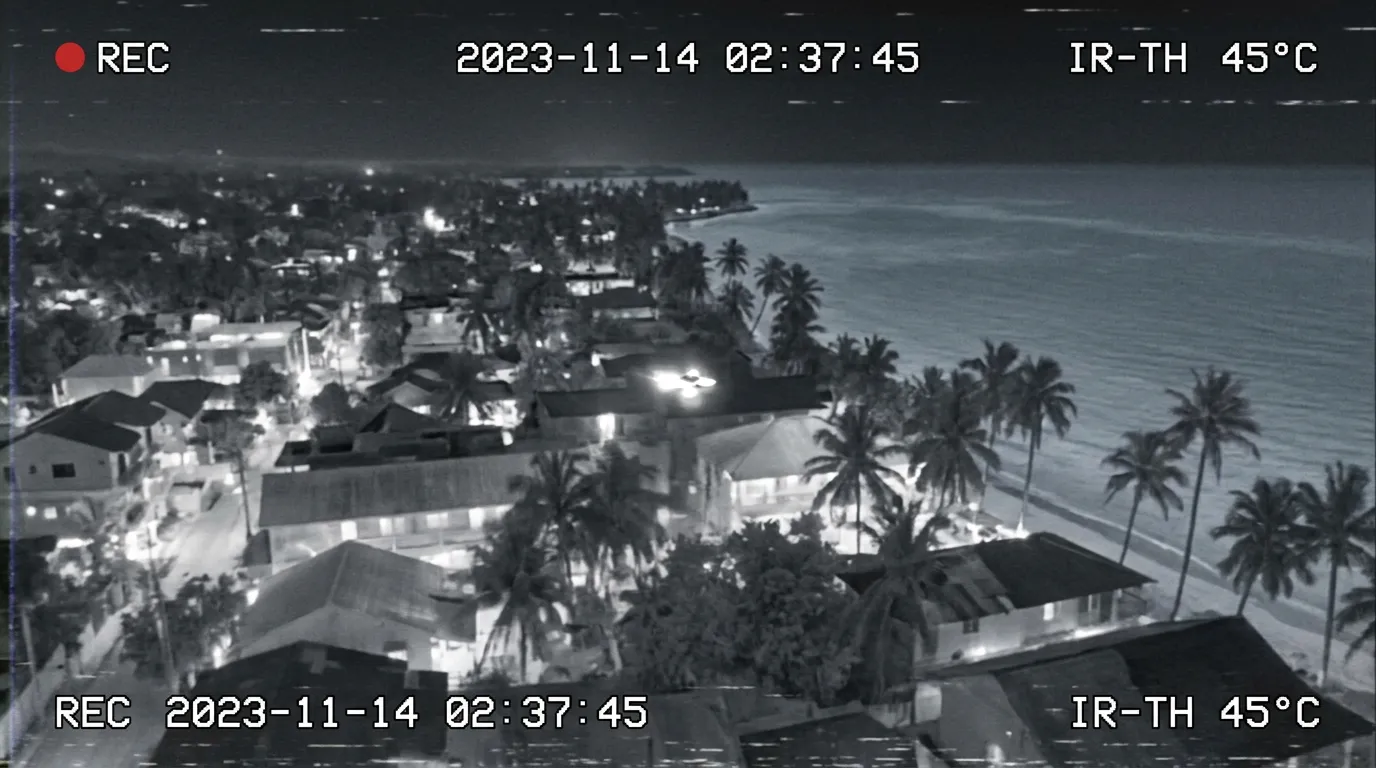
The object crosses over the town and the coastline and then, strikingly, appears to fly straight into the sea without slowing — and to keep moving beneath or across the water before emerging again.
Then comes the detail that made the case famous: near the end of the footage, the single object appears to split into two, the two now flying together where a moment before there had been one.
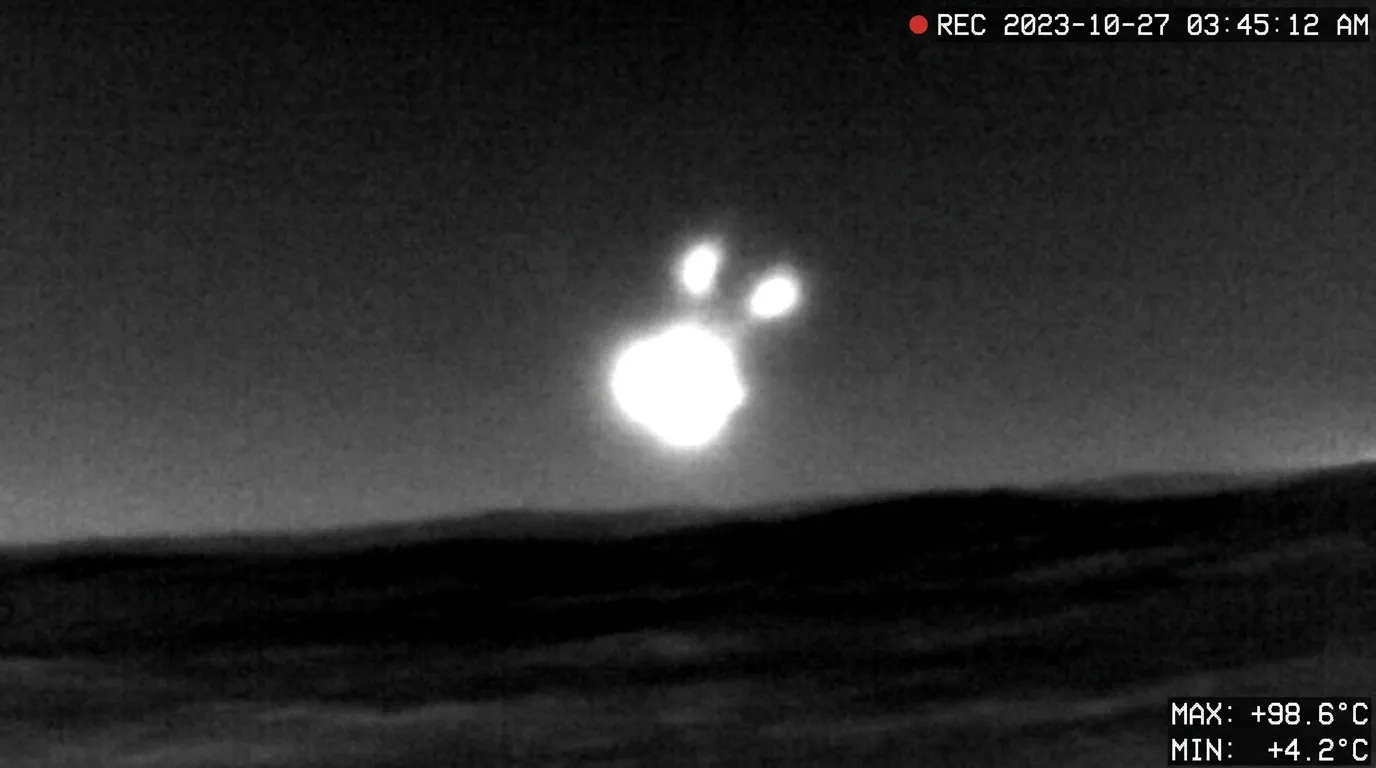
None of that description is contested. Everybody arguing about Aguadilla is arguing about the same three minutes of imagery, frame for frame. The fight is entirely over what those pixels correspond to in the real world.
How the video got out
Provenance is where Aguadilla is both stronger and weaker than its reputation. Stronger, because the footage is unambiguously US government sensor product with intact metadata, not an anonymous clip. Weaker, because it was never released through an official channel.
The video leaked. In September 2014 the researcher John Greenewald, who runs the FOIA archive The Black Vault, received a letter from someone claiming a connection to the incident, along with a high-resolution copy of the footage. The Scientific Coalition for UAP Studies, which went on to analyse it, has been candid that its source was a secondary witness — an acquaintance of the people directly involved — rather than anyone who was aboard the aircraft.
That matters more than enthusiasts usually allow. There is no signed custody chain, no CBP incident report in the public domain, no crew interview, no statement from the sensor operator explaining what he thought he was tracking at the time. The strongest single argument for the video’s authenticity is not testimonial but technical: analysts were able to match the camera metadata against independent FAA radar data for the area and time, which is hard to fake and easy to check.
So the video is almost certainly real footage of something real. What it is footage of is a separate question, and no amount of provenance work answers it.
What the Scientific Coalition actually claimed
The SCU’s 2015 report — authored by Robert Powell, Morgan Beall, Larry Cates, Richard Hoffman, Douglas Chaviano and colleagues, and running to over 160 pages after some two years and a reported thousand hours of work — is the most detailed civilian analysis of any UAP video, and it is worth stating its claims precisely rather than in the usual shorthand.
Working from the turret’s recorded pointing angles and the aircraft’s position, the team reconstructed the object’s track and derived numbers. They put its length at roughly three to five feet, its airspeed varying between about 40 and 120 miles per hour with a median near 80, and — the headline claim — a speed through the water reaching as high as 95mph, averaging around 83. It carried no navigation lights. It entered the water, they argued, with no significant deceleration and no visible splash, and later divided into two objects that continued together.
Their conclusion was carefully worded: unknown origin. Not a craft, not a visitor — an object they could not reconcile with a bird, a balloon, a lantern, an aircraft or a weather phenomenon.
The lantern rebuttal
The sceptical counter-case is specific and serious, which is what makes Aguadilla such a good case to think with. Investigators — most prominently Mick West, whose Metabunk thread on the footage is the standing reference — noted that celebrations in the area release paper hot-air lanterns, and proposed that the “object” was in fact a pair of them, drifting on the wind.
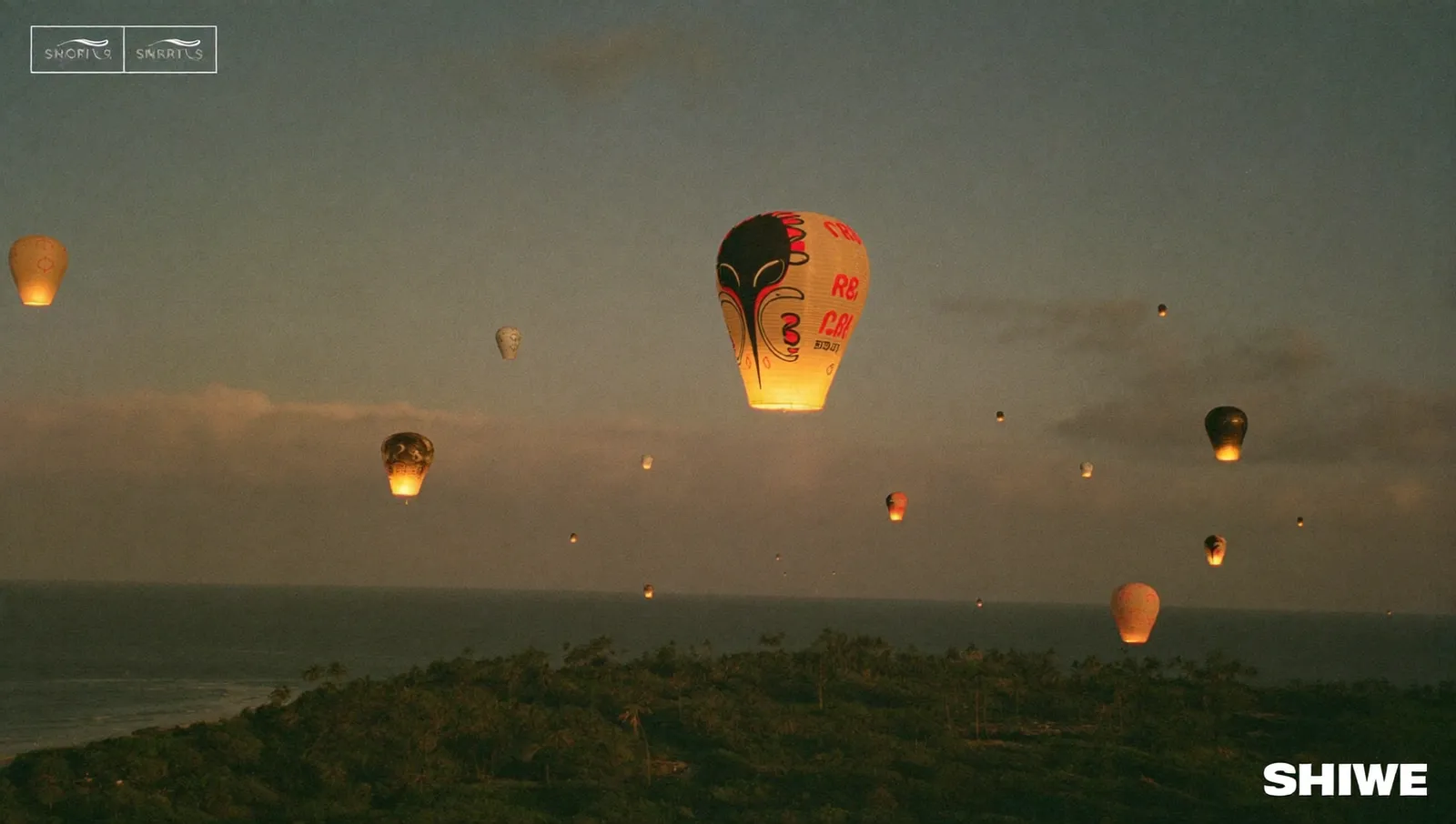
On this reading, the warm signature is the lantern flame; the apparent high speed is parallax, the object’s motion against a foreground rushing past beneath a moving aircraft; the “flight into the sea” is the camera’s perspective flattening a lantern drifting low over the coast against a reflective surface; and the dramatic split is simply two lanterns, one occulting the other, drifting far enough apart to resolve as a pair. West’s stabilised reconstruction, he argues, shows motion relative to the ground exactly consistent with something drifting at a constant wind speed.
Powell replied for the SCU; West published a counter-rebuttal; the exchange has continued, in good faith and at length, for a decade. That is more than most UAP cases ever get.
It is a genuinely economical explanation, and lanterns are warm, slow, wind-borne, and exactly the sort of thing that fools an infrared camera lacking depth perception. SCU’s rejoinder is that their reconstructed speeds and the object’s behaviour over the water don’t fit a lantern’s lazy drift — and that a paper lantern that enters the sea stops being a heat source rather than continuing at 80mph.
AARO’s verdict, and why it did not close the case
For years Aguadilla was a purely civilian argument. That changed when the Pentagon’s All-domain Anomaly Resolution Office took the case on. AARO briefed material on it to the Senate Armed Services Committee in November 2024 and subsequently published a Puerto Rico case resolution report, concluding that the objects were most likely sky lanterns or similar balloons moving at wind speed.
AARO’s reasoning tracked the sceptical analysis closely: that the apparent high-speed flight, the apparent split and the apparent water entry are all products of parallax, sensor limitations and the way an infrared camera renders a warm object against backgrounds of shifting temperature. It is, in other words, an argument that the anomalies live in the imaging rather than in the object.
The SCU has not accepted it. The group submitted a list of technical questions to AARO about the lantern hypothesis — the sort of questions any referee would ask of a physical reconstruction — and AARO acknowledged the inquiry while declining to answer, saying it might address them in a future follow-up.
That is an unsatisfying place for the record to sit, and the dissatisfaction is not confined to believers. A resolution that cannot be interrogated is an assertion with a government letterhead. AARO’s assessment carries real weight — it had access the civilians did not — but a case is only closed when the working is shown.
The distance problem
Underneath every disagreement about Aguadilla is one unglamorous piece of geometry.
A single camera measures angles, not distances. A small object close to the lens and a large object far away produce identical pixels. Every derived quantity that makes Aguadilla remarkable — size, speed, acceleration, whether it entered the water at all — depends on an assumed range, and the video does not contain one. The SCU inferred range from the geometry of the aircraft’s track and the object’s apparent motion; the sceptics infer a different range from wind data and lantern behaviour. Both are reasoning honestly from the same footage to opposite conclusions, because the footage under-determines the answer.
This is not a quirk of one case. It is the structural problem of the entire field, and it is why the serious end of UAP science has moved towards instrumented, multi-station observation — the approach behind the Galileo Project’s push for triangulated measurement. Two calibrated cameras a known distance apart would have resolved Aguadilla in an afternoon. One camera, however good, cannot.
There is also a modern standards point. A case built on a leaked file with no crew statement and no chain of custody would not survive the evidentiary bar that AARO-era reporting is meant to impose. That is a criticism of how the video reached us, not of the people who analysed it — but it explains why Aguadilla is simultaneously the best-analysed civilian video in the field and one that no institution can formally rely upon.
The UAP Times take
Aguadilla earns a Credible rating, four out of five on our scale, and it earns it on provenance more than on certainty. This is not a random clip: it is official government sensor footage, with metadata, corroborated against independent radar, and analysed in detail by serious people on both sides. That alone puts it in a different tier from the endless anonymous phone videos.
Our reading is that Aguadilla is honestly unresolved, and that the honesty matters. The lantern explanation is strong, is now the official position, and may well be correct; the SCU analysis raises real questions that neither West nor AARO has fully answered in public. Anyone claiming this case is settled — in either direction — is telling you about their priors rather than about the evidence.
What the case demonstrates is less “aliens over Puerto Rico” than something more useful: that even with good sensor data, a single monocular thermal feed is a treacherous thing to reason from, because it throws away distance — and distance is where the whole argument lives. Aguadilla is a case worth studying precisely because it shows how far careful people can get, and exactly where they run out of road.
Further reading: for the military sensor case that set the modern standard, see The Tic Tac at 25. For why one camera can never settle an argument like this, see the triangulation problem. For what happens when a maritime case arrives with no sensor detail at all, see the hundred-object Navy event off Virginia. The Aguadilla object was most like a sphere / orb; it’s on the sightings map.
Source: DHS/CBP thermal video; Scientific Coalition for UAP Studies (SCU) analysis; sceptical lantern re-analyses
Follow the file
Every new dispatch from the UAP desk, in your inbox. Sourced, sceptical, and no more than one email a week.