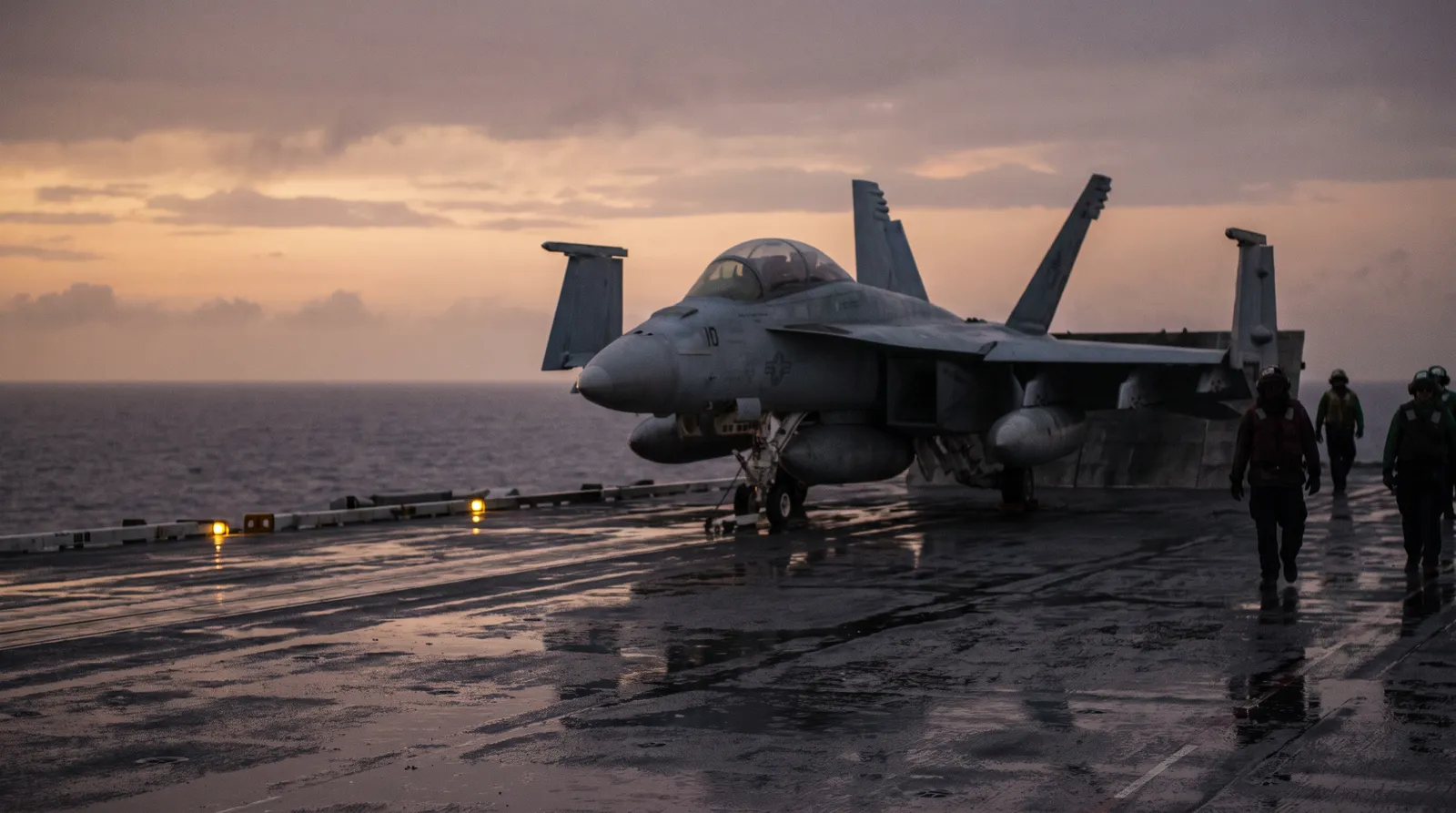
Most UFO stories give you one thing: a witness, or a light, or a blurry frame. The Tic Tac gives you a trained fighter pilot, a second pilot in the air alongside him, a warship’s radar that had been logging the same intruders for a week, a gun-camera video the Pentagon later confirmed was real, a paper trail that has been slowly surfacing through Freedom of Information requests ever since, and a squadron’s worth of sailors who all came home with the same story. That is an unusual amount of corroboration for a case whose central object looked, by the pilots’ own account, like a breath mint.
On 14 November 2004, roughly 100 miles south-west of San Diego, aircrew from the USS Nimitz carrier strike group were vectored onto something their strike group could not identify and, more than twenty years on, still cannot. The encounter is now the founding document of the modern UAP conversation — the case that dragged the subject from late-night radio onto the front page of the New York Times, into the Pentagon’s press releases and, eventually, into a congressional hearing room. It has been retold so many times that the retellings have developed their own weather system.
This is the full version: what actually happened, hour by hour; who saw what, from where, on which sensor; which parts of the story are corroborated by more than one independent source; which parts rest on a single memory; and which parts grew later. It is a long read, because the case deserves one. Pour a drink.
The stage: a strike group rehearsing for war
Context matters, because the Tic Tac did not appear over a lone ship in the middle of nowhere. It appeared inside one of the most heavily instrumented patches of airspace on Earth.
In November 2004, Carrier Strike Group 11 — the aircraft carrier USS Nimitz, the guided-missile cruiser USS Princeton and their escorts — was working up off the coast of southern California, in the Navy’s SOCAL range complex around San Clemente Island. This was COMPTUEX, the composite training exercise a strike group runs before an operational deployment; the group was bound for the Persian Gulf early in the new year. Work-ups are precisely the wrong time and place for an intruder to go unnoticed: every sensor is manned, every operator is being graded, and the whole point of the exercise is to find things and shoot them down on paper.
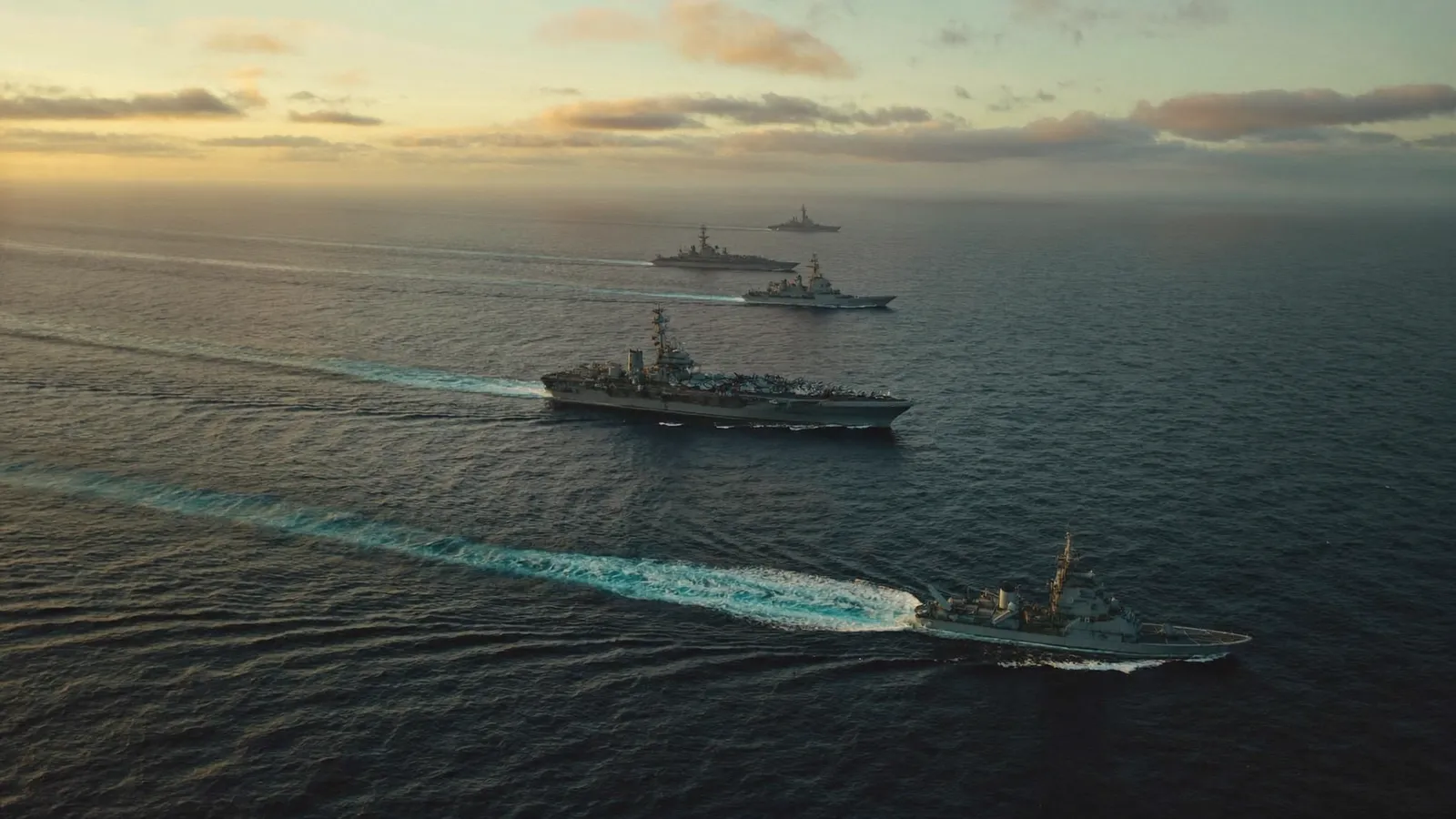
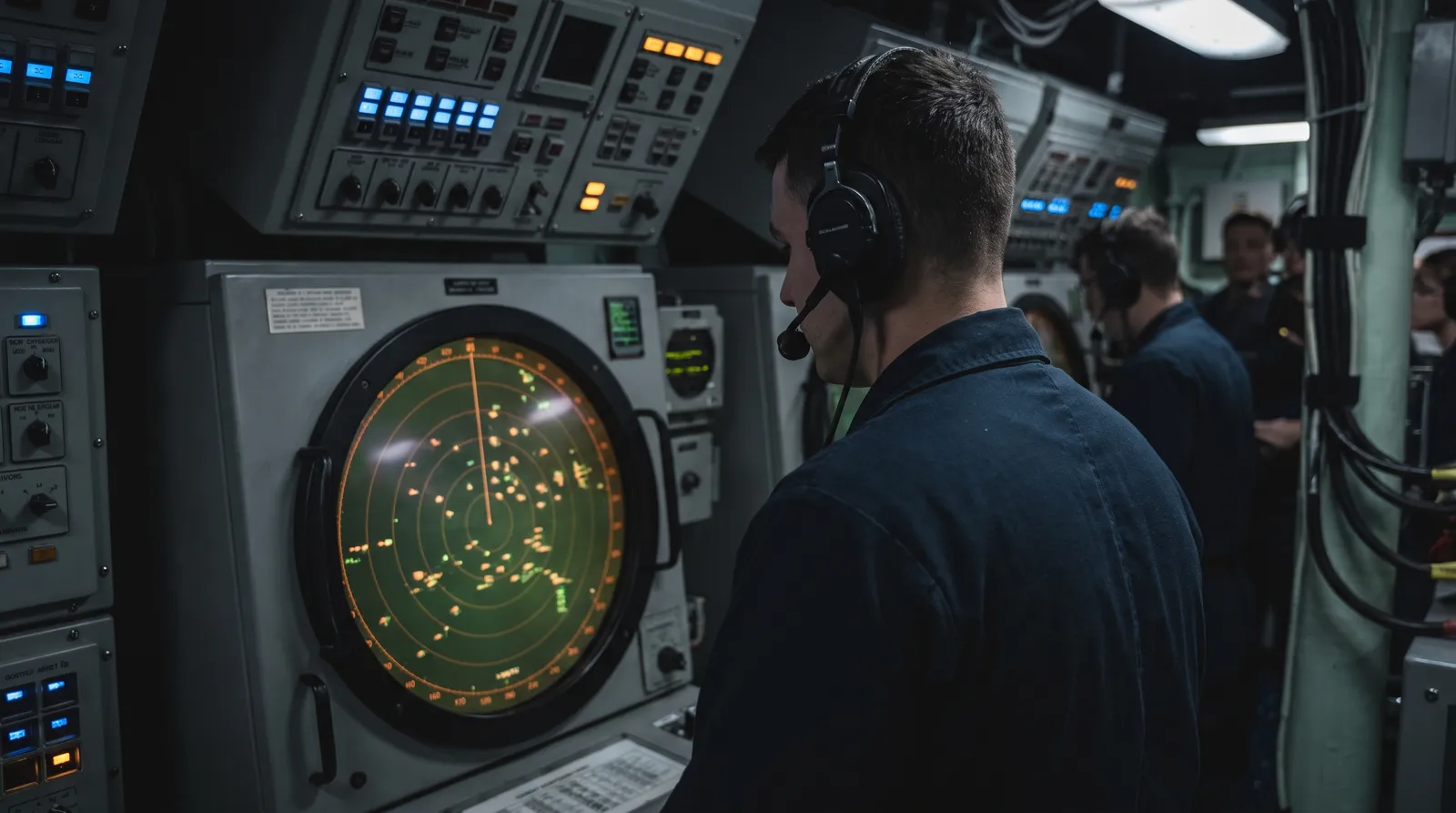
Two details about the cast are worth fixing in mind before anything happens. First, the Princeton is an Aegis cruiser, and her SPY-1B phased-array radar is one of the most capable air-search systems afloat — a system designed to track hundreds of contacts at once and hand off targets for missile engagements. Second, the man watching that radar was Senior Chief Kevin Day, an air-intercept controller with more than twenty years of experience reading Aegis scopes, including tours on the USS Vincennes and USS Chosin. When the case’s critics and defenders argue about what the radar “really” showed, they are arguing about the professional judgement of a TOPGUN-qualified intercept controller at the top of his trade.
The witnesses to what followed were not hobbyists on a beach. They were the people the United States pays to know what is in the sky.
A week of impossible returns
The Tic Tac did not begin with the pilots. It began, days earlier, on a radar screen — and stayed there long enough to become a nuisance.
From around 10 November, Day and his team began picking up clusters of slow, high contacts that behaved like nothing in the inventory. By his account — given consistently across interviews since 2019, including to Tim McMillan for Popular Mechanics — the tracks appeared in groups of five to ten, south of Catalina and San Clemente Islands, loitering above 80,000 feet: higher than commercial traffic, higher than fighters, up where almost nothing flies. Then, at intervals, they would drop to around 28,000 feet and drift south at a stately 100 knots or so — far too slow for jets, far too high and orderly for birds or weather.
The crew’s first assumption was the sensible one: the radar was wrong. The Princeton had recently had her combat systems upgraded, and a fresh install throwing phantom tracks is vastly more common than a fleet of anomalous craft. So they did the unglamorous thing. Petty Officer Gary Voorhis, a fire controlman who maintained the ship’s Aegis systems, has said the crew recalibrated the SPY-1 to chase out the ghosts. The returns sharpened. The system, as far as its keepers could tell, was healthy — and the objects were still there.
Day took to calling them “AAVs” — anomalous aerial vehicles, a term that would later surface, intriguingly, in an internal analysis of the incident. For the better part of a week he watched them come and go over the same patch of ocean, logged and unexplained, while the exercise carried on around them. He has said he eventually went to the Princeton’s captain and recommended intercepting one, partly on air-safety grounds: the training ranges were about to fill with aircraft, and something unidentified was parked in the middle of them.
That is the part of the case that gets the least attention and arguably deserves the most. Before a single pilot laid eyes on anything, a professional radar crew on a warship had spent days convinced that real objects were doing impossible things over their strike group — and had done the boring, load-bearing work of ruling out their own equipment first. Whatever the Tic Tac was, it was not a five-minute wonder. It had a routine.
The day, hour by hour
What follows is the sequence of 14 November 2004 as the witnesses describe it, and then the long tail of the case’s afterlife. Exact clock times were never made public and the underlying logs remain unreleased, so times of day are approximate — reconstructed from aircrew and radar-operator testimony. The order of events, however, is consistent across every first-hand account.
Part one — the week before
The USS Princeton's SPY-1 radar begins tracking groups of slow, anomalous contacts near San Clemente Island — descending from above 80,000 ft to around 28,000 ft. The crew suspect faulty equipment and recalibrate. The tracks remain.
The returns recur daily over the same stretch of ocean. Senior Chief Kevin Day logs them as "anomalous aerial vehicles" and recommends an intercept, partly on air-safety grounds.
Part two — 14 November 2004
With the objects back on the scope, the Princeton cancels a training intercept and gives two airborne F/A-18Fs a real-world vector. Cmdr David Fravor and Lt Alex Dietrich, each with a weapons systems officer, head for the merge plot.
The jets find no airborne radar contact — but spot a churning oval of white water below, roughly the size of an airliner, and a white, wingless, 40-ft object manoeuvring erratically just above the sea.
Fravor descends in a spiral. The object mirrors him, rising to meet his jet, then accelerates away and vanishes from sight in under a second. Dietrich and both back-seaters watch it happen.
The Princeton reacquires a matching contact at the flight's pre-briefed CAP point — some 60 miles away. The whitewater is gone when the crews look back down.
A second jet launches with orders to find the contact. Weapons systems officer Lt Chad Underwood records roughly 76 seconds of it on the ATFLIR targeting pod — the clip the world now knows as "FLIR1". Near the end, the object darts out of frame.
The aircrews debrief. There is laughter in the ready room, some pointed jokes, and — as far as any of them knew at the time — no formal investigation. The strike group deploys to the Gulf weeks later.
Part three — the long tail
FLIR1 quietly leaks onto the internet. The same year, at Senator Harry Reid's urging, the Pentagon stands up the secret AATIP/AAWSAP effort that will later analyse the case.
The New York Times reveals AATIP and publishes FLIR1. Fravor goes on the record. The modern UAP era begins.
Navy spokesman Joseph Gradisher confirms the leaked videos are real and that the Navy designates the objects "unidentified aerial phenomena".
The Department of Defense officially releases FLIR1, Gimbal and GoFast, stating the phenomena "remain characterized as 'unidentified'".
The ODNI's preliminary assessment counts 144 military UAP reports since 2004 and resolves exactly one. The Nimitz encounter anchors the dataset's start date.
Fravor testifies under oath before the House Oversight Committee, alongside Ryan Graves and David Grusch, that the Tic Tac's performance exceeded anything the US had then — or has now.
The Navy releases heavily redacted "range fouler" reports covering 2004–2021 — including a contemporaneous report for the Tic Tac intercept itself, the first primary document of the day to surface.
The vector: “we’ve got a real-world situation”
On the morning of the 14th, the objects were back, and the Princeton finally had assets to spend on them. Two F/A-18F Super Hornets from strike fighter squadron VFA-41, the “Black Aces”, were airborne for a routine two-versus-two training intercept. The Princeton’s controller cancelled the exercise and passed a real-world tasking — words to the effect that this was no longer practice.
In the lead jet was Commander David Fravor, the squadron’s commanding officer, a graduate of the Navy’s TOPGUN programme with some 16 years in fighters at that point — about as senior and unflappable a witness as the service can produce. On his wing was then-Lieutenant Alex Dietrich, who would retire a lieutenant commander. Each two-seat jet carried a weapons systems officer in the back, so four sets of trained eyes in total. Three of the four have since spoken publicly — Fravor and Dietrich at length and under their own names, WSO Jim Slaight more briefly; the fourth has stayed anonymous, which is their right and changes nothing material.
It is worth pausing on Dietrich, because the case is routinely compressed into “the Fravor story” and it is not. She has described the events in her own words since 2021 — to CBS’s 60 Minutes, among others — carefully, reluctantly, and with visible discomfort at the circus. Her account matches Fravor’s in every load-bearing particular while being scrupulous about the limits of what she saw. Witnesses who under-claim are the ones you want.
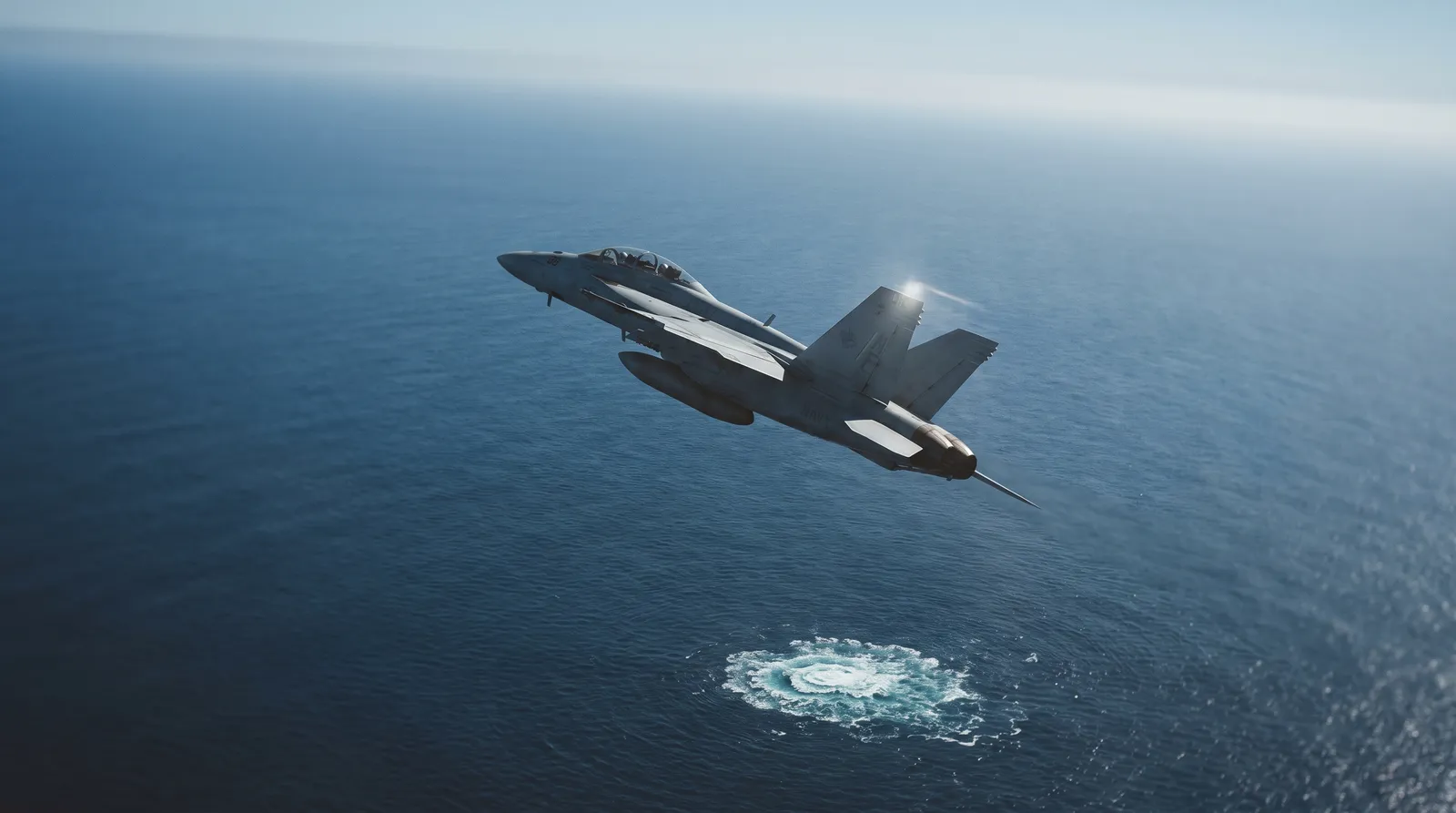
The jets arrived at the coordinates to find clear skies, a calm sea — and nothing on their own radars. Then somebody looked down.
The whitewater and the thing above it
Below them, the crews saw a patch of churning, frothing ocean — an oval of white water that all four aircrew independently compared to something large just beneath the surface, roughly the size of a 737. In an otherwise flat, empty sea, it was the only disturbance from horizon to horizon; several of the aircrew initially wondered if they were looking at a downed airliner.
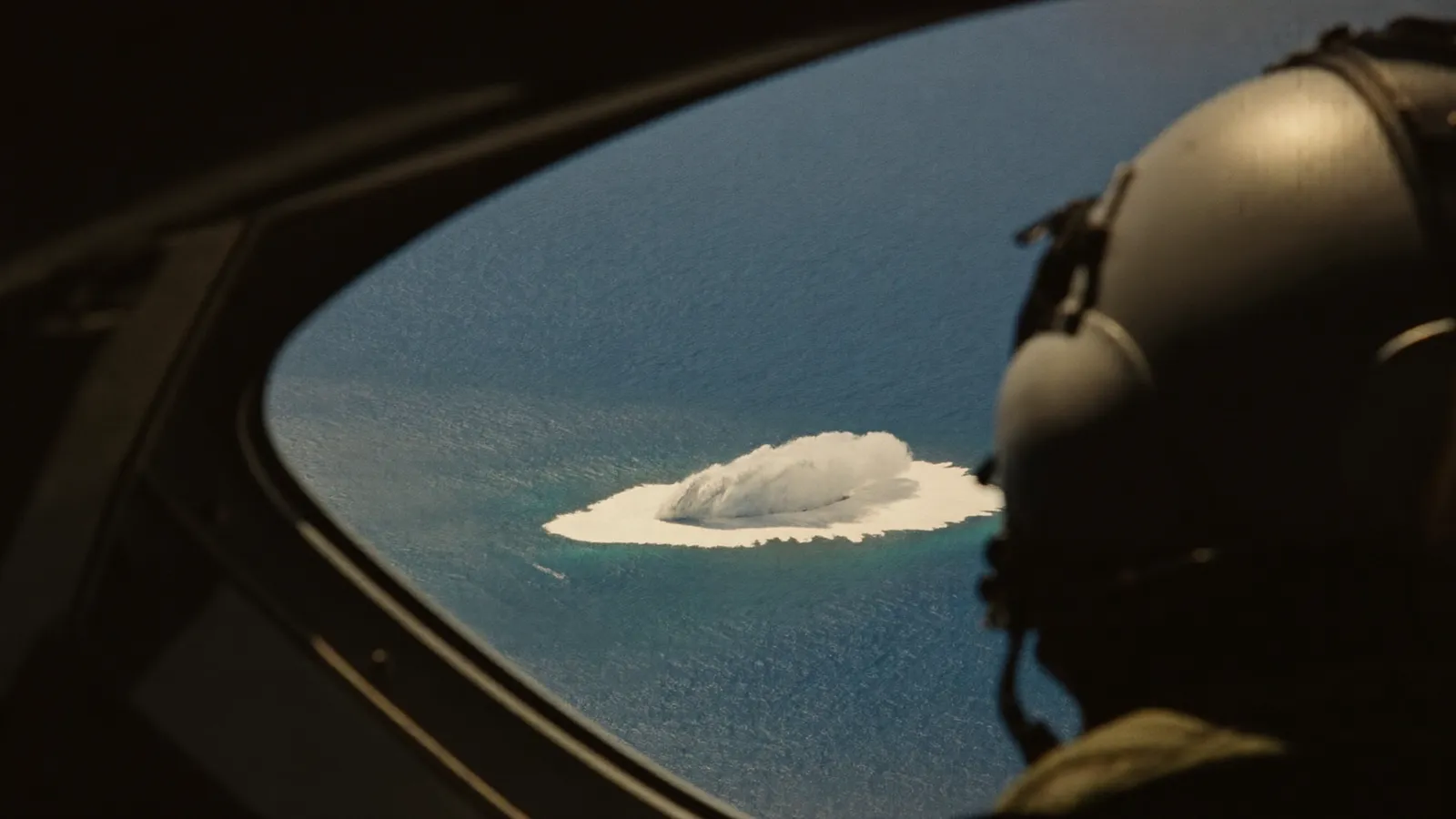
And then the object. Moving above the disturbed water, low and erratic — Fravor has compared it to a ping-pong ball bouncing off invisible walls — was a white, smooth, wingless shape perhaps 40 feet long, about the length of his own aircraft. No windows. No rotors. No wings. No exhaust plume, no rotor wash on the water, no visible means of propulsion at all. The now-famous comparison was immediate and unglamorous: it looked like a giant Tic Tac.
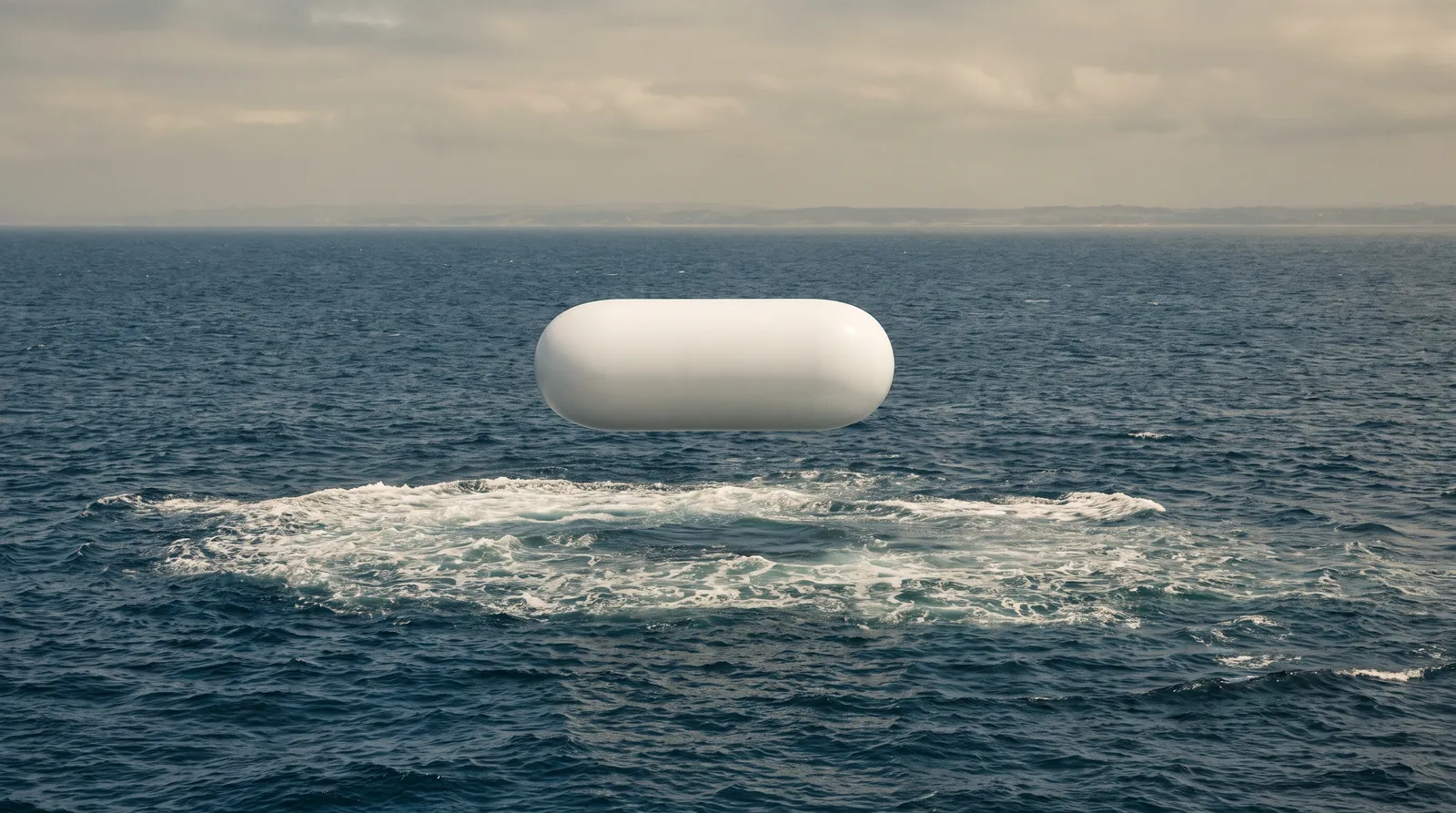
The 2009 analysis of the incident that later surfaced (of which more below) recorded the object as roughly 46 feet long — pleasingly close to the pilots’ in-the-moment estimate, for whatever an estimate against an empty sea is worth. And that caveat matters, so let’s bank it now: with no wingman alongside it, no known landmark and no measured range, every figure for the object’s size and speed is an inference from trained but human eyes. The pilots themselves have always said as much.
The dance
Fravor did what fighter pilots do: he went to look. Leaving Dietrich’s jet high as cover, he began an easy spiralling descent toward the object. What he reports next is the heart of the case, and it has not changed in nine years of retellings, interviews and sworn testimony.
As he descended, the Tic Tac noticed him. It stopped its erratic bouncing and began to climb, mirroring his spiral on the opposite side of a circle — the two aircraft, if that’s the word, orbiting a common centre like partners in a dance neither had agreed to. Dietrich, watching from above, saw the same geometry. Fravor, judging the object’s turn predictable, committed: he cut across the circle nose-low to meet it.
The object crossed his nose — and then it was simply gone. Not a turn, not a climb-out: an acceleration to beyond visual range in, by every witness’s estimate, under a second. Four aircrew, two cockpits, one departure.
“It accelerated like nothing I’ve ever seen.” — Cmdr David Fravor
In his 2023 written testimony to Congress, Fravor put numbers on the comparison rather than the object: the F/A-18F he was flying, he noted, cannot do what that object did — and nothing else in the US inventory then or since can either. Dietrich has been more restrained, and her restraint is its own kind of evidence: she describes the same object, the same mirroring, the same impossible exit, while declining every invitation to say what it was. “I don’t know what I saw,” in various formulations, is the consistent position of every aircrew witness. It is the sceptics’ position too, technically. The argument is about everything in between.
Sixty miles in a blink
What lifts the Tic Tac above every “pilot sees strange thing” story in the archive is what happened next, because it happened on a different sensor, operated by different people, on a different platform.
Within — accounts vary — seconds to a minute of the object vanishing from the pilots’ view, the Princeton reacquired a contact. Not nearby: at the flight’s pre-briefed CAP point, the holding position the aircrew were due to proceed to, roughly 60 miles away. Day, on the scope, has described the reacquisition ever since with the flat astonishment of a man watching arithmetic break: nothing flies 60 miles in that time. The detail that keeps analysts up at night is that the CAP coordinates were part of the day’s planning — which, if the reappearance was deliberate, implies something rather uncomfortable about what the object knew.
Treat that inference with care: it rests on the operators’ memory of timing, and “seconds” versus “a minute” is the difference between physics-breaking and merely extraordinary. But the structure of the moment is the case’s crown jewel — a human eyewitness loss of contact and an independent radar reacquisition that corroborate one another across two platforms. When the pilots returned to where the whitewater had been, the sea was calm. Whatever had disturbed it was finished there.
Low on fuel, the FASTEAGLE flight recovered to the Nimitz. Fravor’s remark on the way back has entered the folklore — words to the effect that he’d like to fly the thing they’d just seen. In the ready room, the reception was what you would expect from naval aviators: merciless. Somebody had queued up alien-abduction movies on the shipboard TV. This, too, is corroboration of a sort — a dozen people remember the mockery, which means a dozen people knew the story on the day it happened, two decades before it was famous.
The 76 seconds: Underwood and FLIR1
One detail that surprises people: Fravor never filmed the Tic Tac. His encounter is testimony — four sets of eyes, zero frames of video.
The famous clip came within the hour. With the contact still appearing on the Princeton’s scope, a second launch went out with specific instructions to find it and bring back sensor data. In the back seat was Lieutenant Chad Underwood, a weapons systems officer with the same squadron. Underwood locked the contact on radar and slewed the jet’s ATFLIR targeting pod onto it: an infrared camera built for identifying targets at range, not for producing beauty shots.
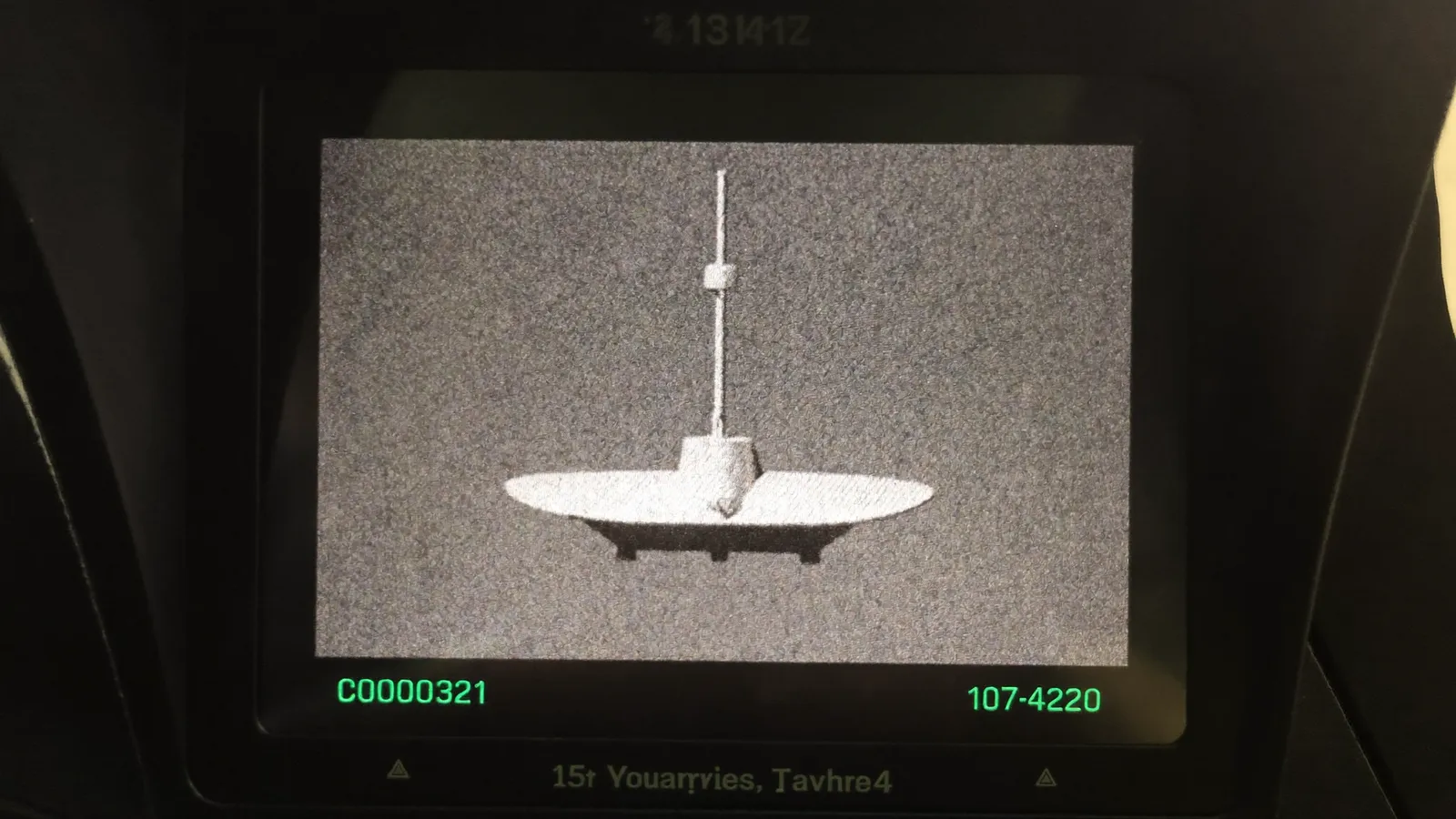
The result is roughly 76 seconds of monochrome video: an oval blob against a cold sky, wobbling in and out of the pod’s track modes, showing no wings, no plume and no obvious propulsion — consistent, in other words, with what the first flight described, while proving almost none of it. Near the end of the clip the object accelerates sharply out of frame to the left, an exit that believers read as the punchline and sceptics read as the pod losing its lock. Underwood never saw the object with his own eyes — at the ranges involved he wouldn’t have expected to — and his radar experience of it was of a contact that jammed nothing but behaved oddly.
Underwood, to his enormous credit, has never oversold any of it. In his one substantial interview — with New York magazine’s Intelligencer in December 2019 — the word he kept returning to was “erratic”: climbing, descending and accelerating in ways that made no aerodynamic sense to him. He stops well short of the E-word, has openly rolled his eyes at the more baroque claims hung on his footage, and generally treats the video as what it is: data, not revelation. The restraint of the man who actually shot the film is worth more than a hundred breathless narrations of it.
One persistent muddle is worth clearing up permanently. The Tic Tac case produced one video: FLIR1. The other two Pentagon clips forever bundled with it — “Gimbal” and “GoFast” — were filmed in 2015, off the US East Coast, by different aircrew from the USS Theodore Roosevelt, in the squadron Lieutenant Ryan Graves has since spoken about publicly. They are separate cases with separate (and, frankly, weaker) evidence. When someone says “the Tic Tac video”, they mean FLIR1 and only FLIR1.
The corroboration ledger
Deep-dive promised, deep-dive delivered: here is the case’s actual evidential structure, claim by claim. This is the exercise almost no retelling bothers with, and it is where the Tic Tac earns its reputation — and its caveats.
Corroborated by multiple independent witnesses and sensors:
- Something was physically present on 14 November 2004. Four aircrew visually; the Princeton’s SPY-1 crew on radar over multiple days; an E-2C Hawkeye’s radar picture feeding the same net; Underwood’s radar and ATFLIR within the hour. No serious sceptical analysis disputes that real returns and a real thermal object were recorded.
- The object’s appearance. White, oblong, wingless, roughly aircraft-length: independently described by Fravor and Dietrich (and their WSOs in contemporaneous debriefs), and consistent with the FLIR1 shape — allowing for what infrared glare does to shapes.
- The departure. All four aircrew describe the same near-instantaneous acceleration; the Princeton’s reacquisition at the CAP point corroborates a rapid displacement of something on an independent sensor. This cross-sensor moment is the strongest single fact in the file.
- The videos’ authenticity. Confirmed on the record by Navy spokesman Joseph Gradisher in September 2019 and by the Department of Defense’s official release on 27 April 2020 — with the objects explicitly still “unidentified”. Whatever FLIR1 shows, it is real Navy footage of a real unknown.
- The story predates the fame. The ready-room mockery, the debriefs, and the video circulating on the Nimitz’s shipboard network within days are attested by numerous crew members interviewed by Popular Mechanics in 2019 — this was a widely known event inside the strike group in 2004, not a legend assembled in 2017.
Attested by one or few witnesses, unverifiable against records:
- The week of prior radar tracks and their specific altitudes (descents from 80,000+ feet, groups of ten, 28,000-foot cruising) rest overwhelmingly on Kevin Day’s recollection, supported in outline by Voorhis and other Princeton crew. No radar tapes have been released to check.
- The exact timing of the CAP-point reacquisition — “within seconds” versus “about a minute” changes the implied physics enormously — is memory, not log.
- The whitewater’s cause. Something under the surface is an impression, not an observation; no submarine contact was reported and no vessel investigated the spot.
Asserted, disputed or unresolved:
- The “28,000 feet to sea level in 0.78 seconds” figure beloved of documentaries traces to the leaked 2009 analysis and to later reconstructions — including a 2019 conference paper by physicist Kevin Knuth and colleagues estimating accelerations in the thousands of g — all of which are built on witness-recalled radar behaviour, not preserved track data. Impressive if true; unverifiable as stated.
- The data seizure. Of which more below — because it deserves its own section.
Read the ledger honestly and the pattern is clear: the closer a claim sits to “multiple trained people perceived an object behaving extraordinarily”, the better it survives scrutiny. The closer it sits to a specific record-breaking number, the more it rests on memory and reconstruction. Both things are true at once. Hold them both.
The vanishing data
Now the subplot that launched a thousand podcasts. In 2019, Tim McMillan assembled five Nimitz and Princeton veterans for Popular Mechanics — Day, Voorhis, aviation technicians Patrick “PJ” Hughes and Ryan Weigelt, and petty officer Jason Turner — and several of them independently described the same odd coda to the encounter.
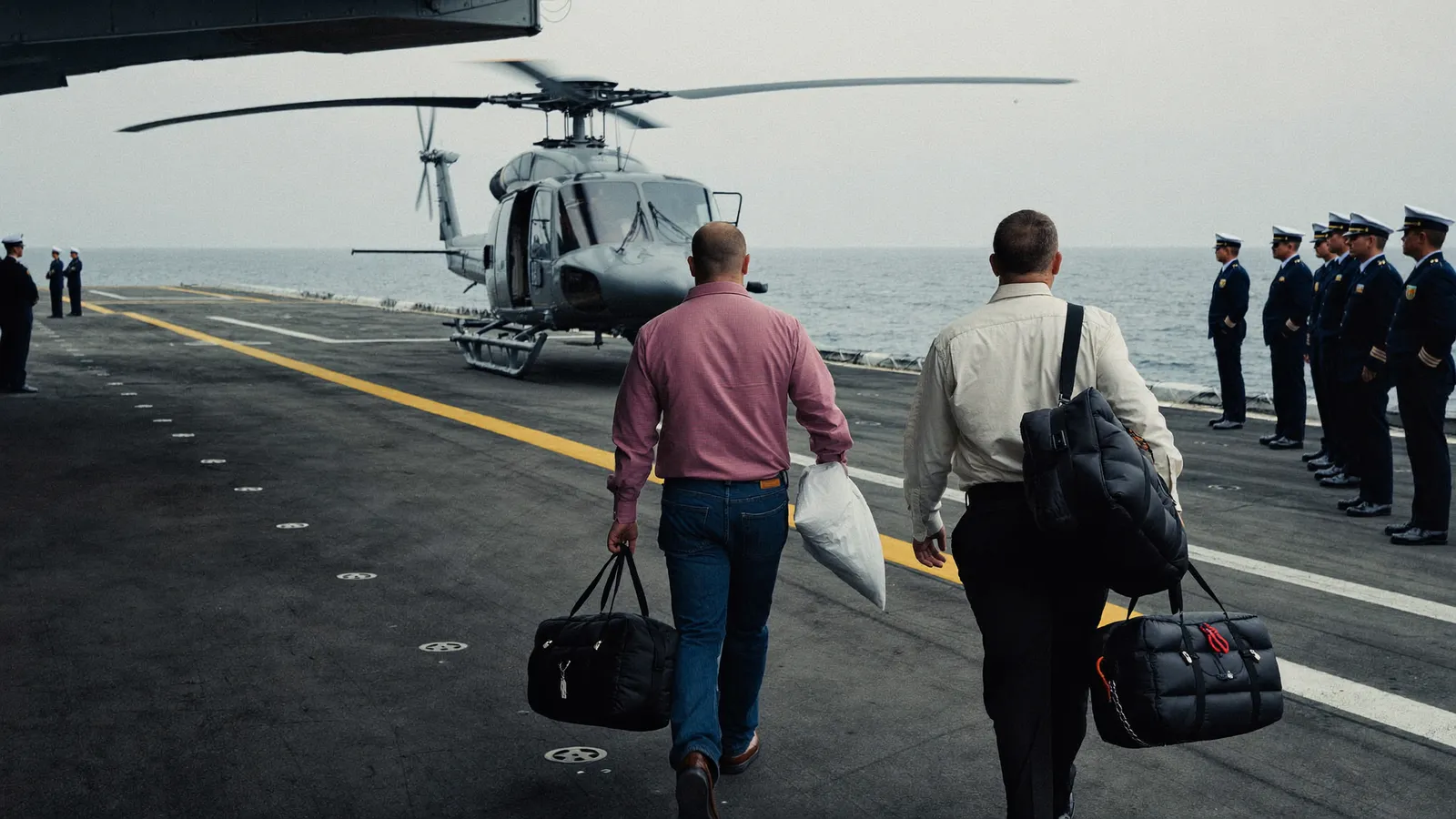
Voorhis, on the Princeton, said two men arrived by helicopter and, within about twenty minutes, his chain of command told him to hand over the ship’s recorded Aegis data. Hughes, on the Nimitz, secured the hard-drive data recorders from the E-2C Hawkeye early-warning aircraft; he says his commanding officer and two unfamiliar men collected them: “We put them in the bags, he took them, then he and the two anonymous officers left.” Turner says the FLIR footage he watched on the ship’s system was longer and clearer than the clip the world knows.
Here is the honest read. These are multiple, named, independent accounts of something being collected — which counts for a good deal, and which a serious investigation would want to run down. It is also true that classified sensor data being gathered up after an unusual event is compatible with entirely mundane security procedure; that none of the witnesses knew who the collectors were (that is rather the point); and that the subplot has grown teeth in the retelling that the original accounts don’t have. The claim “men took the tapes” is well-attested. The claim “therefore a cover-up erased the evidence” is a leap the witnesses themselves mostly decline to make.
And note the trap, because the case’s fans regularly walk into it: you cannot simultaneously use the seizure story to prove a cover-up and to excuse the absence of the very data that would prove the performance claims. If the tapes are gone, the record-breaking numbers are unverifiable, full stop. The same lesson applies to modern radar data with a 45-day deletion clock: in UAP cases, the perishability of sensor records is the whole ballgame.
What is documented is almost stranger: when researchers later filed Freedom of Information requests, the Navy reported that the Princeton’s deck logs for the period, and associated aviation records, could not be located or were incomplete — an absence that is itself a data point, though of what, nobody can say. Bureaucratic entropy loses paperwork every day. It just has poor timing here.
The paper trail that survived
For a case defined by missing data, an interesting amount of paper has slowly surfaced — and it corroborates the outline while settling none of the physics.
The first artefact is the so-called Executive Summary: a 13-page analysis of the encounter, unsigned, undated and unlogoed, which surfaced in 2018 via investigative journalist George Knapp. Multiple sources familiar with the Pentagon’s AATIP/AAWSAP effort confirmed to Knapp’s I-Team it was genuine work product from that programme, produced around 2009 — and its consistent use of Day’s pet term “anomalous aerial vehicle” quietly supports a provenance close to the witnesses. It compiles the radar and aircrew accounts into the fullest official-ish narrative we have: the days of tracks, the 46-foot object, the whitewater, the CAP-point jump, the advanced-performance conclusions. But its anonymity is a genuine problem — a document nobody will put their name to, from a programme the Pentagon spent years being cagey about, is corroboration of the testimony, not independent evidence. It tells you what the witnesses told investigators. It cannot tell you the investigators were right.
The second artefact is better. Among dozens of heavily redacted “range fouler” reports the Navy released under FOIA in 2023 — documenting unidentified intruders in training ranges from 2004 to 2021 — sits a contemporaneous report on the 14 November 2004 intercept itself. It is thin, partial and redacted. It is also the first primary document from the actual day to reach the public: proof, in the Navy’s own paperwork, that the event was reported through official channels at the time, that the intruder was logged as unidentified, and — per the report’s own remarks — that the reporting went up to Third Fleet and stopped, because no process existed to take it further. The Tic Tac, in 2004, was filed as a hazard to training and forgotten. That detail rings truer than any conspiracy: the system didn’t suppress the case. It shrugged.
Add the Pentagon’s 2020 authentication of the video, the ODNI’s 2021 acknowledgement of the whole reporting gap, and the 2023 sworn testimony, and the Tic Tac now has something almost no historical UFO case has: an official paper trail confirming the event happened, produced by institutions with every incentive to explain it away, none of which explains it away.
From ready-room joke to the front page
For thirteen years, the story lived where the Navy left it — in debrief folders, in aviators’ anecdotes, and, from 2007, in a grainy clip of FLIR1 that leaked onto the internet and circulated among forum obsessives who couldn’t prove where it came from. The mainstream, reasonably enough, ignored it.
What changed everything was a programme most Americans had never heard of. From 2007, at the urging of Senate majority leader Harry Reid, the Pentagon quietly funded the Advanced Aerospace Threat Identification Program (AATIP) and its contractual umbrella AAWSAP — some $22 million, largely subcontracted to Robert Bigelow’s aerospace company, whose parallel obsessions also bankrolled the investigation of Skinwalker Ranch. The Nimitz encounter became the programme’s marquee case study; the 2009 Executive Summary appears to be its homework.
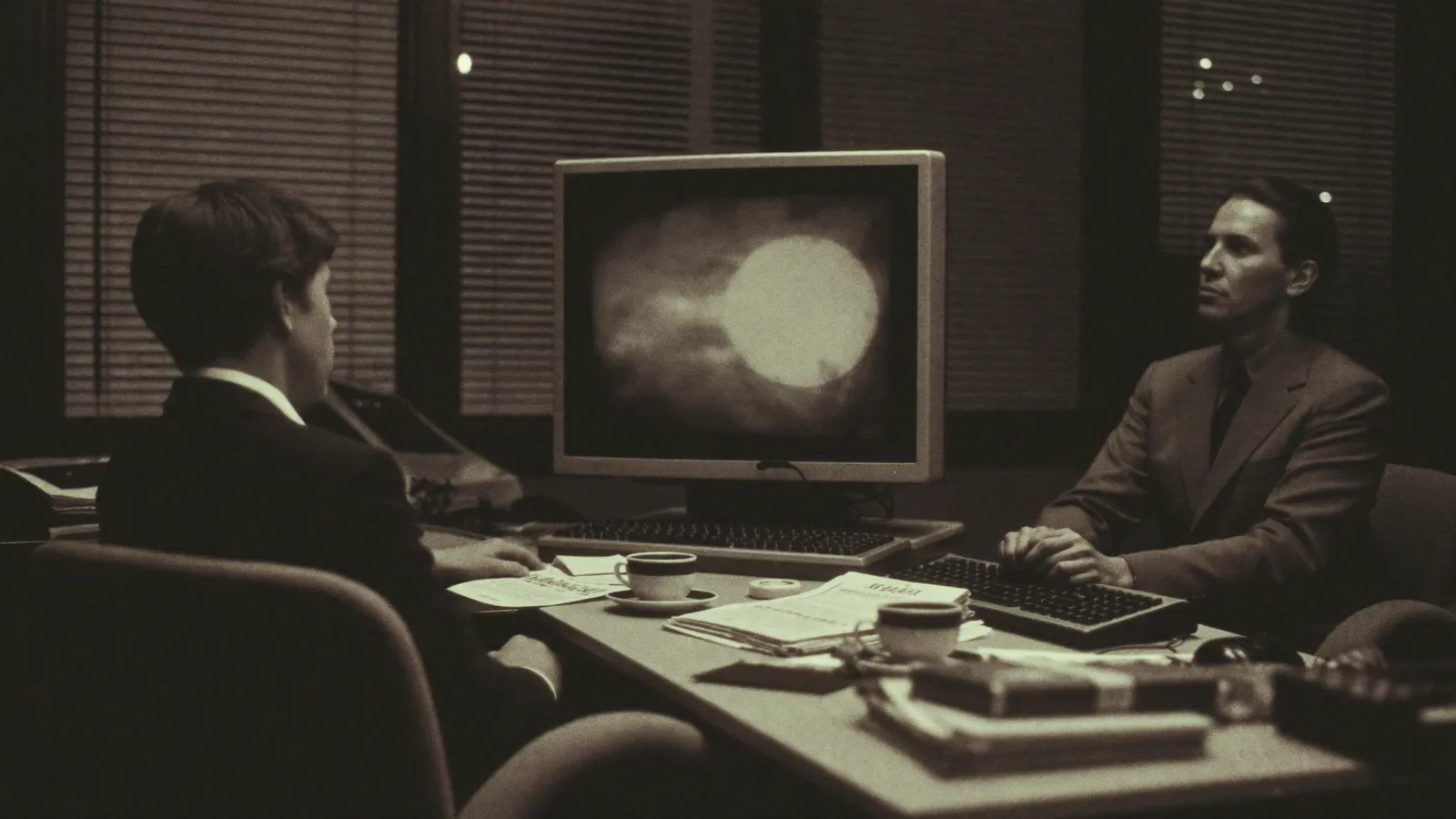
On 16 December 2017, the New York Times published “Glowing Auras and ‘Black Money’”, by Helene Cooper, Ralph Blumenthal and Leslie Kean, revealing AATIP’s existence — with a companion piece telling the Nimitz story under the headline quote “…an object that accelerated like nothing I’ve ever seen”. FLIR1 ran with the articles, released through Luis Elizondo and the To The Stars Academy. Fravor went on the record under his own name. The dam broke.
The official confirmations then arrived in instalments, each one small and, cumulatively, remarkable. September 2019: Navy spokesman Joseph Gradisher confirms the leaked videos are genuine Navy footage and that “the Navy designates the objects contained in these videos as unidentified aerial phenomena” — the first time the US military applied that label to specific public footage. April 2020: the Department of Defense formally releases all three videos “to clear up any misconceptions”, confirming the phenomena “remain characterized as ‘unidentified’”. May 2021: Fravor and Dietrich sit for 60 Minutes. June 2021: the ODNI’s preliminary assessment counts 144 military UAP reports since 2004 and manages to resolve exactly one (a deflating balloon), while noting 18 cases with movement patterns its analysts couldn’t square with known technology. July 2022: the AARO office is stood up to investigate the backlog the Tic Tac started.
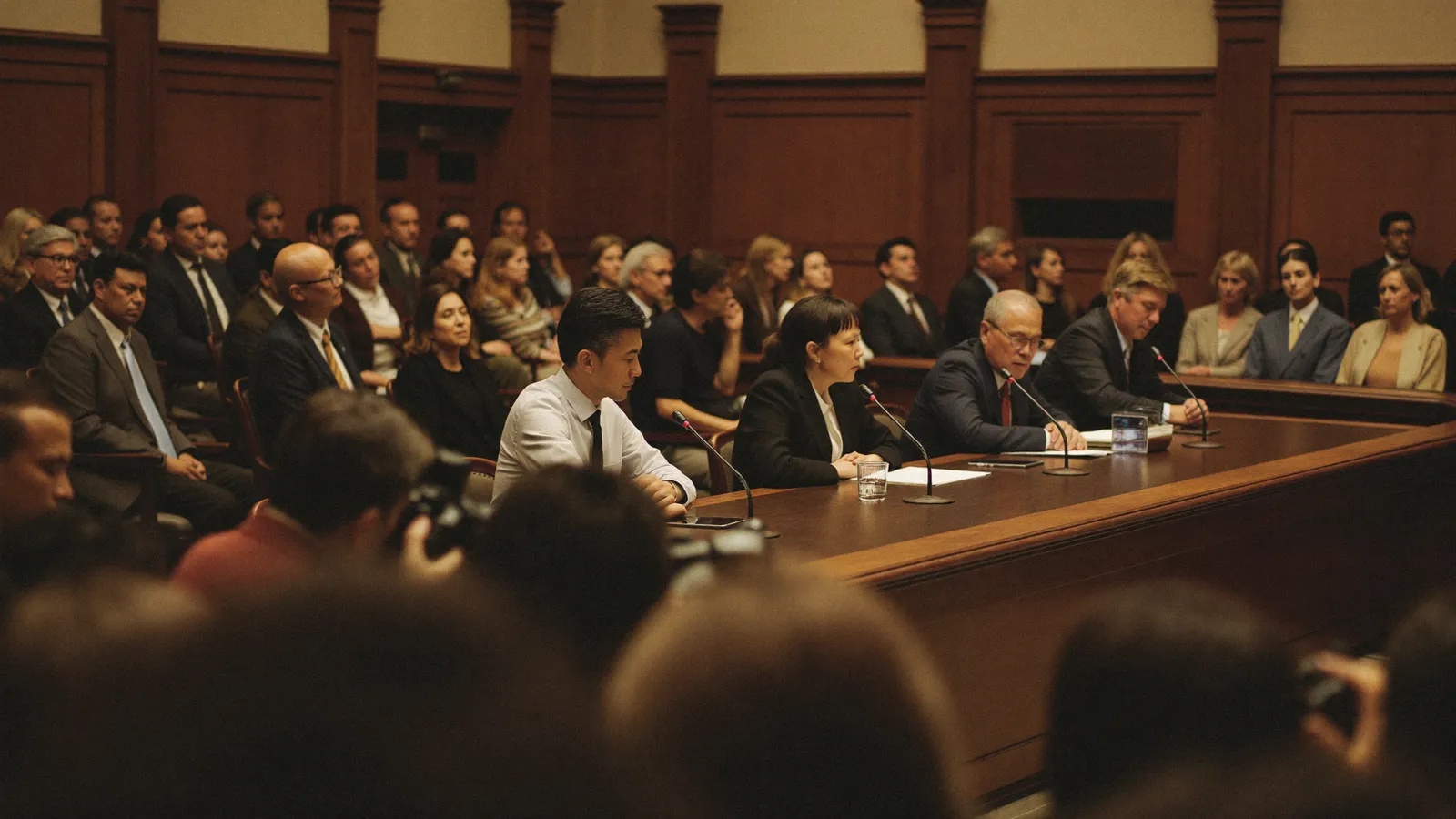
And on 26 July 2023, Fravor raised his right hand before the House Oversight Committee and told the story under oath — noting drily, of the radar tracks’ reported starting altitude, that “above 80,000 feet is space”. His written statement concludes that the technology the four of them witnessed was “far superior to anything that we had” — or, he added, have today. Congress has kept pulling the thread since; the disclosure fight has since moved to the statute books. Whatever else the Tic Tac achieved, it single-handedly made “UAP” a term the US government uses in daylight.
The sceptic’s read
A case this celebrated attracts serious sceptics, and it deserves them. The most prominent is Mick West of Metabunk, whose analyses are worth engaging precisely because they are technical rather than sneering.
On the video, the sceptics have real purchase. West’s detailed FLIR1 work argues the clip is consistent with a distant conventional aircraft rendered shapeless by infrared glare: the “Tic Tac” outline may be an artefact of a hot engine bloom, the apparent lack of wings a resolution problem, and the famous darting exit at the end explicable as the targeting pod dropping its track — the object doesn’t teleport; the camera loses it. An ATFLIR engineer interviewed by Intelligencer allowed that the pod can behave erratically when tracking in cluttered conditions. On the other two Pentagon videos his case is stronger still — Gimbal’s “rotation” as rotating lens glare, GoFast’s sea-skimmer as a slow high balloon-like object made fast by parallax — and it is a point in the sceptics’ favour that they distinguish between the cases more carefully than most believers do.
On the full case, though, the prosaic menu gets thin. “It was a classified US programme” requires the Navy to have test-flown something revolutionary inside its own carrier group’s training exercise without telling the admiral — and to still be sitting on propulsion physics two decades later. “Radar glitches plus pilot misperception” requires the SPY-1 anomalies, the four independent eyewitness accounts and the same-day ATFLIR capture to be three unrelated errors that happened to agree. West himself has been careful here: his strongest claims target the videos and the inflated numbers, not the aircrew’s honesty. The sceptical steel-man is narrower and more awkward: the video shows little; the physics-breaking figures are unverifiable memories; human perception under adrenaline is fallible even in fighter pilots; therefore the case proves an unknown, not an impossibility. That is a serious position. It is also, note well, a position that concedes the Navy encountered something it could not identify — which is where every honest reading of this case ends up.
What no sceptical account has produced, twenty-one years on, is a candidate object: a specific drone, aircraft, balloon or phenomenon that fits the week of radar tracks, the visual encounter and the reacquisition. Absence of explanation is not evidence of aliens. But it is absence of explanation.
What the case can bear — and what grew later
Strip the Tic Tac back to its load-bearing walls and a lot survives. Multiple trained military witnesses corroborating across two aircraft. A radar crew that tracked the intruders for days and ruled out their own equipment first. A cross-sensor reacquisition that is genuinely hard to explain away. Same-day thermal video, officially confirmed real, of an object officially still unidentified. A contemporaneous Navy report proving the event was logged at the time. For a UFO case, that is a staggering amount of scaffolding — there is arguably no better-documented military encounter in the public record.
What deserves more salt is everything the case has accreted since it became famous. The numbers hardened in the retelling: estimates became measurements, “fast” became 0.78 seconds, and a witness’s recollection of a scope became a physics paper’s input data. The data-seizure subplot grew from “some men collected the drives” into an erasure conspiracy its own witnesses don’t quite claim. This is the natural life cycle of a celebrated case — it does not sit still, it swells. It’s the same lesson taught by Britain’s best case, Rendlesham Forest, where a genuinely puzzling core slowly grew embellishments its original witnesses never reported. Strong cases attract barnacles. Separating hull from barnacle is the whole job.
The 2004 core — what Fravor, Dietrich, Slaight, Underwood, Day, Voorhis, Hughes and Turner actually describe — is more disciplined than the mythology wrapped around it, and it is quite strange enough on its own. It is also, structurally, an old story: multiple independent radars, air and ground visual, an attempted intercept was exactly the evidential package assembled at Lakenheath–Bentwaters in 1956, and the instrument gap at the heart of it — nobody ever knows how far away the object is — is precisely what the Galileo Project’s triangulating cameras were designed to close. Until somebody closes it, every Tic Tac number will be an estimate wearing a uniform.
The UAP Times take
The Tic Tac earns a Credible rating — four out of five on our scale: well-witnessed, cross-corroborated across independent sensors, officially acknowledged, and now partially documented in the Navy’s own released paperwork. It falls short of the top mark for one reason only: the hard sensor data — the radar tapes, the full-length FLIR recording, the logs — is missing, seized or unreleased, so the case’s most extraordinary specifics cannot be checked by anyone. On documentation, this is the strongest modern case there is. On examinable evidence, it still has the same hole every UFO case has.
Hold two things at once and you have the honest version. First: something real was present off California in November 2004 — tracked for days, seen by four aircrew, filmed on infrared, reacquired at distance — and the Pentagon, given every opportunity and incentive across two decades, has conceded it cannot say what. That is not folklore. That is the record. Second: the most thrilling specifics — the sub-second drop from space, the thousands of g, the erased evidence — rest on memory, reconstruction and anonymous paperwork rather than on data you could hand to a hostile expert. Treat the eyewitness core as strong and the superlatives as provisional, and you are left with a case that is smaller than the legend and still, by any sober standard, the most important unexplained aerial encounter of the modern era. Twenty-one years on, nobody has explained it — and not for want of trying.
Sources and the record
The claims in this article trace to the following primary sources and reporting, in rough order of evidential weight:
- Cmdr David Fravor’s written statement to the House Oversight Committee (26 July 2023) and the full hearing transcript — sworn testimony.
- DoD statement on the release of the Navy videos (27 April 2020) — official authentication of FLIR1.
- ODNI, “Preliminary Assessment: Unidentified Aerial Phenomena” (25 June 2021).
- The Navy’s 2019 confirmation via spokesman Joseph Gradisher, reported by Military.com after John Greenewald’s Black Vault queries.
- The Navy “range fouler” reports including the 14 November 2004 event, released under FOIA and reported by The War Zone; the underlying documents are archived at The Black Vault.
- Helene Cooper, Ralph Blumenthal and Leslie Kean, “Glowing Auras and ‘Black Money’” and the companion Nimitz piece, New York Times (16 December 2017).
- Fravor and Dietrich on CBS 60 Minutes (16 May 2021).
- Chad Underwood interviewed by New York magazine’s Intelligencer (December 2019).
- Tim McMillan’s witness reporting for Popular Mechanics (November 2019), assembling Day, Voorhis, Hughes, Weigelt and Turner — the data-collection accounts.
- The unsigned 2009 “Executive Summary” analysis obtained by George Knapp — treated here as secondary, given its anonymous provenance.
- The sceptical literature, chiefly Mick West’s FLIR1 analysis at Metabunk.
- Kevin Knuth et al., “Estimating Flight Characteristics of Anomalous Unidentified Aerial Vehicles” (2019) — the acceleration estimates, with the caveat that its inputs are witness reconstructions.
Further reading: for Britain’s best-documented case and the same lesson about how famous encounters grow in the retelling, see Two Nights in Rendlesham Forest; for the instrument problem at the heart of every one of these stories, why nobody has ever known how far away a UFO was; and for the Tic Tac’s polar opposite — maximum testimony, minimum documentation — the complete Bob Lazar evidence file. For the case that first showed how far testimony alone can travel once hypnosis gets involved, see Betty and Barney Hill. The same evidential structure — multiple independent radars, air and ground visual, an attempted intercept — was assembled once before, in 1956: Lakenheath–Bentwaters.
Follow the file
Every new dispatch from the UAP desk, in your inbox. Sourced, sceptical, and no more than one email a week.