Most UFO stories are a witness and a memory. Rendlesham is a witness, a memory, a one-page memorandum from a serving US Air Force officer, a running audio recording made in real time in the dark, three dents in the ground and a set of radiation readings. That is a great deal more paperwork than the genre usually manages, which is exactly why the case has refused to die for more than forty years.
It is often sold as “Britain’s Roswell.” That undersells it. Roswell is debris and rumour reconstructed decades later. Rendlesham is contemporaneous, documented, and populated by trained military personnel who mostly still stand by what they said. It is also — and both things can be true — a case with an unusually tidy set of ordinary explanations sitting right next to it. Here is what happened, what can be shown, and what only gets murkier the harder you look.
The base at the edge of the forest
In December 1980 the twin bases of RAF Bentwaters and RAF Woodbridge, on the Suffolk coast, were British in name and American in practice — leased to the US Air Force and home to the 81st Tactical Fighter Wing. This was the Cold War at its frostiest, and the bases were widely believed (though never officially confirmed at the time) to store nuclear weapons. That detail matters, because it means the men patrolling the perimeter were not idle dreamers. They were security police whose entire job was to notice unusual things near sensitive hardware and take them seriously.
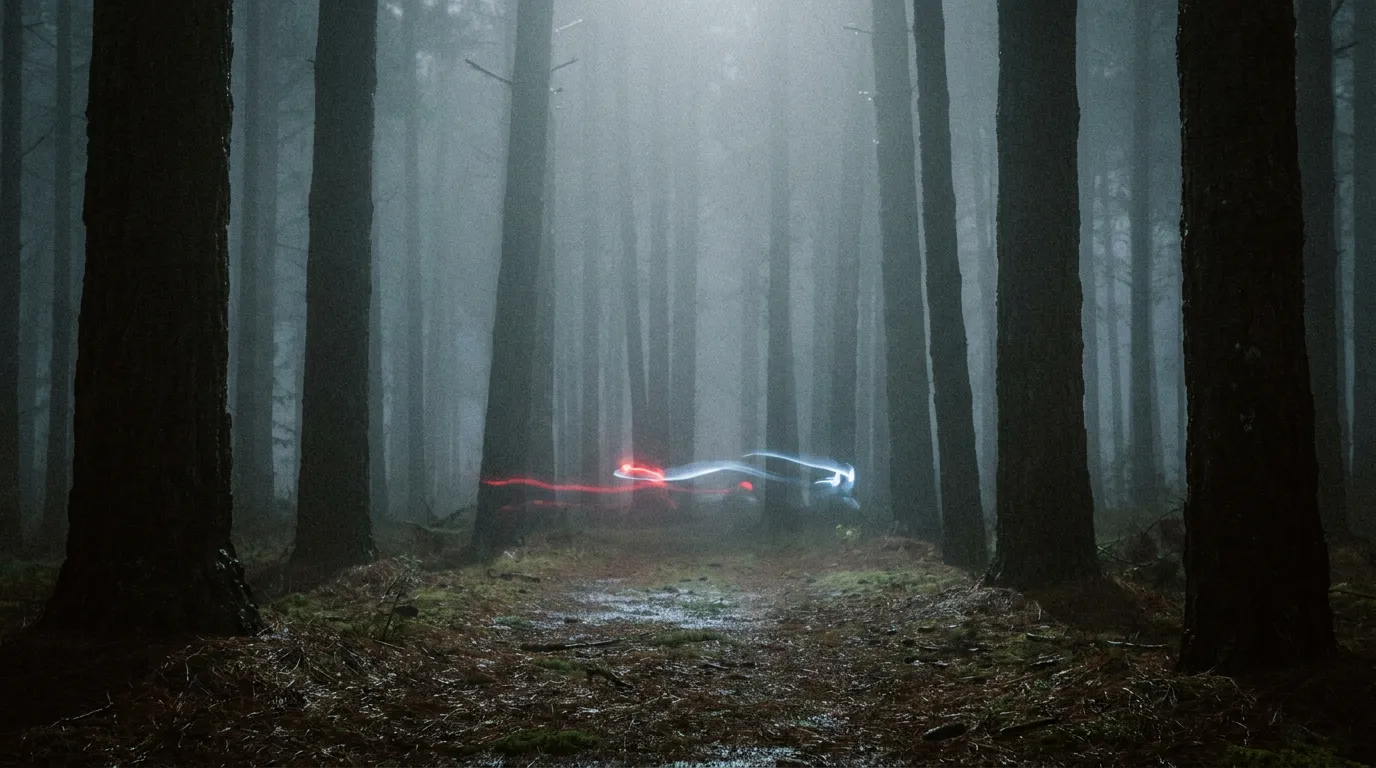
Rendlesham Forest wraps around the eastern edge of Woodbridge. Dense, dark plantation pine, a few tracks, a farm or two, and — five miles out on the coast — the Orford Ness lighthouse. Remember the lighthouse. Everyone in this story eventually has to.
Night one: lights in the trees
In the small hours of 26 December 1980, a patrol near Woodbridge’s east gate saw lights descending into the forest. The initial assumption was entirely sensible: an aircraft had come down. Three men — Staff Sergeant Jim Penniston, Airman First Class John Burroughs and Airman Edward Cabansag — went in on foot to find the wreck.
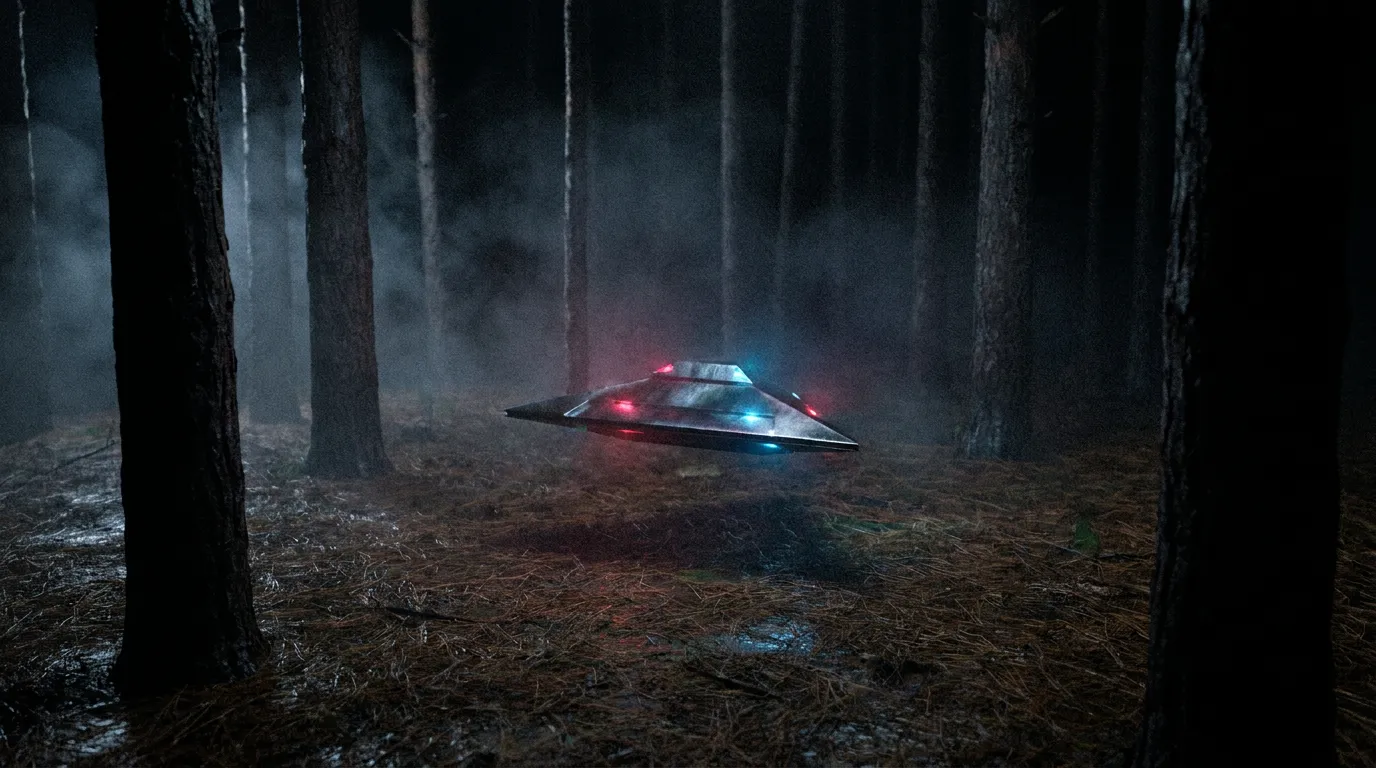
They did not find a wreck. What they reported instead was a glow among the trees, farm animals in a nearby field going berserk, and — in Penniston’s account — a small craft sitting in a clearing. Not a Hollywood saucer: something closer to a rounded triangle, perhaps three metres across, dark and metallic, sitting on or just above the forest floor, its surface covered in raised symbols he would later compare to Egyptian hieroglyphs.
Penniston says he circled it, sketched it in his notebook, and put his hand on it. Then, after some minutes, it lifted, moved through the trees, and was gone — climbing away over the forest at a speed no helicopter manages. Burroughs described lights and a sense of something present; Cabansag, notably, gave the most cautious account, later suggesting the men had been drawn toward a distant beacon of light rather than a landed object.
The thing in the clearing
Penniston’s is the detailed testimony, and it is the load-bearing wall of the whole case. His contemporaneous notebook sketches — a boxy craft, a triangular landing configuration, close-ups of the symbols — are genuinely striking, and he has repeated the story with remarkable consistency for four decades.
It is also, and there is no delicate way to say this, a single person’s close-range account of the most extraordinary part of the entire event. The other two men on that first patrol did not corroborate the touched-craft version. That does not make Penniston wrong. It does mean the strongest single claim in Rendlesham rests on the least corroborated testimony — the reverse of what you want in a case you are trying to build up rather than talk down.
Morning after: marks on the ground
Daylight is where a UFO case either grows teeth or loses them. At Rendlesham, investigators returned to the clearing and found three shallow depressions in a rough triangle, some broken branches, and — crucially — took radiation readings with a hand-held meter.
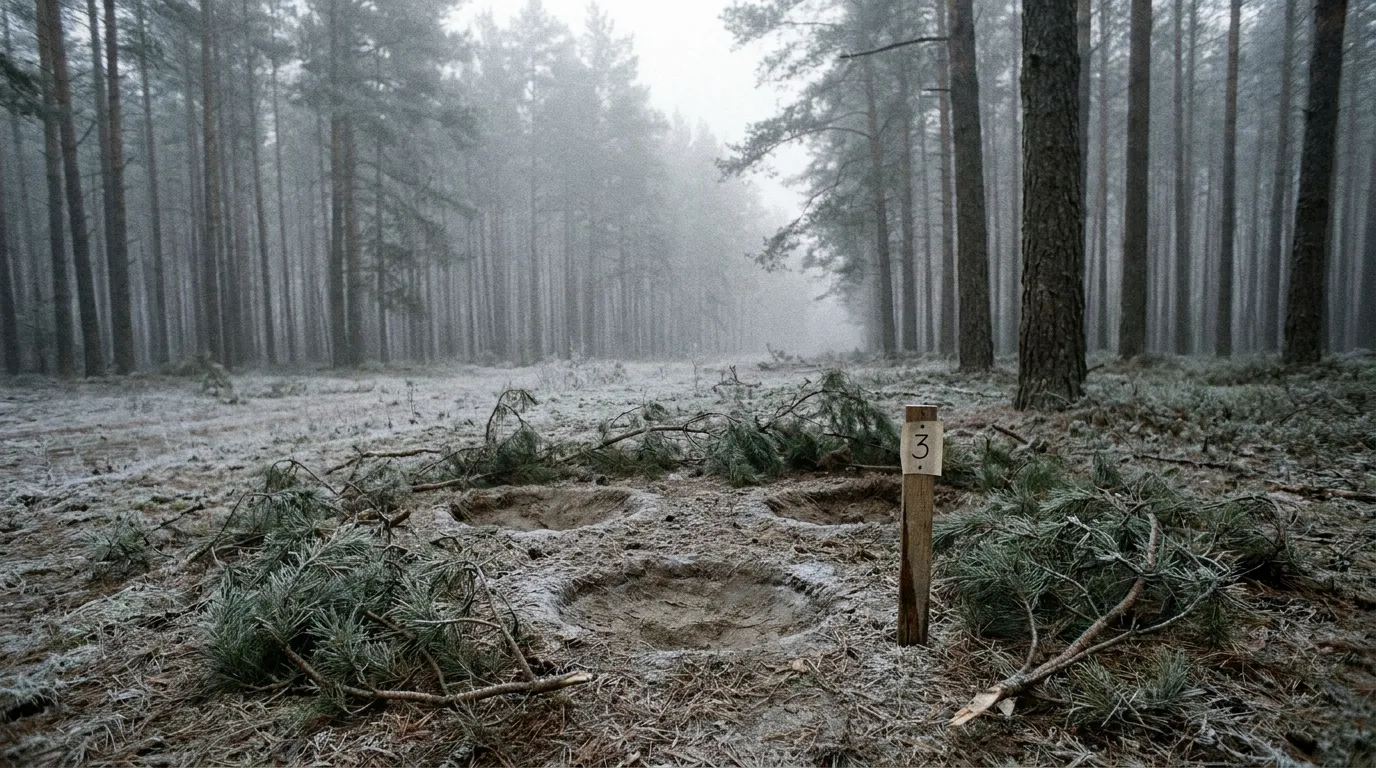
This is the physical-evidence layer, and it is more ambiguous than believers hope and less trivial than sceptics claim. The depressions were consistent with a landed tripod — or, as the Forestry Commission and later analysts pointed out, with rabbit diggings, of which the forest had plenty. The radiation was recorded as somewhat above local background but well within the range of ordinary environmental variation; whether “slightly elevated” means “anomalous” or “a nervous man with a borrowed meter reading it generously at 3am” is exactly the kind of question that never gets cleanly answered. Plaster casts were taken. Branches were photographed. None of it, on its own, proves a craft — but it is more than most cases leave behind.
Night three: the deputy commander goes in
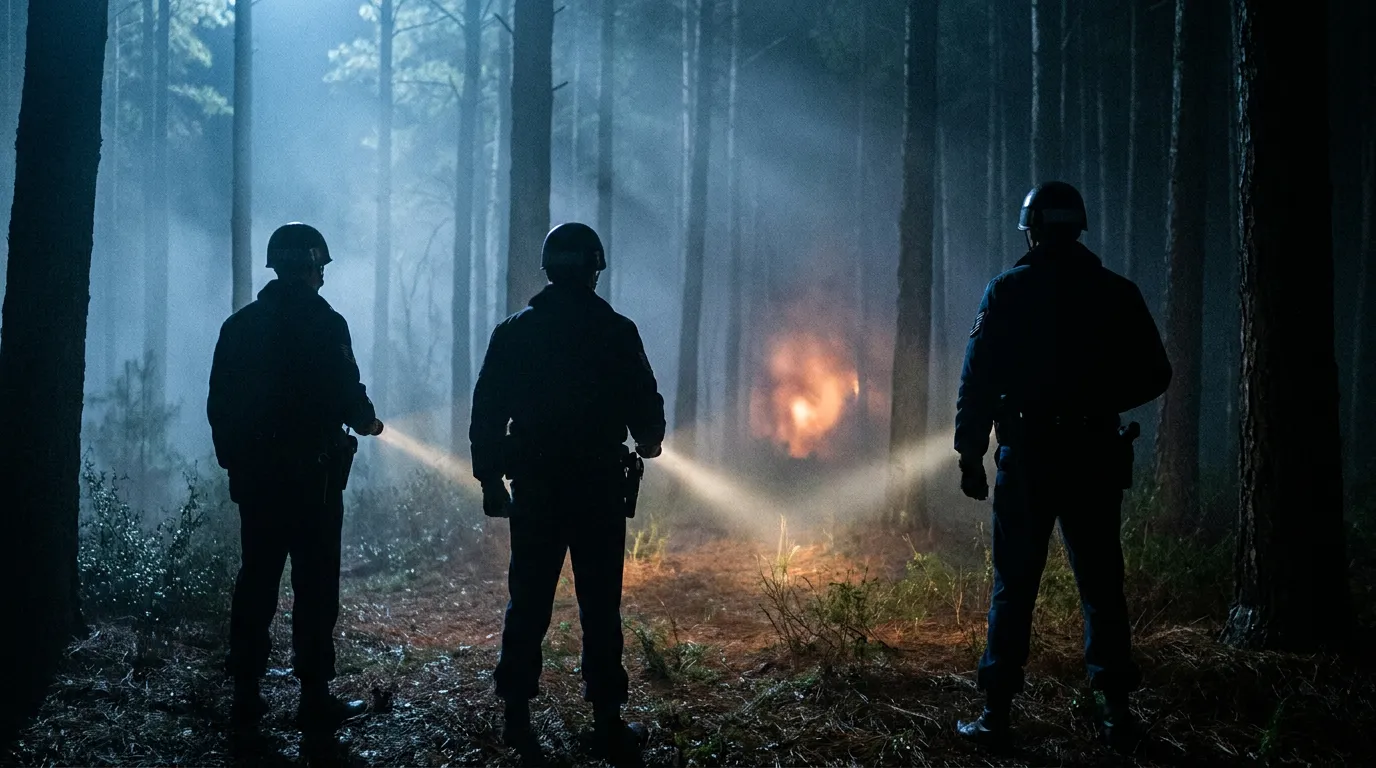
Then the case acquired its best witness. On the night of 27–28 December, the lights returned, and this time Lieutenant Colonel Charles Halt, the deputy base commander, took a team into the forest to get to the bottom of it. He brought a micro-cassette recorder and narrated as he went.
The resulting “Halt Tape” is Rendlesham’s crown jewel, because it is not a memory — it is a senior officer reacting, live, to whatever he was actually seeing. On it, Halt and his men describe a red, pulsing light “like an eye winking,” an object that appears to drip something like molten metal, and later, star-like objects in the sky that seem to send down beams of light — one of them, Halt has always maintained, toward the weapons storage area. His voice on the tape is not that of a man having fun. It is the sound of a professional getting steadily more unnerved by his own instruments and eyes.
The memo that made it real
On 13 January 1981, Halt did the thing that lifted Rendlesham out of folklore: he wrote it down officially. His one-page memorandum, headed “Unexplained Lights,” went up the chain to the British Ministry of Defence. It describes the landed-object marks, the radiation readings and the lights in flat, dry, military prose — the tone of a man logging an incident, not selling a story.
That memo was released to the American public in 1983 under the Freedom of Information Act, and it changed everything. A UFO claim is one thing; a UFO claim that a serving officer felt obliged to file with two governments is another. It is genuinely hard to wave away, and it is the single strongest reason the case still commands respect. Whatever Halt saw, he believed it enough to put his name on it.
The sceptic’s forest
And yet. The most persistent thorn in Rendlesham’s side is the astronomer and science writer Ian Ridpath, who has spent decades assembling a decidedly earthbound account — and it is not flimsy.
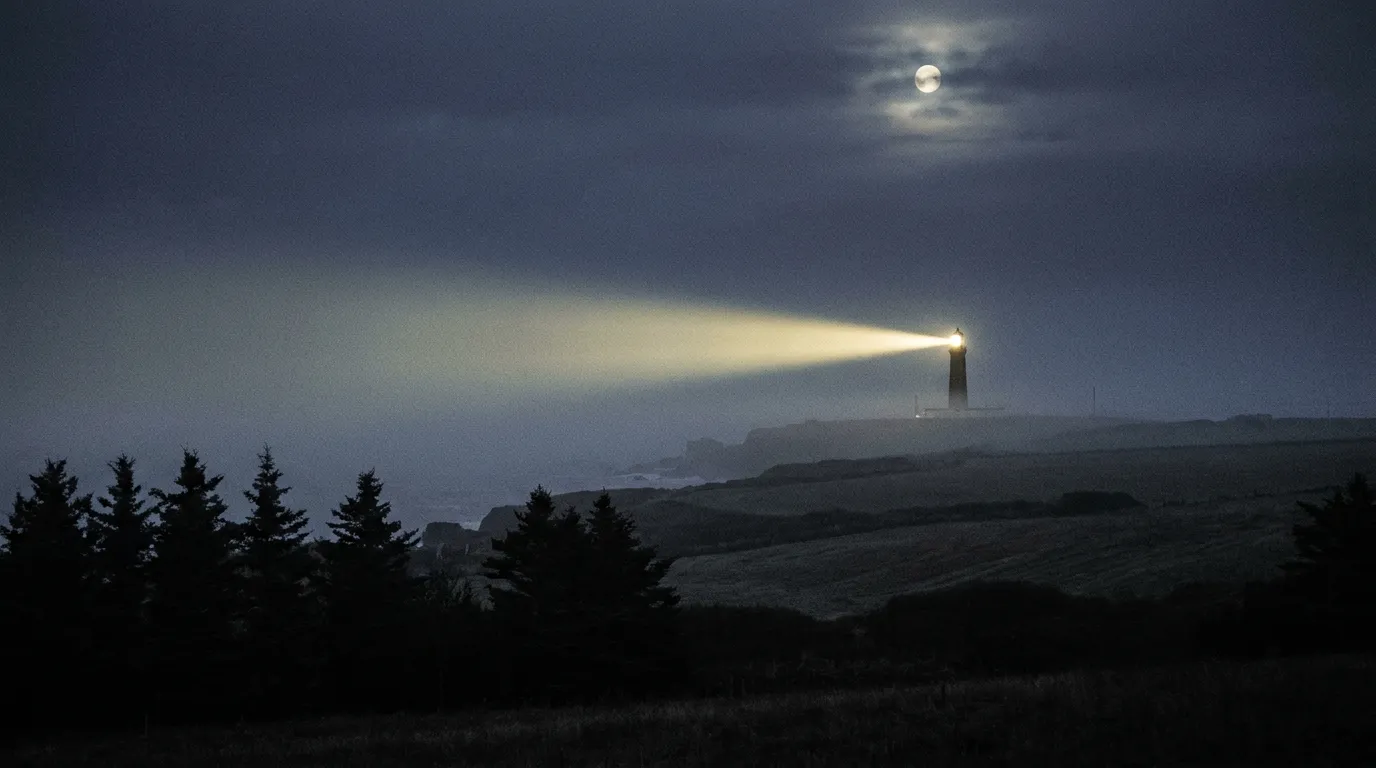
The pieces fit together uncomfortably well. In the early hours of 26 December, a brilliant fireball — a large meteor — crossed the skies of southern England, seen by many; a plausible trigger for a “something has come down in the woods” alarm. The pulsing light low among the trees that so gripped Halt’s team lines up, in direction and rhythm, with the Orford Ness lighthouse flashing every five seconds five miles away — a light that genuinely can look like it is hovering and pulsing when seen through moving trees and drifting mist. The star-like objects Halt tracked correspond to bright stars and planets low on the horizon, including Sirius. And a former USAF officer, Kevin Conde, later said he may have unwittingly contributed to the lights on one night by shining his patrol car’s spotlights around the forest for a lark.
None of this is a magic wand. Sceptics tend to underrate how strange it is that trained security police mistook a lighthouse they knew was there; believers tend to underrate how convincingly a familiar light behaves when adrenaline, cold, fatigue and expectation all pull in the same direction. But the prosaic case is not hand-waving — it is specific, testable, and mostly stands up.
The binary code and the long tail
Here is where a hard-nosed reader should get twitchy. Rendlesham did not stay put; it accreted. Decades after the event, Jim Penniston revealed that when he touched the craft he received a stream of binary code, telepathically, which he wrote in his notebook and later decoded into a message about “exploration of humanity” and a set of coordinates. Charles Halt, for his part, signed a 2010 affidavit affirming the events and alleging that the objects fired beams near the weapons store, and that radar data and a wider cover-up existed.
We would gently file the binary-code download under “take with considerable salt.” Claims that surface thirty years after the fact, unversioned notebook pages, and messages that conveniently speak the language of modern ufology are the textbook signature of a memory that has been lovingly maintained rather than preserved. That does not retroactively debunk the 1980 memo or the tape — but it is a useful reminder that the longer a famous case runs, the more it grows, and not always in the direction of the evidence.
The UAP Times take
Rendlesham is, without much competition, the best-documented UFO case in British history, and it earns a Credible rating — four out of five on our scale — well-witnessed and genuinely puzzling — rather than our top mark, which we reserve for cases with hard sensor data we can actually inspect.
What is solid is remarkable: multiple trained military witnesses, a contemporaneous official memo, a real-time audio recording, and physical traces that were at least investigated. What is missing is equally telling: not a single clear photograph of a craft, physical evidence that comfortably fits rabbits and background radiation, and a coastal lighthouse doing exactly what the most dramatic light appeared to do. The honest position is the uncomfortable one — that something happened in those woods over three nights that frightened serious people, and that the most spectacular interpretation of it remains the least supported. Forty years of retelling has made the story bigger. It has not made it clearer.
Further reading: for a modern case where the sensors, not the memories, do the talking, see The Tic Tac at 25. Twenty-four years before Halt walked into the trees, the same corner of Suffolk produced a radar case with far better instruments and far worse paperwork — see Lakenheath–Bentwaters, 1956. Rendlesham’s craft is a classic of its kind — compare the shapes in our field guide, and find it among the logged cases on the sightings map. For what the Ministry of Defence says about all of this now, see Britain’s UAP transparency gap.
Source: The Halt Memo (USAF, Jan 1981); UK Ministry of Defence files at The National Archives; Ian Ridpath's investigation
Follow the file
Every new dispatch from the UAP desk, in your inbox. Sourced, sceptical, and no more than one email a week.