There is a version of the UAP problem that has nothing to do with secrecy, and it is arguably worse. It is a retention schedule.
The United States now has a reporting duty. As of this month, every element of the intelligence community is being told, in writing, that old nondisclosure agreements are void and staff who know something should report it. The FAA has had its own UAP reporting rule since last autumn. The machinery for collecting the story is, for the first time, roughly in place.
The machinery for collecting the evidence is not. When an unidentified target appears on civil radar over America, two things happen almost automatically: a good deal of it never reaches the scope at all, and the raw recording is destroyed 45 days later.
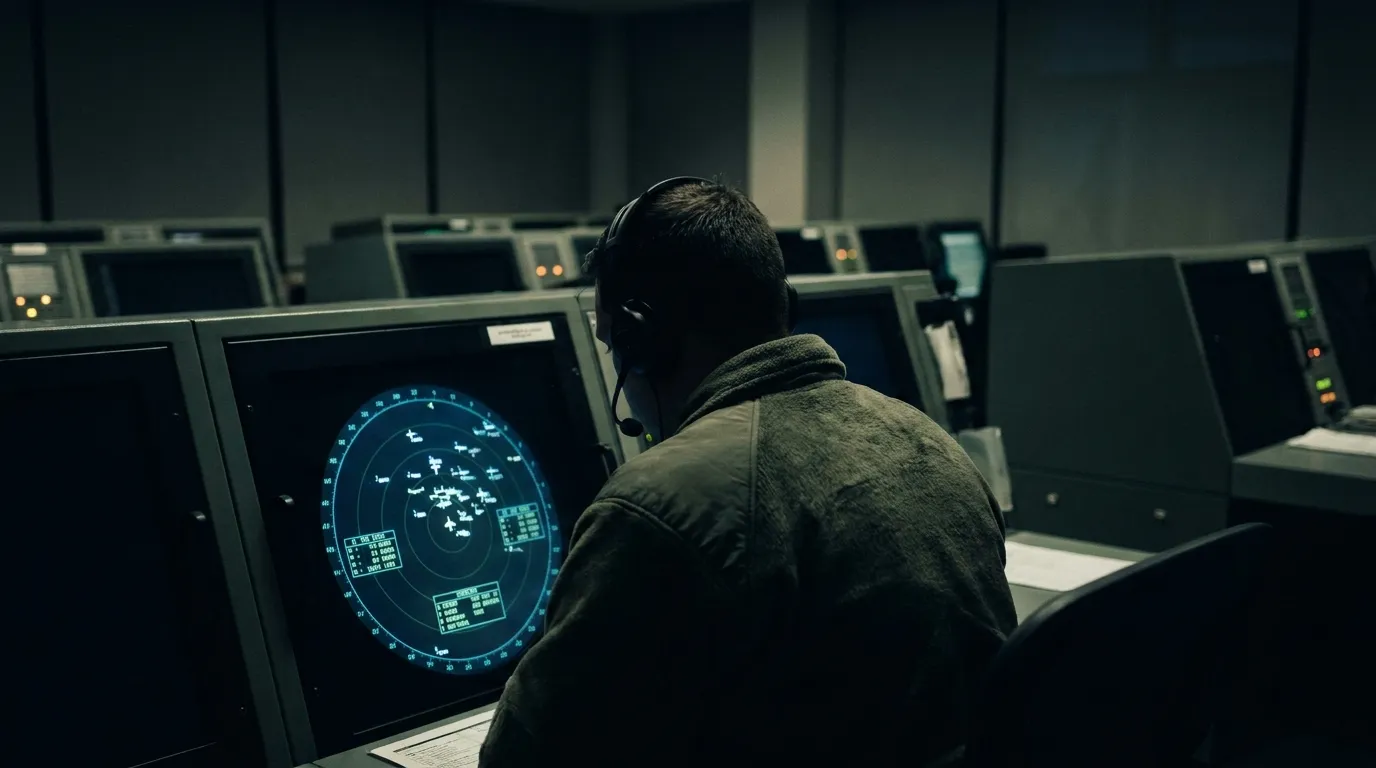
The man in the radar room
The account comes from Jason Judy, a 26-year FAA air traffic controller now flying corporate, who sat down for the debut episode of the Safe Aerospace Podcast on 10 July. The show is run by Ryan Graves, the former Navy F/A-18F pilot who in 2023 became the first serving aviator to testify to Congress about routine UAP encounters in controlled airspace, and who has since built Americans for Safe Aerospace into the main civilian intake channel for airline crews who don’t fancy telling their employer.
Judy’s account is not a saucer story. It is a description of a workflow.
From around 2021, he says, unidentified-object reports started arriving at his facility on something close to a nightly basis — often enough that watch desk managers had a shorthand for it: they’re back. He describes an American Airlines crew reporting an object apparently sitting off their wing for a large part of a leg towards Salt Lake. And he describes what happened on the scopes during the strangest fortnight in modern American air defence, February 2023, when the country shot down four objects in nine days.
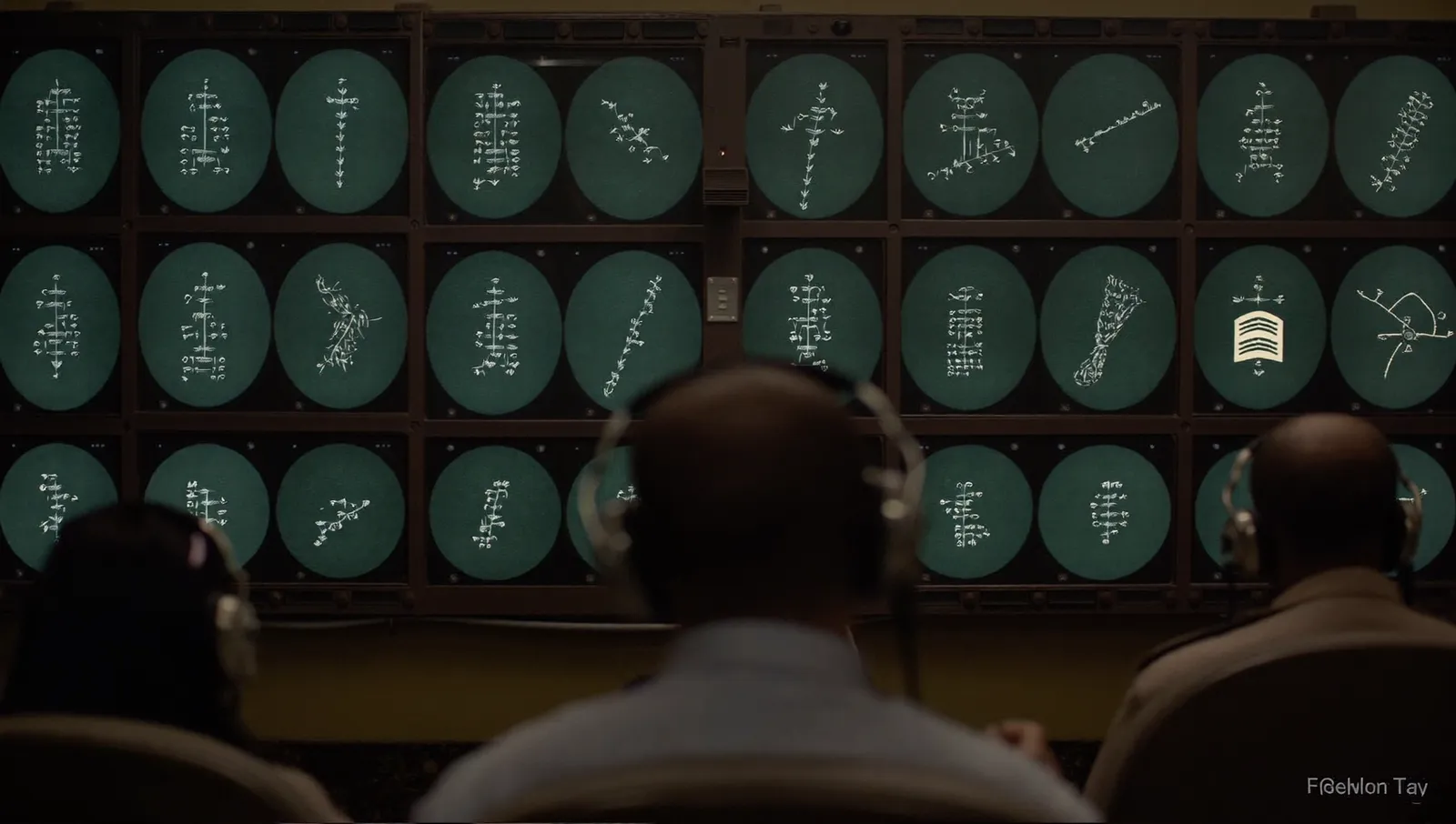
One radar track from that period, he says, was tagged as a balloon. It then executed a U-turn and accelerated from a 28-knot drift to a computed 1,252 knots — roughly 1,441mph — in about a minute, at which point the system dropped the track altogether.
The number that cannot be checked, and why
Take that figure seriously enough to attack it, because it deserves attacking.
“Computed” is doing an enormous amount of work in that sentence. Air traffic automation does not measure a target’s speed directly; it infers velocity by associating successive returns with an existing track and smoothing the result. When the software loses the object it was following and correlates the track with a different return several miles away, the arithmetic produces an acceleration no physical object could survive. Mick West, the sceptic who has spent a decade taking apart the famous Navy videos, has made close to a career of demonstrating this class of artefact, and he is right that it is the boringly common explanation for impossible radar speeds.
The honest position is that a 1,252-knot computed velocity followed immediately by a dropped track is precisely what a correlation failure looks like. It is also precisely what an object performing an extraordinary manoeuvre and leaving the radar’s detection envelope would look like. The two are distinguishable — but only from the raw sensor data, which would show whether the returns are consistent and what the signal quality was doing either side of the jump.
That data does not exist any more. Which is the actual story here.
Forty-five days, and then it’s gone
FAA Order JO 7210.3, which governs how air traffic facilities run, sets out the retention rules for recorded data. Data extraction recordings — the tracking messages, target reports, keyboard entries and interfacility traffic that constitute the underlying record of what the radar system saw and did — are kept for 45 days. So are the SAR/CDR computer and DLOG recordings.
There is one meaningful exception, and it is the exception that matters: recordings related to an accident or incident, as defined in FAA Order JO 8020.16, are held longer. Material tied to a tarmac delay gets a year.
Notice what is not on that list. A UAP report is not an accident. Unless something is hit, damaged or brought to the point of hitting, nothing in the system classifies an unidentified target as an incident — so nothing triggers preservation, and the deletion proceeds on schedule. Judy’s claim that raw radar is erased after 45 days is not a whistleblower revelation. It is written down, it applies to everything, and it has been the rule for years.
Which means the evidential half-life of any American civil radar encounter with an unidentified object is about six weeks. Every case older than that exists only as narrative.
What February 2023 proved about filters
The second half of Judy’s account is the harder one to verify and the more important one to think about: that the system deliberately discards a great deal before a human ever sees it. He describes primary radar returns — the raw skin paint from an object with no transponder — being filtered out above 23,000 feet in en-route operations. We have not been able to confirm that specific threshold from FAA documentation, and we are attributing it to him rather than asserting it.
But the underlying principle is not in dispute, because the US military demonstrated it in public three years ago.
On 12 February 2023, General Glen VanHerck, then head of NORAD, told reporters at the Pentagon that radar systems apply “velocity gates that allow us to filter out low-speed clutter,” alongside further filters for size and altitude — all designed to stop birds, weather and rubbish from generating alerts. After the Chinese balloon was shot down off South Carolina on 4 February, NORAD adjusted those gates. Within days, three more objects were engaged: over Alaska on 10 February, the Yukon on 11 February, and Lake Huron on 12 February.
VanHerck’s own explanation was almost comically direct — “with some adjustments, we’ve been able to get a better categorisation of radar tracks now.” The objects had not arrived. The filters had moved.
That cuts both ways. The sceptic who says “if these things were real, radar would show them” is misunderstanding how radar is configured. The believer pointing at a sudden surge in detections is looking at a settings change, not an invasion — the same trap we flagged when airline pilot sighting numbers started climbing.
The FAA does have a rule now. It is about talking, not keeping
To be fair to the agency, something did change. In September 2025 the FAA issued Notice N 7210.970, which took effect that October and has since been folded into Order JO 7210.3: the term “UFO” was retired in favour of “UAP”, and paragraph 4-7-4 was rewritten accordingly. Pilot reports and controller observations of UAP activity must now be passed to the National Tactical Security Operations Air Traffic Security Coordinator team on the Domestic Events Network, and facilities were given AARO’s public reporting link to hand to anyone else who asks.
That is a genuine improvement on the previous position, which was closer to a shrug. But read what it governs. It is a communications rule: it routes a verbal account to a security desk and points members of the public at a website. Nothing in it instructs a facility to place a preservation hold on the corresponding radar data, or reclassifies a UAP report as the kind of event that survives the 45-day clock.
So the two provisions now sit in the same order, a few chapters apart: report the thing, and delete the record of the thing. Nobody designed that. It is what happens when a reporting policy is bolted onto a records schedule written for a different purpose.
Stephenville is the proof it matters
There is a reason we know anything at all about the 2008 Stephenville sightings in Texas. Dozens of witnesses reported a large, fast object over the town, and the story would have stayed exactly there — testimony, and nothing to test it against — except that investigators went after the FAA radar quickly, and got it. What came back were tracks that did not tidily match the military’s shifting account of what was in the air that night.
That is the whole model. Witness testimony tells you where and roughly when to look; the sensor record tells you whether anything was there. Strip out the second half and every case collapses into the first, which is how this field has spent most of its eighty years.
NASA said as much, formally, in September 2023. Its UAP Independent Study Team — sixteen scientists convened precisely to advise on methodology — recommended the agency lean on the FAA and on the NASA-administered Aviation Safety Reporting System, and work with the FAA to develop air traffic management systems capable of actually acquiring UAP data. Three years on, the reporting has improved and the data pipeline has not.
What a fix would look like
It is unglamorous and cheap, which is possibly why nobody has done it.
A UAP report filed under the FAA’s own new procedure should automatically trigger a preservation hold on that facility’s data extraction recording, exactly as an accident does. That is a records-schedule amendment, not a technology programme. AARO should be able to request retention prospectively, before the 45 days elapse rather than after. And someone should publish what the en-route filters are set to, because a detection system with unpublished thresholds cannot have its negative results interpreted by anyone outside the building.
None of that requires believing anything is up there. It requires only accepting that a system which records unidentified objects and then deletes the recording can never answer the question. It is the same structural gap running through the incursions over American military bases: not secrecy, not physics, just nobody’s job.
The UAP Times take
Credible — four out of five on our scale — and, as ever, the rating is about the claim in the headline, not about aliens.
The institutional facts here are close to a 1. The 45-day retention rule is published. The FAA’s UAP notice is published. VanHerck said what he said, on the record, at the Pentagon. NASA’s recommendations are in a report anyone can download.
Judy’s specific stories are a different tier: a named, identifiable, trained observer with 26 years in the job, speaking on the record on a platform run by a congressional witness. That is about as good as single-source testimony gets, and it is still single-source testimony. The 1,252-knot track in particular has a mundane explanation sitting right beside it, and we cannot tell you which is correct — because the only material that could settle it was deleted, on schedule, in the spring of 2023.
That is the point worth taking away. The government has spent this summer building elaborate new channels for people to come forward and tell it things. It has not spent five minutes making sure the machines keep their notes. You can have all the whistleblowers you like; without the tape, you have a very well-attested rumour.
Further reading: Stephenville 2008: The Texas Lights the Radar Backed Up, The Intelligence Community Now Has a Duty to Report UFOs, and why radar sees ghosts in the first place.
Follow the file
Every new dispatch from the UAP desk, in your inbox. Sourced, sceptical, and no more than one email a week.