

No single person has done more to shape the modern mythology of Area 51 than Bob Lazar, and no single person is harder to pin down. He is either the most consequential whistleblower in the history of the subject or its most durable hoax — and after thirty-seven years, an unusually large paper trail, one felony conviction, one Netflix documentary and several hundred million podcast views, the evidence still refuses to deliver a clean verdict.
That refusal is worth taking seriously, because Lazar is not the usual case. Most UFO claimants leave nothing to check. Lazar leaves receipts everywhere — newspaper archives, phone directories, court records, tax forms — and the strange, stubborn fact of the man is that the receipts keep coming back half right. He really was around a nuclear weapons laboratory. He really was caught by base security on a dirt road outside Area 51. And the physics degrees, the alien reactor and the element that powers it really do evaporate the moment you reach for them.
This is the full file: every claim that can be tested, what the test found, and a graphical timeline of how it all fits together. It is a long read, because the honest version of this story is long. The short version — believer or debunker — always has to leave something out.
The man in the shadows
The story starts, properly, in a darkened television studio in Las Vegas. In May 1989, station KLAS-TV aired an interview between investigative journalist George Knapp and a man in silhouette calling himself “Dennis” — a name borrowed, he later said, from his supervisor at the secret site. The silhouette claimed the United States government was in possession of flying saucers, and that he had been hired to help work out how one of them functioned.
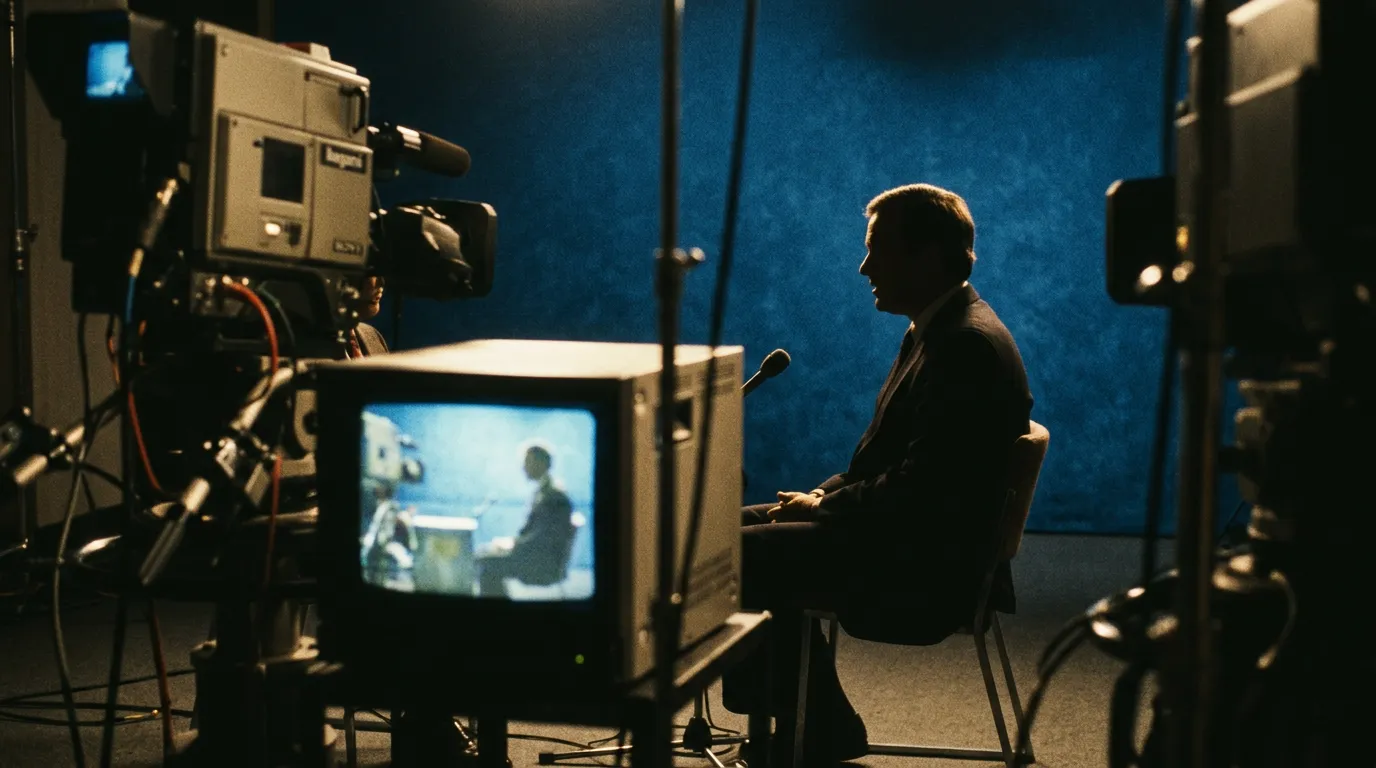
By November 1989 the silhouette had a name and a face. Robert Scott Lazar — born January 1959 in Coral Gables, Florida, raised on Long Island, resident of Las Vegas — sat under studio lights for Knapp’s multi-part series and repeated the claim on the record. The series was a regional sensation, and it did two things that still define the case. It made Area 51, until then an obscure patch of restricted Nevada desert, into the most famous secret base on Earth. And it staked Lazar’s entire story on Lazar himself, because he arrived with no documents, no photographs and no colleagues — only an account.
Knapp, it should be said, is not a fringe figure: he is a multiple Peabody and Emmy award winner who has broken genuinely important stories in this field, and he has spent three decades defending Lazar’s basic honesty. That defence is part of the record too. But so is the fact that Knapp is the story’s co-author in every practical sense — the man who found Lazar an audience, marshalled the corroboration and framed the narrative. Almost everything supportive we know arrives through that one channel. Keep that in mind throughout; it cuts both ways.
The story he told
Lazar’s account, assembled from the 1989 broadcasts and repeated with impressive consistency ever since, runs like this. In late 1988, after an interview arranged through the defence contractor EG&G — and, he later suggested, a good word from the physicist Edward Teller — he was hired for occasional work at a facility called S-4, hidden in the mountainside at Papoose Lake, about fifteen minutes’ drive south of the main Groom Lake base. Employees flew from Las Vegas to Groom Lake on the contractor shuttle, then rode a bus with blacked-out windows to the site, where nine hangar bays were cut into the rock behind camouflaged, sand-textured doors.
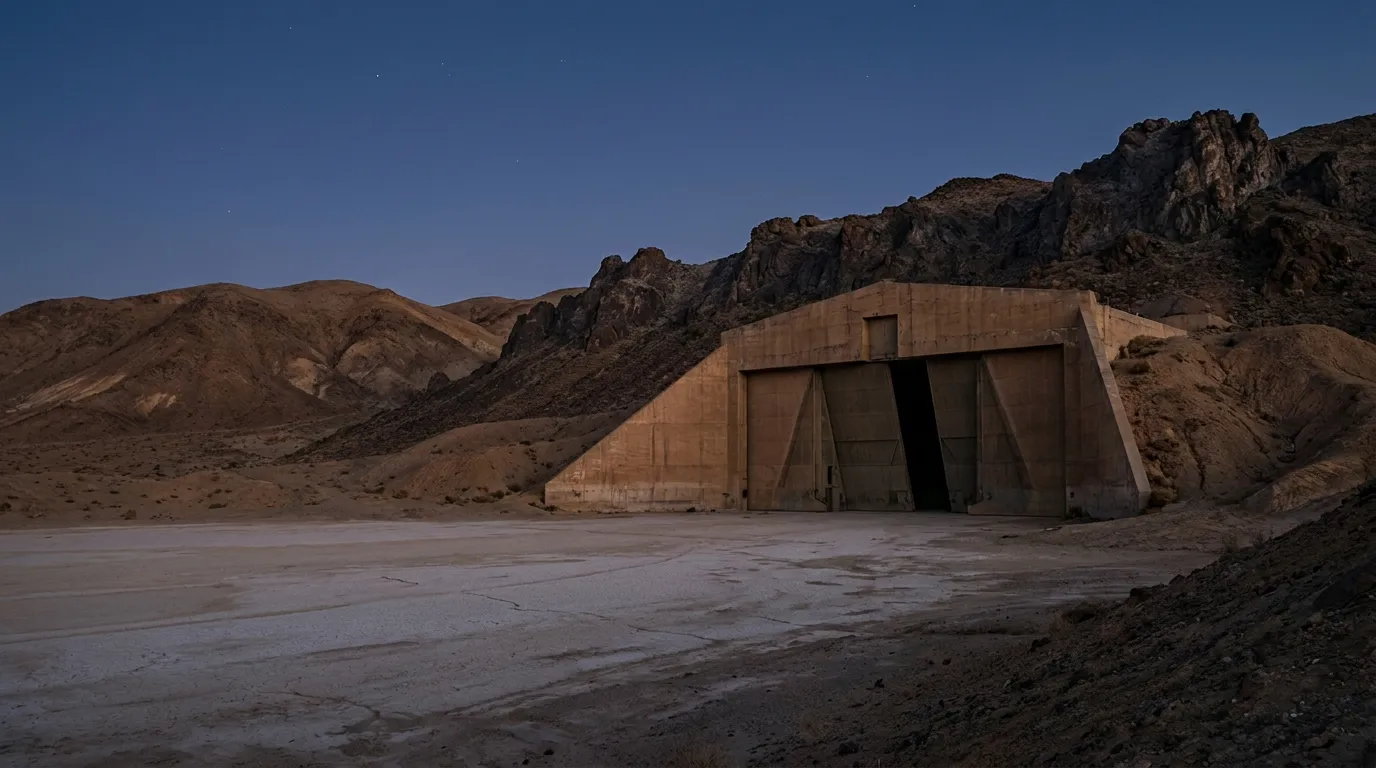
Inside, he says, were nine flying saucers. He worked mainly on one — the “Sport Model”, he called it — and his job, alongside a colleague he named only as Barry, was to understand its propulsion: an antimatter reactor fuelled by a stable isotope of element 115, an element which in 1989 did not officially exist. The reactor, he said, generated a gravity field that let the craft bend spacetime around itself. He read briefing documents describing crashed craft and their occupants. Security was theatrical and menacing — guns drawn, threats delivered, his home phone tapped. After a handful of visits over several months, it all ended in the spring of 1989, when he was caught showing friends the night sky outside the base.
It is worth pausing on what kind of claim this is. It is not a light in the sky, a memory, or an interpretation. It is a detailed, factual account of a specific facility, a specific technology and a specific employment history — which means, unusually for this field, nearly every element of it can be checked against something. So let’s check.
The case file at a glance
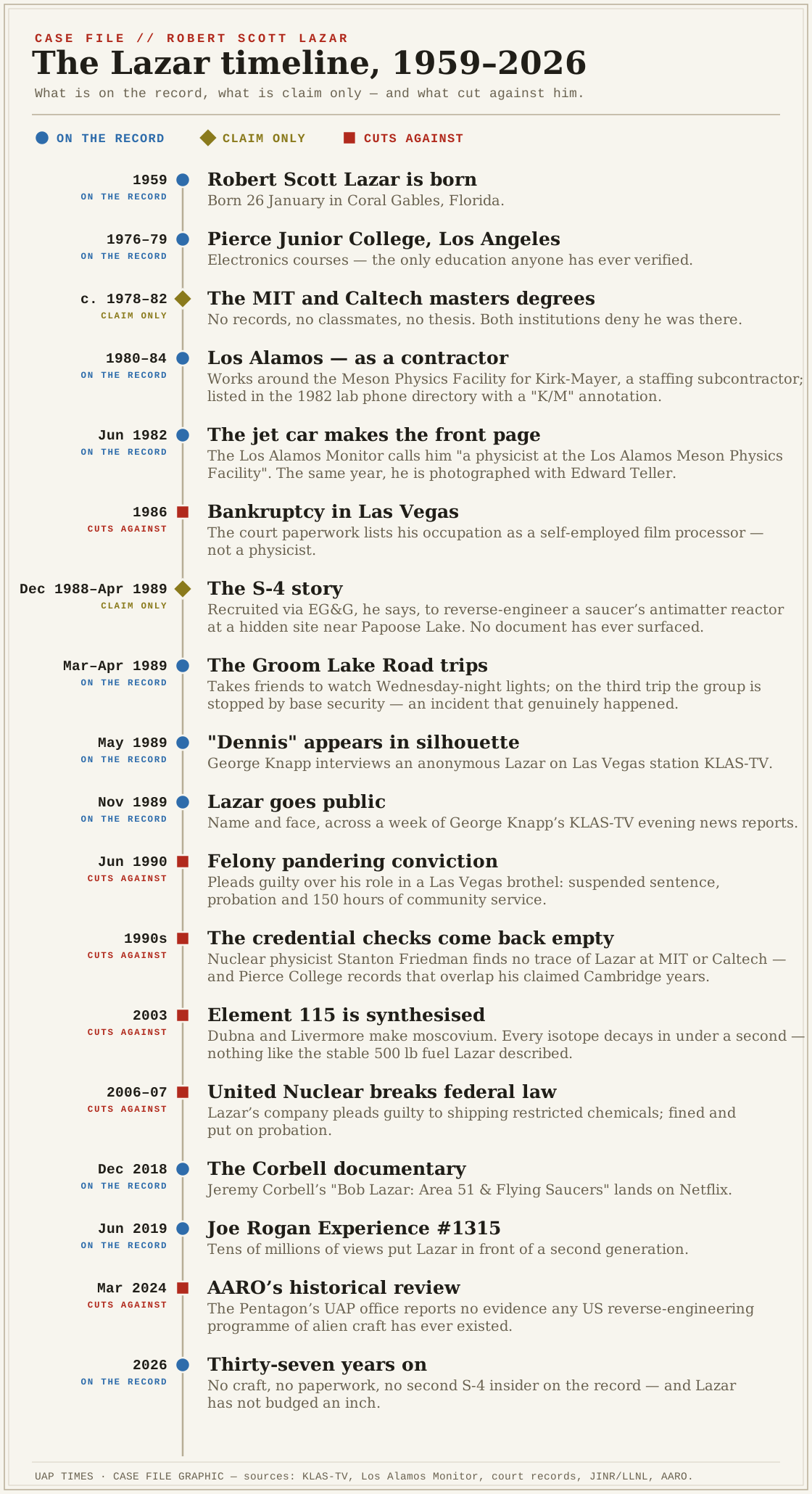
Read the colours, not the legend of the man: the blue events put Lazar near real institutions and real dirt roads. The amber events are the extraordinary core, resting on testimony alone. The red events are the documented record cutting against him. The pattern — mundane claims verify, extraordinary claims never do — is the whole case in miniature.
What actually checks out
Give Lazar his due, because a surprising amount of the ordinary scaffolding holds.
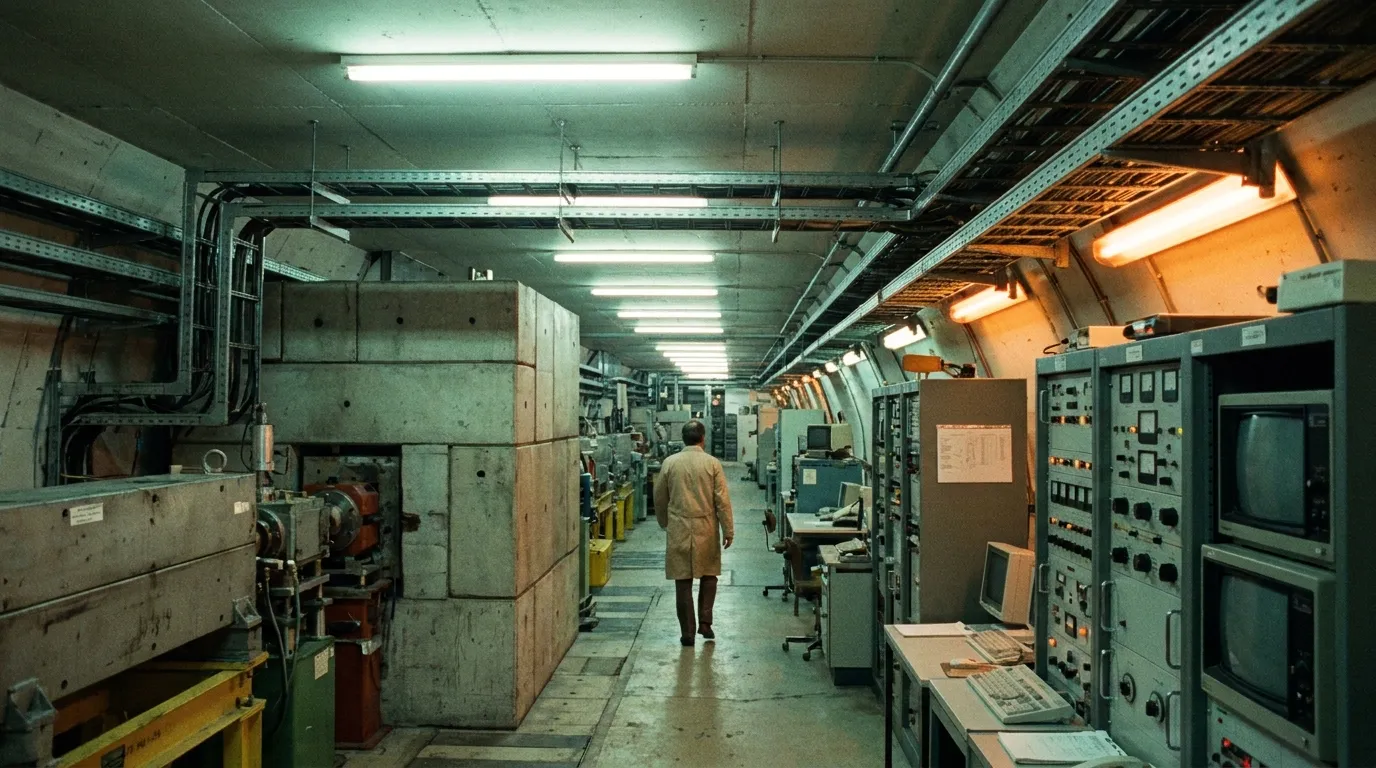
On 27 June 1982, the Los Alamos Monitor put Lazar on its front page over a jet-powered car he had bolted together, and staff writer Terry England described him as “a physicist at the Los Alamos Meson Physics Facility”. A 1982 Los Alamos phone directory lists “Lazar, Robert” among laboratory personnel. Knapp says that when he went checking in 1989, former Los Alamos workers remembered Lazar on site, and that the laboratory’s initial flat denial of any record of him softened, over time, into an acknowledgement that he had been there in a contractor capacity. The man was demonstrably in and around one of the most serious physics institutions in the world.
Two more things check out, and they matter. First, the security stop: in the early spring of 1989 Lazar really did take friends up Groom Lake Road at night to watch lights, and the group really was caught by base security — an incident corroborated beyond his own word, and about as close as this story gets to independent confirmation that something was going on in his life involving that base. Second, the consistency: unlike most figures in this genre, Lazar has told materially the same story since 1989, declined to embroider it with new revelations, and has spent much of the past three decades visibly bored of telling it. Serial fabricators usually escalate. He hasn’t.
That is the honest credit column, and it is more than almost any other self-declared insider can produce. The trouble begins the moment you look at what, precisely, those verified facts establish.
The K/M problem
Return to that 1982 phone directory, the single most-cited piece of pro-Lazar evidence, and read the whole line. Next to Lazar’s name is the annotation “K/M” — Kirk-Mayer, a staffing firm that supplied contract technicians to the laboratory. The directory that proves Lazar was at Los Alamos proves, in the same breath, that he was not a Los Alamos physicist. He was an outside contractor’s technician working around the Meson Physics Facility: a real job at a real facility, and a fundamentally different one from the story’s requirements.

The Monitor front page has the same shape. Terry England, the reporter who wrote it, has since admitted he simply took Lazar’s word for the “physicist” job title and never checked. A local-paper human-interest piece about a jet car is evidence that Lazar said he was a physicist in 1982; it is not evidence that he was one. And when Lazar filed for bankruptcy in Las Vegas in 1986, the paperwork gave his occupation not as physicist but as a self-employed film processor. His supporters read that as a man scrubbed from the system; the simpler reading is that the system never contained what he claimed.
The directory that proves Lazar was at Los Alamos proves, in the same breath, that he was not a Los Alamos physicist.
None of this is fatal to the S-4 story on its own. Plenty of capable people have been underemployed. But the case for Lazar has always leaned on “he was a Los Alamos physicist, so the rest deserves the benefit of the doubt” — and the checkable record supports the location while flatly contradicting the title.
The credentials that vanish
Lazar claims a master’s degree in physics from MIT and a master’s in electronic technology from Caltech. Neither institution has any record of him — not as a graduate, not as a student, not as a name in a yearbook. No thesis has ever surfaced, no professor has ever remembered him, no classmate has ever come forward. For a man whose mundane life left fingerprints on newspaper archives and phone directories, the total void where two elite degrees should be is loud.
The late nuclear physicist Stanton Friedman — a Roswell advocate and no reflexive debunker, which makes his verdict sting more — did the legwork in the 1990s: registrars, alumni offices, yearbooks. He found no trace of Lazar at either university, a high-school record that placed him in the bottom third of his class, and enrolment at Pierce Junior College in Los Angeles — electronics courses, the only education anyone has ever verified — during the very years Lazar should have been in Cambridge, Massachusetts. Friedman also noted that William Duxler, the man Lazar named as his Caltech thesis adviser, was in fact a physics professor at Pierce. That detail is quietly devastating: it suggests not a scrubbed record but a résumé assembled from a real, humbler education with the labels upgraded.
Lazar’s answer has always been that the government erased him. As a defence it explains everything and predicts nothing — and it asks you to believe in a clean-up crew meticulous enough to delete him from two universities’ registrars, yearbooks and every professor’s memory, yet sloppy enough to leave his name sitting in a Los Alamos phone book for journalists to find. A cover-up that only ever removes the evidence that would help him, and only ever misses the evidence that hurts him, is indistinguishable from no cover-up at all.
A W-2 from a department that does not exist
The one piece of physical documentation Lazar has ever produced for the S-4 job is a W-2 tax slip for 1989, issued by the “United States Department of Naval Intelligence” for $958.11 — a couple of weeks’ wages, consistent, believers note, with his handful of visits. It even entered the court record at his 1990 sentencing.
It is a strange exhibit. There is an Office of Naval Intelligence; there has never been a Department of Naval Intelligence. Sceptics who chased the employer identification number on the form reported that it corresponds to no known federal payer, and the form carries formatting oddities — including the mysterious mail-stop style code “E-6722MAJ” — that sit awkwardly with genuine government payroll documents. The W-2 is either evidence of a payroll system so secret it uses a nonexistent agency name and an untraceable EIN, or it is a prop. What it cannot be is independent corroboration, because there is no thread on it anyone has ever been able to pull.
The Edward Teller thread is similar. Lazar’s version — Teller saw the 1982 jet-car front page, remembered him, and years later passed his CV along for the S-4 job — is anchored to one genuine fact: Teller really did visit Los Alamos to lecture in 1982, and the two plausibly met. But when Knapp put Lazar’s name to Teller on camera years later, the great man produced a masterpiece of the careful non-answer — allowing that he had probably met him, declining to say anything more. Believers hear a man honouring classification; sceptics hear a physicist declining to vouch for a stranger. It is a Rorschach blot, not a reference.
Wednesday nights on Groom Lake Road
Now the strongest card in Lazar’s hand. In March and April 1989, Lazar drove friends — among them estate appraiser Gene Huff and the aviation-world conspiracist John Lear — into the desert off Groom Lake Road on consecutive Wednesday nights, telling them saucer test flights were scheduled. On those nights they watched, and filmed, a brilliant light rising and manoeuvring above the distant range. On the third outing the group was caught by base security, questioned, and sent on their way; Lazar says the breach ended his employment, at gunpoint, shortly afterwards.
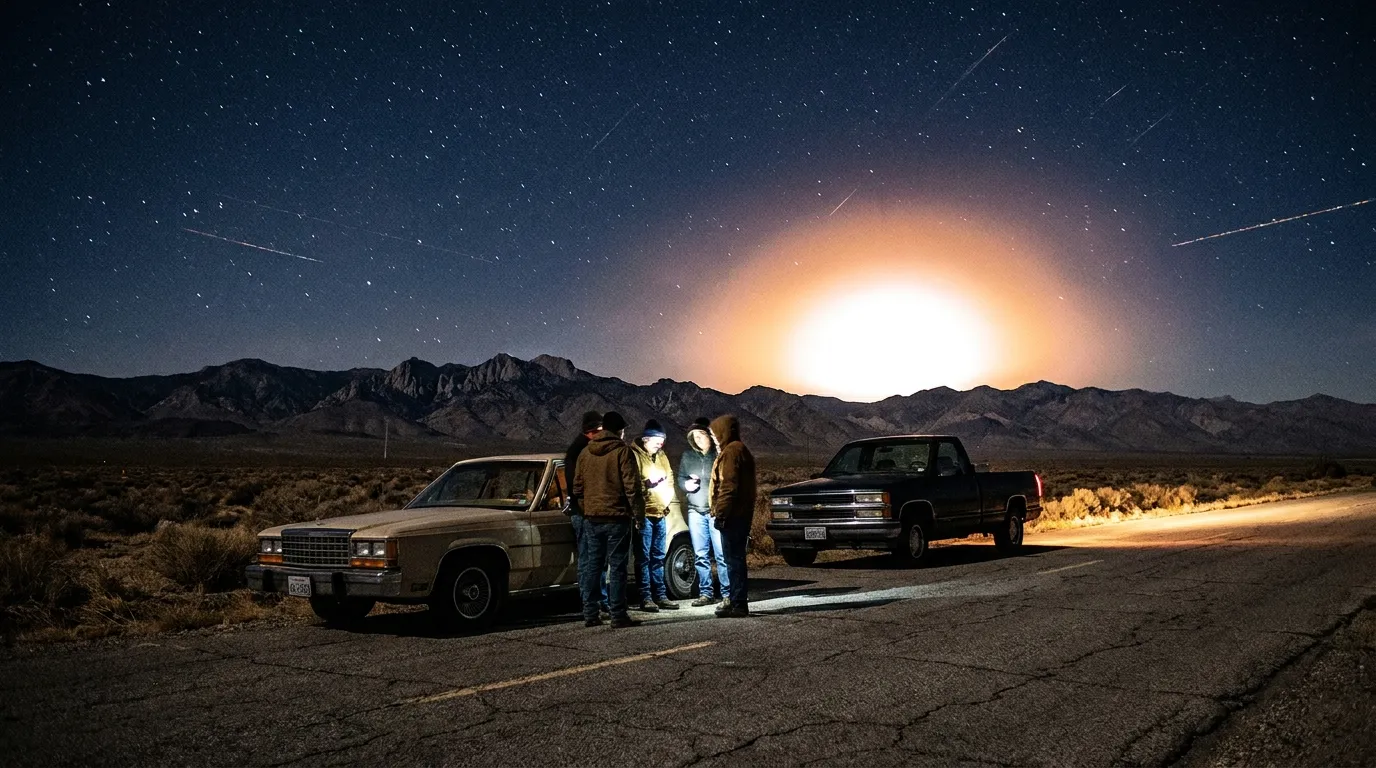
The stop is real — it is the one moment where Lazar’s secret life touches the official record. And the reasoning it supports is genuinely interesting: how did a Las Vegas technician know which nights to drive out and watch? His companions came away convinced he had inside knowledge of a test schedule.
But hold the two halves of the claim apart. “Lazar knew something was flying near Groom Lake on certain nights” is well supported. “The something was an alien saucer from S-4” rests entirely on his say-so. Groom Lake in 1989 was among the most active classified flight-test sites on the planet — the F-117 was still officially secret, and exotic programmes ran at night as a matter of routine. Distant lights performing apparently impossible feats are exactly what a classified aircraft, flares or helicopters look like from many miles away across a desert basin at night. A man with any contact inside the base’s contractor ecosystem — which Lazar, EG&G-adjacent as he was, plausibly had — could learn that Wednesdays were busy without ever stepping inside a hangar.
Where the story came from
The passenger list on those desert runs matters more than it first appears, because it answers a question sceptics consider central: where would a jobbing technician get a story like S-4 from, if not from S-4?
John Lear — son of the Learjet founder, record-setting pilot, and by the late 1980s the most energetic conspiracist in American ufology — was in Lazar’s circle before any of this went public, and it was Lear who put Lazar in a room with George Knapp. And Lear’s own gospel, which he had been broadcasting since 1987, already contained the entire skeleton of what Lazar would later describe: crashed saucers in government hands, secret desert installations, reverse-engineering programmes, briefing papers about deals with alien species. Lazar’s S-4 account did not arrive from nowhere; it arrived from inside the orbit of the one man in America most invested in exactly that narrative, at exactly the moment Lear needed a first-hand witness to make the mythology reportable.
That is circumstantial, and it should be weighed as such. Lazar has never adopted Lear’s wilder cosmology — indeed he has spent decades visibly rolling his eyes at it, which believers cite as evidence of his independence. The counter-reading is subtler: a story engineered to be believed would look precisely like Lear’s lore with the lurid parts sanded off, delivered deadpan by a man in glasses who claims to hate the attention. Both readings fit the record. What the record will not support is the popular notion that Lazar’s tale emerged, unprompted and unshaped, from a naive insider with no exposure to UFO mythology. The mythology was in the room from the start — with a motive, and a journalist’s phone number.
Element 115: prophecy, or a lucky number?
Lazar’s signature scientific claim was that the saucers ran on a stable isotope of element 115 — an element unknown in 1989 — of which the programme allegedly held around five hundred pounds. When Russian and American physicists at Dubna and Lawrence Livermore synthesised element 115 in 2003, later named moscovium, his supporters declared prophecy fulfilled. It remains the single most persuasive-sounding line in the pro-Lazar brief, and it dissolves fastest under inspection.
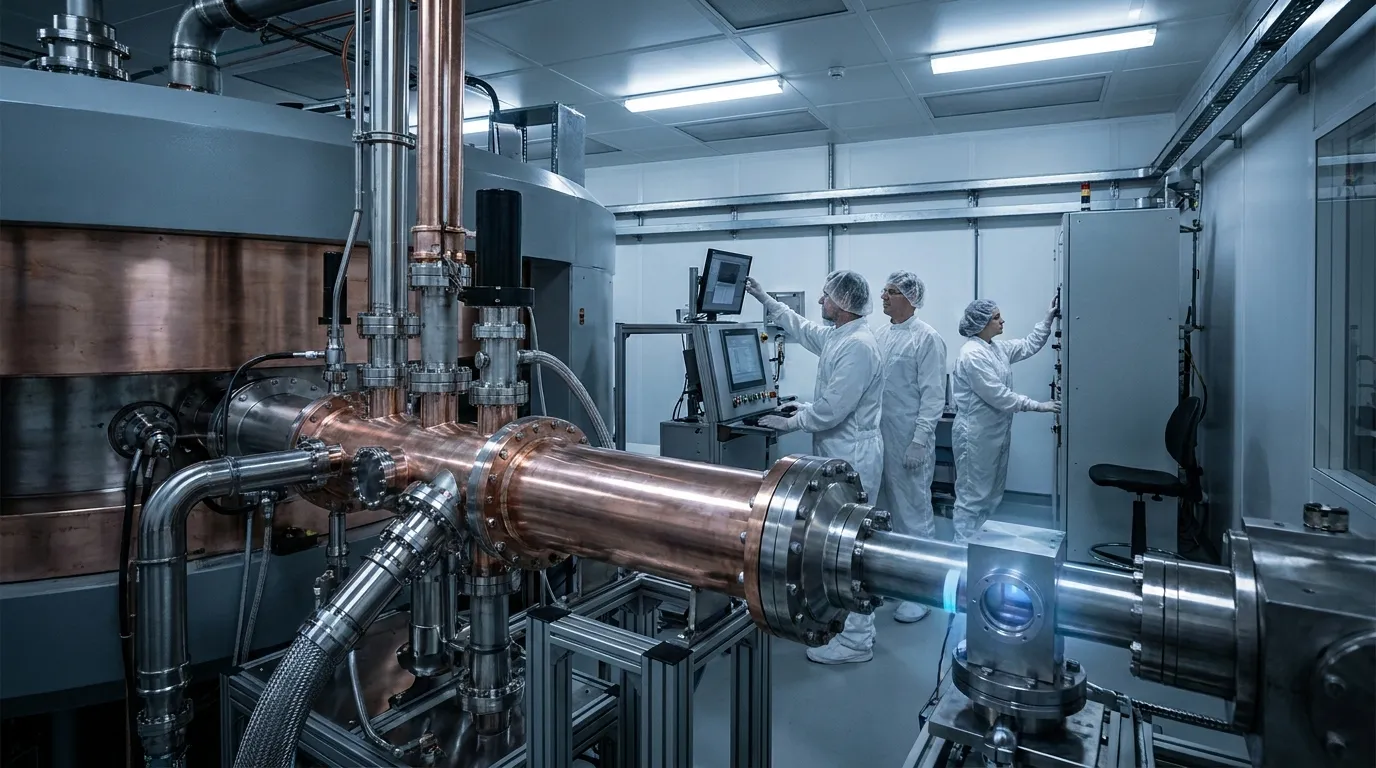
First, the prediction wasn’t one. Physicists had been publishing about hypothetical superheavy elements — including element 115 and the theorised “island of stability” that might grant some of them longer lives — since the late 1960s; the idea was sitting in popular-science books Lazar could have read. Naming a not-yet-synthesised element was no more clairvoyant than predicting a blank square on a chess board will one day hold a piece.
Second, the substance found is nothing like the substance described. Moscovium has been produced literally atoms at a time by slamming calcium-48 into americium-243; its longest-lived known isotope survives for a fraction of a second before decaying, and none of its measured properties involve gravity generation, antimatter production or machinable stability. The island of stability remains a respectable hypothesis — but even its optimists talk about half-lives of minutes or days for isotopes nobody can yet make, not about warehouse quantities of inert metal you can mill into wedges. Lazar named a number that chemistry later filled in; the thing that filled it behaves nothing like his story requires.
The physics nobody can use
Set aside where element 115 came from and examine what Lazar says it does, because this is where his claimed training should show — and doesn’t.
His mechanism, repeated since 1989, runs roughly: bombard the stable 115 with protons to briefly make element 116, which decays and releases antimatter; the annihilation energy drives “gravity amplifiers” that emit “gravity-A waves” — the strong-force-as-gravity, in his telling — allowing the craft to pinch distant spacetime toward itself and fall across the gap. It sounds wonderfully specific. To a physicist it is a collage. “Gravity-A” and “gravity-B” are not terms from any physics literature; the strong nuclear force is not gravity that leaks beyond the nucleus, and treating it as one garbles two of the four fundamental interactions at a stroke. Proton capture on a superheavy nucleus does not yield tidy antimatter on demand — and an antimatter power plant in a hangar would announce itself with a gamma-ray signature nobody has ever had to shield Nevada from.
More telling than any single error is the missing genre of evidence: mathematics. A physicist with a master’s from MIT explaining a propulsion system he studied for months would be expected — would be unable to resist — writing down the model: field strengths, energy budgets, anything. In thirty-seven years of interviews, Lazar has never produced an equation, a calculation or a testable quantity; pressed on fundamentals, he reliably retreats to “that’s what the briefings said”. Physicist critics who have gone through his accounts line by line — David Morgan’s dissection is the standard reference — conclude the material reads not like recalled science but like remembered description of science, pitched at exactly the depth of a bright 1980s popular-science reader. Which, on the sceptical account of his education, is exactly what he was.
The believer’s rejoinder — he was a hands-on experimentalist handed a black box, not a theorist — has some force. But it concedes the point that matters for credibility: the physics in the story provides no independent evidence for the story. It is testimony wearing a lab coat.
The hand scanner: his best detail, downgraded
For years, Lazar’s description of S-4’s exotic security — a scanner that read the bone structure of the hand — looked like his most quietly impressive claim. When Jeremy Corbell turned up 1980s photographs of exactly such a device guarding a secure federal facility, it was hailed as vindication: how could Lazar have known?
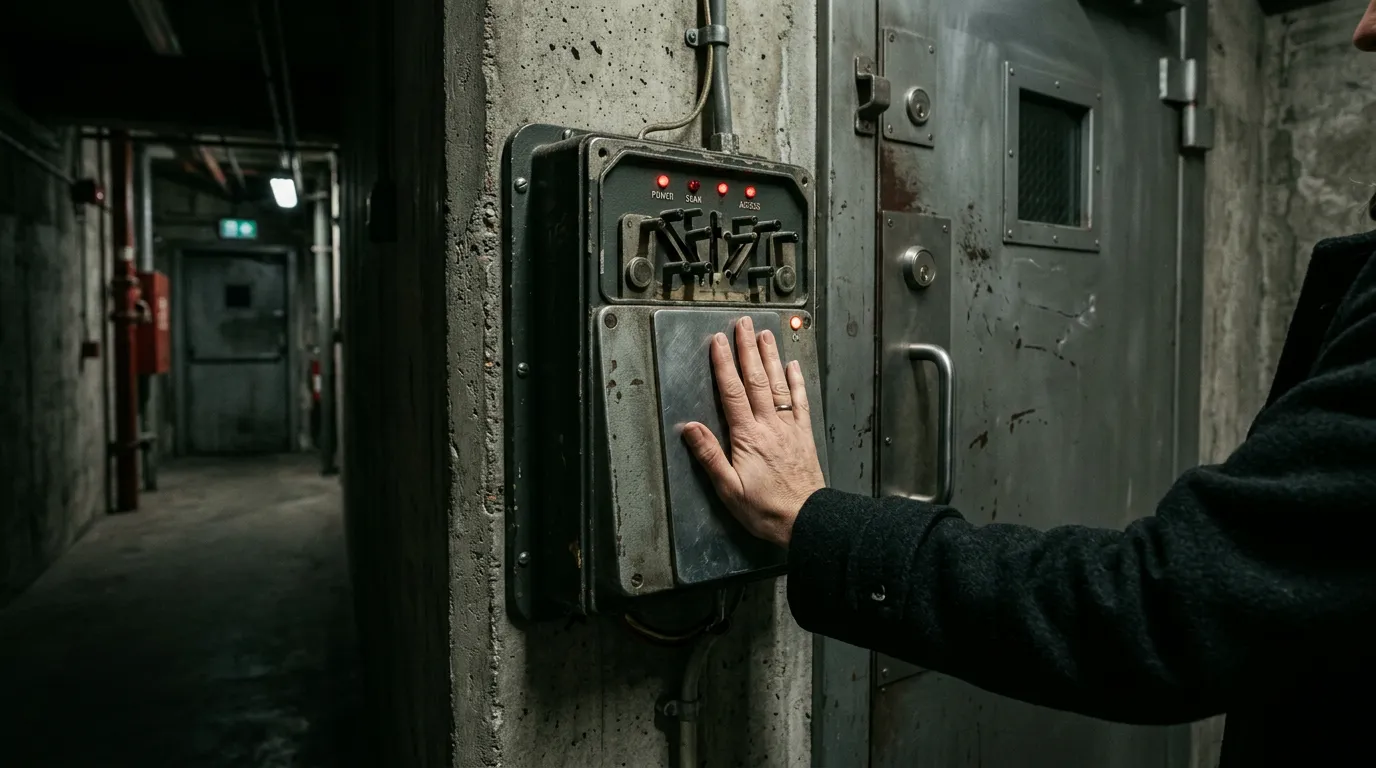
The answer, supplied in deflating detail by sceptic Mick West, is that the device was the Identimat — a commercial hand-geometry reader sold openly from the early 1970s and installed at various secure sites. Better: it appears on screen in Close Encounters of the Third Kind, Steven Spielberg’s 1977 UFO blockbuster, granting a character access to a secret facility. Tens of millions of people had watched a “top-secret hand scanner” guard a government UFO site a decade before Lazar described one. The detail is still consistent with his having passed through a secure facility somewhere; it is no longer evidence of it. That is the recurring fate of Lazar corroboration: on inspection, “impossible for him to know” keeps turning into “available at the cinema”.
The rap sheet
Credibility cases have to weigh the man as well as the story, and the record here is not neutral. In June 1990, with his fifteen minutes still fresh, Lazar pleaded guilty to felony pandering in Las Vegas after helping run the computerised books — and by the court record, rather more — of an illegal brothel; he took a suspended sentence, probation and community service. In 2006, federal agents raided his scientific-supply company, United Nuclear, over sales of restricted chemicals used in illegal fireworks; the company pleaded guilty in 2007 and was fined and put on probation.
A criminal record does not disprove a word about S-4 — plenty of honest witnesses have messy lives. But this particular story has no physical evidence, no documents and no second witness; it is carried entirely by the credibility of one man’s testimony. That dependence is the trap the field keeps walking into: it is why decades later the same energy is being spent litigating whether Luis Elizondo is who he says he is rather than what the records show. A felony conviction involving deception, plus a corporate guilty plea for breaking federal law, are not details a responsible reader gets to wave away in a case that consists of nothing but the defendant’s word.
Then there is the 2017 FBI raid on United Nuclear’s Michigan premises, which the Corbell documentary presents with heavy implication that the government was hunting Lazar’s smuggled element 115. Police records obtained by journalists and The Black Vault tell a grimmer, entirely terrestrial story: investigators were tracing the source of thallium in a poisoning murder inquiry, checking whether the victim’s husband had bought the toxic metal from Lazar’s chemical catalogue. Lazar was not a suspect. The episode is instructive less for what it says about Lazar than for what it says about the mythology machine around him: an ordinary, documented event was repackaged as cosmic persecution for an audience primed to believe it.
The resurrection
By the mid-2000s the story had gone quiet; Lazar sold chemicals and lab supplies in Michigan and gave interviews reluctantly. What changed was the era. The 2017 New York Times revelations about Pentagon UAP programmes — the ones that made the Tic Tac encounter a household case — cracked the stigma, and into that opening stepped filmmaker Jeremy Corbell with Bob Lazar: Area 51 & Flying Saucers (2018), narrated by Mickey Rourke, followed in June 2019 by Joe Rogan Experience #1315: two and a half hours of Lazar, calm and technical, in front of what became tens of millions of viewers.

The resurrection worked partly because Lazar presents well — understated, weary, allergic to flourish — and partly because the new audience had no memory of the old homework. The documentary does not dwell on Kirk-Mayer, Friedman’s registrar checks, the Duxler detail, the pandering conviction’s specifics or the Identimat; the Rogan conversation, warm and uninterrogated, ran on the same rails. A generation met the legend before the file, in the same years that Washington was again taking the broader UAP question seriously for its own, better-evidenced reasons. Guilt by association runs both ways: Lazar lent Area 51 its aliens, and now the era’s genuine official seriousness lends Lazar its respectability. Neither transfer is earned.
The dog that never barks
Step back from the details and audit the story the way you would any thirty-seven-year-old claim: what should exist by now, if it were true?
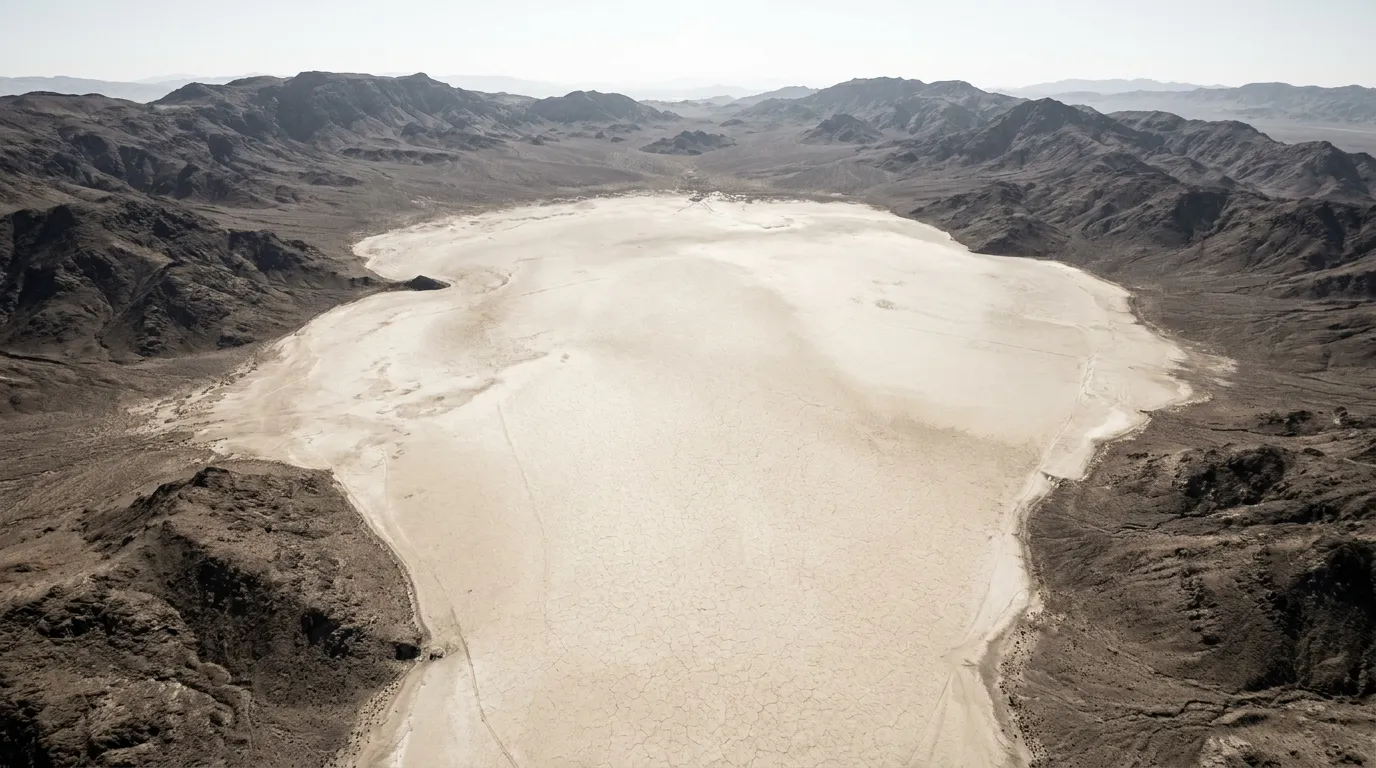
A second witness, for one. S-4 as described employed guards, pilots, scientists, cooks and bus drivers across decades; not one has ever surfaced with Lazar-consistent, checkable testimony. Imagery, for another: Papoose Lake sits under commercial satellites that resolve individual cars, and shows a bare playa — no hangar doors, no roads sized for the traffic, no infrastructure for a facility allegedly busier than Groom Lake itself. Documents, most of all. The modern disclosure era has pried loose an astonishing amount of paper — and the Pentagon’s AARO, tasked by Congress to run down precisely these legends, reported in March 2024 that every alleged hidden reverse-engineering programme it investigated either never existed or turned out to be an ordinary classified project with nothing extraterrestrial about it. Whatever one thinks of official disclosure’s limits, the specific, named claim at the heart of Lazar’s story has now been formally investigated and formally come back empty.
Each absence has an apologetic answer — witnesses are terrified, the doors are camouflaged, AARO is the cover-up. Stack them, though, and the story requires a conspiracy that performs perfectly against every form of evidence that would confirm the tale, while failing comically against every form that undermines it. Thirty-seven years is a long time for a dog never to bark.
The believer’s best case, stated fairly
An honest file states the other side’s strongest hand, so here it is. Lazar was verifiably inside the fence of the American classified world, at Los Alamos and around the Nevada contractor ecosystem, when almost nobody who fabricates UFO stories can say the same. He knew which nights to park on Groom Lake Road, and the resulting security stop is documented. His story has stayed rigid for nearly four decades while his finances would have rewarded embellishment handsomely; he has repeatedly said no to easy escalations — no channelled aliens, no fresh revelations, no annual conference circuit. Polygraph sessions arranged in 1989 came back mixed rather than damning. George Knapp — a serious, decorated journalist who has interviewed everyone in this saga and chased every lead — emerged believing him. And the field’s later history, from the Tic Tac to Congress’s interest in crash-retrieval allegations, proved that official denial and real programmes can co-exist for decades.
It is a real case. It is also, note carefully, a case built entirely from proximity and demeanour — he was near real secrets, and he lies well or not at all — rather than from any artefact of the story itself. Thirty-seven years in, no element of the extraordinary core has ever independently verified. That asymmetry is the file’s bottom line.
The UAP Times take
Bob Lazar endures because he is genuinely unusual: a claimant with real proximity to real classified places, a documented brush with base security, and a story he has never once upgraded. That is enough to keep him out of the obvious-hoax bin, and we understand why serious people — Knapp above all — have spent careers unwilling to throw him away.
But an evidence file has to be read by its weight, not its atmosphere. The verifiable facts describe a bright, underemployed contractor technician with upgraded credentials: a directory line that says Kirk-Mayer, a bankruptcy that says film processor, registrars that say nothing at all, a thesis adviser who turns out to teach at a junior college, a W-2 from an agency that does not exist. The extraordinary facts — nine saucers, a stable element 115, an antimatter reactor — rest on testimony alone, and every prop that once looked like corroboration has been downgraded on inspection: the element to a sub-second laboratory curiosity, the hand scanner to a Spielberg film, the FBI raid to a poisoning inquiry, the hidden programme to an AARO finding of nothing. Treat Lazar as the most interesting unproven story ufology owns — a five-decade masterclass in how far proximity, consistency and one loyal journalist can carry a claim — and you have the honest version. Treat him as evidence, and you have left the file for the legend.
Sources and citations
The primary materials this file draws on, for readers who want to pull the threads themselves:
- Tom Mahood’s Robert Lazar timeline, the most rigorous independent chronology of the case, including the 1982 Los Alamos Monitor jet-car article.
- Las Vegas Review-Journal court reporting on the pandering case, June and August 1990.
- Stanton Friedman’s credential investigation, summarised with citations at RationalWiki’s Lazar entry.
- George Knapp’s original KLAS-TV reporting (May and November 1989) and his subsequent decades of coverage.
- On element 115: the discovery and isotope record for moscovium (JINR/LLNL, 2003 onwards).
- Mick West’s identification of the Identimat hand scanner, including its 1977 appearance in Close Encounters of the Third Kind.
- MJ Banias for Vice: “Bob Lazar Says the FBI Raided Him to Seize Area 51’s Alien Fuel. The Truth Is Weirder”, and the Laingsburg Police Department records at The Black Vault.
- The Pentagon’s AARO Historical Record Report, Volume 1 (March 2024) on alleged reverse-engineering programmes.
- April Corbin Girnus for Nevada Current: “UFOs, the Pentagon, and the enigma of Bob Lazar”.
Further reading: The Tic Tac at 25: What the Nimitz Encounter Still Gets Right, Pentagon’s Latest UAP Report Logs 240 New Cases, and — for the disclosure bill that would let the government seize recovered material from private contractors — The House Just Voted for UAP Disclosure. For the same separation of claim from confirmation applied to a live scientific case, see Four Telescopes Listened to 3I/ATLAS for a Year. For what happens when an allegedly exotic sample actually reaches a national laboratory, see the UAP material analyses. For another case Philip Klass built a specific, documented financial-motive theory against, see Travis Walton, 1975.
Follow the file
Every new dispatch from the UAP desk, in your inbox. Sourced, sceptical, and no more than one email a week.