
There is a particular kind of document that does more for this subject than any amount of grainy footage, and the Pentagon has just published one. It is a stenographer’s transcript. It is dry, procedural, and occasionally tedious. It records a meeting held at 1300 hours on 16 February 1949, in conference room P-162 of the Los Alamos Scientific Laboratory, at which some of the most consequential physicists alive sat down to work out why bright green lights kept flying over America’s nuclear weapons infrastructure — and failed.
Among those present: Norris Bradbury, who had taken over the laboratory from J. Robert Oppenheimer; Edward Teller, later the father of the hydrogen bomb; Frederick Reines, who would win a Nobel Prize for detecting the neutrino; and Lincoln LaPaz, head of the University of New Mexico’s Institute of Meteoritics and probably the best-qualified person in the world to say whether a thing in the sky was a meteor. Representatives of the Atomic Energy Commission, the FBI and the military were in the room too.
They talked for a long time. They did not reach a conclusion. That is the story.
What was actually released
On Friday 10 July, the Department of War posted its fourth batch of declassified UAP material to the portal it runs under the acronym PURSUE — the Presidential Unsealing and Reporting System for UAP Encounters, live at war.gov/ufo since 8 May. The batch runs to 40 files: 14 documents, 19 videos, four audio files and three images, drawn from the Pentagon, NASA, the CIA, the FBI and the Department of Energy.
Most of the coverage went, understandably, to the moving pictures and the recent cases. There is a sensor video from over the Yellow Sea showing what the accompanying paperwork calls an area of contrast resembling a six-pointed star. There is an Energy Department file on a September 2015 intrusion over the Pantex plant near Amarillo, Texas — where American nuclear weapons are assembled and dismantled — in which security officers put the site into lockdown and pursued a silent, diamond-shaped object roughly four feet tall, drifting at ten to fifteen miles per hour with no propulsion system anybody could identify through binoculars. There is an aviator’s account of something “unlike anything I had seen” in 28 years of service.
There are also three NASA stills from the 1996 STS-80 shuttle mission, published without the metadata that would make them interpretable.
All of that is worth attention. But the historical document is the one that will still be cited in a decade, because unlike a video it can be read, quoted and checked.
Room P-162, 1300 hours
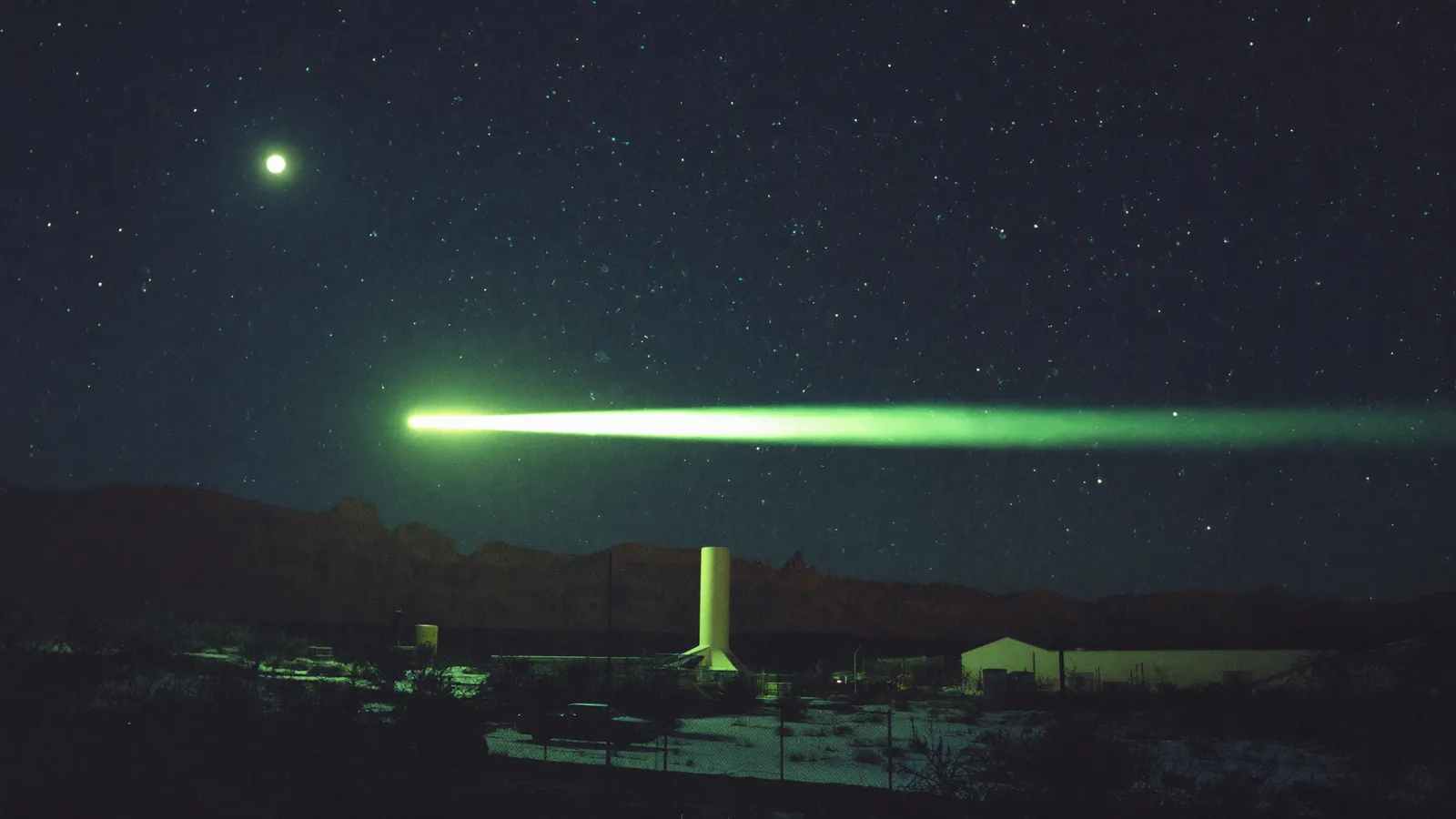
The background: from roughly December 1948, personnel across northern and central New Mexico — at Los Alamos, at Sandia Base where the bombs were assembled, at Kirtland Air Force Base — began reporting intensely green lights crossing the sky. Not occasionally. Repeatedly, and disproportionately over exactly the installations the United States could least afford to have anybody loitering above.
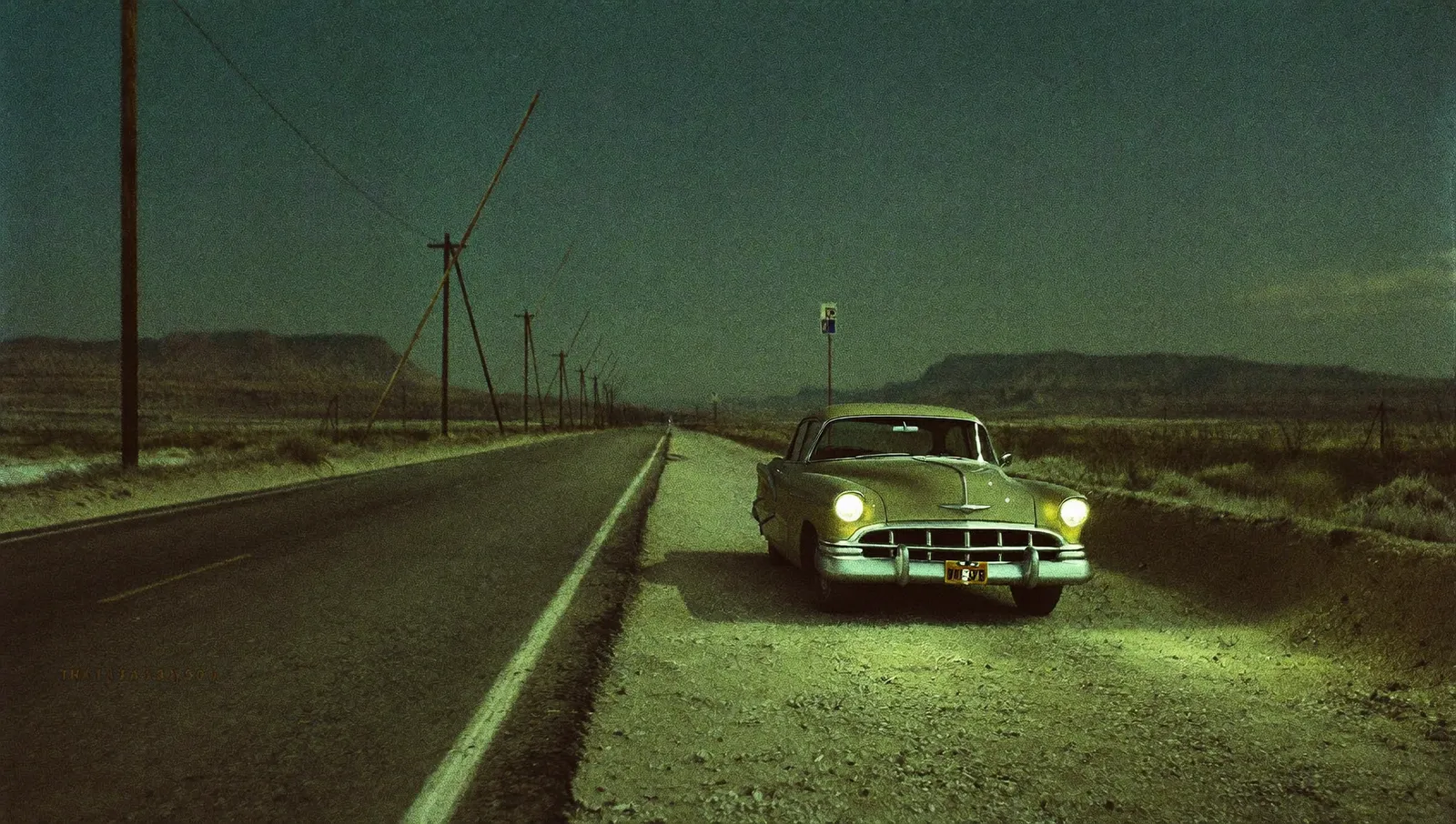
The Atomic Energy Commission convened the February meeting to establish what these things were. An earlier PURSUE tranche, released on 22 May, had already put out the 116-page file catalogued as PURSUE-D017, which logs 209 reports of green orbs, discs and fireballs and shows the Armed Forces Special Weapons Project and the Air Force’s 17th District Office of Special Investigations running a genuine, classified, multi-agency inquiry. The new transcript is the missing middle of that story: not the memos about the investigation, but the room where the scientists argued.
LaPaz, who had seen one himself, was blunt. What he observed was, in his words, “most certainly not a conventional meteorite fall.” It appeared, he said, “in full intensity instantly” — no build-up — travelled on a nearly horizontal track at consistent brightness, and broke into bright green fragments. He put the altitude at eight to ten miles, far lower than the eighty-odd kilometres at which meteors normally ignite.
Teller, characteristically, went to first principles and came out sideways. The transcript has him saying: “If I can just believe everything I have heard and put it together with what I theoretically believe in, it ought to be a material body — might be an electron phenomenon.” Which is a physicist’s way of saying the observations and the theory refuse to sit in the same sentence. He was floating the idea that the lights might not be objects at all, but some atmospheric electrical effect.
Nobody carried the room.
Why LaPaz wouldn’t call them meteors
This is the part worth being precise about, because it is where the case either stands up or falls over.
LaPaz’s objection was not mystical. It was technical, and it had four legs. First, trajectory: the fireballs travelled flat, over long distances, without the downward curve that gravity and drag impose on an incoming rock. Second, velocity: they held roughly constant speed rather than decelerating. Third, altitude: eight to ten miles is deep inside the atmosphere, where a body that bright should be shedding energy violently. Fourth, and the one he found hardest to swallow, silence. A meteor bright enough to be seen at hundreds of miles ordinarily announces itself with detonations audible for a wide radius, and sets dogs off across three counties. These made no sound at all. LaPaz called that the most implausible feature of the lot.
He also made a straightforwardly checkable claim: that he could not find, anywhere in the meteoritics literature, a documented case of conventional meteoric material behaving this way. He was the person best placed in the world to know.
His own preferred explanation, it should be said, was not extraterrestrial. LaPaz thought they were artificial and probably Soviet — some form of test vehicle or reconnaissance device. In February 1949 that was the most frightening available answer, and it was six months before the USSR detonated its first nuclear device. The men in that room were not chasing wonder. They were chasing a national security problem.
The strangest line in the transcript
At a follow-up session on 22 March 1949, the record catches an exchange that has understandably drawn attention. Asked by a participant recorded as Mr Newburger whether the Germans had been experimenting with anything that might be connected, LaPaz replied: “Well, they had the so-called stations in space… might have some attachment to it.”
The Australian researcher Geoffrey Cruickshank, who first flagged the passage, makes the interesting observation that nobody in the room interrupts to ask what on earth he means — which suggests the phrase was familiar to them. Michael Salla has since amplified it, and some have tried to connect it to the pre-Sputnik point sources that the astronomer Beatriz Villarroel has identified on archival photographic plates.
Be careful here. “German stations in space” in 1949 is far more likely to be a reference to Hermann Oberth and Wernher von Braun’s widely publicised interwar concept of a crewed orbital station — a staple of popular science writing at the time — than evidence that anything was actually up there. A room of physicists nodding along to a familiar speculative concept is not a room of physicists confirming a secret. The line is fascinating; it is not proof of anything, and the leap to Villarroel’s transients is a leap, not a finding.
What happened next, and why it settled nothing
The February conference did produce an outcome of sorts: a recommendation that somebody try to photograph the things and measure their speed, altitude and size. The Air Force Cambridge Research Laboratories duly set up Project Twinkle, whose observation post went live on 21 February 1950 with two observers, cameras and instructions to catch a fireball on film.
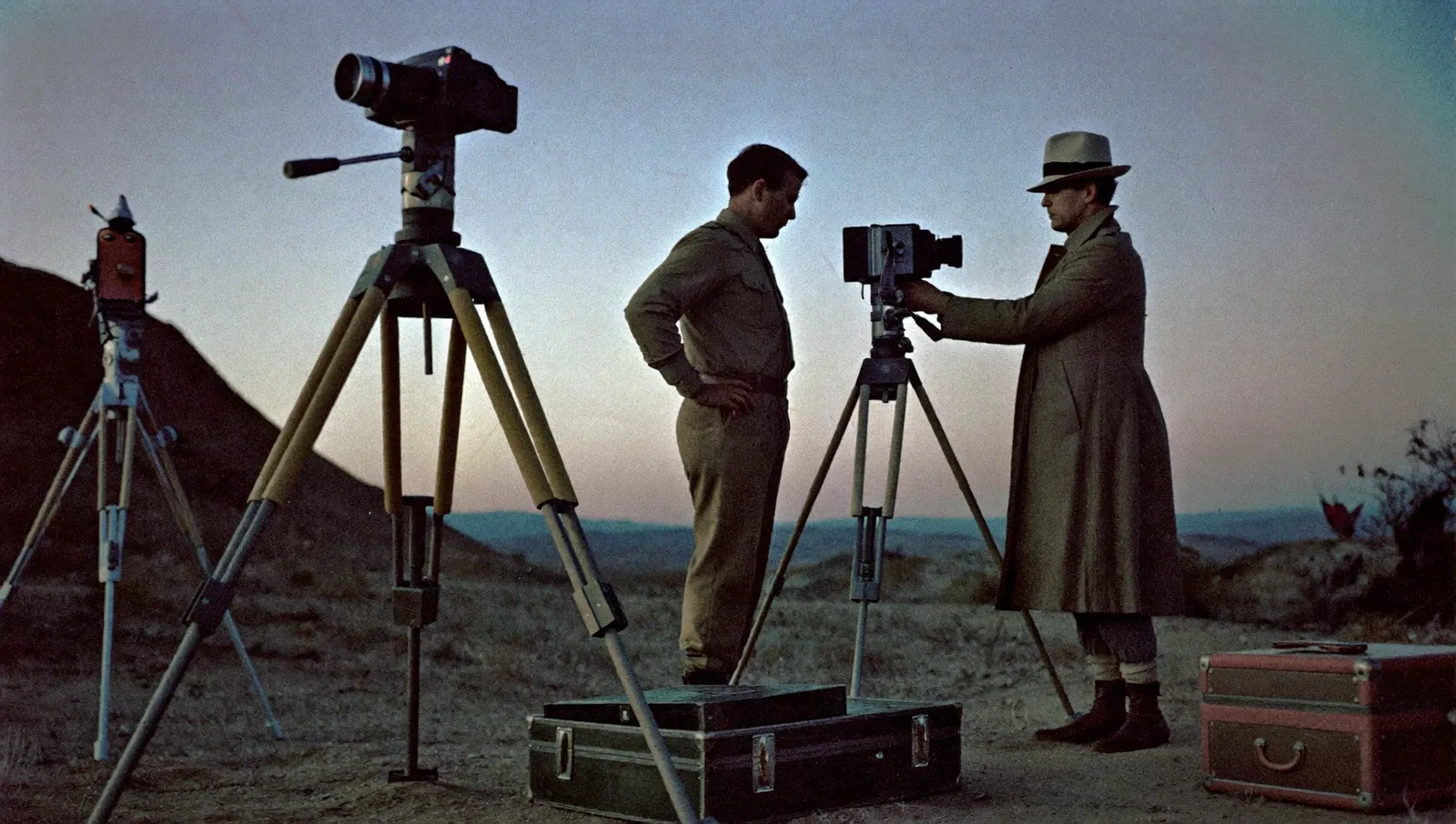
It caught almost nothing. Project Twinkle’s final report, written by Dr Louis Elterman and dated 27 November 1951, concluded that most of the observed phenomena could be attributed to man-made objects such as aircraft, balloons and rockets, or to natural causes. LaPaz disputed that conclusion for the rest of his life, and researchers since — Kevin Randle among the more careful — have argued that the report reads less like a scientific finding than a tidy way to close a file.
Both readings can be partly right. An under-resourced two-man camera post that fails to photograph a rare, unpredictable event has not demonstrated that the event was mundane. It has demonstrated that two men with cameras are not enough. That is a null result about the instrument, not about the sky — the same measurement-versus-phenomenon trap that still snarls up this subject seventy-five years later.
The sceptic’s case, which is stronger than the headlines suggest
Here is the honest counter-argument, and it deserves proper room.
Green fireballs are, in isolation, entirely real and entirely explicable. The colour is a signature of copper and nickel burning in atmosphere, and bolides of that description are logged routinely. The late 1940s saw a genuine uptick in fireball activity across the American southwest, and a population primed to look up — because they had been told to look up, by their employers, at the most security-conscious sites in the country — will produce a surge of reports without any change in the underlying rate. Nobody in New Mexico in 1949 was casually watching the sky. They were watching it professionally.
The near-horizontal, constant-velocity descriptions rest on eyewitness estimates of altitude, speed and path, and those estimates are notoriously bad even from trained observers, because there is nothing in an empty night sky to judge distance against. LaPaz was an expert on meteorites; he was not immune to the geometry problem. And the strongest single piece of evidence for the sceptical case is the one the proponents have to live with: two years of dedicated observation produced no photographs, no triangulation, no spectra, no data.
The sightings also tailed off. Phenomena that stop when the panic stops are usually telling you something about the panic.
Why a 77-year-old meeting matters now
Because of what it proves about the shape of the problem, which has not changed.
In 1949 the United States put its very best scientists in a room, gave them clearances, gave them the raw reports, gave them access to the affected sites, and asked them to explain lights over the nuclear stockpile. They could not. That is not a story about government secrecy; it is a story about a genuinely hard question meeting the best available minds and winning.
Set that against the present arrangement. The White House’s new UAP Science Advisory Council under Avi Loeb has fifteen scientists, no budget, no clearances, and access only to material already made public. The 1949 panel had less physics and better access. Whatever else the last three-quarters of a century achieved, it did not improve the terms on which scientists get to look at this.
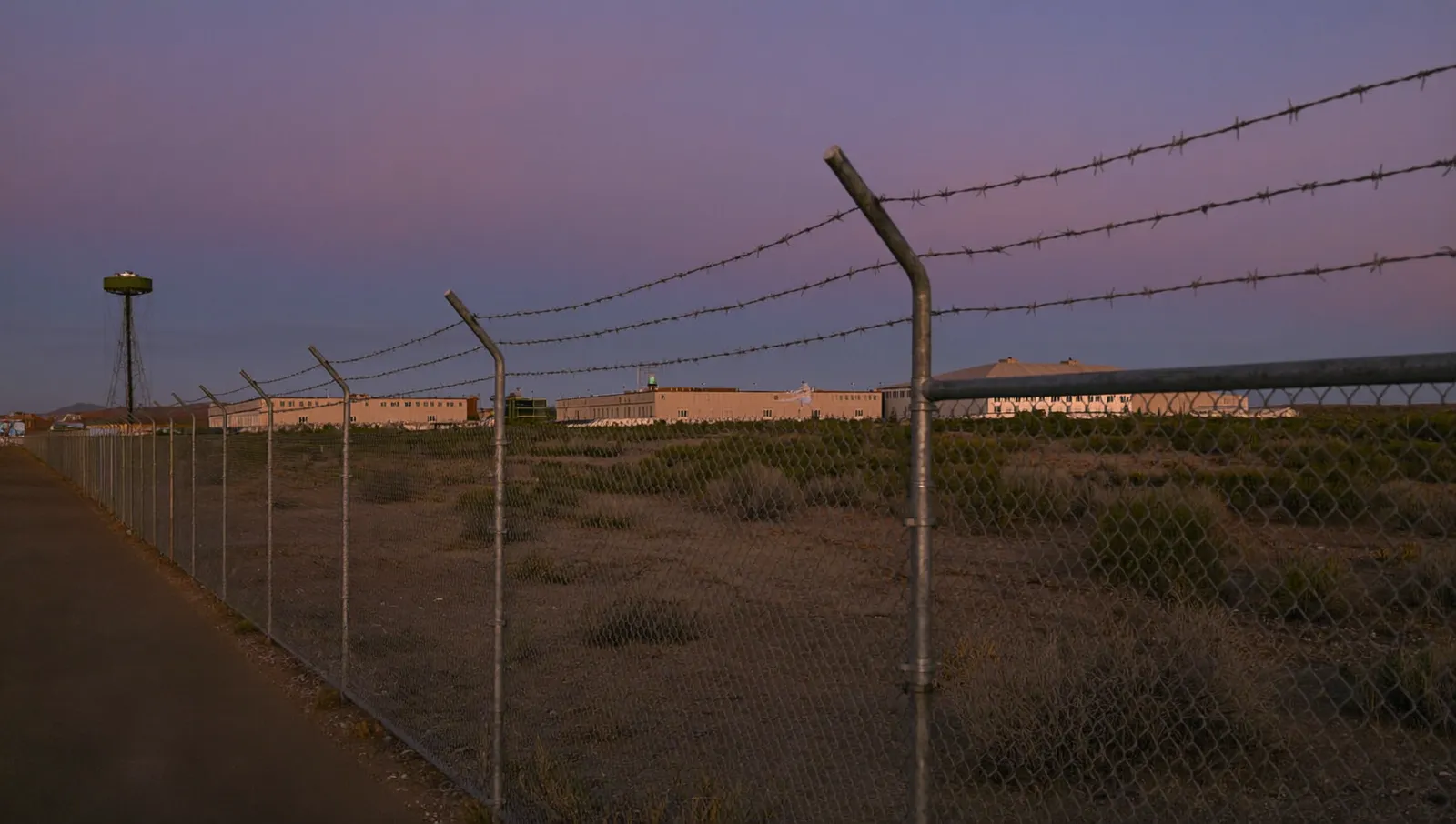
The other reason it matters is the setting. Objects over nuclear facilities is the single most persistent pattern in the entire documentary record, running from Los Alamos in 1949 through the Malmstrom missile shutdown of 1967 to the Pantex incursion file published in this same tranche. Whatever is generating those reports — and it may well be several different things — the pattern is not new, and the government has been unable to close it out for three generations.
The UAP Times take
We rate this Credible, four out of five on our scale, and we want to be exact about what that applies to. It applies to the document. The transcript is authentic, officially released, dated, attributed and quotable; there is no reasonable dispute that Teller, Bradbury, Reines and LaPaz sat in that room and could not agree on what the green fireballs were. That is established fact, and it is now on the public record in a way it was not three weeks ago.
It does not apply to any claim about what the fireballs were. The most probable single explanation remains an unusual cluster of natural bolides, amplified by an alert and anxious observer population, with LaPaz’s anomalous trajectory data resting on eyewitness estimation that we cannot now check. If we had to bet, we would bet mundane.
But the value of this release is not that it solves 1949. It is that it demolishes a lazy framing that still gets deployed against this subject — that serious scientists have never taken UAP seriously, and that the whole business is a modern folk enthusiasm. Here is Edward Teller, in February 1949, at the height of his powers, taking it entirely seriously and getting nowhere. The people who built the bomb could not explain the lights over the place where they built it. Seventy-seven years later, the government’s answer to the same question is a scientific panel that isn’t allowed to read the files. Progress, of a sort.
Further reading: for the most consequential later case of unexplained objects over a nuclear weapons site, see Malmstrom 1967; for the moment the Cold War state first lost control of the story in public, The Washington Flap of 1952. Three years after this meeting, the Air Force gave a similar closed briefing to MIT’s Beacon Hill reconnaissance panel — and a tape of it is now being extracted from Lincoln Laboratory. In the same years, the Palomar sky survey was photographing the pre-Sputnik heavens — and what those plates may or may not show about nuclear tests is still being argued over. The 1949 objects were described as bright green orbs.
Source: Department of War fourth PURSUE release (war.gov/ufo); Atomic Energy Commission conference transcript, 16 February 1949; Project Twinkle Final Report, 27 November 1951
Follow the file
Every new dispatch from the UAP desk, in your inbox. Sourced, sceptical, and no more than one email a week.