
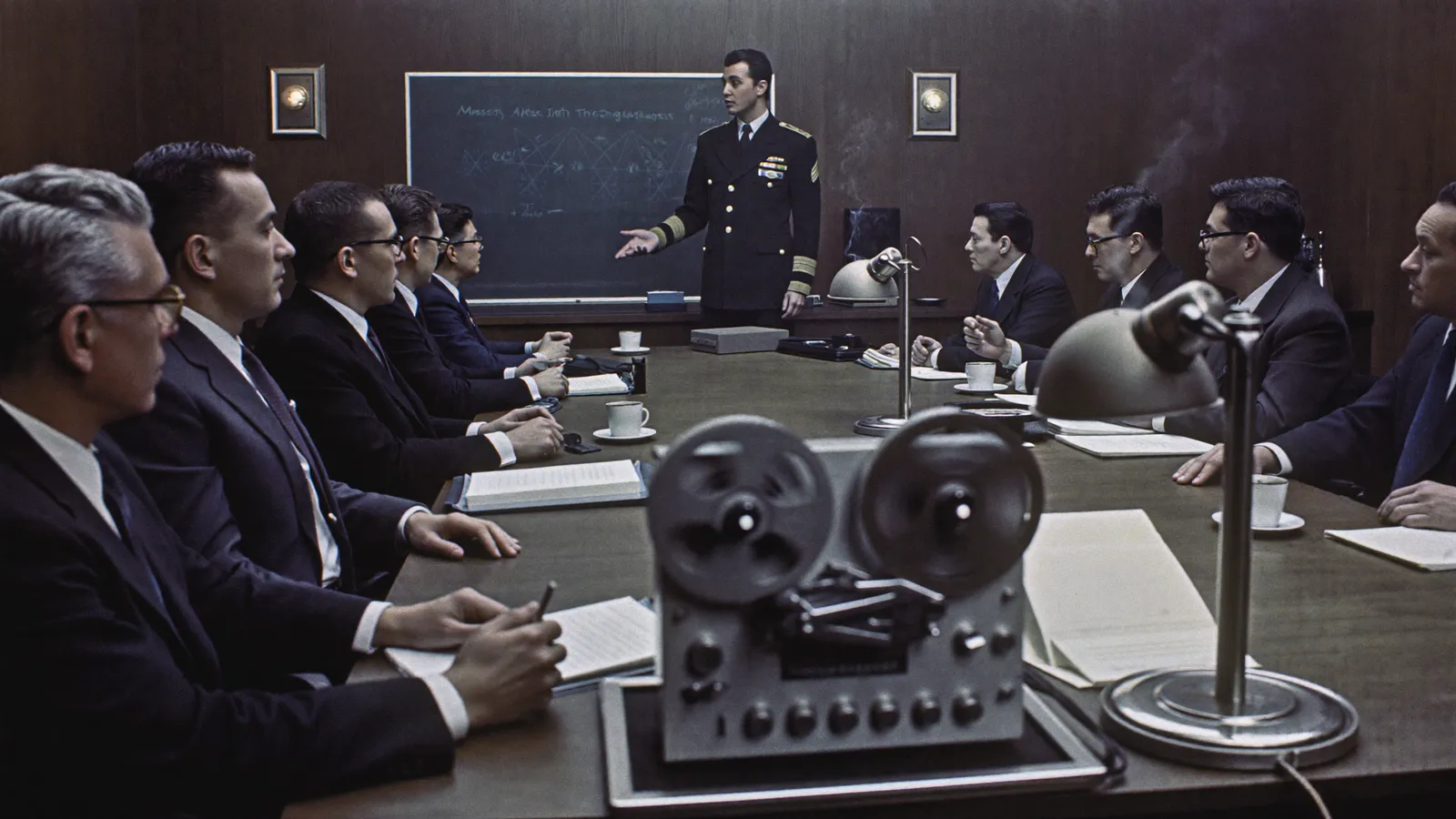
Seventy-four years ago this weekend, on the nights of 26 and 27 July 1952, unidentified radar returns appeared over Washington D.C. for the second weekend running, fighters were scrambled, and the US Air Force found itself explaining to the world’s press why nobody could catch whatever was loitering above the Capitol. It remains the most institutionally embarrassing fortnight in the history of the subject.
So when a sitting congressman announces that MIT’s Lincoln Laboratory has been sitting on a reel of tape from 1952 labelled “flying saucer talk”, and has agreed to hand it over, the story writes itself. Within days the headlines had settled into a single shape: the lost tape of the Invasion of Washington, found at last.
It is a very good story. The one problem with it is sitting in plain sight in the catalogue entry that started it.
A letter, a catalogue entry, and a reel of tape
The documented part of this — the part that does not rest on anybody’s memory or good faith — is a letter. In May, Rep. Eric Burlison (R-Mo.) wrote to MIT Lincoln Laboratory asking it to identify, preserve, digitise and arrange the transfer of government-funded records relating to unidentified anomalous phenomena. His office published the letter.
What makes it unusual is that it does not ask a vague question. It names a specific item: a reel-to-reel recording catalogued as “AF-ATIC-FILM, 03/52”, described as a “flying saucer talk”, with the briefer listed as Edward J. Ruppelt. Burlison asked the Laboratory to establish the recording’s condition and status and to coordinate with the National Archives so that anything responsive lands in the statutory UAP Records Collection rather than a basement in Lexington, Massachusetts. It is difficult to reply “we hold no responsive records” when the requester has read you your own catalogue entry back. His framing, delivered with some relish, was that this is what happens when you stop asking politely.
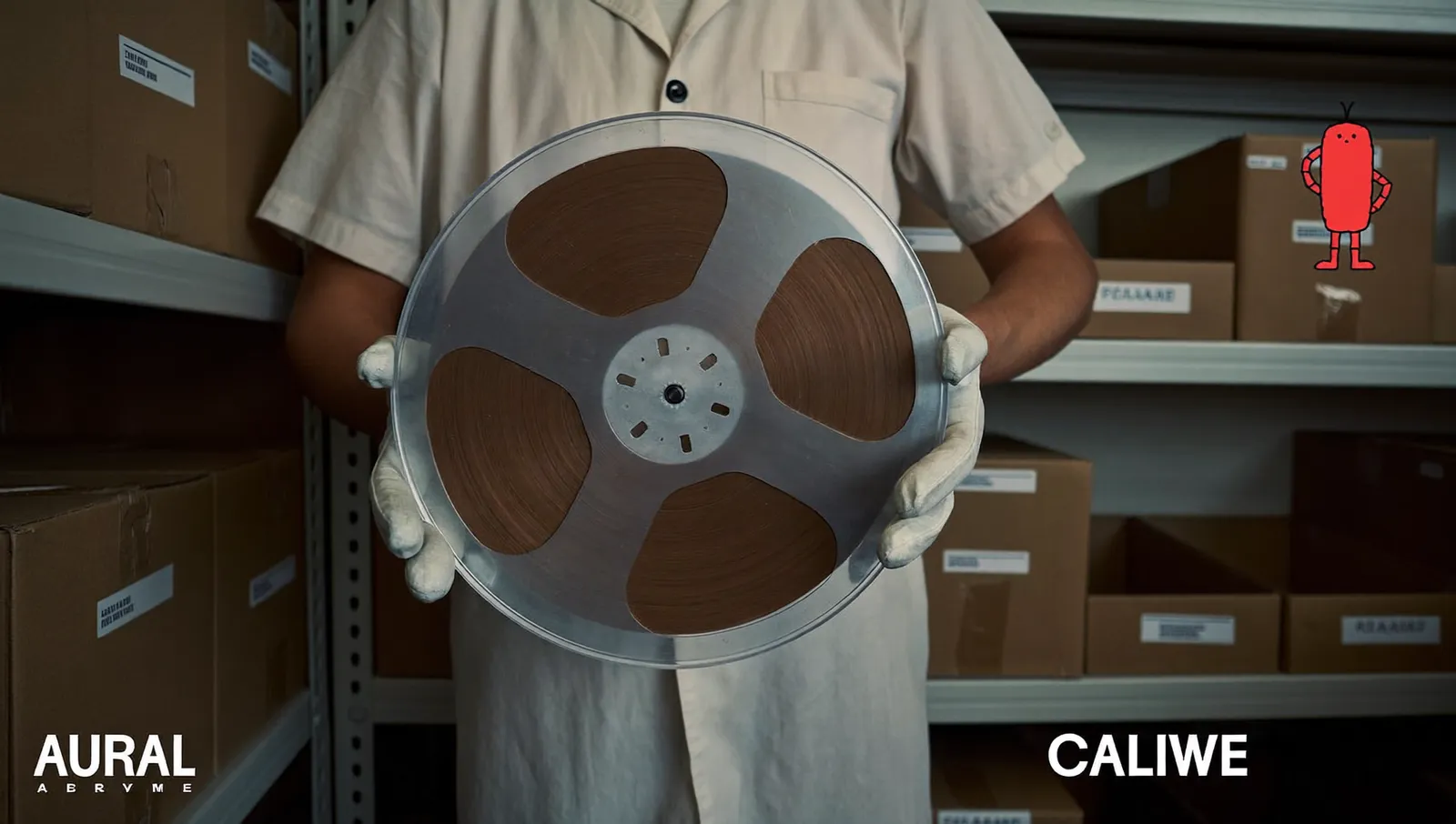
On 24 June he said the Laboratory had acknowledged the file exists and agreed to produce it; reporting since indicates its lawyers responded quickly and undertook to comply within thirty days. The following day, at the Disclosure Forum in the Russell Senate Office Building — an event that also drew Senators Kirsten Gillibrand and Mike Rounds, Reps. Tim Burchett and Anna Paulina Luna, former Deputy Assistant Secretary of Defense Christopher Mellon and the astrophysicist Avi Loeb — the tape became a headline.
One caveat belongs here rather than buried at the bottom: Lincoln Laboratory itself has said nothing publicly. Everything we know of its response comes from Burlison’s account. That is not a reason to disbelieve him, but it is the difference between a claim and a confirmation, and this publication is not in the habit of collapsing the two.
Who Edward Ruppelt was, and what he was in the middle of
Edward J. Ruppelt ran the Air Force’s UFO investigation at the Air Technical Intelligence Center at Wright-Patterson. He inherited Project Grudge — an effort so committed to debunking that it had stopped functioning as an investigation — and in March 1952 it was redesignated Project Blue Book under his direction. He coined the term “unidentified flying object”, largely because he wanted a phrase that did not come pre-loaded with a shape.
Ruppelt is also the reason the official 1952 verdict has never quite held. When the Air Force attributed the Washington radar returns to temperature inversion, it was Ruppelt who noted the awkward corollary: hardly a night passed that summer without an inversion over Washington, which rather invites the question of why the sky was not permanently full of saucers. He signed off on the explanation. He was visibly unconvinced by it, as we set out in our account of the Washington flap.
So a recording of Ruppelt briefing anybody, on any date in 1952, is a valuable document. The question is who he was briefing, and when.
The audience: Beacon Hill, not the press room
Burlison’s letter ties the recording to the Beacon Hill Study — the detail almost every write-up has skated past.
Beacon Hill was a study group convened under Project Lincoln — the MIT air-defence programme that became Lincoln Laboratory — and run for the Air Force across 1951 and 1952. It was chaired by Carl Overhage, who would later direct the Laboratory, under the sponsorship of the Air Force’s Gordon Saville, and its members included Edwin Land of Polaroid and the optical designer James Baker. Its subject was strategic aerial reconnaissance: how the United States might photograph the interior of the Soviet Union, given that its best imagery of anything west of the Urals had been taken by the Luftwaffe during a war that ended seven years earlier. The report is one of the founding documents of Cold War overhead reconnaissance; the line from it runs more or less directly to the U-2.
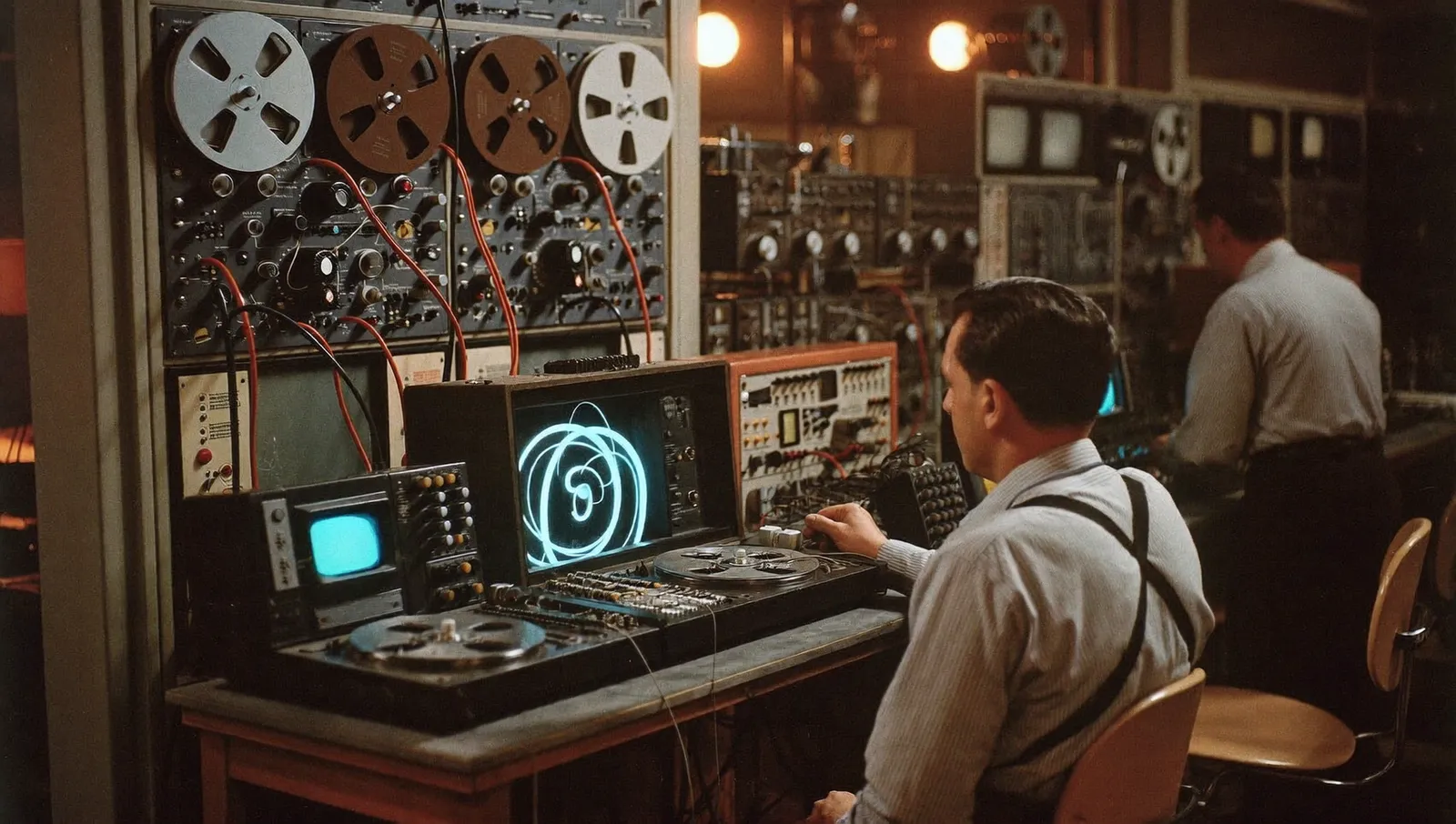
That is the room: not a press conference, not a committee, but a closed technical panel of the most capable imaging people in the country, assembled to work out how to see things that did not want to be seen. And at some point, according to the catalogue, somebody wheeled in a tape recorder and the head of the Air Force’s flying saucer desk gave them a talk.
The date that doesn’t fit
“03/52” reads as March 1952. The Washington sightings happened on the nights of 19–20 and 26–27 July 1952. A briefing recorded in March cannot be a briefing about events that had not yet occurred. That is not a subtle discrepancy: it is four months and the entire substance of the case. Yet the claim that this is the tape of the Washington flyover has been repeated across the Hill, NewsNation and much of the ecosystem downstream of them.
The link appears to originate with Jordan Flowers, executive director of the Disclosure Foundation, who characterised the recording as belonging to the same file family as the July 1952 events — the radar returns, the F-94 interceptors, the lights that faded on approach. Flowers credits Burlison with shaking the material loose, and on that he is plainly right. But “same file family” did a great deal of work on its way to becoming “the tape of the Invasion of Washington”, and the compression happened somewhere between the forum floor and the headline desk.
In fairness, there are readings that rescue the July connection: “03/52” could be an accession number rather than a date, and a single reel can carry more than one recording, catalogued under the earliest. Nobody outside Burlison’s office has seen the full entry. But the plain reading of a date-shaped string in a date-shaped position is a date, and anyone insisting otherwise should say so and explain why, rather than leaving the July framing to rest on an ambiguity they have not flagged.
Why the boring answer is the better story
Strip away the Washington claim and consider what is probably on the tape. In March 1952 the Air Force’s UFO effort was being rebuilt from the ground up. Blue Book had just been named, Ruppelt was arguing internally that the reports were a legitimate intelligence problem rather than a public-relations nuisance, and the wave that would define that summer had not begun. At that precise moment, on this account, he sat down in front of the people being asked how America might build eyes capable of seeing into a closed empire, and talked to them about unidentified objects.
Consider what that conversation would have been for. Beacon Hill’s problem was detecting and imaging things at long range and high altitude. Ruppelt’s problem was a stack of reports of things at long range and high altitude that nobody could identify. The overlap is no coincidence, and the first question any of those men would have asked is the one that had haunted the file since the green fireballs over the atomic installations in 1949: are these Soviet?
A recording of that exchange would tell us, in unguarded voices, how the American technical establishment privately rated the saucer problem at the moment it was deciding how to spend the next decade looking at the sky. That is a better document than one more retelling of a fortnight in July. It is simply less headline-shaped.
The sceptic’s read
The unglamorous possibility deserves stating clearly: the tape may be dull.
Briefings of this kind were often unremarkable — a survey of report volumes, a run through the standard misidentifications, a request that the panel bear the phenomenon in mind. Ruppelt’s public position was that most sightings resolved and a stubborn residue did not, and there is no reason to expect the private version to contain a revelation. The history of this subject is substantially a history of long-awaited documents arriving and saying less than hoped.
There is also a real chance nothing arrives at all. Thirty days from late June has been and gone; as of this weekend there is no sign of the recording, no NARA accession announcement and no statement from the Laboratory. Nor is 1952 magnetic tape a robust medium — acetate stock of that vintage shrinks, sheds and succumbs to vinegar syndrome, and a reel nobody has audited in seven decades may be a box of unplayable flakes. “Agreed to hand it over” and “there is something on it” are separate propositions, and only the first has been claimed.
And the temperature-inversion explanation for July 1952 — championed later by Harvard’s Donald Menzel and Aviation Week’s Philip Klass — is not a fabrication. A March briefing cannot settle that case either way.
What actually happens next
The mechanism matters more than the tape. Burlison has been pressing federally funded research and development centres — Lincoln Laboratory, and separately MITRE — on whether records generated with public money have been properly identified and offered to the National Archives. That is the structural argument running through the UAP records provisions the House attached to the 2027 defence bill: a legal duty to surface, describe and transfer, rather than an invitation to volunteer.
FFRDCs are a genuine gap. They are not agencies, so they sit awkwardly relative to FOIA, but they work under federal contract, which means the records are arguably the public’s. Nobody has systematically tested what seventy-five years of that arrangement has left in the filing cabinets of the national laboratories. A single named reel is a small thing; a precedent that a named reel can be prised out is not.
The timing carries its own irony. A panel of scientists is once again being asked to adjudicate this for the government — the White House UAP science council chaired by Avi Loeb — and, like Beacon Hill, on the basis of what it is permitted to see. In 1952 the briefing at least went onto a tape.
The UAP Times take
We rate this Credible, four out of five on our scale, and the rating applies to a narrower claim than the headlines do.
Well evidenced: a specific recording is catalogued, named in a published congressional letter, listing Ruppelt as briefer and tied to the Beacon Hill Study, and a member of Congress states on the record that the Laboratory has agreed to produce it. That is a documented paper trail, which in this field counts as luxury. Not evidenced: that it concerns the July 1952 Washington sightings. On the only date information anyone has published, it cannot. That framing should be retired, and the outlets that ran it should say so rather than quietly letting it fade.
We would go further. The Washington gloss is not merely wrong, it is costing the story its interest. A tape of the head of Project Blue Book briefing the architects of American aerial reconnaissance, in the month Blue Book was created, is a more significant artefact than a retrospective on a case already documented to death. The disclosure movement’s instinct to attach every new find to a famous name is the habit most reliably preventing it from being taken seriously — and here it is not even necessary, because the unglamorous reading is the good one.
Get the reel digitised. Get it into the National Archives. Then let us find out what a room full of physicists actually said when the Air Force told them about flying saucers, four months before the summer that made it everyone else’s problem.
Further reading: for the case everyone has attached this tape to, see The Washington Flap of 1952. For what the same Cold War state was doing three years earlier, see the 1949 Los Alamos green fireball transcript. For the statutory machinery Burlison is trying to build, see the House UAP records amendment, and for the modern version of asking scientists to sort it out, the White House UAP science council. For what it costs to keep this field’s paper record at all, see the Pentagon’s move to subscribe to a private UFO archive.
Follow the file
Every new dispatch from the UAP desk, in your inbox. Sourced, sceptical, and no more than one email a week.