
The European Union has spent three years telling anyone who asks that unidentified anomalous phenomena are a matter for member states. It turns out that while it was saying this, its defence department was writing letters about them.
That is the substance of an exclusive published on Monday by Euronews, reported by Marta Pacheco, which draws on correspondence from the European Commission’s defence directorate that the outlet says it has seen. The paper trail runs back to October 2022 and starts, improbably, with a father-and-son team of amateur astronomers in Malaysia.
It is not a crash-retrieval story, and nobody in Brussels has admitted to anything landing anywhere. What it is — and this is the more useful kind of story — is a documented gap between what an institution says about UAP in public and what it does about them in the post.
What Euronews actually found
The Malaysians had been photographing objects they could not identify and sent their material to the Commission. Thirty-seven of them, by Euronews’ account. What is interesting is that somebody in the defence directorate wrote back, and did not write back with a polite brush-off.
The line Euronews quotes from the correspondence is this:
We are getting better at seeing it and better identifying it as our technological capacities improve, but we need to get even better.
The Commission’s reply, per the reporting, went on to note that Brussels had proposed to member states that they increase their ability to detect objects in the space environment — and acknowledged that doing so could help identify both UAP and space debris.
Two caveats before anyone gets carried away. First, Euronews has seen the documents; we have not, and neither has the wider public — this is single-outlet reporting on unpublished correspondence, which is a perfectly normal way for journalism to work but is a rung below reading the file yourself. Second, no individual official is quoted by name, which makes the letter harder to weigh than a signed statement would be.
The sentence that does most of the work
Read that quote again with a cold eye, because the phrase carrying the weight is space environment.
Improving Europe’s ability to detect objects in orbit is not a UAP programme. It is space situational awareness — the deeply unglamorous business of tracking the tens of thousands of pieces of debris that could ruin a satellite, and knowing which of the things overhead are yours. The EU has been building that capability for years for reasons that have nothing to do with anomalous phenomena and everything to do with insurance underwriters and collision-avoidance manoeuvres.
So the honest reading of the letter is narrower than the headline. It is not “Brussels runs a secret UFO office”. It is closer to: an official in the defence directorate, asked about unexplained objects, replied that better sensors would help resolve them, and listed UAP alongside space junk as a thing better sensors would resolve.
That is still a meaningful admission — it puts UAP inside the sentence, in writing, from a department that has spent years insisting the subject sits with national capitals. But it is an admission about detection capability, not about a phenomenon. The distinction matters, and the distance between the two is exactly where this subject usually goes wrong.
“A matter for member states”
Asked to comment, a Commission spokesperson gave Euronews the line the institution has given for years: UAP are the responsibility of EU member states, which handle them according to national security and defence priorities.
As a statement of legal competence that is straightforwardly correct. Defence and national security are member-state prerogatives under the treaties; the Commission does not get to open an investigations bureau because it fancies one. Anyone expecting Brussels to announce a European AARO has misread how the EU is built.
But “not our competence” and “not our interest” are different claims, and the correspondence suggests the institution has been quietly holding the second position while publicly stating the first. That is the newsworthy part, and it is the sort of thing that only ever surfaces because a journalist filed for documents.
The reporting system that exists, and the category that doesn’t
The more consequential thread here has nothing to do with defence directorates and everything to do with aviation paperwork.
Europe already has a harmonised system for logging things that go wrong or go strange in its airspace: ECCAIRS2, feeding the European Central Repository, run under the aegis of the European Union Aviation Safety Agency. Every airline occurrence report in the bloc ends up in that architecture.
In July 2025, answering a parliamentary question, the Commission confirmed that relevant UAP occurrences could be recorded in ECCAIRS2. In March 2026 it went a shade further, saying EASA was aware of recent international developments concerning UAP reporting and that such incidents could be stored in the European Central Repository for analysis — before concluding that no additional action was warranted.
That last clause is the whole fight. “Could be recorded” is not the same as “has a field”. Without a dedicated classification, a pilot’s report of an unidentified object is filed under whatever adjacent category the reporting officer picks, disappears into a database of several million entries, and becomes effectively unsearchable. You cannot analyse a trend you have not tagged.
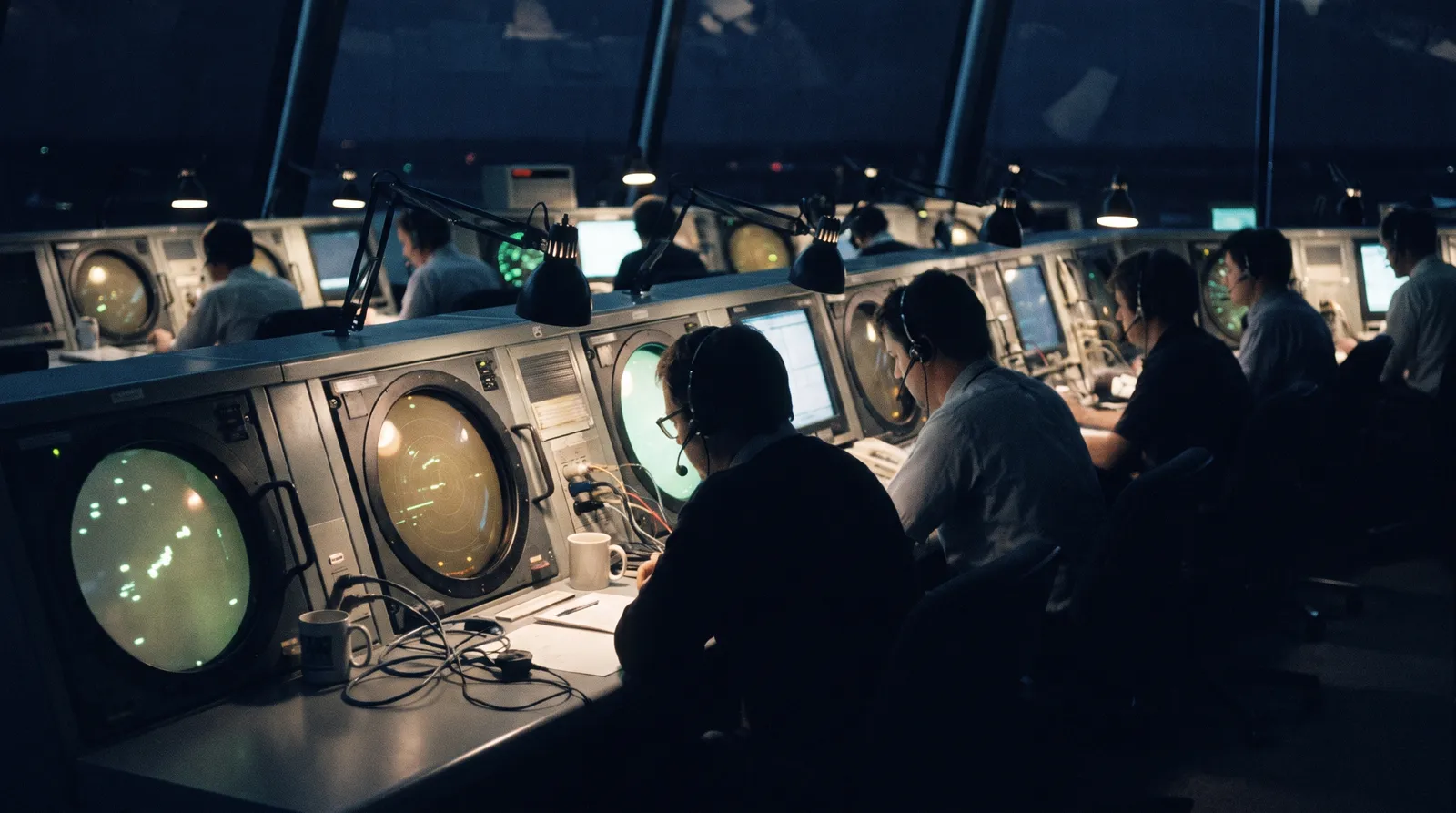
The MEP who has pressed hardest on this is Germany’s Fabio De Masi, who has repeatedly asked the Commission to create a dedicated UAP category on the grounds that existing classifications do not capture the incidents properly. Note his framing: airspace security and flight safety, not visitors. It is the same argument Ryan Graves has made to American legislators for three years — that the safety case for counting these things stands entirely on its own, whatever they turn out to be.
EASA’s answer has been no. Which leaves Europe in the position of having built a superb data pipeline and declined to install the tap.
What member states actually have
If UAP really are a matter for national capitals, it is worth asking what the capitals have.
France has GEIPAN, the unit inside the space agency CNES that has been collecting, investigating and archiving reports since 1977, and remains the only state-funded body of its kind in the Union. It grades cases A through D by how well identified and how well documented they are, publishes its files, and resolves the large majority — roughly 97 per cent, depending on the year — leaving a residue of two to three per cent it classes as genuinely unexplained. Its most-cited case, the 1981 landing trace at Trans-en-Provence, is also its most instructive: soil and plant samples taken by a government laboratory, anomalies found, and still no conclusion anyone can bank.
That is one country. Germany, the largest member state, has no equivalent. What it has instead is CENAP — the Central Research Network for Extraordinary Celestial Phenomena — which is run by an amateur astronomer called Hansjürgen Köhler out of Lützelbach in Hesse, and which by Köhler’s account has now cleared up some 14,000 cases and takes between three and six calls a day. That makes one hobbyist in a Hessian village the busiest UAP reporting centre in the German-speaking world.
Köhler is not a believer with a mailing list. He identifies almost everything that reaches him as aircraft, helicopters, rocket stages, satellites, meteors, fireballs, planets, balloons and event lasers, and he is blunt about the leftovers: “These were not alien visits. The cases have simply remained unexplained because we lack key information.”
He also, for the record, doesn’t rule out life elsewhere — he simply doubts anything advanced enough to get here would then crash in a desert. It is a better-calibrated position than most of the people who get booked on television to discuss this.
The Cyprus report, and why the pilots keep talking
Running alongside the Brussels story this week is a smaller one that shows why the paperwork question is not academic. The Cyprus Mail carried an account from Rob Ackermans, a Dutch airline pilot, who says he and five crew watched lights south of Cyprus in 2023 that brightened and faded, with one appearing to manoeuvre around the others in what he described as something like a chase. The phenomenon stayed in the same bearing even after the aircraft had reached the Balkans.
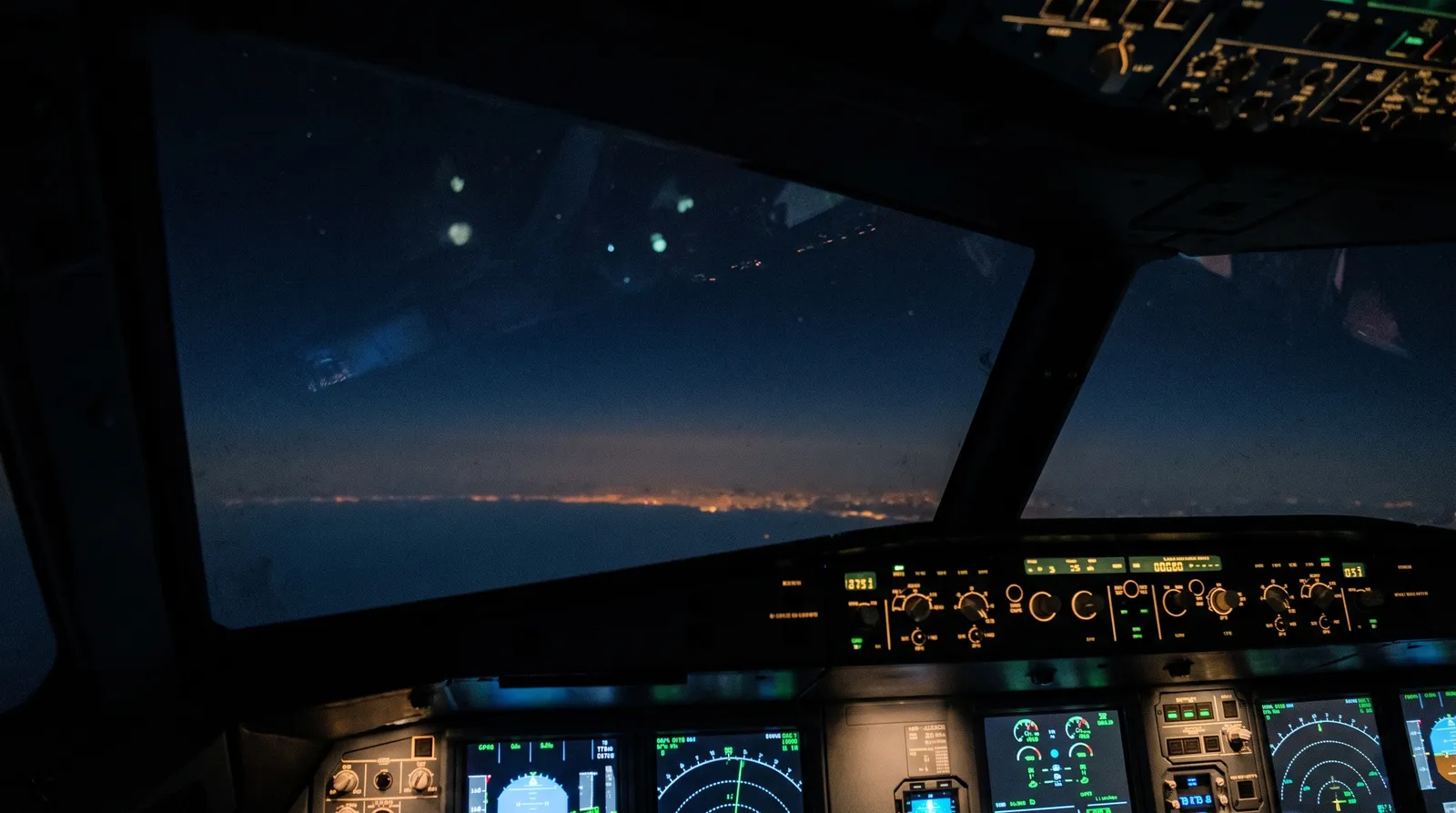
A bearing that does not change as you fly hundreds of miles is, for what it is worth, a strong hint at something very distant or very high — flares over a range, ordnance, satellites, or a launch plume all behave that way. That is a prosaic reading, and it is probably the right one. Nobody in the story claims otherwise; the article itself notes there is no evidence any of this is extraterrestrial.
But six aircrew watched something they could not identify in busy international airspace, and there is no European field on any form where that observation goes. It ended up in a newspaper. Compare that with the American position, where a reporting rule now exists and the raw radar behind it is deleted after 45 days, and you have two different ways of arriving at the same place: an anecdote with nothing underneath it.
The sceptic’s read
The strongest case against making much of this is that Euronews has essentially found a courteous reply letter.
An official corresponded with members of the public, said better sensors would help, and mentioned UAP in the same breath as debris. No budget line has been identified, no programme named, no analyst assigned. The Commission’s public position — competence lies with member states — has not actually been contradicted by anything in the reporting, only made to look a little more tight-lipped than necessary. “EU quietly monitors UFOs” is a headline the underlying document does not quite pay off.
Europe also has form for mass sightings that generated enormous institutional interest and no lasting answer. The Belgian wave of 1989–90 produced F-16 intercepts, released radar tapes, an air force that publicly admitted it was stumped — and a famous photograph that turned out to be a fake. Institutional attention is not the same as evidence, and Europeans have been here before.
The UAP Times take
This story is worth your time for the gap it documents, not for the phenomenon it describes.
Nothing in the Euronews material suggests the European Commission knows anything about UAP that you don’t. What it does suggest is that an institution which has spent three years deflecting the question to national capitals has been engaging with it in writing since at least 2022, and has been thinking about the sensor problem for longer than it let on. That is a transparency story, and a fair one.
The substantive failure sits elsewhere, and it is EASA’s. Europe operates one of the world’s best aviation occurrence-reporting systems and has repeatedly declined to add a field that would let anyone count unidentified objects in its airspace. The cost of adding one is a database migration and some guidance. The cost of not adding one is that in twenty years there will still be no European dataset to argue over, only pilots giving interviews to local papers and one very patient man in Hesse answering the phone.
We rate this a Credible story — four out of five on our scale. The correspondence is real, seen by a reputable outlet, and consistent with on-record Commission answers to parliament. It is a rung short of well-sourced only because the documents themselves are not public, no official is named, and the leap from “better detection of objects in the space environment” to “Brussels is monitoring UFOs” is the reporting’s inference rather than the letter’s claim.
Further reading: Why Commercial Pilots Are Reporting More Sightings, Trans-en-Provence: The Landing a Government Lab Took Seriously, and what happened when Germany actually recovered one of the objects over its airfields. Britain has the same missing reporting field, and an even quieter answer for it; Japan, by contrast, has had a mandatory reporting rule since 2020 and has published nothing from it.
Follow the file
Every new dispatch from the UAP desk, in your inbox. Sourced, sceptical, and no more than one email a week.