
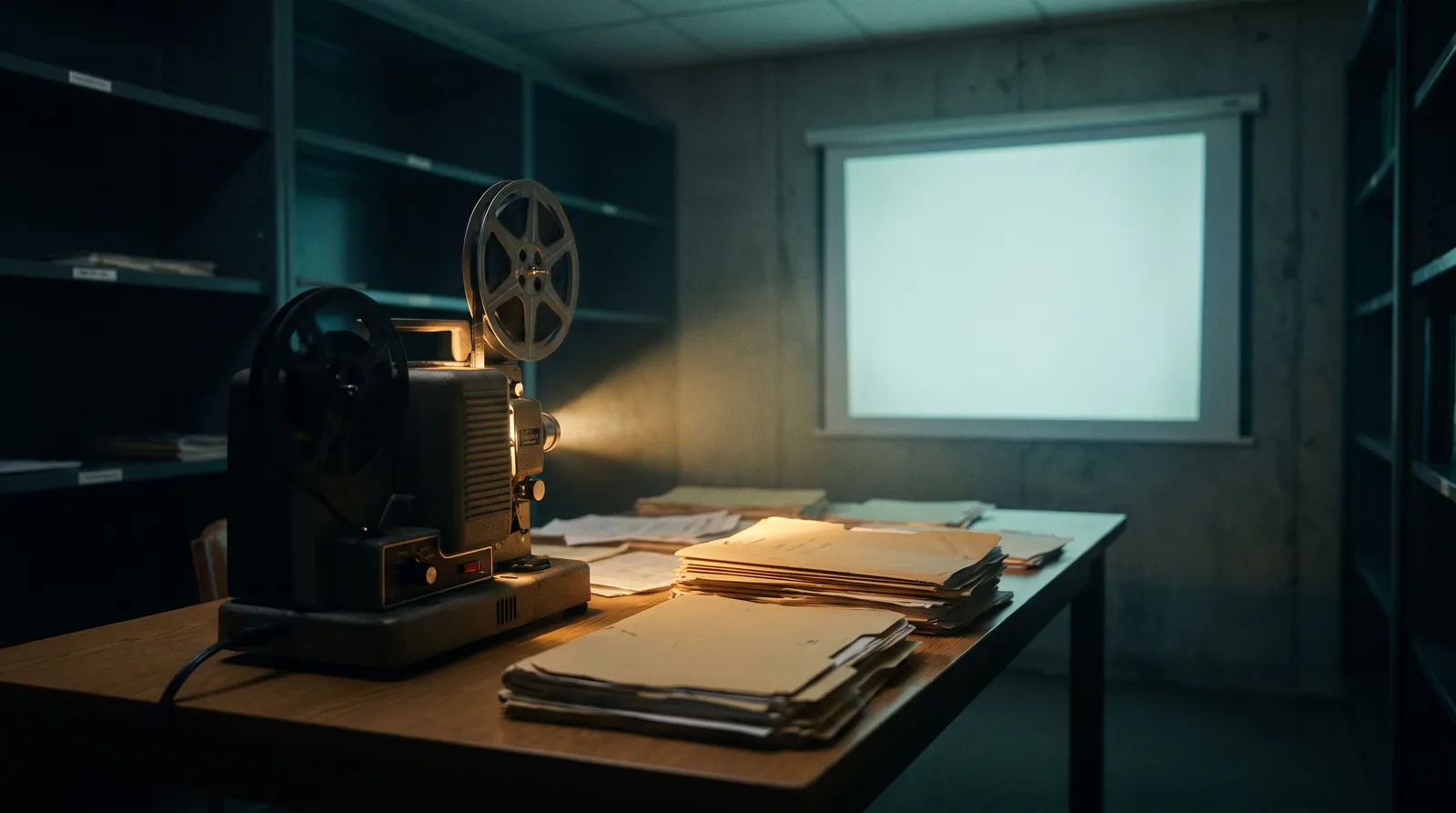
On Friday the Department of War published its sixth tranche of UAP records, and by Saturday morning a good deal of the internet had decided the Pentagon had just admitted to building a stargate.
It had not. What it had done was re-publish, on a government website, two theoretical physics papers that have been sitting on a FOIA archive since 2019 — one of which you can still download from the same URL you could have used seven years ago. That is not nothing. It is just not what the headlines said it was.
Which is a shame, because there is genuinely new material in Release 06, and almost none of it is about wormholes.
What actually landed
The release went up on WAR.GOV/UFO on Friday 18 September: 71 files in total, 67 supplied by the Department of War and four handed over by local law enforcement in Colorado. The breakdown is 55 PDFs, 15 video files and a single audio recording. The documents span 1952 to 2025, and 64 of the 71 carry redactions of some kind.
It is the sixth batch under the Presidential Unsealing and Reporting System for UAP Encounters, the disclosure machinery President Trump ordered in February. Previous tranches landed on 8 May, 22 May, 12 June, 10 July and — the one we read in detail at the time — 7 August. Chief Pentagon Spokesman Sean Parnell, who described the portal at launch as “a major milestone in government transparency”, says the department and its partners are already working on a seventh.
So far, so procedural. Then people opened the PDFs.
The two documents everyone wrote about
The headline-makers were a Defense Intelligence Reference Document titled Warp Drive, Dark Energy, and the Manipulation of Extra Dimensions, and a second called Traversable Wormholes, Stargates, and Negative Energy.
Those titles do a lot of work on an aggregator homepage. Here is what they are.
The first was written by Richard K. Obousy and Eric W. Davis of EarthTech International and is dated 1 December 2009. The second is Davis on his own, dated 6 April 2010. Both were commissioned under the Advanced Aerospace Weapon System Applications Program — AAWSAP, the Defense Intelligence Agency effort that ran from 2008 to 2012 with Bigelow Aerospace Advanced Space Studies as its contractor, and which is the direct ancestor of every Pentagon UAP office since.
AAWSAP commissioned 38 of these reference documents. The list of all 38 was published in July 2018 by George Knapp and Matt Adams at KLAS-TV in Las Vegas — credit where it is due; that reporting is why anyone knew to ask for them. The DIA then released the list formally in January 2019 under Freedom of Information Act requests from Steven Aftergood of the Federation of American Scientists and from John Greenewald Jr. of The Black Vault. The documents themselves followed over the course of 2019, and 37 of the 38 have been public ever since. Greenewald’s archive still hosts them. So does the Internet Archive.
Release 06, in other words, re-issued paperwork that has been a two-click download for seven years.
What a DIRD actually is
This matters more than the provenance quibble, because a lot of coverage has treated these as evidence that the government has a warp drive.
A Defense Intelligence Reference Document is a commissioned literature review. It is a contractor being paid to survey what the published physics says about a speculative topic and write it up for an intelligence audience. Davis’s wormhole paper walks through the general-relativistic definition of exotic or negative energy and the laboratory methods that might generate it. Obousy and Davis’s paper explores whether manipulating the radius of a compactified extra dimension could adjust the local cosmological constant, and therefore expand and contract spacetime around a craft.
Both are arguments about what the mathematics permits. Neither describes hardware. Neither claims the United States possesses any. The Pentagon paid for a survey of the theoretical literature, which is a reasonable thing for a threat-assessment office to do and an extremely unreasonable thing to report as “Pentagon confirms stargates”.
For what the physics actually implies if you take it seriously, we went through the numbers last week: a warp drive crossing our atmosphere would radiate like a second sun, which is emphatically not what the objects in the Pentagon’s own videos are doing.
The 1952 film — and this part is new
The genuinely interesting document in Release 06 concerns a case seventy-four years old.
On 2 July 1952, Navy Chief Warrant Officer Delbert C. Newhouse was driving through Utah with his wife when she spotted something overhead. He got a Bell & Howell Auto Master out of the boot and exposed around thirty feet of colour film on a formation he put at twelve to fourteen bright objects. The Tremonton film went to the Air Force, then to the Navy’s photographic interpretation people, who reportedly spent more than a thousand man-hours on it. In January 1953 the CIA-convened Robertson Panel concluded the objects were seagulls catching the sun.
That much has been in the literature for decades. What the new files add is the argument the government was having with itself.
One newly released memorandum sets out a proposed public line: that the Air Force could not positively identify the objects, but was “reasonably sure” they were balloons or gulls. The same memorandum also carries the Air Force laboratory’s finding that the images appeared brighter than birds, and summarises the Navy’s position that the objects were self-luminous and could be neither aircraft nor balloons.
The gap is not between the government and the public. It is between what the analysts wrote down and what the department proposed to say out loud.
That is the story. Not a cover-up of alien craft — a press line being drafted at a confidence level the underlying analysis did not support. Anyone who has watched a communications team at work will recognise the manoeuvre immediately.
To be fair to the sceptics, Project Blue Book’s Edward Ruppelt was not being cynical. He agreed the film should be released, and he later wrote that he had watched gulls circling in clear sky over San Francisco and been struck by the resemblance to the Tremonton objects. Release 06 also includes audio of Ruppelt briefing on the subject — a useful companion to the 1952 recording currently being prised out of MIT’s Lincoln Laboratory, and a small piece of the same extraordinary summer we covered in the Washington flap.
Four phone videos from Colorado
The other new material is the most modest and, on current evidence, the most honest.
Four of the fifteen videos came not from the Department of War but from a local law enforcement agency in Colorado, which submitted them to AARO. They were shot on mobile phones in October 2023 and have been partially blurred before release. The Pentagon’s accompanying note quotes the reporting officer describing the phenomenon as “silent” and as showing “red, blue, and green flashing lights”.
Red, blue and green flashing lights, silent, at night, is — it must be said — also a near-perfect description of a light aircraft’s navigation and anti-collision lights at a distance, or a camera drone. We are not saying it was. We are saying that four blurred phone clips with no range, no bearing and no sensor data attached cannot distinguish between the mundane and the anomalous, which is the structural problem with this entire archive and one two researchers have now quantified across every PURSUE video.
The distraction argument
There is a political read on all this, and it deserves airing rather than dismissing.
Critics of the disclosure programme have argued since February that the file drops function as spectacle. Representative Thomas Massie, no friend of the administration, called the release effort the “ultimate weapon of mass distraction”. Marjorie Taylor Greene, from the other direction, wrote that she was “so sick of the ‘look at the shiny object’ propaganda”. Both were talking about the programme in general rather than this tranche, but Friday’s release is an awkward data point for the defence: a batch whose most-covered documents were already public, published on a Friday afternoon, generating a weekend of stargate headlines.
The charitable reading is also available, and we think it is partly right. Putting the AAWSAP documents on an official, searchable government portal alongside the Blue Book paperwork, the Ruppelt audio and contemporary law-enforcement footage is a real improvement on a FOIA archive maintained by one man in California out of sheer bloody-mindedness. Provenance matters. A document on war.gov is harder to wave away than the same document on a forum.
But “we have organised the filing cabinet” and “we have declassified something” are different claims, and only one of them was made on Friday.
Six tranches in
The pattern from the fifth release holds. PURSUE can publish. What it has still not published is the thing that would let anyone outside the building settle an argument: the sensor data, the ranges, the radar returns, the numbers behind the pictures.
Six tranches, several hundred files, and the most evidentially useful item to date remains an unresolved intelligence report from the Gulf of Oman. Release 06 adds a genuine historical find — the Tremonton memo — and a great deal of material that was already on the internet.
The UAP Times take
Judged as journalism about a real event, this one is solid: the release happened, the file counts come from the Department of War’s own publication, and the provenance of the two headline documents can be checked against archives anyone can open. It earns a Well-sourced rating, five out of five on our scale — for the reporting, not for the contents.
Because the contents are a different matter entirely. Nothing in Release 06 is evidence of a warp drive, a wormhole or a stargate. Two commissioned literature reviews from 2009 and 2010 tell you what a contractor thought the published physics allowed, which is interesting intellectual history and nothing more. The real value in this tranche is a 1952 memorandum showing the Air Force preparing to sound more certain in public than its own laboratory was in private — and if you want a reason people distrust official UAP statements, that document is a far better one than any amount of negative energy.
The seventh release is already in preparation. Our modest request: fewer PDFs we already own, more of the data that was recorded at the time.
Further reading: for the tranche that set the pattern, see the Gulf of Oman file in Release 05. For what a warp drive would actually look like from the ground, see the Fell–Loeb calculation. For the other 1952 Ruppelt recording still under negotiation, see the MIT Lincoln Lab tape. And for the clip from Release 04 that went round again in this tranche’s wake, see the six-pointed star over the Yellow Sea. For the UAP publication this tranche overshadowed entirely, see the Navy graduate school’s own UAP journal. And for the AAWSAP material that was not in this tranche, see Robert Bigelow’s claim that the DIA has now found its inventory.
Source: US Department of War, PURSUE Release 06, published 18 September 2026 at WAR.GOV/UFO
Follow the file
Every new dispatch from the UAP desk, in your inbox. Sourced, sceptical, and no more than one email a week.