
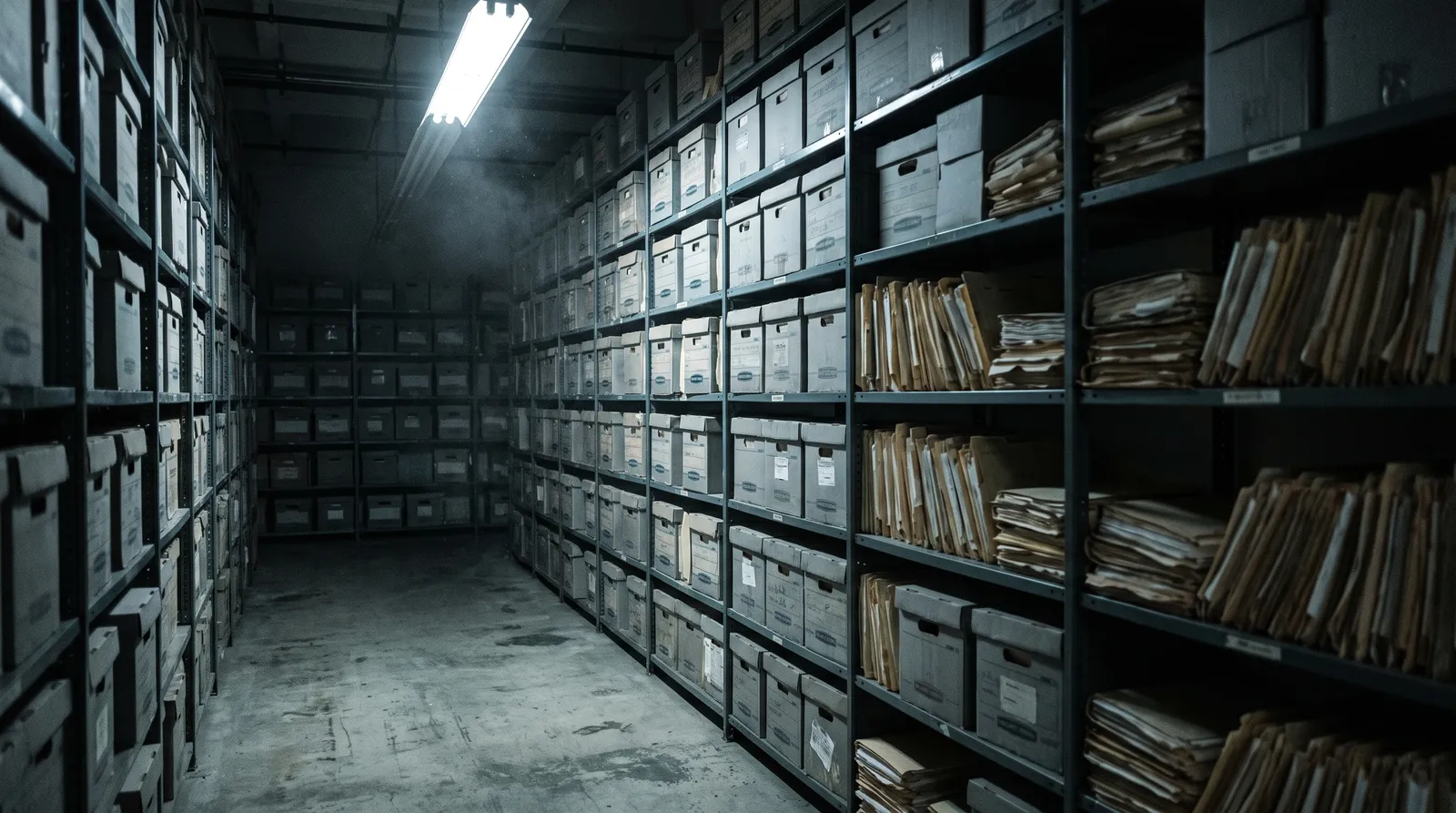
For about four years the Defense Intelligence Agency’s answer to anyone asking about the files from its own UFO programme has been a variation on the same sentence: no records located. Last week the man who ran the programme’s contractor said he has a letter saying otherwise.
Robert Bigelow told George Knapp, in a long interview published on 7 October, that the DIA has written to him confirming it has located an inventory of records associated with the Advanced Aerospace Weapon System Applications Program — AAWSAP, the 2008–2012 effort Bigelow’s company was paid roughly $22m to carry out — and that it intends to prepare material for public release.
That is a genuinely significant development, and it is also a much smaller thing than the headlines it produced. The word doing the heavy lifting is inventory. An inventory is a list. Nobody outside the agency has yet seen a letter, a list, or a page of the material it describes.
What AAWSAP actually was
AAWSAP matters because it is the ancestor of everything that followed. The DIA awarded contract HHM402-08-C-0072 in September 2008 to the sole bidder, Bigelow Aerospace Advanced Space Studies — BAASS — and the programme ran until its funding lapsed in 2012.
It is the thing from which AATIP, the UAP Task Force and eventually AARO descend. It is also the programme that put the Pentagon’s money into a 512-acre cattle ranch in the Uinta Basin, which is the detail that has made it famous and the detail that has made it easy to dismiss.
Two kinds of paperwork came out of it. The first was a set of 38 commissioned technical literature reviews — Defense Intelligence Reference Documents, or DIRDs — on subjects from warp drives to metallic glasses. The second, and the interesting one, was BAASS’s own operational output: field investigations, witness interviews, and a case database that Knapp has described as the largest UFO data warehouse in the world, running to around 200,000 catalogued cases.
The DIRDs are public. The operational material is not, and never has been.
“Missing” is doing a lot of work too
It is worth being precise about what was actually unaccounted for, because the field has a habit of upgrading an administrative gap into a cover-up.
The 38 DIRD titles were handed to Congress in 2018 and published that July by Knapp and Matt Adams at KLAS-TV in Las Vegas — the reporting that told everyone else what to ask for. The DIA then released the list formally in January 2019 under Freedom of Information Act requests from Steven Aftergood of the Federation of American Scientists and John Greenewald Jr. of The Black Vault. Thirty-seven of the 38 followed over the course of 2019 and have been downloadable ever since. One remains withheld.
What went nowhere was the rest. The DIA’s own FOIA logs show repeated requests for BAASS correspondence, reports and contract material closed as “No Records” across 2021 and 2023. In 2022 the agency told a requester it could not locate the Utah ranch investigation report referenced by name in Skinwalkers at the Pentagon, the book two of the programme’s own participants had written about it. In March 2024 The Black Vault received another no-records response and appealed, arguing in part that the Pentagon’s own interchangeable use of “AATIP” and “AAWSAP” had made a competent search structurally unlikely.
So the government’s position was never quite “these documents do not exist”. It was closer to “we cannot find them, and the way we file things means we may not be able to tell you whether we have them”. Which is less sinister than a shredder and considerably more embarrassing.
What the letter is said to say
Here is where the evidence gets thin, and we would rather say so than smooth it over.
Knapp posted on 6 October that the DIA had located the missing AAWSAP files, including the sightings data warehouse assembled partly from the Mutual UFO Network and other sources. The following day’s interview is Bigelow’s own account of correspondence addressed to him.
The two outlets that covered it do not agree on the basic facts. Above the Norm News reports a letter dated 29 September confirming the agency had located an inventory and intended to prepare material for release. Knapp’s own station frames it as the DIA writing to Bigelow in early October to state an intent to compile information for release. Those are different letters on different dates saying slightly different things, and the discrepancy is not trivial — “we have located an inventory” and “we intend to compile” describe very different stages of the same process.
The scale figures have drifted in transit as well. Knapp’s long-standing description is of roughly 200,000 catalogued cases and more than 100 detailed technical reports. Secondary coverage last week rendered that as “more than 240,000”. A figure of 200,000 to 260,000 circulating on aggregator sites traces back to a reader comment. None of these numbers has a document behind it.
We have found no DIA or Department of War statement, no published letter, and no released record. Everything above reaches you through one named first-hand party and one named journalist.
The precedent nobody should forget
Three weeks before this, the Pentagon published its sixth PURSUE tranche and the internet briefly concluded it had admitted to building a stargate. The headline documents were two AAWSAP warp-drive papers that had been freely downloadable since 2019.
That is the relevant precedent here, and it cuts in a specific direction. An official release labelled “AAWSAP material” is not the same as new AAWSAP material. Of the 44 AAWSAP documents in Release 06, the 37 DIRDs were already public; only the contract paperwork was fresh. A compiled, reviewed, redacted tranche drawn from a rediscovered inventory could very plausibly land in 2027 looking much the same: impressive page count, familiar contents.
It could also be the most substantial UAP document release since Blue Book. Both remain live possibilities, and anyone telling you which one it will be is guessing.
What 200,000 case files are, and are not
Assume for a moment the best case: the whole BAASS data warehouse lands intact. What would the field actually have?
A very large body of civilian sighting reports. BAASS contracted with MUFON in early 2009 for access to its case management system, its witness reports and its field investigators — an arrangement for which MUFON’s filings show a few hundred thousand dollars, not millions. Much of the rest came from other civilian organisations and foreign collections. A meaningful but unknown fraction is BAASS’s own original investigation.
That is a resource worth having. It is not sensor data. AARO’s current difficulty, as its director Jon Kosloski told the Senate in November 2024, is that more than 900 of its cases sit in the archive precisely because they lack sufficient scientific data for analysis. We ran the numbers on the video side of this problem when the Pentagon’s own clips were examined and not one yielded a usable velocity. Volume has never been the bottleneck in this subject. Calibration is.
There is a reason AARO is simultaneously trying to sole-source a subscription to a private UFO archive in New Mexico: the state stopped keeping this record in 1970, and the people who kept collecting it were civilians with clipboards. Recovering a government-held copy of civilian anecdote is housekeeping, not revelation.
The sceptic’s read
The deflationary account of last week requires no conspiracy at all, and it fits the known facts comfortably.
A 14-year-old contract’s deliverables were filed by an agency that had no interest in them, under a programme name it has never used consistently. Several FOIA searches failed because the searches were badly scoped. Then a presidentially-driven declassification exercise gave someone an actual reason to go and look properly, and they found the index. The next step is a review process that could run for years, and the material that survives it may be heavily redacted, largely duplicative, or both.
The sharper question, which Metabunk’s regulars have been asking for years and which has never been satisfactorily answered, is how much of the BAASS output was original work and how much was MUFON’s database with a government letterhead on top. If a release eventually lands, that is the first thing to check — and it is checkable, because MUFON’s cases are already out there to compare against.
What would move this up our scale
We will state the test in advance, so it can be held against us. The letter, published. A DIA or Department of War acknowledgement on the record. An inventory with document counts and date ranges. And then, eventually, BAASS material that is not already sitting in Greenewald’s archive.
Any of the first three would take this straight to a four. The fourth would make it the biggest records story the subject has had in decades.
The UAP Times take
Unconfirmed — three out of five.
This is a named, first-hand, accountable source describing correspondence addressed to him, relayed by the one journalist with a demonstrable track record on AAWSAP specifically: Knapp broke the DIRD list in 2018 and the documents duly turned up. That is a long way above anonymous-insider territory, and we are not treating it as a rumour.
But the two accounts of the letter disagree on its date and its substance, the scale figures are inconsistent and undocumented, no agency has said anything, and not one page has been released. The material at the centre of the story remains exactly where it was a fortnight ago.
What we would say to anyone already drafting the big reveal: an inventory is a filing achievement. It means a government that spent four years unable to find its own UFO programme can now, apparently, find the list. That is progress of a sort, and it is also the single most on-brand sentence this subject has produced all year.
Further reading: for the tranche that showed how an AAWSAP release can be mostly things you already own, see the Pentagon’s sixth UFO release; for the programme’s most notorious line item, Skinwalker Ranch; for AARO renting the civilian record back, the private archive contract; and for why volume is not the problem, 112 clips and not one usable number.
Follow the file
Every new dispatch from the UAP desk, in your inbox. Sourced, sceptical, and no more than one email a week.