

The most talked-about sentence in UAP circles this week was not in a report, a hearing transcript or a sensor file. It was in a blog post, and it starts with a man at a party.
Avi Loeb — Harvard astrophysicist, chair of the UAP Science Advisory Council the administration stood up in June, and the most quotable scientist in this field by a distance — published an essay on his Medium page arguing that alien technology deserves an XPRIZE. Near the top of it sits this:
“One of the distinguished guests I met two days ago told me that he recently heard from an official at the highest level in the Pentagon that the U.S. is in possession of alien technology and related biological material.”
That’s the sentence. It has since been reproduced, verbatim and approvingly, across most of the UAP internet, generally under a headline with the word confirms somewhere in it.
It confirms nothing. And the reason it is worth writing about anyway is not the claim — the claim is the oldest rumour in the subject — but who is now carrying it, and what he has spent the last three years telling everybody else about evidence.
What the essay actually describes
Loeb’s account of the evening is first-hand and perfectly checkable, which is more than can be said for the claim inside it. He describes dinner at the home of Lyn Lear with three other members of the Science Advisory Council, followed the next evening by a salon in the back garden of Peter Diamandis — who founded the XPRIZE Foundation, a detail worth holding on to.
The panel in that garden was a strong one. The anthropologist Peter Skafish set out the history of UAP data collection inside the US government. Loeb covered the Galileo Project and the council. Garry Nolan, the Stanford immunologist who has become the field’s go-to name on material analysis, reviewed the state of UAP sample work. Ryan Graves, the former Navy F/A-18 pilot, described what aircrew have been reporting. Jane Fonda was among the guests. The audience, Loeb writes, agreed the time was ripe to fund an XPRIZE on UAP research — in the garden of the man whose foundation runs XPRIZEs.
His argument from there is coherent enough: if the United States really holds non-human material, then getting at it would spare scientists the thankless business of squinting at redacted government video. That last part is fair comment. Two researchers went through all 112 PURSUE clips with a calculator in August and found not one of them contained the four numbers you need to turn a moving pixel into a moving object.
The chain has three links and two of them are anonymous
Set the rhetoric aside and count the hops.
Loeb heard it from a guest. The guest says he heard it from an official. The official is unnamed, unquoted and described only by altitude — “the highest level in the Pentagon”. Loeb does not say he saw hardware. He does not say he saw a photograph, a document, a sample number, a facility, or a programme name. He names the dinner host and the panellists; he names nobody in the chain that matters.
That is not a leak. It is a dinner-party anecdote with a very good return address.
It is also, structurally, indistinguishable from every other version of this story told since 1947. The people are new, the claim is identical, and the evidence available to a reader is the same as it was eighty years ago: somebody important is said to have said so. We have written before about how claims built this way cannot lose — an unnamed source at an unspecified level cannot be checked, which means it cannot be wrong, which means it is not doing any evidential work at all.
The standard he set, applied to him
Here is the awkward bit, and it is awkward precisely because Loeb has generally been on the right side of it.
When David Grusch told Congress in 2023 that the US held recovered craft and non-human biological material, Loeb’s public response was to ask for the material. When Grusch declined to produce specifics, citing legal exposure, Loeb kept asking. He has said, repeatedly and in print, that this subject will be settled by instruments and samples rather than testimony — which is the entire premise of the Galileo Project, and of the orb imager he now wants built to take the first spectrum of one of these things.
He has also been willing to let that standard cost him. Earlier this year his own group went back over the Palomar plate claim — transients supposedly clustering around 1950s nuclear tests — checked the maths and published a deflating answer in public. That is the behaviour of a working scientist, and we said so at the time.
None of which is compatible with relaying a two-hop anonymous rumour as the premise of a policy argument. Either testimony about recovered material requires evidence or it doesn’t. The rule cannot apply to Grusch, who at least put his name and his clearance on the line in front of a congressional committee, and not to a guest at a salon.
To be fair to Loeb: he does not claim to have verified it. He presents it as something he was told, and he has elsewhere quoted the Pentagon’s own position that nothing in the released files has been shown to be alien technology. The problem is what the sentence is doing in the essay — it is the premise. Remove it and the argument becomes “we should fund an XPRIZE in case there is material”, which is a weaker and more honest sentence than the one he wrote.
What the record actually holds
The documentary position has not moved, and it is worth restating because the week’s coverage mostly didn’t.
AARO’s historical review, published in March 2024, examined claims of US possession and reverse-engineering of non-human technology running from 1945 to October 2023. It found no verifiable evidence for any of them, and found that specific claims about named people, locations and documents were inaccurate. Jon Kosloski, AARO’s director, has told the Senate the office has found no verifiable evidence of extraterrestrial beings, activity or technology, and that fewer than 3.5% of its cases show genuinely anomalous characteristics — adding, carefully, that anomalous is not a synonym for alien. The New York Times, working through some 155,000 pages of UAP records from seven countries, reported finding no definitive evidence that any of it came from off Earth.
Against that, the Pentagon has written itself a procedure for handling recovered UAP material while maintaining that it holds none — an oddity we’ve covered, and one that cuts both ways. And it is claimed, without official confirmation, that craft have been brought down at White Sands and pieces recovered.
A rumour is not nothing in that landscape. But it is not a sample, and the gap between the two is the entire subject.
The sceptic on his own council has money on it
The most useful commentary on Loeb’s claim comes from a man Loeb appointed.
Michael Shermer, founder of Skeptic magazine, sits on the Science Advisory Council as its designated awkward customer. He has described the released files as largely blurry photographs, grainy video and stories from people who saw something. He has a standing $1,000 bet with Loeb that extraterrestrial visitation, technology or biological life will not be confirmed by 31 December 2030 — the stake going to the Galileo Project Foundation whichever way it lands, which is a rather elegant way to disagree.
Shermer’s other standing objection applies directly here. Once a claim is pitched beyond reach of checking — an unnamed official, a different dimension, a programme nobody can name — it stops being a scientific proposition and starts being an article of faith with a security classification attached.
Sean Kirkpatrick, who ran AARO before Kosloski, has been blunter about Loeb himself, saying he is “not viewed favourably” in the scientific community and lacks national-security experience. On this week’s evidence, the first half of that is unfair and the second half is beside the point. The real difficulty is simpler: the council Loeb chairs has no budget, no clearances and access only to material already made public. A body in that position has one asset, which is its credibility about what counts as evidence. Spending it on a dinner-party rumour is an expensive way to make a case for a prize fund.
What would change our minds
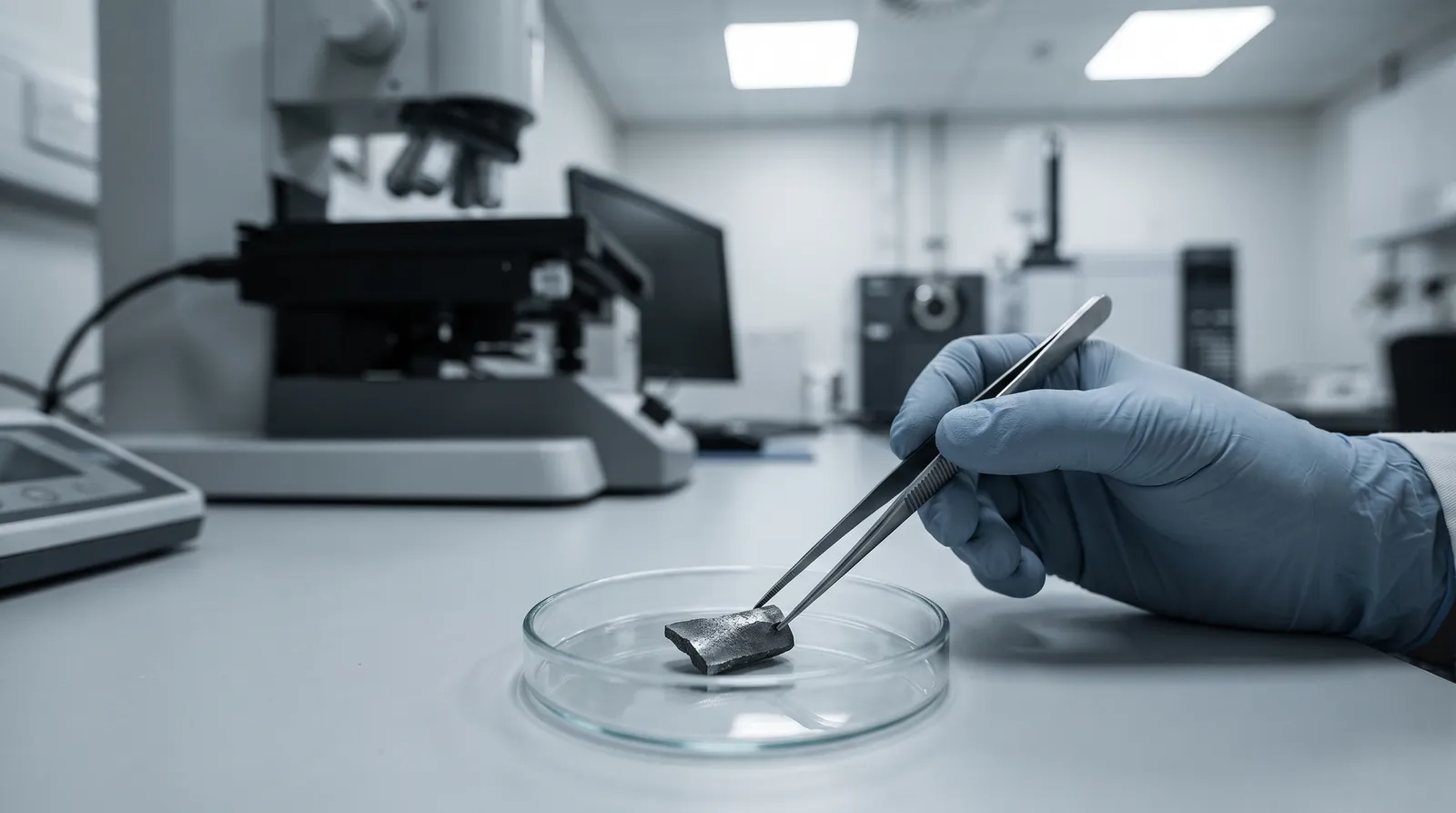
We’ll state it plainly, so it can be held against us. A name on the official. A programme designation. A facility. A sample with a chain of custody that an outside laboratory can run a mass spectrometer over and publish on. Any one of those turns this from gossip into the biggest story in the history of the site.
Until then, the honest description of what happened this week is that a distinguished scientist repeated something he was told at a party, and several thousand people read it as confirmation.
The UAP Times take
Take with salt — one out of five, our lowest rating, and it is the claim being rated, not the man making it.
The essay is real, Loeb’s account of the evening is first-hand, and he is entitled to write about what he was told. But the thing at the centre of it — that the United States holds alien technology and related biological material — reaches the reader through an unnamed guest quoting an unnamed official, with no document, image or sample attached. That is the definition of our bottom tier, and it would be our rating whoever had published it.
What makes it worth your time is the inversion. For three years the most useful thing Loeb did in this field was insist, loudly and unfashionably, that testimony is not evidence and instruments are. He was right then. He is the best-placed person in America to go and get the material he has just been told about — he chairs the council, he has the government’s ear, and he has a laboratory. We would much rather read that essay.
Further reading: for the panel Loeb chairs and the constraints it works under, see the White House’s UAP Science Council; for the Pentagon’s procedure for material it insists it hasn’t got, the Oak Ridge aluminium file; for the audit of the video evidence Loeb would rather not squint at, 112 clips and not one usable number; and for his own group’s willingness to publish a deflating answer, the Palomar plates, re-checked.
Update, 10 October: two days later a serving cabinet secretary supplied his own secondhand version — a group of unnamed former special-operations personnel who, he says, told him they could call craft in. We counted the hops on that one too.
Source: Avi Loeb, 'Alien Technology Deserves an XPRIZE' (Medium, October 2026)
Follow the file
Every new dispatch from the UAP desk, in your inbox. Sourced, sceptical, and no more than one email a week.