
There is a particular kind of UAP story that arrives with no object, no document and no name attached to it. This week’s came from a serving member of the United States Cabinet.
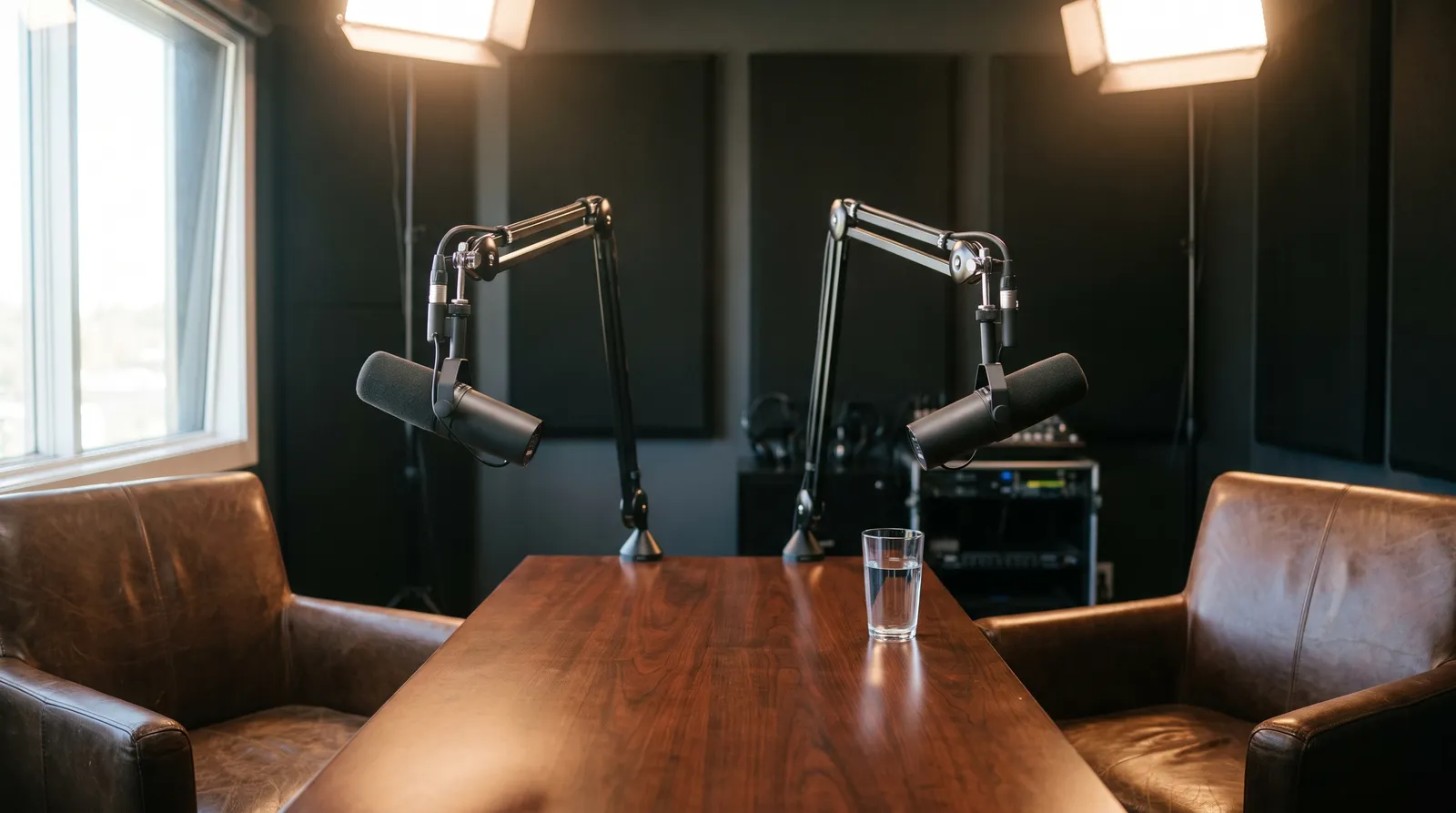
On his own podcast, Health and Human Services Secretary Robert F. Kennedy Jr told Rep. Anna Paulina Luna — the congresswoman who chairs the House task force trying to prise UAP records out of the federal government — that he was approached during the presidential transition by a group of people claiming first-hand knowledge of UFO recovery operations. He described what they told him. Luna, to her considerable credit, asked him whether any of it could be proved.
That exchange is the story. Not the claim, which is the oldest rumour in the subject and arrived this week in its usual condition: unaccompanied. What is new is who is now carrying it, to whom — and that the first response in the room was a request for evidence rather than a round of applause.
What Kennedy actually said
Kennedy’s account, as transcribed by the outlets covering the episode, runs roughly like this. During the transition, while he was living in Palm Beach, a group approached him wanting to talk about UAP. It included, in his words, “a very high-level NASA scientist, and then a bunch of Navy SEALs and Green Berets who had been on recovery teams”.
What they told him is the part that travelled. They had, he said, “actually figured out how to call some of the ships in” — and they were “under orders to destroy them and recover them”.
He added, separately, that “I have had briefings once I got in there”, without saying what they covered, who gave them, or whether they bore on anything he had been told in Florida.
Then the detail most of the coverage skipped: he declined to go public with it. His stated reason was reputational — he is already widely characterised as a conspiracy theorist, and judged that putting his name to this would not help. Hold on to that; it is the most revealing sentence in the episode.
A note on where these quotes come from
We would rather be straight about this than pretend to a transcript we haven’t got. No mainstream outlet has reported the remarks; the wording above is circulating through UAP aggregators and a technology-site write-up that is largely a survey of Reddit reaction, and we have not been able to pull the episode itself to check it end to end. A cabinet secretary saying this is news whoever transcribed it first — but it is a reason to mark the claim down rather than up, and to expect the wording to shift once a transcript exists.
Count the hops
The house rule is to separate what is claimed from what is confirmed, and this anecdote has three tiers inside it.
Tier one: the approach happened. Kennedy is a named, accountable source describing something he experienced himself, at a specific place and time — checkable, in principle, by anyone with subpoena power. This is the strongest thing in the story.
Tier two: who the group were. A senior NASA scientist and former special-operations personnel, all unnamed. Nothing in the public record confirms the backgrounds attributed to them, and Kennedy did not say whether he verified them.
Tier three: what they said they did. Summoning craft at will and destroying them on orders. No document, no object, no named programme, no corroborating witness — an assertion relayed twice.
The approach is first-hand. Everything that makes the approach interesting is not.
Those tiers flatten the moment the story leaves the room. Within a day the headline version was “RFK Jr confirms crash retrievals” — three logical steps further than anything Kennedy said.
“They figured out how to call the ships in”
What would that sentence mean, if it were true? The scale of it is its own argument for caution.
Summoning a craft on demand is not a sighting. It implies a repeatable protocol, an understanding of the thing being summoned, instrumentation, personnel, funding lines and — because this is the United States government — paperwork. Add standing orders to destroy and recover, and you have described a programme with a chain of command, a legal authority, a budget and a disposal process.
Programmes of that shape leave traces: contract numbers, facility records, transport manifests, medical surveillance of the people handling the material. Claims of this scale have been made for thirty years and the traces have never arrived. We have been here before: the Pentagon has a written procedure for handling recovered UAP material while insisting it holds none, and the one specimen that did reach a national laboratory came back as ordinary cast aluminium.
There is now a lawful door for exactly these witnesses
Here is what makes this anecdote more testable than the same story told in 2017, and worth covering at all.
If a group of former SEALs and Green Berets really served on recovery teams, they spent decades contractually gagged. That changed twice this year. On 31 July the Director of National Intelligence issued guidance telling the intelligence community that UAP nondisclosure agreements are no longer a bar to reporting what you know — to designated government officials. On 14 September the Department of War followed with its own waiver, which reached the contractors and the Special Access Program agreements the July memo had missed.
So the route exists. The people Kennedy describes could, as of last month, walk their account into the PURSUE Task Force without breaching a single agreement they signed.
The honest caveat is that neither instrument touches the Espionage Act or the classification system — the gap we flagged at the time, and the reason at least one named whistleblower has refused the channel outright. Silence from these witnesses is not proof they don’t exist. It does mean the claim is no longer un-testable in the way it was a year ago, and that the burden has moved.
The woman asking for proof runs the task force
Luna’s reply — in effect, people say a great deal, what can you actually show — is the right question, and it is also a slightly awkward one coming from her.
Luna chairs the Task Force on the Declassification of Federal Secrets and has been the most forward-leaning member of Congress on this subject by some margin. On Joe Rogan’s show in August 2025 she said lawmakers had seen proof of “interdimensional beings”, while acknowledging the basis was “stuff that we’ve seen” and “information that we’ve been told” — and that she had not personally seen a craft or a portal. She repeated the framing on national television in February 2026, said she had “observed things that are of nonhuman origin and creation”, and promised a press conference once the material is declassified. That press conference has not happened.
Her task force does hold the one lever in this story with teeth. A letter dated 31 March demanded UAP video files from the Pentagon by 14 April; dozens of clips — the figure most often cited is 46 — remain unreleased. A subpoena for those, or for the personnel records that would confirm or demolish the Palm Beach group, would settle more in a fortnight than a year of podcasts.
The sceptic’s read
The official position has not moved. AARO’s Historical Record Report, Volume I, published in March 2024, found no evidence that any official investigation, academic study or review panel had ever confirmed a UAP as extraterrestrial technology — and traced the crash-retrieval allegations largely to circular reporting: a small number of people citing one another until the chain looks like corroboration. Sean Kirkpatrick, AARO’s first director, has said repeatedly that his office found no evidence of aliens.
Critics of that report have a real point in reply: AARO had no subpoena power and limited access to Special Access Programs, so “we found nothing” is weaker than it sounds. A body that cannot compel testimony finding nothing is not the same as there being nothing — and it is also not evidence of something.
The debunking side of the field — Mick West and the Metabunk crowd among them — has made the plainer methodological version of this argument for years: a claim with no object, no document and no named witness attached is not evidence, it is a story about evidence. The sharpest version of the sceptical read is not that Kennedy’s group were lying. It is that he has no way of knowing whether they were, and said so.
There is an uncomfortable symmetry in his reason for staying quiet, too. A man who declines to repeat a claim because his reputation would sink it is telling you what he thinks the claim can carry on its own.
What would move this
Three things, in ascending order of unlikeliness. A recording of the episode, so the wording stops being third-hand. One of the group going on the record by name, through the channel that now exists to let them. Or a document — a contract, an order, a transport record — putting the programme somewhere other than in a conversation.
There may soon be a venue for the first two. House Oversight chair James Comer told Ask a Pol in September that a UAP hearing planned for that month fell when Speaker Johnson scrapped the last two sitting weeks, and that he means to revive it in an aggressive post-election lame duck. He also conceded the committee had not settled on a topic. We would respectfully suggest one: ask the Secretary of Health and Human Services, under oath, who approached him in Palm Beach — and ask the Department of War whether anyone of those descriptions held the assignments claimed.
The UAP Times take
This earns a Thin rating — two out of five on our scale — and it is worth being precise about which part earns it. The fact of the conversation is well attested by the standards of this field: a named, serving cabinet official describing on the record an approach he experienced himself. That is more than most crash-retrieval stories manage on day one.
The content has nothing behind it. Unnamed sources, no documents, no object, an extraordinary capability claim delivered as an aside, and a relay chain running through aggregator sites rather than a transcript. Two out of five is what a credible witness to an incredible second-hand claim is worth, and it stays there until a name or a piece of paper arrives.
What is notable is the week. On Thursday the chair of the White House’s own UAP science council published a dinner-party version of the same rumour. Within forty-eight hours a cabinet secretary had supplied a special-forces version of it. Neither produced a thing. A field that has spent a year building machinery for sworn, documented testimony keeps being handed anecdotes instead — by the very people with the standing to use the machinery.
Further reading: the chair of the White House’s UAP science council publishing something he heard at a dinner party, the ODNI memorandum that freed the intelligence community to report what it knows and why an amnesty was never the instrument that would free UAP witnesses to talk.
Source: The Secretary Kennedy Podcast, episode with Rep. Anna Paulina Luna (early October 2026)
Follow the file
Every new dispatch from the UAP desk, in your inbox. Sourced, sceptical, and no more than one email a week.