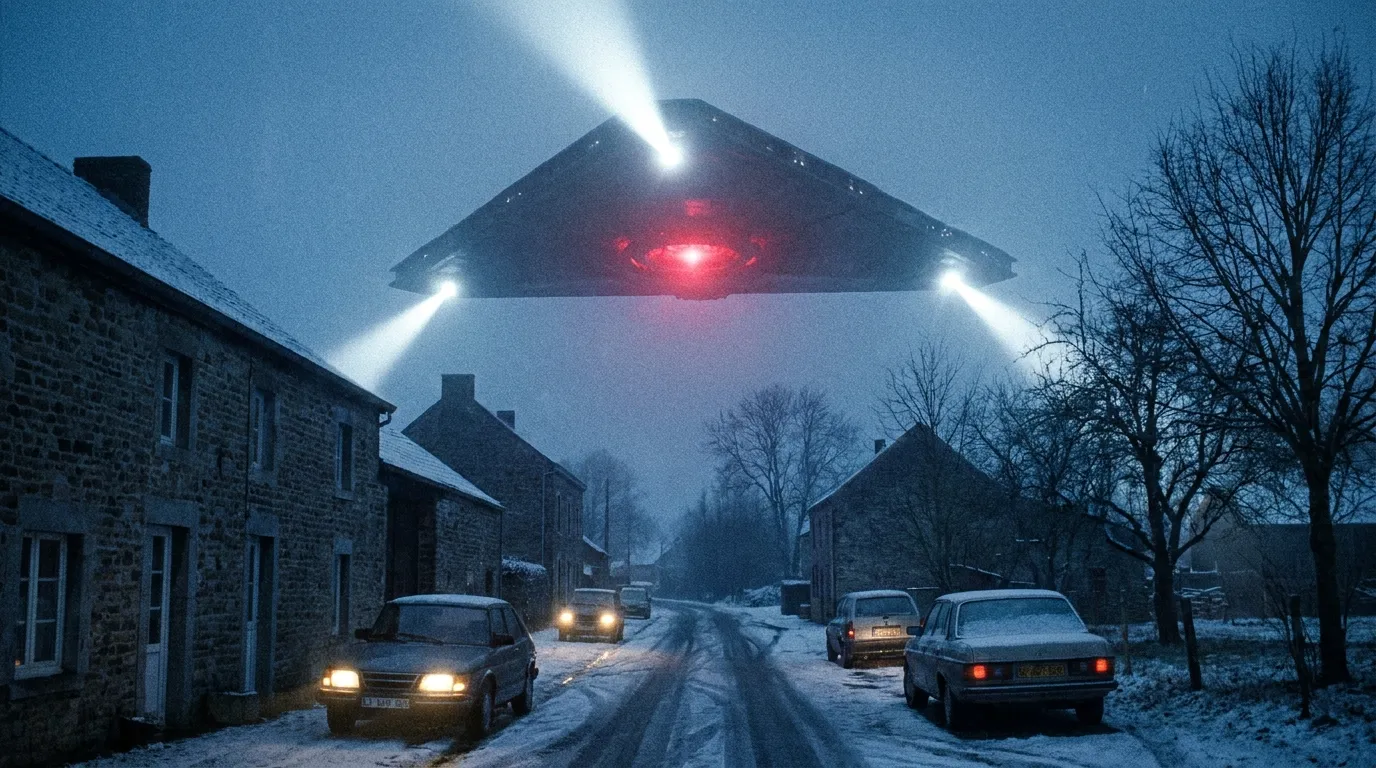
Every so often a UFO wave produces the thing believers always say they want and rarely get: an official body that takes it seriously, on the record, in real time. The Belgian Wave is that case. For roughly eighteen months across 1989 and 1990, a small European country reported thousands of silent black triangles drifting over its towns — and rather than laughing it off, the Belgian Air Force scrambled interceptors, shared its radar tapes with civilian investigators, and let a serving officer stand at a podium and say, in effect, we don’t know what this was either.
It is, for that reason, one of the most institutionally respectable UFO episodes on record. It is also the one whose single most famous piece of evidence turned out to be a lump of painted polystyrene. Both facts are true, and holding them at once is the whole art of reading this case.
The winter the triangles came
It began in earnest on the evening of 29 November 1989, around the town of Eupen in Belgium’s German-speaking east. Over the course of that night, dozens of separate groups of witnesses — including, crucially, several gendarmes, Belgium’s paramilitary police — reported the same thing: a large, dark, triangular object moving slowly and almost silently across the sky, with a bright light at each of its three corners and a pulsing red light at its centre.
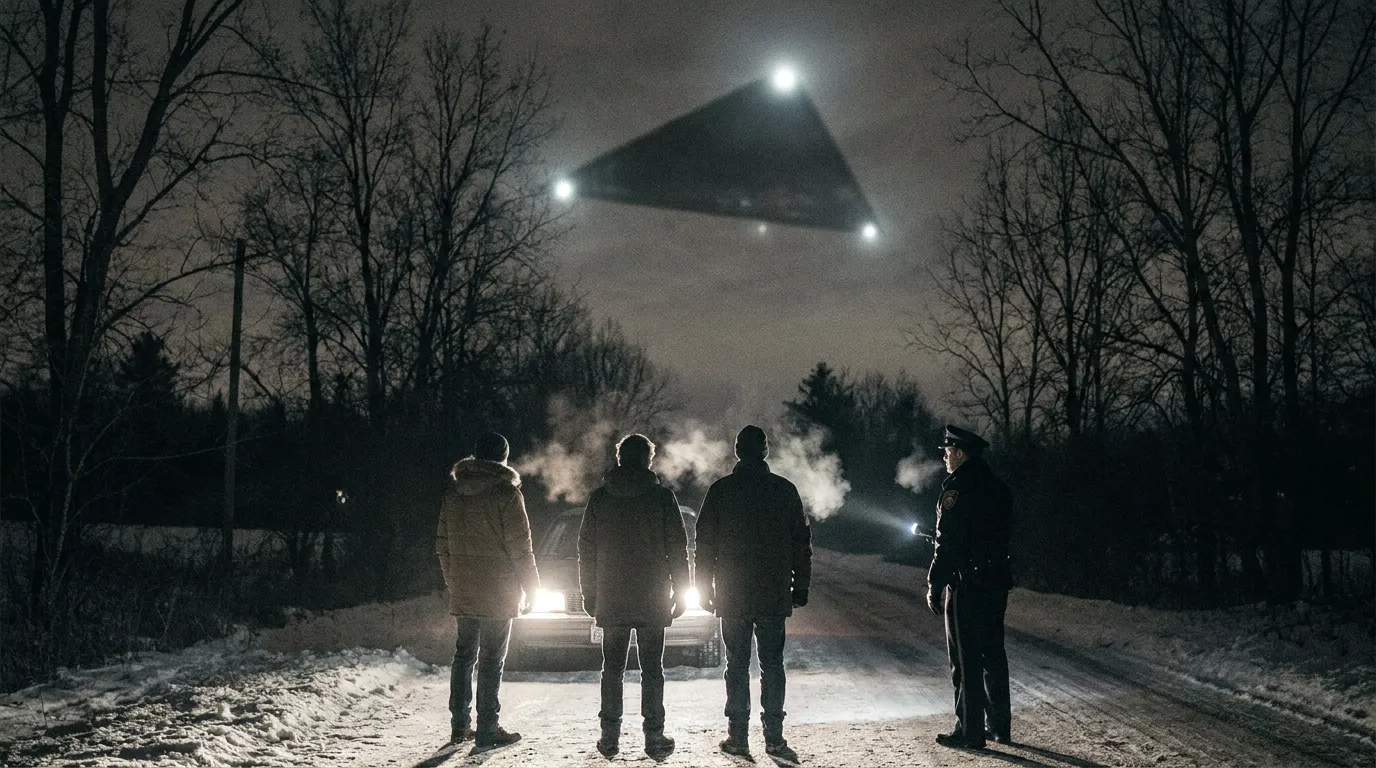
That description — big, triangular, three corner lights, slow, silent — would repeat across the country for a year. By the time the wave subsided, Belgian investigators had logged something on the order of 13,500 reports, taken around 2,600 detailed written statements, and formally investigated several hundred. Whatever was or wasn’t in the sky, the sheer volume and consistency of the reporting is a genuine data point. This was not one farmer with a Polaroid; it was a rolling, nationwide phenomenon that trained police officers put their names to.
An air force that didn’t laugh
What makes Belgium unusual is the official response. The reports were taken up by SOBEPS, a serious civilian UFO study group, and — remarkably — the Belgian Air Force chose to cooperate rather than stonewall. The public face of that cooperation was Colonel (later Major General) Wilfried De Brouwer, who ran the air staff’s response and never pretended to more certainty than he had.
This matters because it removes the usual escape hatch. With most famous cases you can wonder whether the military secretly knew it was a test aircraft, or a weather balloon, and simply wasn’t saying. In Belgium the military was actively, publicly trying to find out, sharing what it had, and coming up empty. De Brouwer has maintained for decades that a portion of the events has no conventional explanation — not “it was aliens,” but “we looked, and we could not identify it.”
SOBEPS eventually published the whole dossier as Vague d’OVNI sur la Belgique, two volumes running to something close to a thousand pages. Very few UFO waves anywhere have been documented at that length by the people who investigated them at the time, and the fact that the record is open is precisely why the case can be argued about properly rather than merely believed.
The night of the F-16s
The wave’s centrepiece came on the night of 30–31 March 1990. Two ground radar stations picked up unusual returns; witnesses on the ground reported lights; and the Air Force scrambled two F-16s from Beauvechain to take a look.
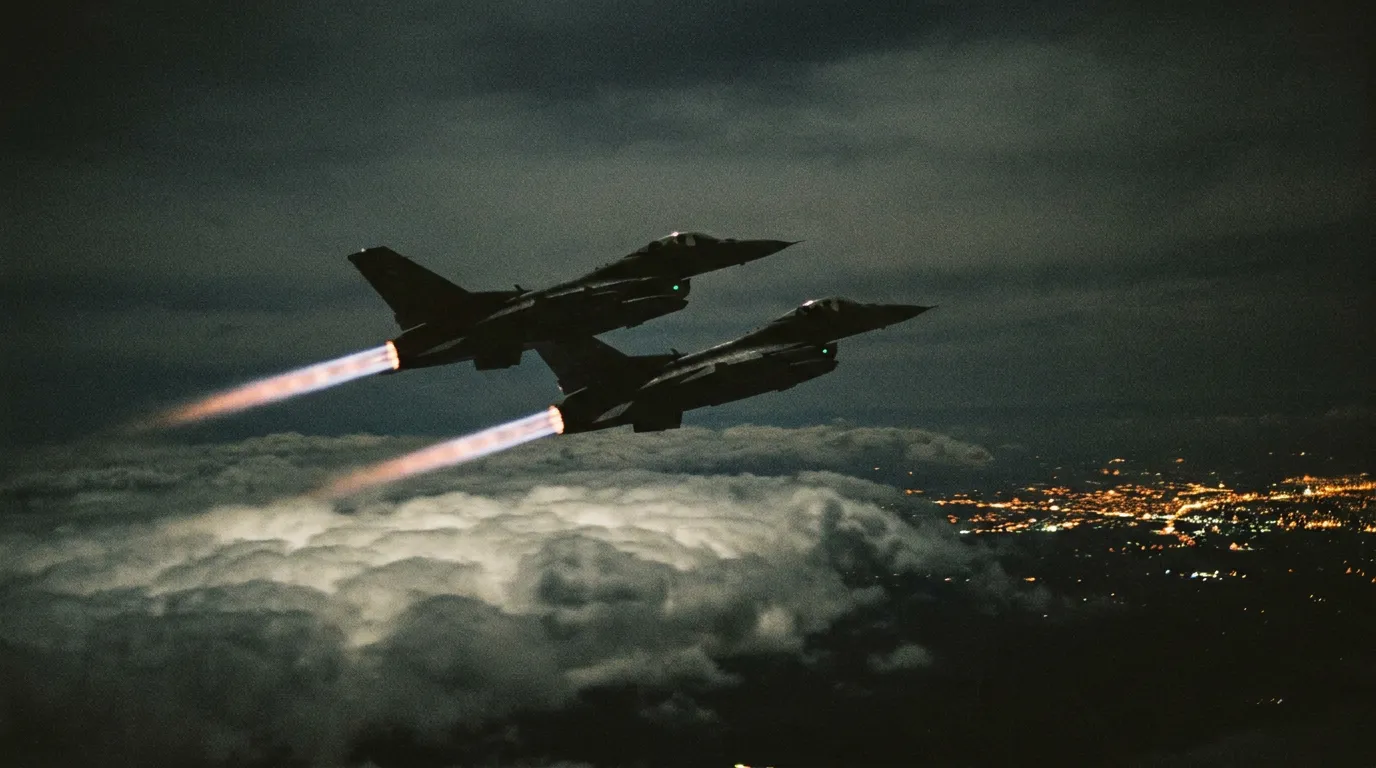
What the jets’ radars reportedly recorded is the heart of the legend. On several occasions the F-16s achieved a lock on a target that then behaved impossibly: accelerating from a few hundred to over a thousand knots, changing altitude by thousands of feet in seconds, and pulling turns whose implied g-forces would have pulped a human crew. Each time, the lock was broken almost as soon as it was made. And — the detail that cuts both ways — the pilots never got a visual. They were chasing numbers on a scope in the dark, not a shape in the windscreen.
De Brouwer’s Air Force later released the radar plots and discussed them openly, which is why this incident, rather than any of the thousands of naked-eye sightings, became the wave’s evidential anchor. Official radar, a scramble, released data, a general on the record: that is about as good as institutional engagement with a UFO case ever gets.
The photograph everyone remembers
And then there is the picture. In April 1990, near Petit-Rechain, someone photographed a black triangle with three glowing corner lights and a central glow against a pitch-black sky. It was sharp, it was dramatic, and it became the image of the Belgian Wave — reproduced in every documentary, on every book cover, the visual shorthand for the entire episode.
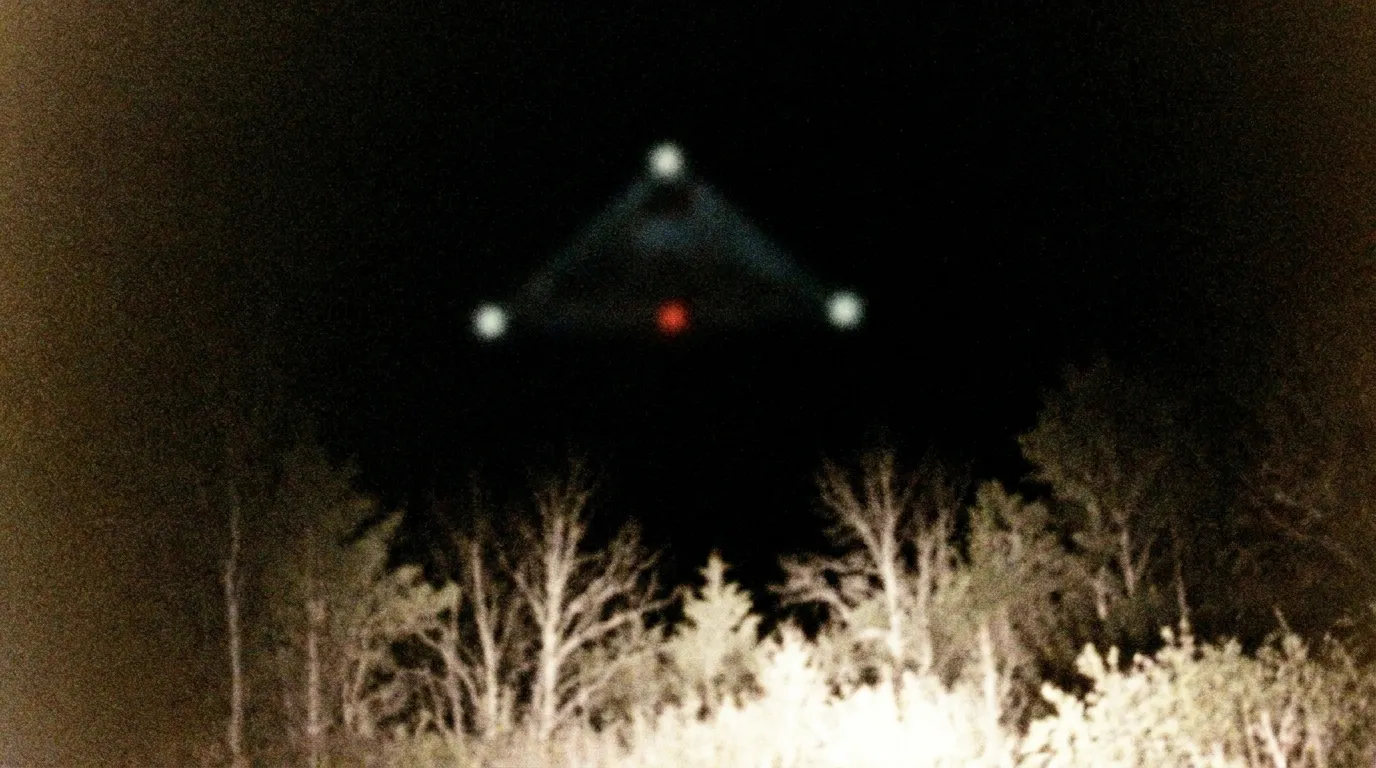
In 2011, a man identified in the Belgian press only as Patrick — later named as Patrick Maréchal — went on television and admitted he had faked it. He had been eighteen at the time. The “craft” was a piece of expanded polystyrene, painted, with lights attached, photographed as a lark. He said he had been astonished it was taken seriously for twenty years.
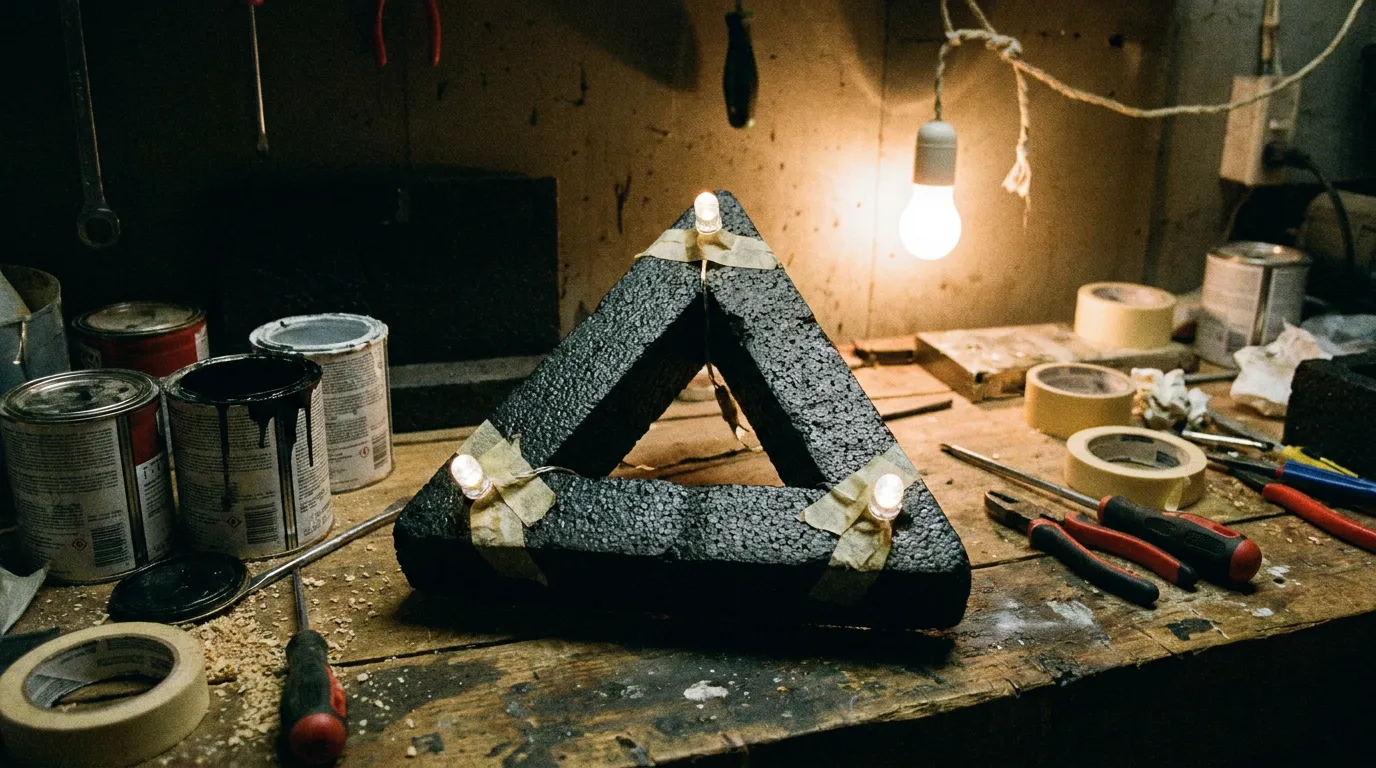
There is a coda that the debunk-and-move-on version tends to skip. In 2022 Maréchal was reported as retracting his retraction, claiming he had been paid to declare the photograph a fake. We would not lean on that for a second: a man who has admitted lying about a photograph is not a reliable witness to his own motives, and the confession came with a described method that fits the image. But it is on the record, and pretending otherwise would be the same sin in the other direction.
This is a genuinely important moment, and not only because it deleted the wave’s best-known evidence. It is a clean, humbling demonstration of how a single striking fake can define public memory of an entire event — and of why a case should never rest on its most photogenic artefact. The honest thing is to say plainly: the famous photo is worthless. The honest thing is also to note that a hoaxed photograph in April 1990 does nothing to explain what a dozen gendarmes and a national radar network were reacting to the previous November.
Re-reading the radar
Which brings us to the part of the case that has quietly eroded while the photograph took all the attention. Reconstructions of the F-16 night — including the Air Force’s own chronology — describe roughly nine intercept attempts over about an hour, producing three brief radar locks.
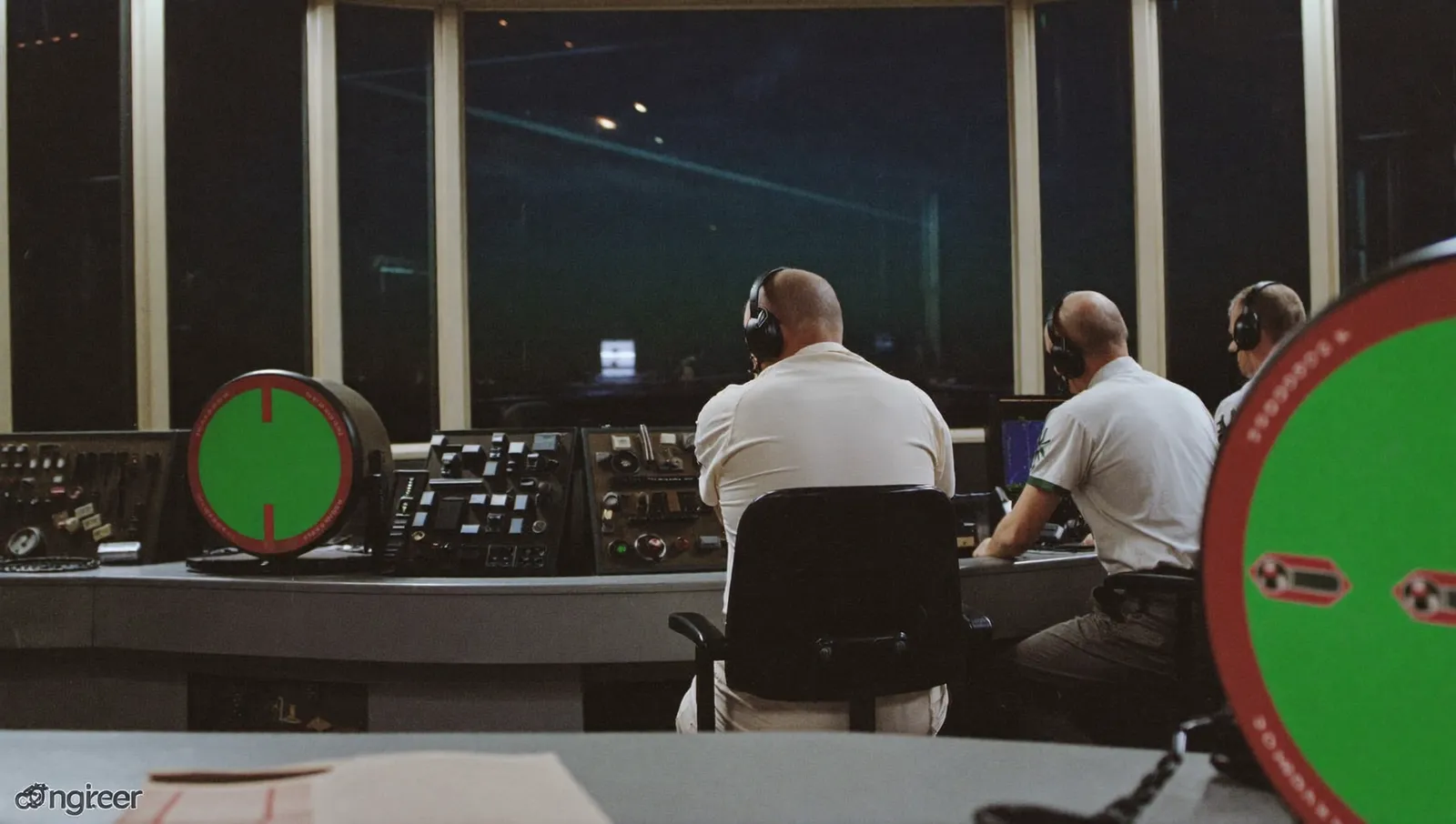
Subsequent analysis attributed those three locks to the two F-16s detecting each other. That is a deflating sentence, and it should be read carefully: it doesn’t mean the crews were incompetent, it means a pulse-Doppler radar looking for a fast mover in a crowded sky at night can find its own wingman and report a miracle. The remaining contacts have been widely attributed to Bragg scattering — coherent returns from layered, quasi-periodic refractive structures in the atmosphere, which can throw up echoes that appear to accelerate impossibly and, tellingly, to descend below ground level.
The most important name here is not a debunker’s. Auguste Meessen, the Louvain physicist who worked alongside SOBEPS rather than against it, accepted the radar-artefact reading for much of the data, pointing out that some computed positions put the target beneath the surface — a signature of ground reflection, not of a craft. He also suggested that a temperature inversion producing exceptional refraction could account for some of the visual reports, with stars appearing to move and pulse. Meessen has nonetheless maintained that at least one trace still resists explanation. That residue is real, and it is also just that: an unexplained trace, not a measured object. Stephenville in 2008 is the counter-example worth holding in mind — a case where independent radar told a coherent story rather than a contradictory one.
The sceptic’s case
Strip out the fake and a serious sceptical account remains. The radar returns, critics argue, are the sort of thing radar throws up when the atmosphere misbehaves — temperature inversions and “angels” that produce fast, erratic, physically impossible-looking targets that aren’t solid objects at all. The F-16 lock-ons, on this reading, were the jets’ own radars fooling themselves, which would neatly explain why the pilots never saw anything. And the naked-eye triangles could be a mix of real but mundane things — aircraft, helicopters, ultralights, stars seen through moving cloud — amplified by a year of saturation media coverage that primed an entire nation to look up and see a triangle.
It is a coherent story, and parts of it are almost certainly right for some of the sightings. What it struggles with is the same thing every debunk of a big wave struggles with: explaining away thousands of consistent reports, from sober witnesses including police, without at some point simply asserting that all of them were mistaken in the same specific way.
The aircraft that was never found
The most popular prosaic candidate at the time was a secret aircraft. The F-117 Nighthawk had been publicly unveiled in 1988 and the B-2 had first flown in 1989, so 1990 was exactly the moment for a European public to assume that anything black and angular belonged to the Americans. The US embassy in Brussels denied any involvement, and the physics is against it anyway: neither aircraft hovers, neither is triangular with lights at the corners, and the whole appeal of a stealth design is not being seen by half a country.
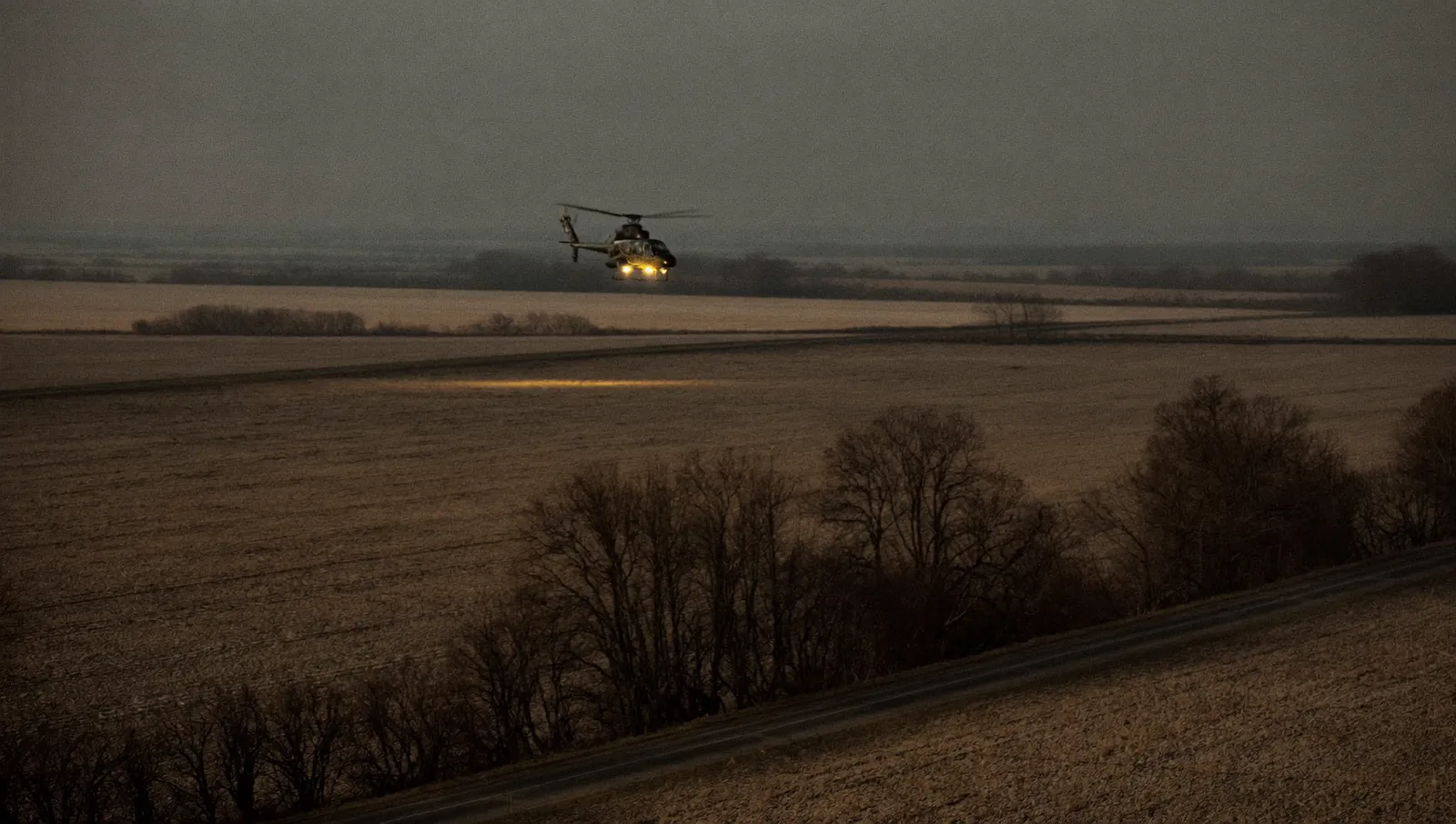
The more serious mundane candidate is the boring one. The French researcher Renaud Leclet has argued at length that a large share of the Belgian sightings are consistent with helicopters — slow, capable of appearing to hang in place, carrying exactly the sort of bright lights that resolve at night into a geometric arrangement, and much quieter at distance and downwind than witnesses assume. Ultralights and microlights fill in more of the gap.
Leclet’s case does not close the file either. It accounts well for the diffuse, distant sightings and poorly for the close ones, and it requires an unusual amount of low-level night flying to have gone unlogged. But it is the strongest surviving conventional hypothesis, and it has the virtue of proposing something that demonstrably exists.
What survives
So what is actually left, once the foam triangle is in the bin and the radar has been re-read? Less than the legend, and more than nothing. A genuinely enormous, consistent body of eyewitness reports, many from trained observers. An air force that engaged honestly, published its data, and could not close the case. A handful of radar traces that remain formally unexplained even after a strong atmospheric account has taken most of them off the table. And no craft — not one — ever identified, recovered, photographed for real, or explained.
That is the shape of the Belgian Wave: heavy on official credibility and witness volume, light on anything you can put under a microscope, and permanently tainted by the fact that its most famous image was a fraud.
The UAP Times take
The Belgian Wave earns a Credible rating — four out of five on our scale: well-witnessed, officially investigated, genuinely unresolved — and it is a useful stress test for how you weigh evidence. If you rate cases by the seriousness of the response, Belgium is near the top: a NATO air force scrambled jets and published its data. If you rate them by hard, surviving proof, it is thinner than its reputation, its signature photograph is a known hoax, and its signature radar event has been substantially explained.
Our reading is that the Belgian Wave is real as a phenomenon — something genuinely drove tens of thousands of reports and an official investigation — while remaining completely unproven as a craft.
The lasting lesson isn’t about triangles at all. It’s that the most convincing-looking piece of a case is often the first thing you should distrust.
An honest “we don’t know,” from an air force willing to say it, is worth more than any photograph. It is also, thirty-six years on, still all anyone has.
Further reading: for a radar case with trained military witnesses but no hoaxed photo to muddy it, see The Tehran Dogfight; for a documented triangle on the ground, Two Nights in Rendlesham Forest. For what European institutions do with the subject now, thirty-odd years on, see Brussels Has Been Quietly Watching the Skies Since 2022. For the two other great mass-witness waves — one American, one suburban — see The Phoenix Lights and the Hudson Valley sightings. The Belgian craft is the archetypal black triangle — and it’s logged on the sightings map. For the alleged craft the whole phenomenon gets pinned on, see our guide to the TR-3B.
Source: Belgian Air Force radar data and testimony (Gen. Wilfried De Brouwer); SOBEPS investigation
Follow the file
Every new dispatch from the UAP desk, in your inbox. Sourced, sceptical, and no more than one email a week.