For forty years, people on four continents have looked up and drawn the same shape: a vast, silent, matte-black triangle, a light burning at each corner and a fifth glow pulsing in the middle. They didn’t compare notes. A retired copper in Hudson Valley, a gendarme in Eupen, a met officer at RAF Shawbury, thirty thousand people under the Phoenix sky — all sketching the same craft.
That craft has a name in the folklore of the aerospace underground: the TR-3B Astra. This is the ultimate guide to it — what people actually saw, where the legend came from, what it’s claimed to be, and our attempt to build the most accurate reconstruction of it going. We’ll take the witnesses seriously. We’ll also tell you exactly where the evidence gets thin, because pretending otherwise would be an insult to how genuinely strange this thing is.
The shape everyone draws the same way
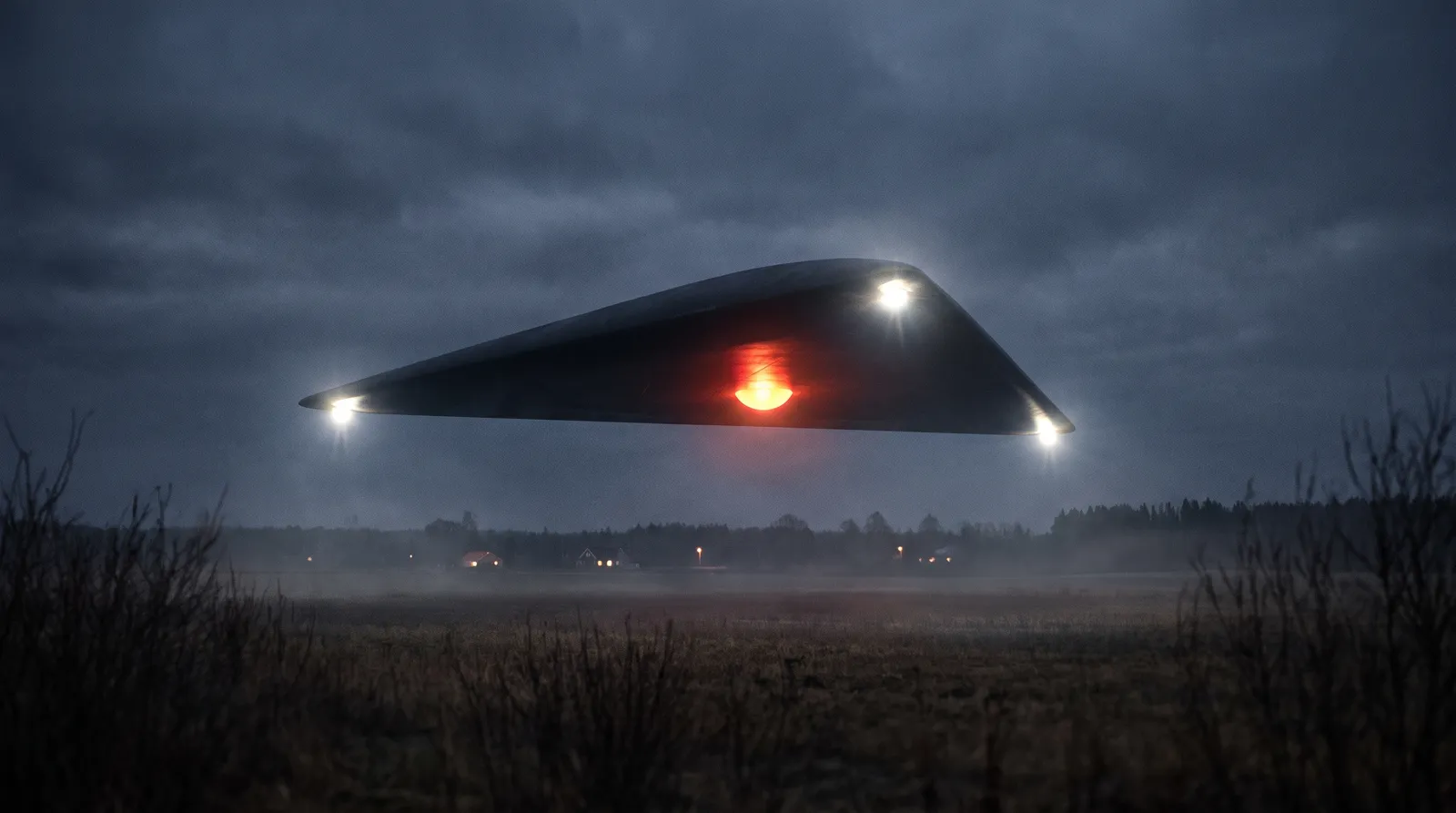
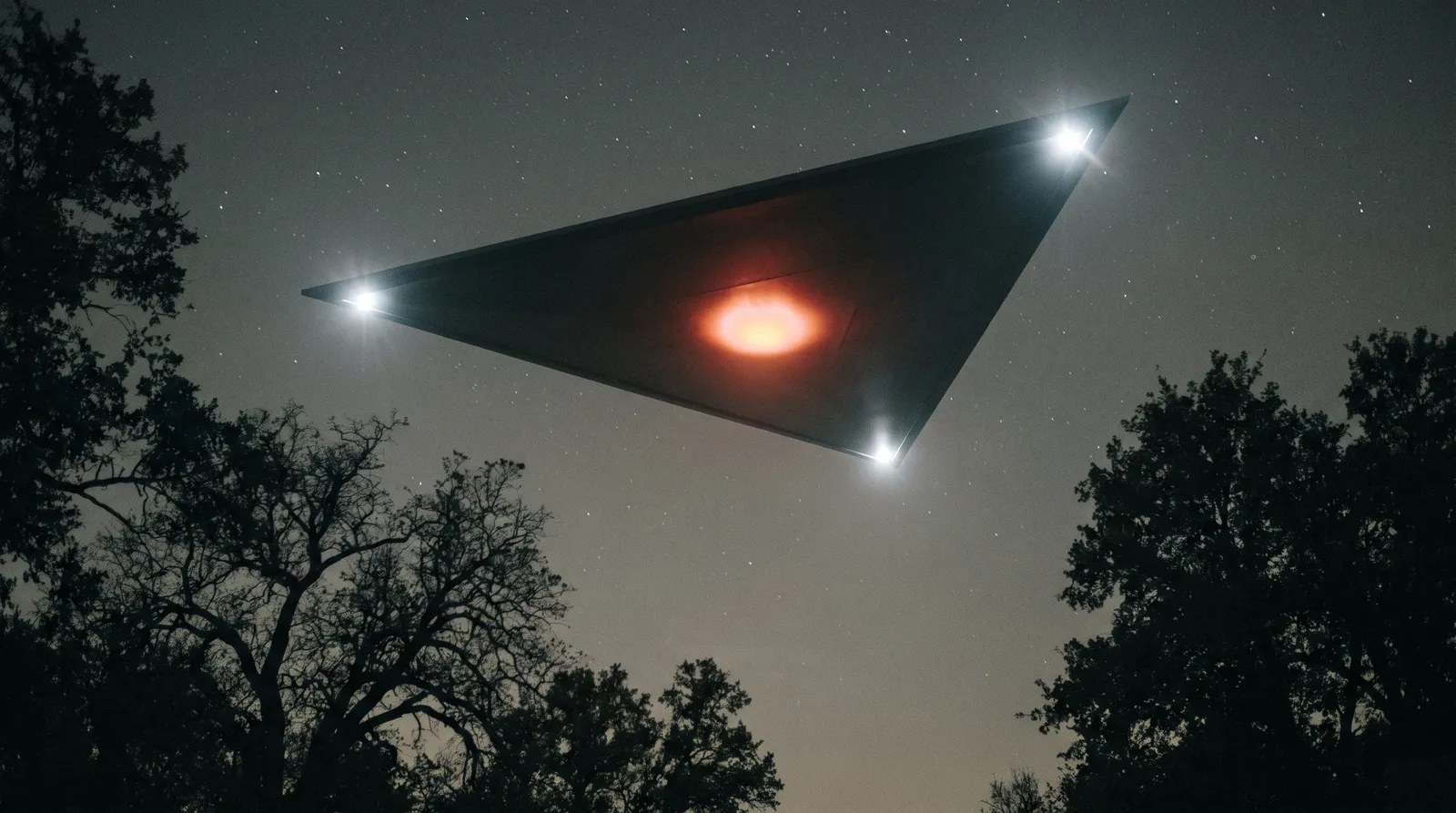
Strip away the theories and you’re left with a remarkably consistent description. The craft is a flat equilateral triangle — sharp straight edges, defined points, no wings, no tail, no cockpit. The surface is matte black and “seamless”, the kind of dark that doesn’t reflect the moon so much as swallow it.
Then there’s the lighting rig, and this is the part that matters most. Three bright lights, one at each corner. One larger light dead centre, usually red or amber, often described as pulsing or glowing rather than shining. Witnesses across decades report the same detail — that the lights can dim, brighten, or wink out entirely, as if the thing can choose to disappear.
It doesn’t roar. It doesn’t even hum, most of the time. It just sits there, enormous and low, and the silence is the part that frightens people.
That combination — the rigid triangle, the four-light signature, the impossible silence, the low slow hover — is the single most repeated UFO description of the modern era. Whatever it is, it is not one person’s tall tale.
Four decades of the same triangle
The pattern starts in earnest over the Hudson Valley between 1983 and 1986, where hundreds of people — including a retired police lieutenant — reported a silent craft “the size of a football field” making sharp turns before accelerating away.
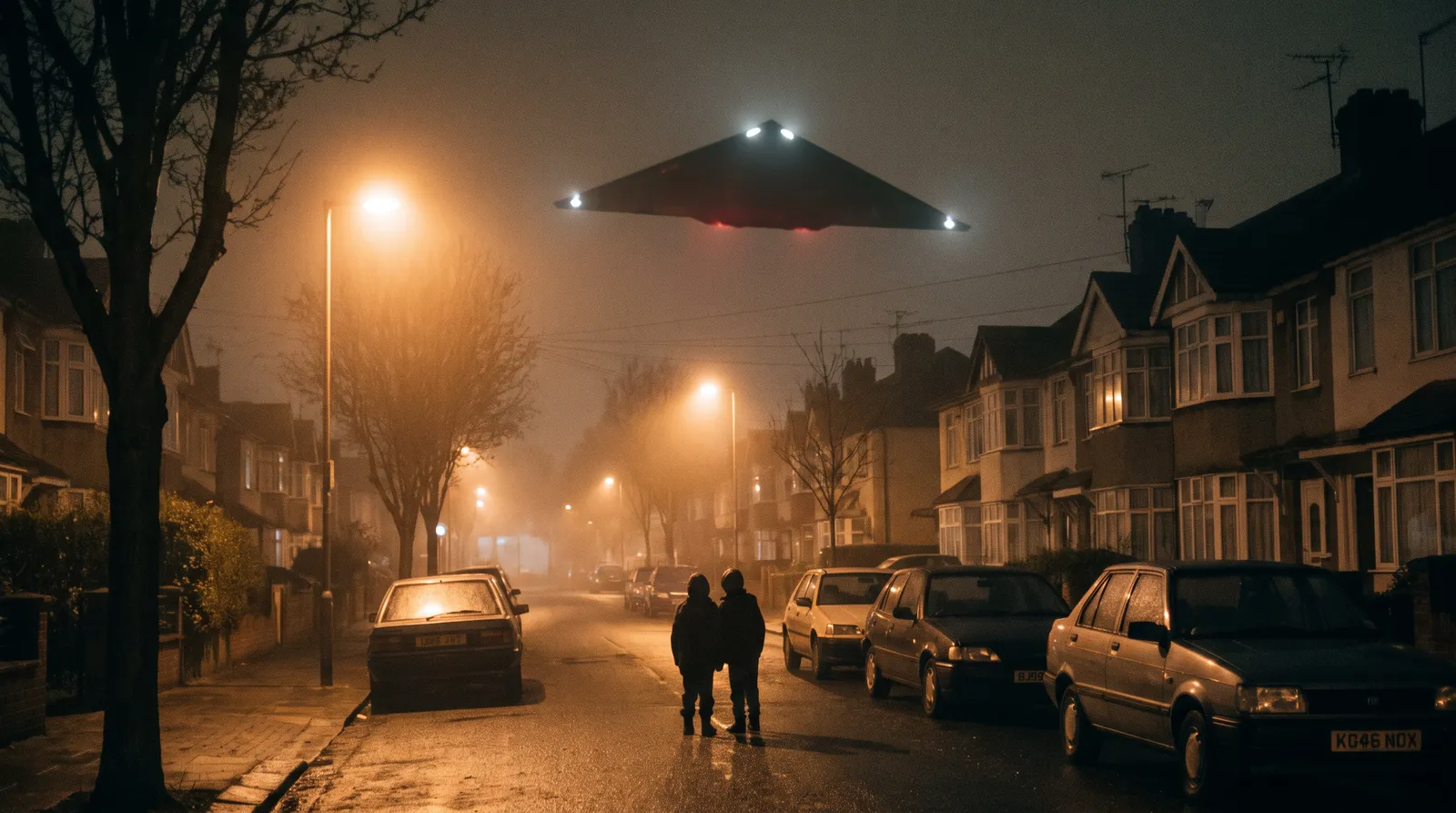
Then came Belgium. From November 1989 into 1990, thousands of Belgians, police units among them, reported triangular craft with corner lights drifting overhead. The Belgian Air Force did something almost no government does: it took the reports seriously, scrambled F-16s, and released its radar data. We’ve covered that extraordinary episode in full in our deep dive on the Belgian Wave — including the hoaxed photograph that later muddied the whole affair.
Britain got its own encounter in the small hours of 31 March 1993, when a triangular craft was reported over RAF Cosford and RAF Shawbury. A meteorological officer described a “vast triangular-shaped craft” moving low with a narrow beam of light and a faint hum. The MoD’s own Nick Pope logged it as being “of considerable defence significance” — the sort of phrase that tends not to appear on filed-and-forgotten reports.
Then the big one: the Phoenix Lights, 13 March 1997, when an estimated tens of thousands of Arizonans watched an enormous V or triangle slide silently over the city. Add the St. Clair / Illinois sightings of January 2000, where police officers across seven towns tracked an arrowhead-shaped craft near Scott Air Force Base, and Stephenville, Texas in 2008, where a pilot estimated a triangle half a mile wide and the FAA radar partly backed the witnesses up — and you have a phenomenon that simply refuses to go away.
Enter Edgar Fouché
For years the triangle was just that — a shape. Then in 1998, a former US Air Force master sergeant and defence contractor named Edgar Fouché stood up at the International UFO Congress in Laughlin, Nevada, and gave it an engine, a budget and a name.
Fouché claimed firsthand knowledge of classified programs around Nellis and Edwards. He described the TR-3B Astra: a nuclear-powered triangular craft, roughly 600 feet to a side, built jointly by the big primes — Lockheed, Northrop, Boeing — under NSA and National Reconnaissance Office management, flown by test pilots out of Edwards. Nearly every specific “spec sheet” you’ve ever seen for the TR-3B traces back to that talk.
It’s worth being straight about what that means. Fouché is a named source with a real service record, which puts him a cut above the anonymous crowd — but no primary program document supporting the TR-3B has ever surfaced, and his most dramatic claims lean on reverse-engineered non-human technology. Take him as a serious claimant, not as confirmation.
The Magnetic Field Disruptor
Here’s where the TR-3B stops being a stealth-plane rumour and becomes something stranger. Fouché’s headline claim was a propulsion system he called the Magnetic Field Disruptor (MFD).
The story goes like this: a ring around the craft is filled with mercury-based plasma, spun up to enormous speed and pressurised, energised by an onboard nuclear reactor at the centre. That rotating plasma is said to generate a field that reduces the craft’s apparent mass — by as much as 89%, according to the lore — so that conventional thrusters at the three corners can then fling it around at speeds and angles that would pulp a human pilot in an ordinary airframe.
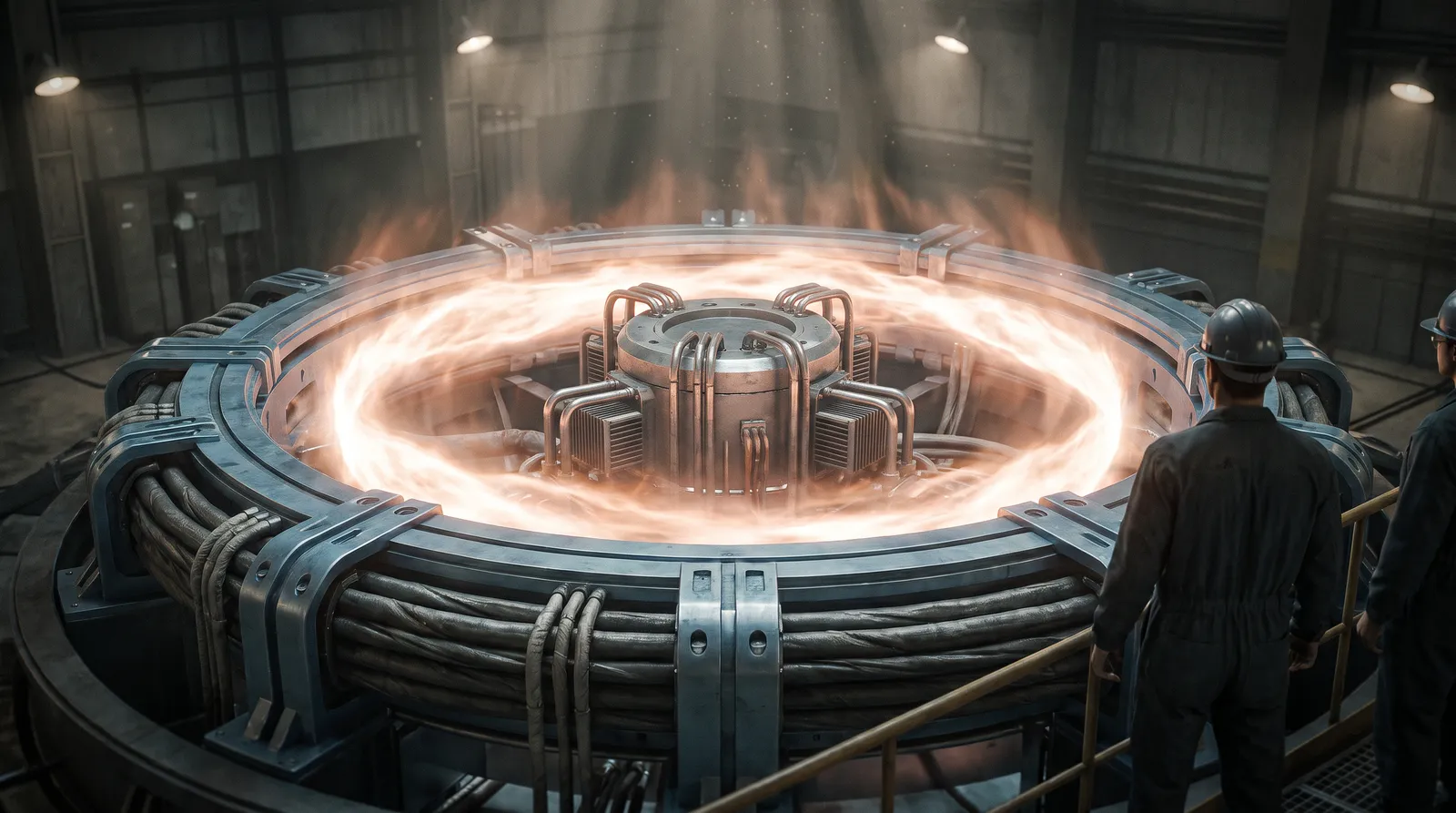
It’s a genuinely elegant explanation for what witnesses describe: the dead silence, the instant acceleration, the hover, the central glow. It is also, physically, on very shaky ground — a mercury plasma torus doesn’t cancel gravity in any physics we can point to, and the specific figures (Mach 9, “89%”) have no traceable primary source. This is the part of the TR-3B where you should keep one hand on your wallet.
Building the most accurate TR-3B
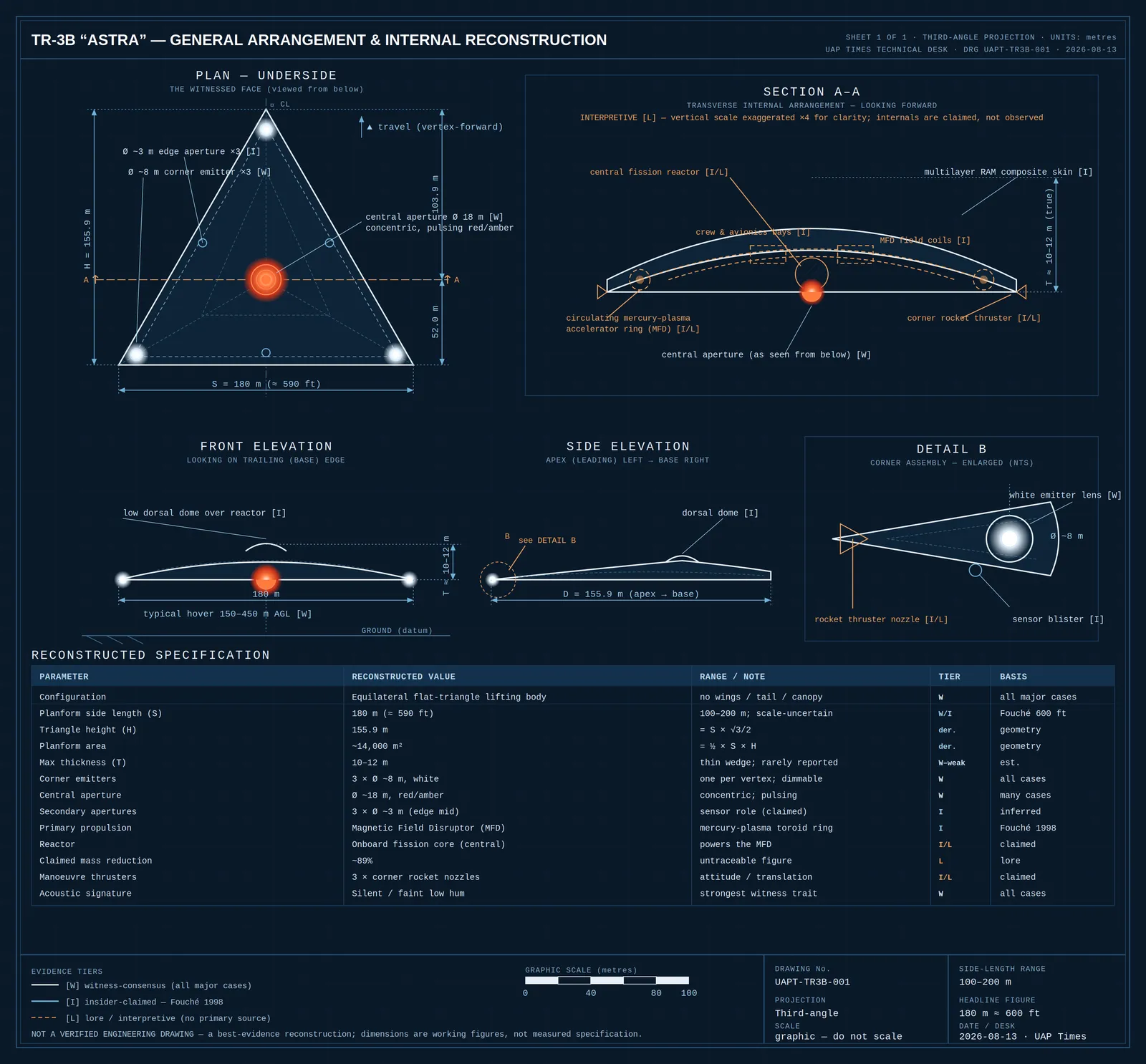
For this guide we did something a little different: we assembled a best-evidence reconstruction of the craft — a design pulled strictly from what witnesses consistently report, with the insider claims layered on top and clearly labelled as such.
The confident bits — the parts backed by four decades of consistent testimony — are the silhouette (flat equilateral triangle, sharp edges, seamless matte black) and the lighting rig (three white corner lights, one pulsing red-amber centre). Get those right and you’ve drawn the thing the world actually saw. Size we’ve pegged to a range of roughly 100–200 metres a side, which spans the credible witness estimates without swallowing Fouché’s 600-foot top end whole.
The speculative bits — the perimeter plasma ring, the central reactor feeding that middle glow — we’ve kept as an interpretive cutaway, not a blueprint. That’s the honest way to reconstruct something with no schematic: draw what was seen in ink, and what was merely claimed in pencil.
What the sceptics say (and they’re not wrong to)
A believer-forward guide that skips the counter-case isn’t worth reading, so here it is. The defining Belgian photograph — the Petit-Rechain triangle — was confessed as a hoax in 2011: painted polystyrene and torch bulbs. The Belgian F-16 radar locks were later attributed to the jets detecting each other and to atmospheric “Bragg scattering”. The Phoenix Lights had a second-half explanation of military flares over a gunnery range. The Cosford craft may have been the re-entry of a Russian rocket booster. Advertising blimps, ultralights in formation, and the UK’s own Condign report on “buoyant plasmas” mop up a good deal of the rest.
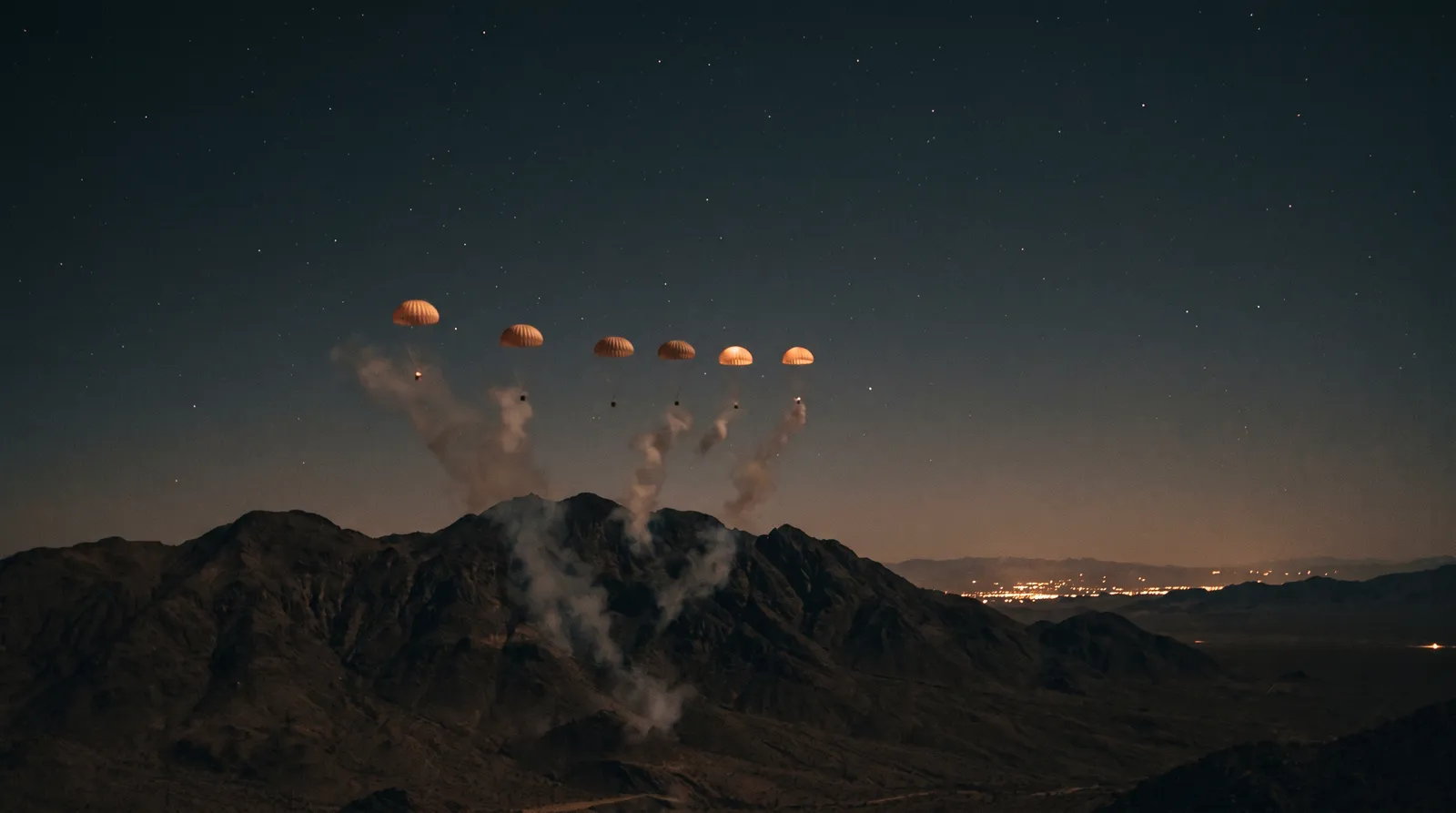
None of that erases the core mystery. Flares don’t hover in rigid formation for twenty minutes; a hoaxed photo doesn’t un-see three police units. But it does mean the smart position is the uncomfortable one: something genuinely anomalous is being seen, and the TR-3B is one story we tell to explain it — not a proven fact.
The Field Kit
Most black-triangle reports die on the phrase “I didn’t have a camera ready”. If you live under a flight path or near a base and fancy your chances, a bit of kit turns “a bloke saw a light” into usable evidence.
Some links are Amazon affiliate links. As an Amazon Associate, UAP Times earns from qualifying purchases — at no extra cost to you.
- Night-vision monocular — for catching the dark, silent stuff → — the triangle’s whole trick is going dark; a digital NV monocular sees the airframe when your eyes only catch the lights. Limited range, but decisive on a clear night.
- Celestron SkyMaster 15x70 — for confirming a shape → — big 70mm objectives gather enough light to tell a rigid craft from three separate aircraft in formation. The single most useful upgrade over the naked eye.
- Phone astro-clamp + tripod — for a steady frame → — hand-held night footage is worthless; a stable long exposure is where “orb” videos become measurable. Cheap, and the difference between evidence and blur.
The full kit list lives on our Field Kit page.
The UAP Times take
The black triangle is one of the best-attested phenomena in UFO history — consistent, cross-cultural, and witnessed by police, pilots and meteorologists who had nothing to gain. On that, the credibility is high and we’re comfortable saying so.
The TR-3B specifically is a different tier. It’s a compelling, internally-consistent story that fits the sightings beautifully — but it rests almost entirely on a single 1998 testimony and a spec sheet no document has ever backed. Our reconstruction leans into what was genuinely seen and stays honest about what was merely claimed. Believe in the triangle; keep the mercury plasma at arm’s length. The most interesting possibility isn’t that the TR-3B is alien — it’s that it’s ours, and the reason nobody will confirm it is the most mundane one of all.
Further reading: The Belgian Wave: The Triangle Its Own Air Force Couldn’t Explain and The Phoenix Lights — the two great mass-witness triangle cases — plus Stephenville 2008, the one where the radar record partly backed the witnesses up.
Source: Edgar Fouché, International UFO Congress (1998); Belgian Air Force / SOBEPS records
Follow the file
Every new dispatch from the UAP desk, in your inbox. Sourced, sceptical, and no more than one email a week.