
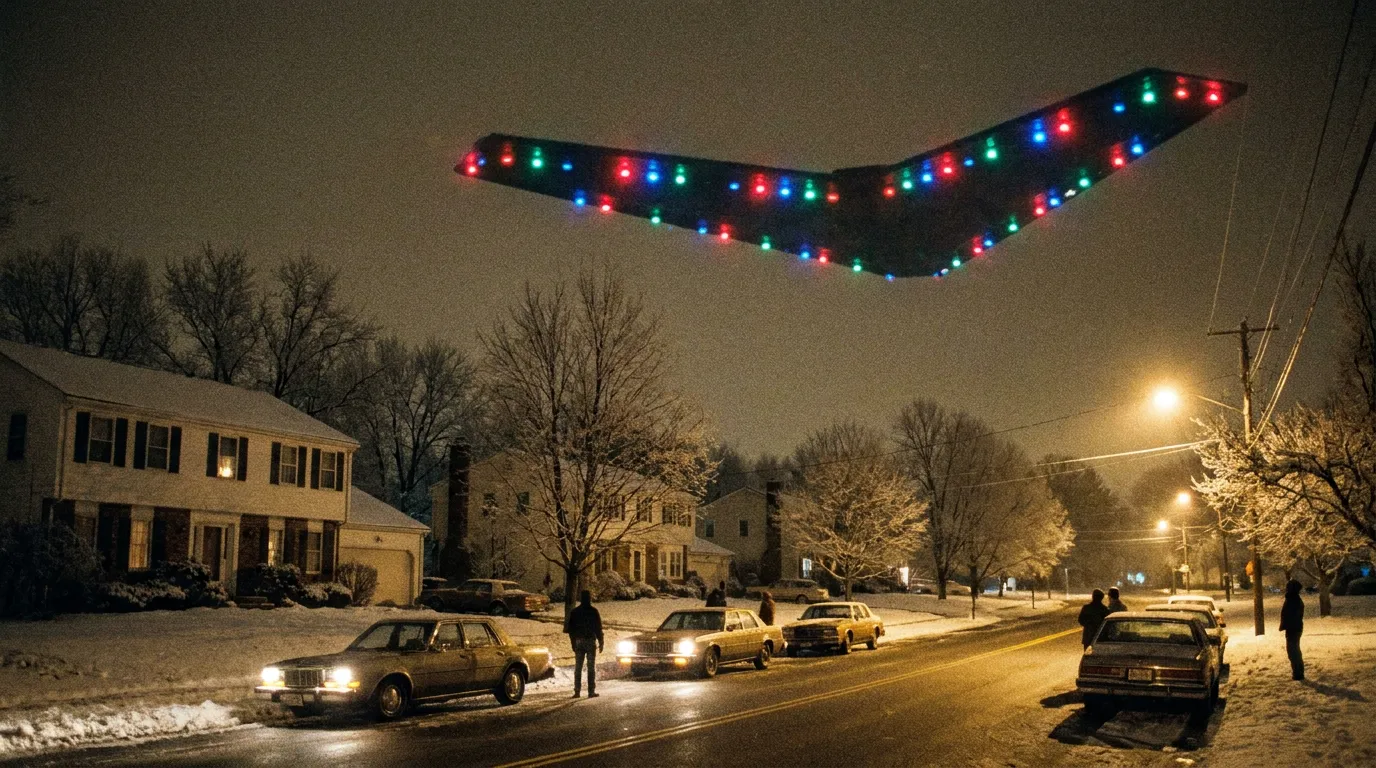
The Hudson Valley wave is the case that a partial explanation is supposed to close — and doesn’t quite. For years in the early-to-mid 1980s, an enormous, silent, V-shaped array of lights drifted over the commuter suburbs north of New York City and across the Connecticut line, watched by thousands of people. A specific group of light-aircraft pilots later admitted they were behind at least some of it. That should be the end. And yet the descriptions, from far too many sober people, keep pointing at something the stunt does not fully account for.
A light show over the commuter belt
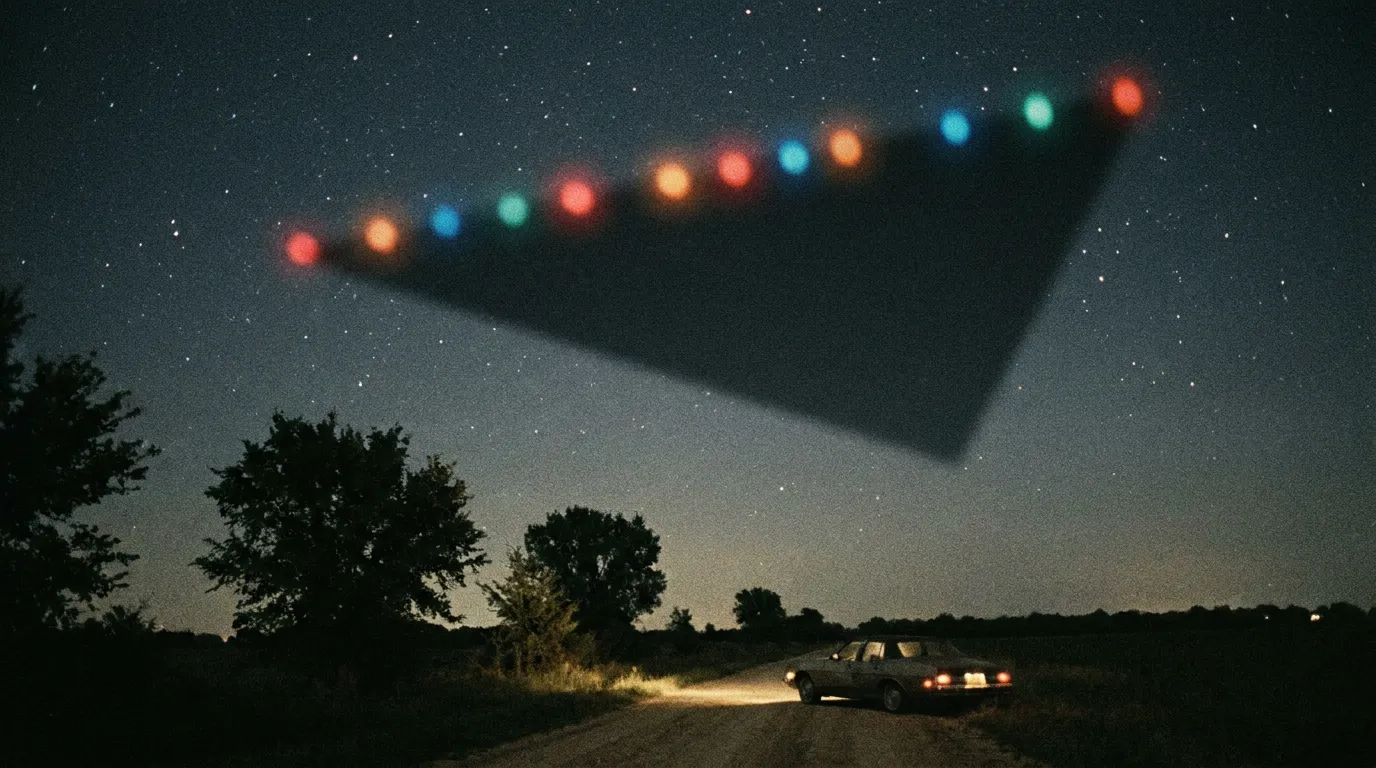
Beginning around 1982 and running for several years, residents of Westchester and Putnam counties in New York, and neighbouring towns in Connecticut, reported the same apparition again and again: a vast boomerang or V of coloured lights, moving slowly, low, and in near-total silence over the treeline and the rooftops.
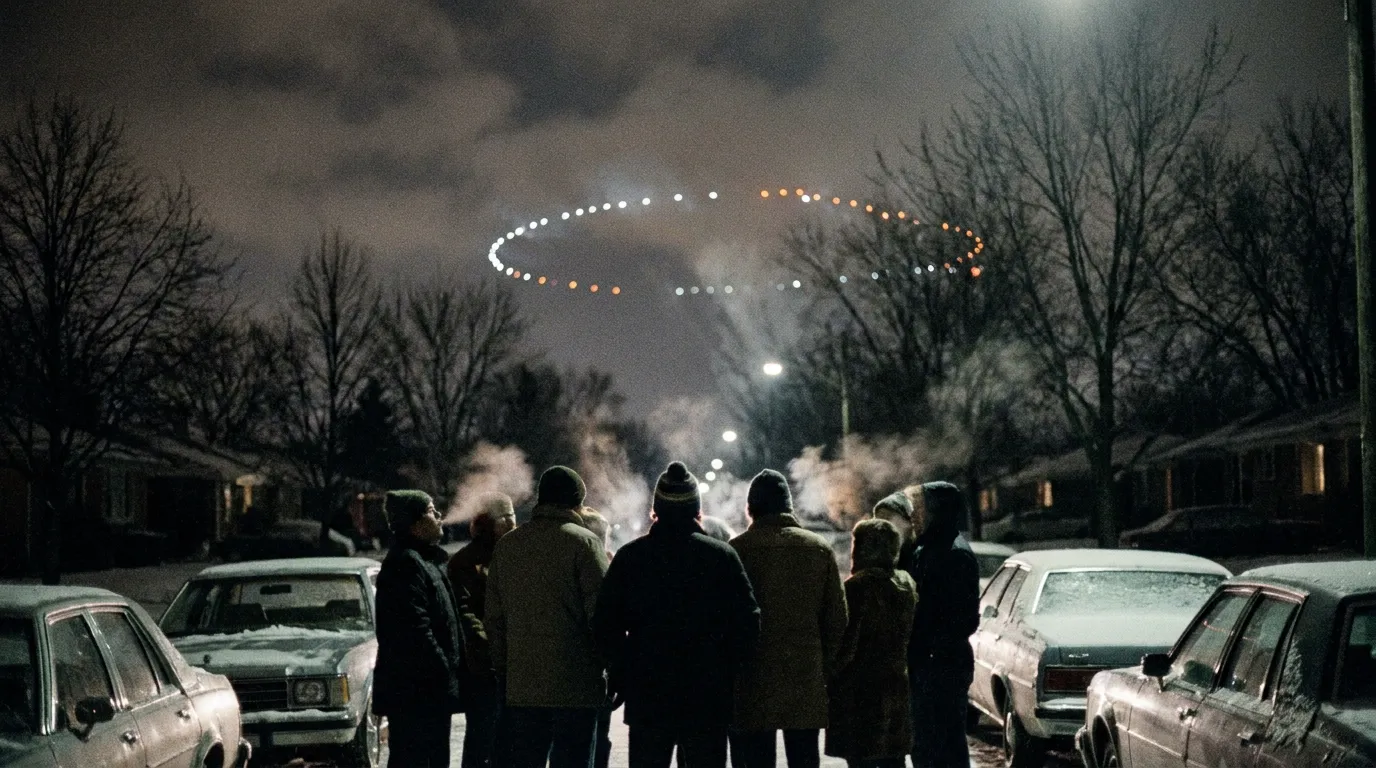
It became a genuine regional phenomenon. Drivers stopped on the Taconic Parkway. Police fielded floods of calls. The reports were remarkably consistent: not a cluster of separate aircraft, witnesses insisted, but a single, solid, structured object carrying the lights — often described as bigger than a football field, and, above all, silent.
The nights that made the wave
The wave was not one event but a long, uneven series, and it had peaks. The two most cited fall within a fortnight of each other in the spring of 1983.
The first is the night of 17 March 1983 — St Patrick’s Day — when reports came in across Putnam County and the towns strung along Interstate 84. Among the witnesses was a county deputy, Dennis Sant, who described the thing passing above his home near Brewster as looking like a city of lights. That phrase did a lot of work in the coverage that followed, and it is a fair summary of what most witnesses were reaching for: not a light, not a formation, but an illuminated structure.
The second is the night of 24 March 1983, when emergency lines across the region logged reports in numbers that are still hard to credit — somewhere north of three hundred calls in a single evening, with traffic backing up on the Taconic as people stopped to look.
Taken across the whole run — roughly 1982 to 1986, across Westchester, Putnam and Dutchess counties in New York and over the line into Fairfield County, Connecticut — the tally usually quoted is in the region of five thousand reports. That figure comes from the investigators rather than from any official register, so treat it as an order of magnitude rather than a count. Even discounted heavily, it describes something a great many people in a densely populated, well-educated, heavily policed corner of the north-eastern United States thought they were looking at.
Hynek takes an interest
The wave attracted a heavyweight investigator: Dr J. Allen Hynek, the astronomer who had spent decades as the US Air Force’s own UFO consultant before concluding the subject deserved serious study. Together with the investigator Philip Imbrogno, he gathered hundreds of Hudson Valley reports, later published as the book Night Siege.
Hynek’s involvement matters for calibration. He was not a wide-eyed believer; he was the man who had coined the sober “close encounter” classification and spent years debunking cases for the Air Force. That someone with his instincts found the Hudson Valley reports worth a book is a point in the case’s favour — though it is worth noting the investigation has also been criticised for leaning on its more dramatic witnesses.
It is also worth noting how thin his personal involvement in the book actually was. Night Siege: The Hudson Valley UFO Sightings, written with Imbrogno and the journalist Bob Pratt, first appeared in 1987. Hynek had died in April 1986. The most authoritative name on the cover was not alive to defend, revise or disown a word of it.
The pilots who owned up
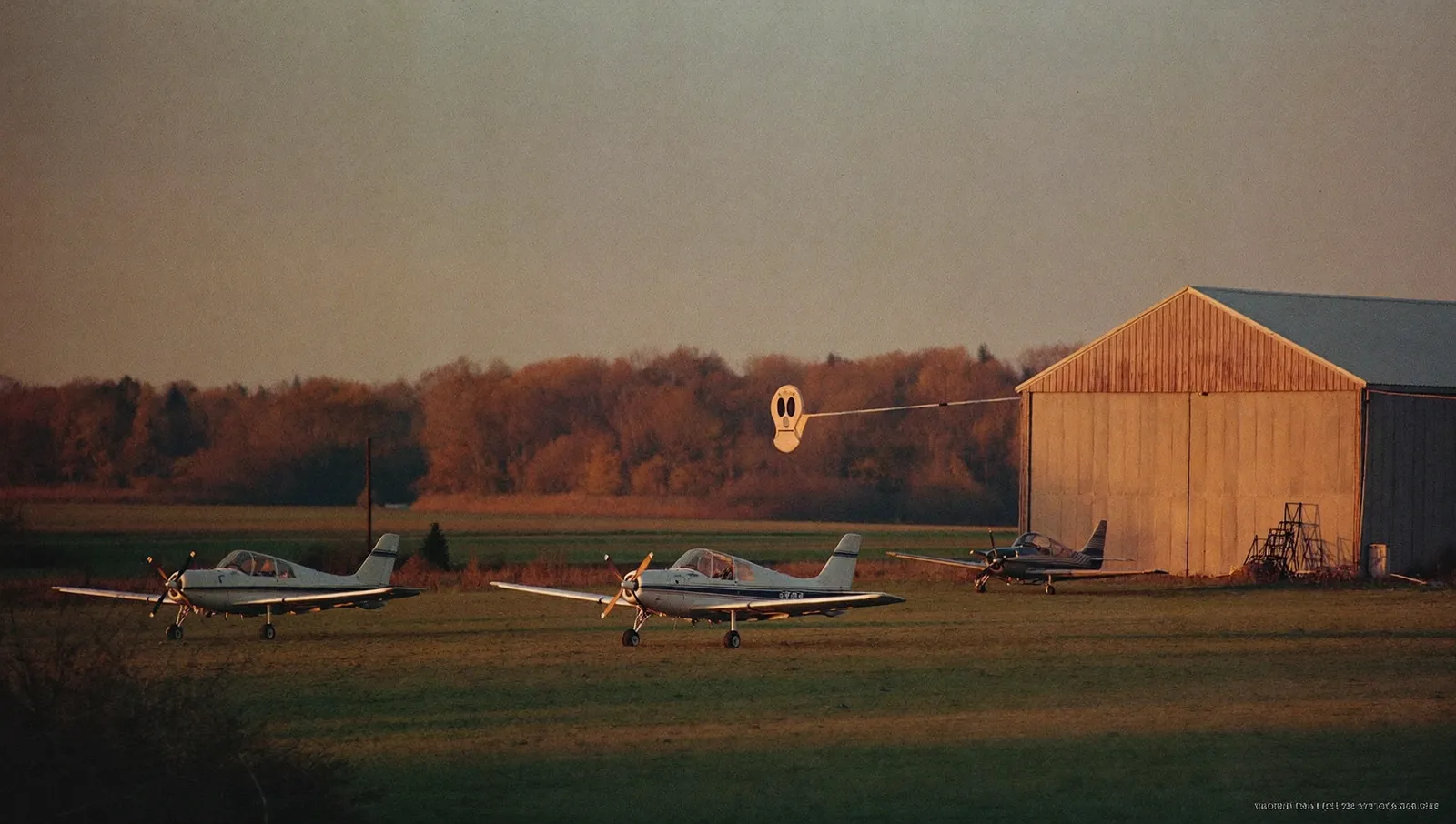
Here is the deflating part, and it is real. A group of pilots flying small aircraft — including ultralights — out of Stormville Airport admitted to flying in tight formation at night, sometimes with coloured lights, precisely to create the illusion of a single huge craft. Seen from below, a disciplined V of light aircraft, engines faint or throttled back on the wind, can genuinely read as one silent structure.
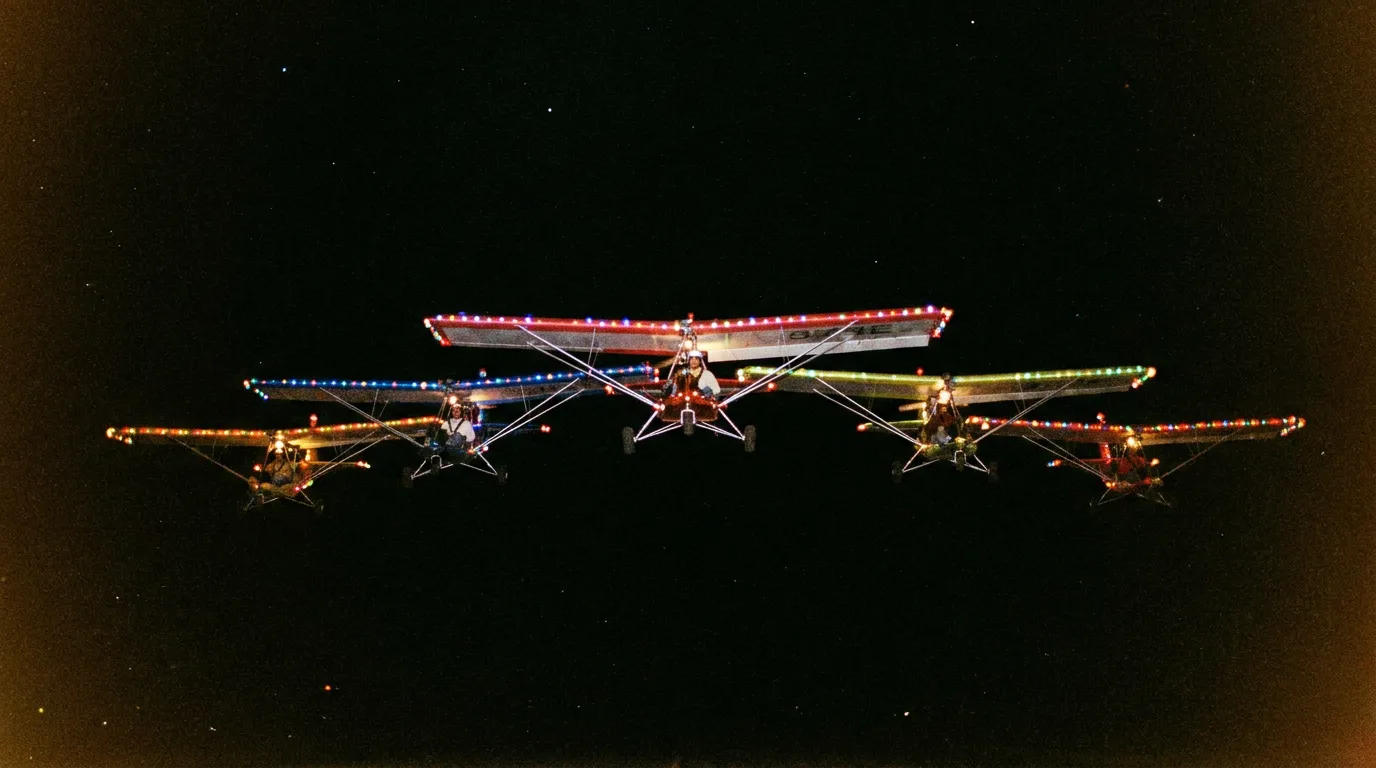
The detail available on the Stormville flights is better than most sceptical explanations manage. Contemporary reporting — including a piece in the November 1984 issue of Discover — described a group flying mainly Cessna 152s with lights rigged to change colour, and a New York state police sergeant summarised it bluntly for the press: light planes, flown in formation, undersides painted black so the airframes cannot be seen, with the lights supplying the shape. At three to four thousand feet, the argument runs, a 152’s engine is effectively inaudible from the ground.
The FAA visited Stormville in September 1984 looking for illegally rigged lighting and other violations. The aircraft it inspected passed. The pilots, by most accounts, wound the flights down at that point anyway.
For a large fraction of the Hudson Valley sightings, this is almost certainly the answer. The formation flew, people saw lights, and the imagination — primed by every previous report — supplied a solid hull between them.
Something over Indian Point
The reports that resist the Stormville explanation most stubbornly are the ones from the Indian Point nuclear station at Buchanan, on the east bank of the Hudson about thirty-five miles north of Manhattan.
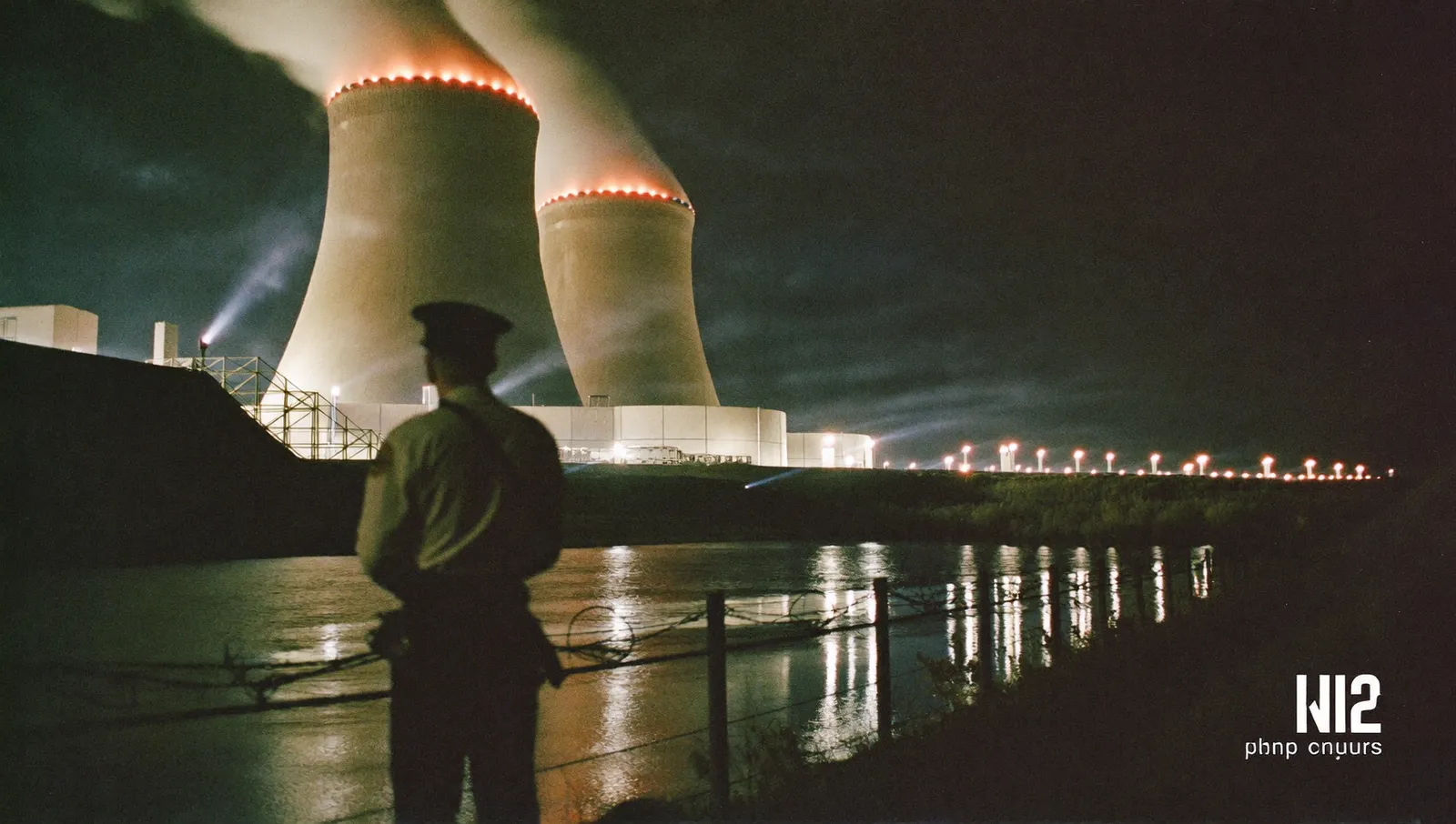
Two dates are usually cited, 14 June and 24 July 1984. On both, plant security personnel are said to have watched a large object over restricted airspace: on the July occasion, guards described a boomerang pattern of lights that hovered for something like a quarter of an hour before moving off. Estimates of its size vary wildly between accounts, which is itself a caution.
Two things about Indian Point need holding apart. The first is that a hovering object over an operating nuclear plant is, in aviation terms, a serious matter regardless of what it was — that airspace is restricted, and a formation of civilian Cessnas loitering above a reactor for fifteen minutes would be a federal problem, not a prank.
The second is that the most dramatic version of the story — that the object’s approach knocked out perimeter motion sensors and crashed the security console — traces back to Imbrogno’s own reporting rather than to any released document. The New York Power Authority and the Nuclear Regulatory Commission have said they hold no records of the incident. That may mean nothing happened; it may mean nothing was written down; it may mean the paperwork went somewhere the NRC does not index. What it does not do is corroborate anybody.
The Imbrogno problem
Which brings us to the part of this case that changed after the fact, and that anyone citing Night Siege now has to reckon with.
In 2011, sceptical researchers — Lance Moody prominent among them, with Kevin Randle pressing the question in public — established that Philip Imbrogno’s stated credentials did not exist. He had claimed a doctorate, variously described, including a connection to MIT; MIT had no record of him. He had claimed service with US Army Special Forces; that did not hold up either. Confronted, he produced a series of shifting and mutually incompatible explanations, and then left the field.
Be precise about what this does and does not damage. It does not retroactively unsee what a Putnam County deputy saw over his own house, and it does not delete the police switchboards. Thousands of Hudson Valley witnesses were interviewed by local journalists, filed reports with their own departments, and appeared on television long before Imbrogno wrote a book.
What it does damage is every specific in the record that rests on Imbrogno’s word alone — the unnamed sources, the security-system failures at Indian Point, the reports he says he collected and nobody else ever saw. That is a substantial fraction of the case’s most impressive detail, and the honest move is to strike it and see what is left rather than to argue about the man.
What the stunt doesn’t cover
What is left is still not nothing. Many witnesses reported the object at very low altitude, well below the three or four thousand feet at which a Cessna goes quiet, moving against the wind, stopping and hovering, or turning on its axis in a way a loose formation of light aircraft cannot. Silence at treetop range is a much harder thing to explain than silence at altitude.
There is also the timing. The Stormville pilots stood down around September 1984. Reports of the boomerang continued into 1985 and 1986, and some researchers extend the tail further still. A hoax that stops and a phenomenon that doesn’t are not the same phenomenon.
The counter to all of that is the plainest fact in the file: nobody in five years and several thousand sightings, in one of the most camera-owning regions on earth, produced a photograph that settles it. For a structure the size of a football field hanging over a suburban parkway, that absence is not a small thing, and sceptics are entitled to lean on it hard.
The UAP Times take
The Hudson Valley wave earns an Unconfirmed rating — three out of five on our scale. It is the rare case with a confirmed mundane cause for part of the phenomenon — the Stormville formation flights are not a theory, they happened — and a genuine unexplained remainder that the confirmed cause struggles to absorb.
Our reading is that the honest answer is “mostly, but not entirely, the pilots.” The stunt is real and accounts for a great deal; the silence and the low, hovering, structured object reported by the most careful witnesses are the part that keeps the case open a crack. The Imbrogno collapse cost the case a tier of credibility it can’t get back, and any account that still quotes his unsourced specifics as fact should be read with that in mind.
A hoax that stops in 1984 does not explain sightings in 1986. Nor does 1986 prove anything about 1984.
It is a valuable case to sit with, because it resists the two easy conclusions equally. You cannot wave it all away as a prank, and you cannot claim it all as a craft. Somewhere in the Hudson Valley, on a lot of cold nights, both things were true at once.
Further reading: for the biggest V-formation case of them all, see The Phoenix Lights. For a national-scale triangle wave that came with radar and fighter intercepts, see the Belgian wave. The Hudson Valley object is the classic chevron / boomerang; it’s on the sightings map. And for the alleged secret craft this whole shape gets blamed on, see our guide to the TR-3B.
Source: J. Allen Hynek & Philip Imbrogno's investigation ('Night Siege'); contemporary witness reports
Follow the file
Every new dispatch from the UAP desk, in your inbox. Sourced, sceptical, and no more than one email a week.