Most small-town UFO flaps live and die on eyewitness word alone. Stephenville is different, and better, because after the witnesses came the radar. When investigators pried the FAA’s raw data loose through freedom-of-information requests, they found something that ordinary lights-in-the-sky cases almost never produce: a documented, unidentified track in the air, in roughly the right place, at roughly the right time — plus a military that changed its story about what its own jets were doing.
Lights over the ranchland
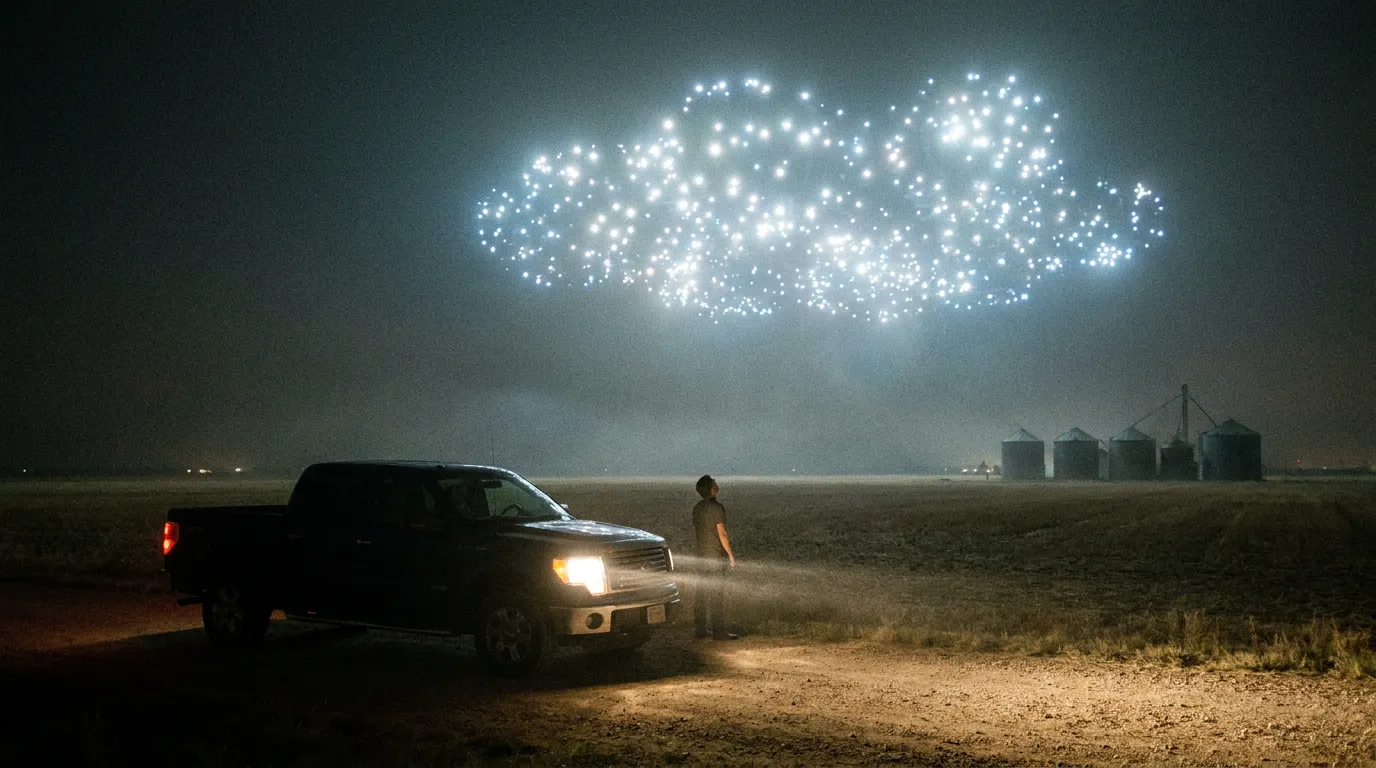
On the evening of 8 January 2008, people across Erath County in central Texas — in and around the dairy town of Stephenville and neighbouring Dublin — began reporting bright lights and a large, fast-moving, silent object low over the flat farmland. The witnesses were not the usual thin roster. They included a private pilot, a county constable, a machinist, and dozens of ordinary residents.
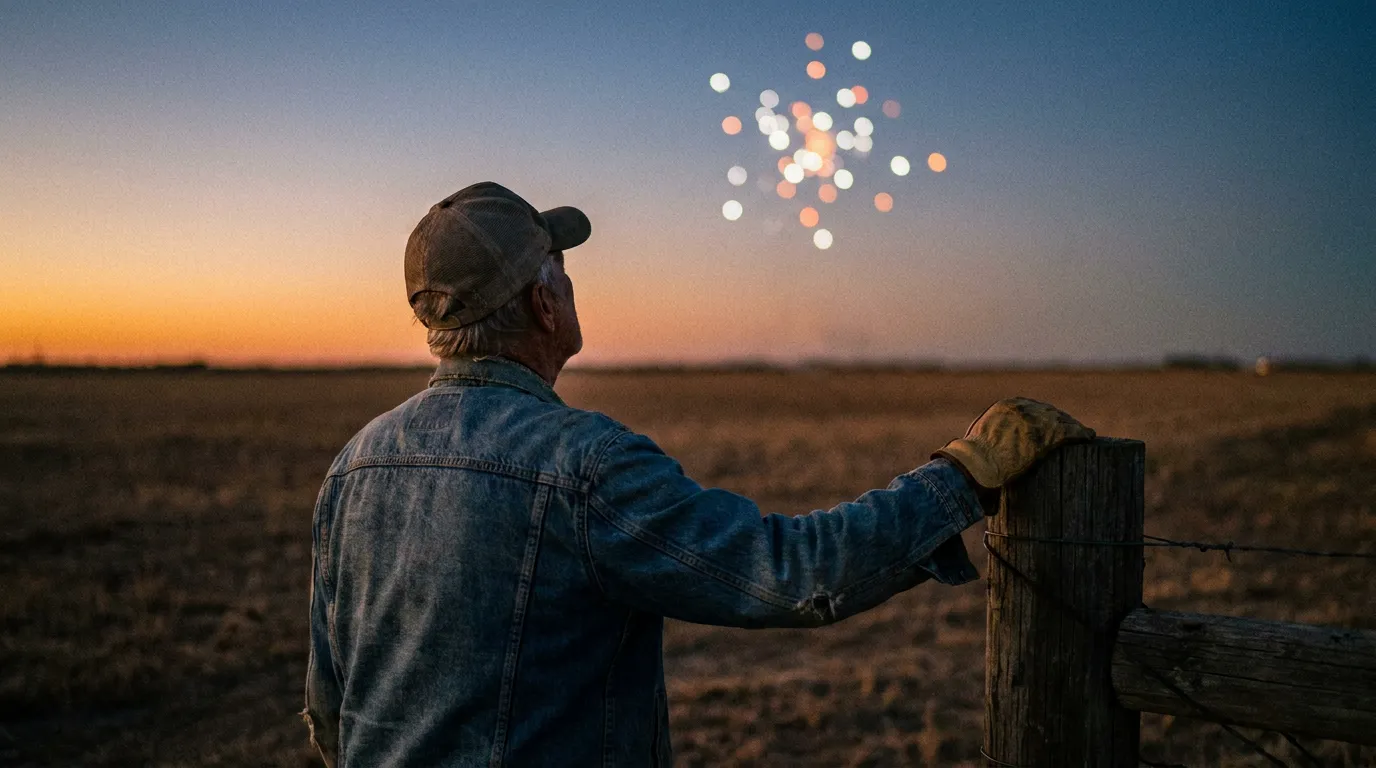
A local newspaper ran the story, national media descended, and Stephenville briefly became the most famous UFO town in America. That alone would make it a footnote. What lifts it is what happened when the sightings met the sensor record.
Who saw what, and when
The evening’s spine is a handful of accounts that can be pinned to a time and a road. At roughly 18:15, Steve Allen — a private pilot with around three decades of flying behind him — was outside with Mike Odom and Lance Jones when they saw a formation of lights they judged to be at something like 3,500 feet above the ground, spread across a swathe of sky they put at about a square mile, moving above Highway 67 towards Stephenville. It made no sound. Allen’s estimate of its speed, offered freely and worth treating as an impression rather than a measurement, was around 3,000 miles per hour.
Constable Lee Roy Gaitan, an Erath County law officer, saw lights that evening with his young son. Ricky Sorrells, a machinist living outside Dublin, described a flat, metallic object hanging over the pasture behind his house.
Those four descriptions are not the same object. A distant formation of lights over a highway, a set of lights seen from a driveway, and a low flat metallic shape over a pasture are three different reports, and honest treatment of Stephenville has to start by admitting that the “mile-wide craft” of the headlines was a composite assembled by the press out of separately reported things.
The jets that weren’t there — until they were
In the immediate aftermath, the military said no aircraft had been operating in the area. Major Karl Lewis, a spokesman for the 301st Fighter Wing at Naval Air Station Fort Worth Joint Reserve Base, stated that no F-16s or other aircraft from his base had been up there.
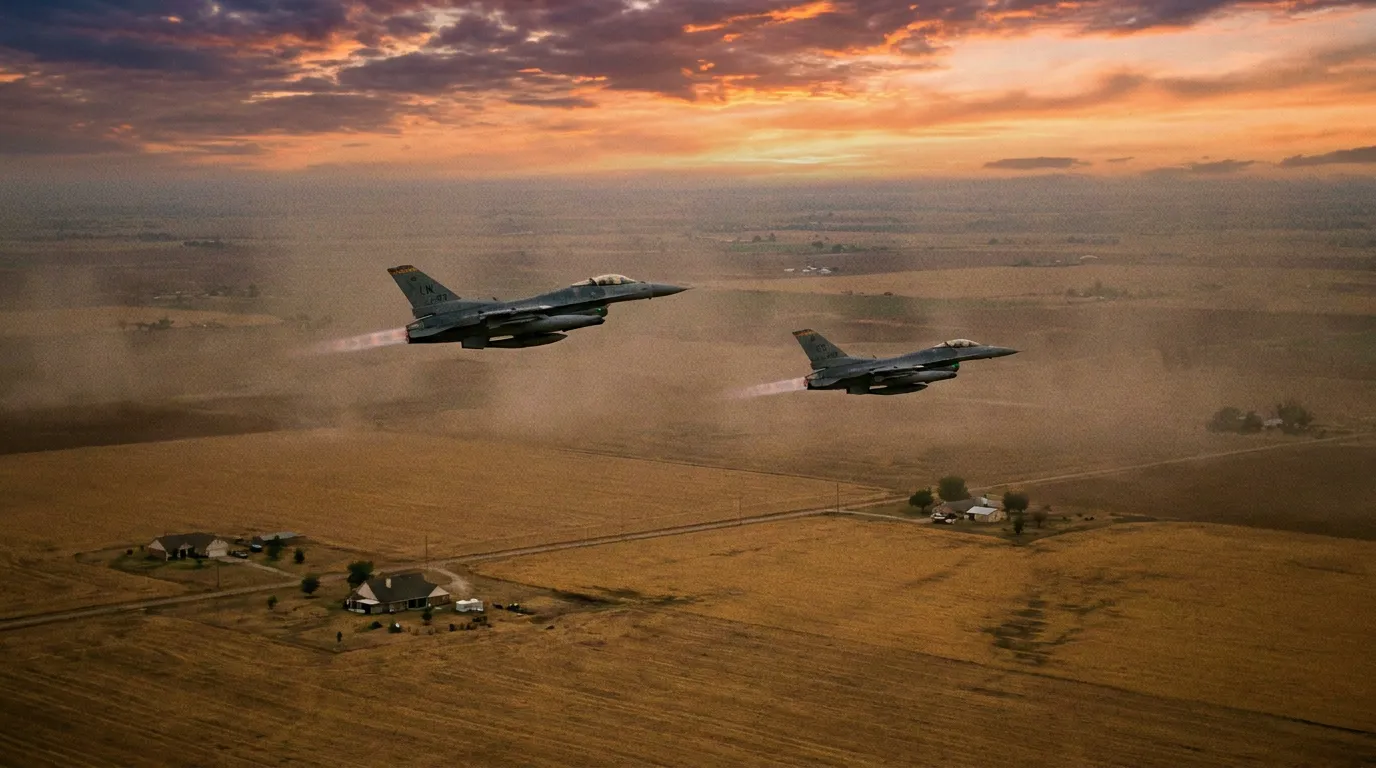
About ten days later, that changed. The Air Force Reserve acknowledged the error and confirmed that ten F-16s had in fact been flying training missions in the region that evening, and offered military flares as the likely explanation for what people saw.
A reversal like that is catnip to conspiracy, but it is also, more prosaically, exactly the sort of thing that erodes public trust for no good reason: the jets were almost certainly real and almost certainly training, and the initial denial did more damage than the truth would have. It also handed sceptics a ready explanation — and, awkwardly for the sceptics, handed the town a reason not to believe the correction either.
The town that filled a hall
By mid-January the story had escaped Erath County. Angelia Joiner, a reporter at the Stephenville Empire-Tribune, wrote the piece that broke it nationally, and within days the town was hosting satellite trucks. Ken Cherry, then MUFON’s Texas state director, said the organisation had taken calls from around fifty people who believed they had seen something, and rated the witnesses unusually credible.
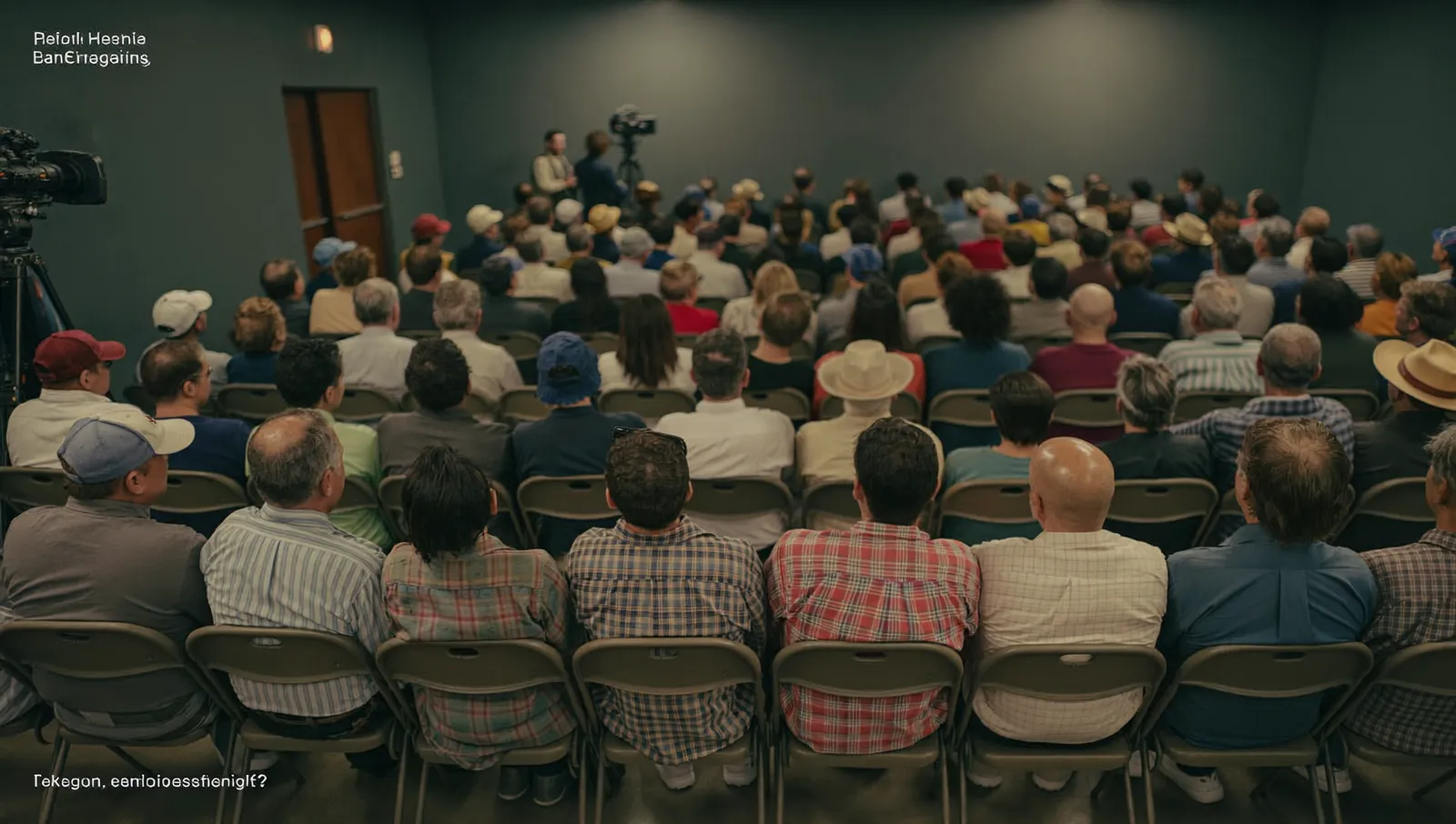
On 19 January, MUFON held a public meeting in Stephenville. Roughly five hundred people came, a fair proportion of them press. It was the point at which the case stopped being a set of reports and became an event — with all the contamination that implies, because after a town meeting and a fortnight of television, later testimony is no longer independent of earlier testimony.
That is not a smear on the witnesses. It is simply how memory works in a crowd, and it is the reason the sensor record ended up carrying the case rather than the interviews.
What the radar actually showed
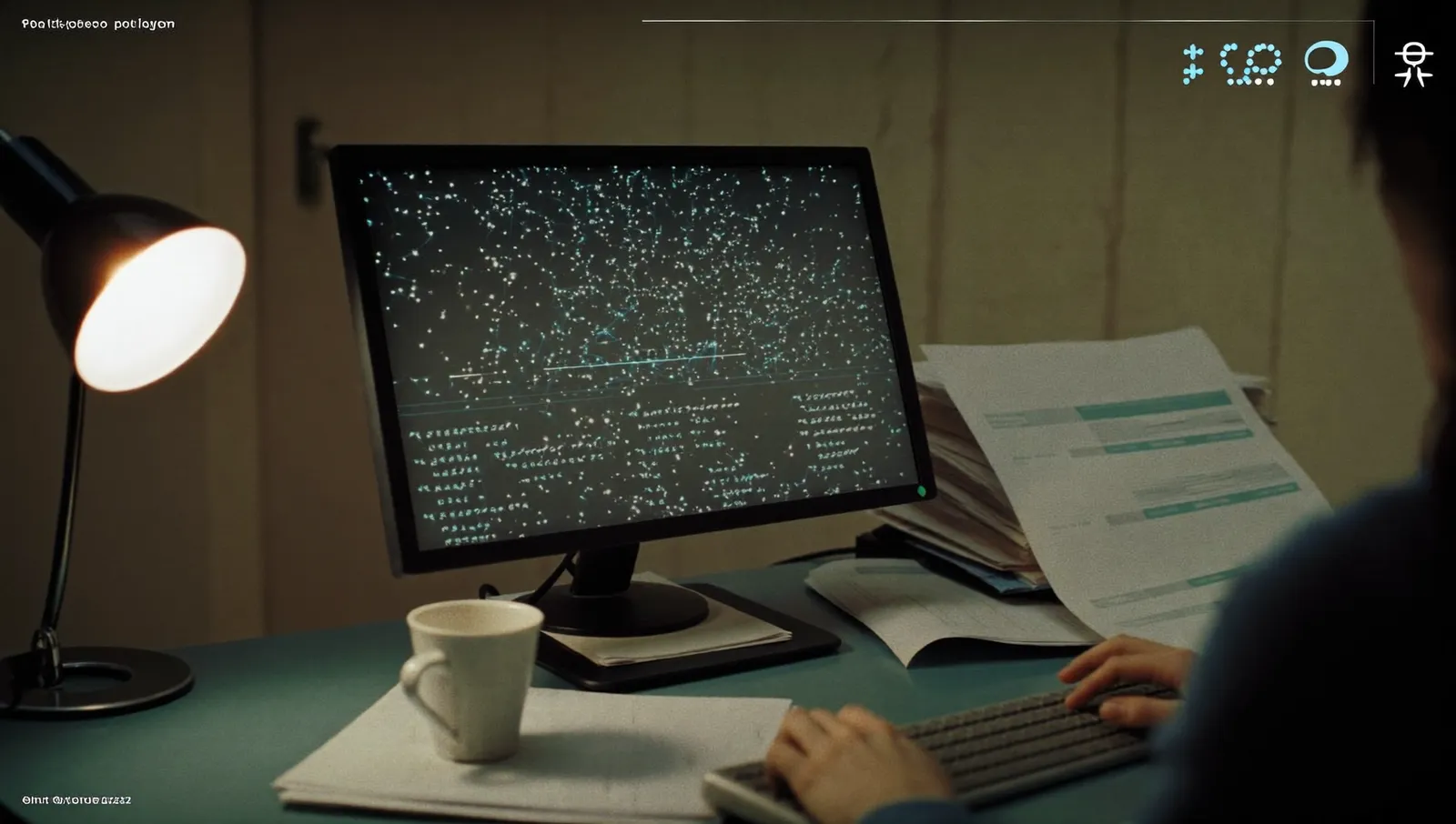
Then came the data. Investigators associated with MUFON — Glen Schulze and Robert Powell — filed freedom-of-information requests for the raw radar records covering the evening and spent months on them, releasing their analysis in July 2008 as the Special Research Report: Stephenville, Texas.
Their conclusion was striking. Alongside the identifiable air traffic and the military jets — which the radar confirmed were there — the data contained returns from objects carrying no transponder. One of these was on the scope for over an hour, spending long stretches slow or effectively stationary before, on their reading, accelerating hard. Its general course took it towards the restricted airspace over President Bush’s ranch at Crawford. The report also documented an AWACS aircraft flying a racetrack orbit over the area for hours, and noted that nothing in the records showed the military reacting to the unknown at all.
Two men and 2.8 million radar returns
The method is worth spelling out, because it is the reason the case is quoted and the reason it is attacked. Schulze and Powell were not casually reading a screen. They obtained raw digital returns — around 2.8 million of them — from five FAA and National Weather Service radar installations, covering roughly four hours from 16:00 to 20:00, and worked through them looking for targets that could not be matched to a filed flight.
Their credentials were unusual for civilian ufology and are worth stating plainly. Schulze had worked on radar at White Sands Missile Range. Powell, MUFON’s research director, came from a chemistry and semiconductor-industry background at Advanced Micro Devices. Neither is a radar physicist; both had more relevant technical grounding than the field normally musters.
The strength of the work is that it is checkable in principle: the source data came from the government, the window is defined, the method is described. The weakness is the same thing that afflicts every raw-radar study — deciding which returns are aircraft, which are birds, weather, ground clutter or propagation artefacts, and which are anything at all, is a judgement call made thousands of times over.
The sceptic’s case, at its strongest
The most substantial rebuttal came from James McGaha, a retired US Air Force pilot and astronomer, writing in Skeptical Inquirer in early 2009. His reconstruction is specific rather than dismissive, which is what makes it worth engaging with.
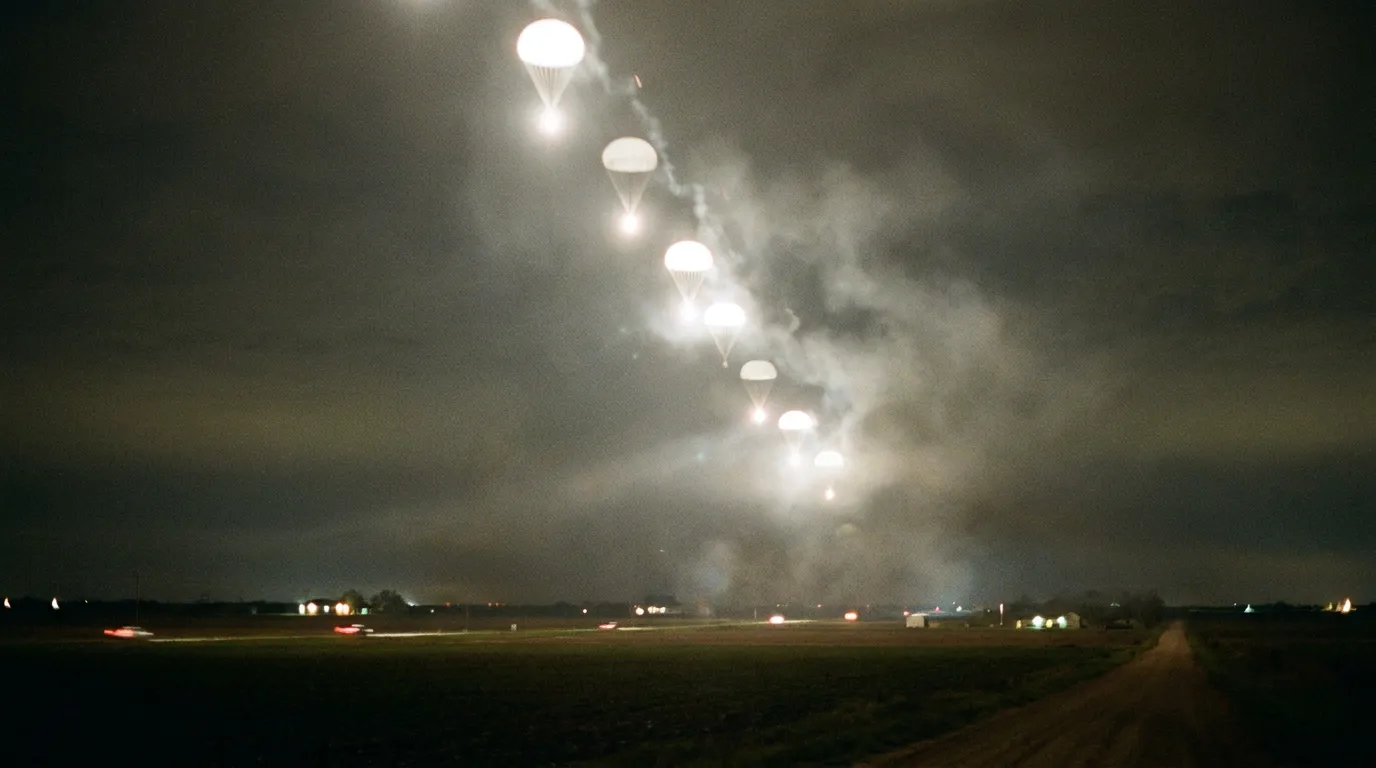
McGaha placed F-16s from the 457th Fighter Squadron in the Brownwood Military Operating Areas that evening, flying in flights of four, and pointed out what such training involves: LUU-2B/B illumination flares, which burn at something on the order of two million candlepower and descend slowly under parachutes. A line of those, at distance, silent because the jets releasing them are miles off, produces exactly the “row of bright lights hanging in the sky then going out one by one” that many Stephenville witnesses describe. Add the jets themselves, at speed and at night, and you have the fast-moving element too.
On the radar analysis he was blunt. He characterised it as cherry-picking a couple of hundred targets out of millions of points of noise and scatter to assemble a track ambling along at forty-nine miles per hour for over an hour, and called that absurd. He is pointing at a real hazard: pick your criteria loosely enough across 2.8 million returns and a track will emerge whether or not an object did. Temperature inversions over the Texas plains in January can also bend radar beams and generate ghost returns from the ground, which is a mundane way to produce a slow-moving “object” that never existed.
McGaha’s flare explanation covers the lights competently, and anyone who has read his postmortem on the Phoenix Lights will recognise the pattern of argument. What it covers less well is the low, close, flat metallic shape Sorrells described over his own pasture, which is not a flare at any distance.
Crawford, and what the case actually changed
The Crawford detail is the part that gets repeated hardest and deserves the most caution. A transponder-less return drifting on a heading that would eventually reach restricted airspace over a sitting president’s ranch is genuinely arresting. It is also, on a map of central Texas, a heading shared by a great many things, and “was moving in the direction of” is not “was intercepted approaching”. The report itself noted the absence of any military reaction — which is either evidence that nobody official was worried, or evidence that nobody official was watching.
The case’s durable contribution is not the object. It is the demonstration that raw FAA radar could be prised out under FOIA and analysed independently at all. That precedent is why Stephenville still gets cited in policy arguments about sensor data — and why the retention question matters so much now that the raw data is routinely deleted after 45 days. Schulze and Powell had months. A researcher today would have six weeks from the event to know it happened, file, and get an answer.
The UAP Times take
Stephenville earns a Credible rating — four out of five on our scale. It has the profile of a case worth keeping: a solid roster of witnesses including trained observers, a specific dated event, official radar data obtained and analysed rather than merely alleged, and a military account that shifted under questioning. The flares-and-F-16s explanation covers the lights competently; it covers the radar track less well, and McGaha’s counter-analysis, though sharp, is an argument about method rather than a demonstration that the track was noise.
Be clear about what the radar does and does not do. It does not confirm a mile-wide craft, a hovering object, or anything a witness described. At most it shows unidentified returns in the same county on the same evening — corroboration of a kind, not of a shape.
Our reading is that Stephenville is one of the better modern cases precisely because it doesn’t rest on awe. Strip out the hyperbole and the composite craft assembled by the press, and you are left with a genuine puzzle in the sensor record that the tidy conventional story doesn’t fully absorb. That is exactly the kind of quiet, data-anchored anomaly that deserves more attention than the flashier legends, and gets less.
Further reading: for the gold standard of the sensor-backed case, see The Tic Tac at 25. For the other great American mass-lights case and the flare argument that follows it around, see The Phoenix Lights. Stephenville only has a sensor record because investigators went after the FAA radar fast — today that data is deleted after 45 days. The object was often described as a huge triangle; it’s on the sightings map.
Source: FAA radar data (FOIA analysis by Glen Schulze & Robert Powell/MUFON); witness testimony
Follow the file
Every new dispatch from the UAP desk, in your inbox. Sourced, sceptical, and no more than one email a week.