
Most people in this field are known for what they claim. Grant Cameron is known for what he asks. Across nearly fifty years he has been one of the subject’s most industrious researchers — a Canadian who filed the requests, read the documents, chased the presidential paper trail, and interviewed almost everyone worth interviewing — and then, in a move that sets him apart from nearly all of them, publicly concluded that the documentary approach he had built his reputation on could only take him so far. He is that rare figure in ufology who will tell you, unprompted, where his own certainty ends.
That intellectual honesty is why he earns a profile here. Cameron is neither a whistleblower with a contested title nor a claimant with a story that dissolves under a lamp. He is a documentarian and a synthesiser who changed his mind in public — and whose later turn toward consciousness is both his most interesting idea and the point at which his work leaves the ground that evidence can hold.
Charlie Red Star
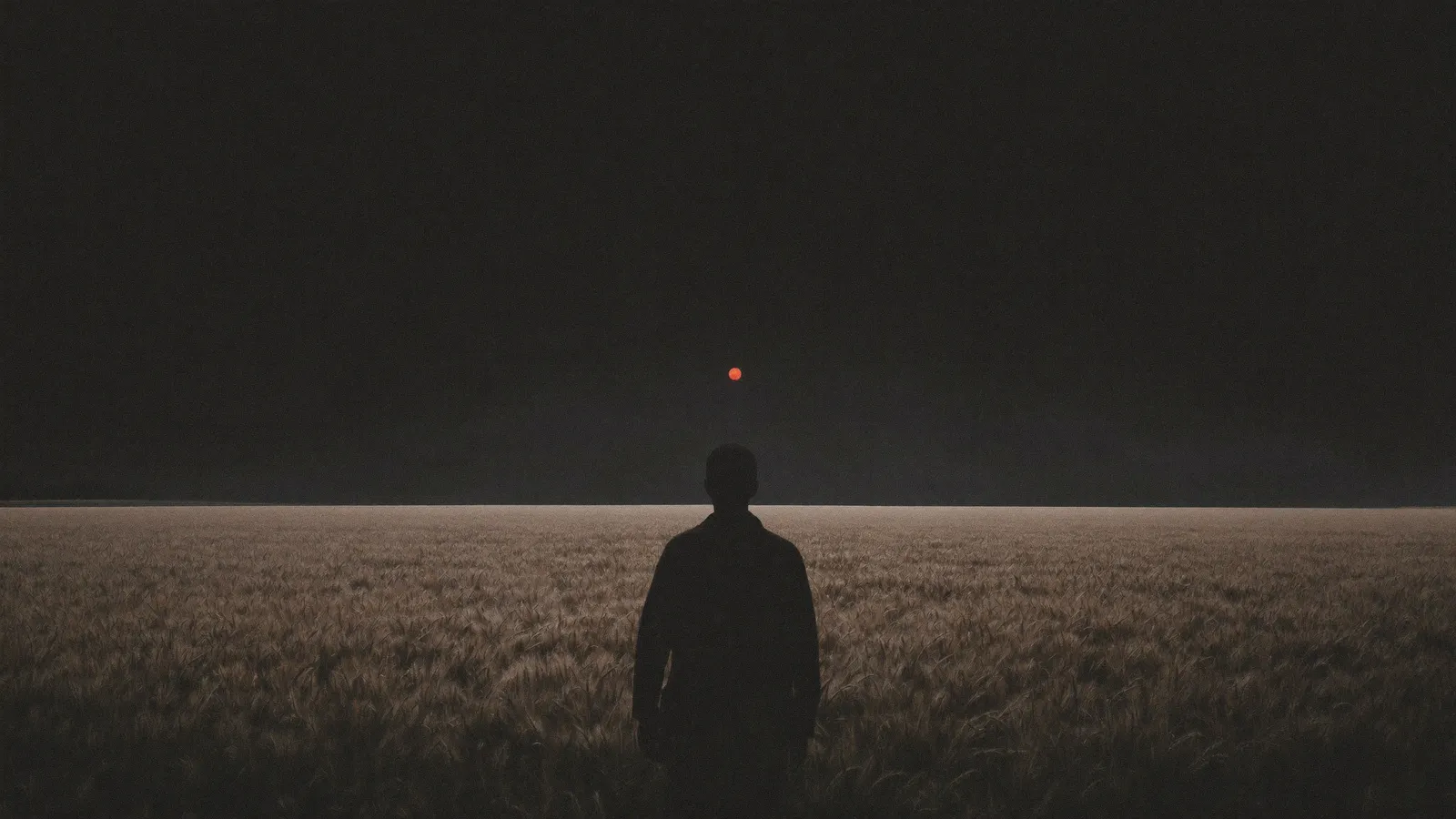
Cameron’s entry into the subject is unusually well-dated: 1975, in the flat farmland around Carman, Manitoba, during one of the largest UFO flaps in North American history. For months, residents of the Canadian prairie reported a recurring red light — nicknamed “Charlie Red Star” — hanging over the fields and roads near the US border. Cameron, then a young man, went out to look, saw things he could not explain, and never really came back. Manitoba has a way of doing that to people; it is the same province that a decade earlier had sent a Winnipeg mechanic out of the bush with burns on his chest at Falcon Lake. The Charlie Red Star flap became his origin story and, eventually, one of his books.
Presidential UFO
What made Cameron’s name, though, was not a sighting but a filing cabinet. For decades he pursued a deceptively simple question — what have US presidents actually known about UFOs? — and turned it into Presidential UFO, a sprawling research project and website documenting the intersection of the White House and the phenomenon across administrations. He filed Freedom of Information Act requests, collected declassified memos, tracked down staffers and aides, and assembled one of the more serious open archives on the political history of the subject.
It is patient, unglamorous work, and it is the opposite of the podcast-clip economy that now dominates the field. Where others assert a cover-up, Cameron went looking for the paperwork of one — which is the same instinct that drives the modern, procedural fight over statutory UAP disclosure. His archive is a resource other researchers still draw on, regardless of what they make of his later conclusions.
The turn toward consciousness
Then came the pivot that defines late-period Cameron. After decades in the documents, he concluded that the government-secrets frame — the idea that the truth is a physical file being withheld — was too small to contain what he was seeing. Increasingly he argued that the phenomenon is bound up with consciousness: that contact often arrives through altered states, synchronicities, dreams, downloads of information, and what he and others came to call the “contact modalities”. In this telling the interesting action is not in a hangar but in the mind, and “disclosure” is less a press release than a change in human awareness.
This is where a house that separates claim from confirmation has to be candid. The consciousness frame is, by construction, largely untestable from the outside: personal experiences, felt meaning and subjective downloads do not leave the kind of trace a FOIA request can retrieve, and Cameron — to his credit — mostly says so himself. It is a coherent and sincerely held worldview that explains a great deal and predicts very little that an independent observer could check. Readers drawn to Steven Greer’s experiential, contact-first approach will find a gentler, more self-aware cousin of it here; readers who want a document will find Cameron openly conceding that this part of his work is not that.
The researcher’s temperament
What runs through both halves of his career is a temperament the field could use more of. Cameron is not a shouter. He platforms people he disagrees with, revises his views when the evidence pushes him, and is unusually willing to say “I don’t know” — a sentence that is almost extinct in this subject. He has not built a betrayal narrative, has not claimed secret insider status, and has not monetised a single dramatic revelation into a franchise. Even where you think he has wandered off the map, he tends to tell you he is off the map.
The sceptic’s read
The deflationary account is not unkind to him, because it doesn’t need to be. As a researcher, Cameron is genuinely valuable: the FOIA archive is real, the interviews are real, and the presidential history he assembled is a legitimate contribution. As a theorist of consciousness, he has moved into territory where nothing he says can be corroborated or refuted, which means his later work is best read as philosophy and testimony rather than evidence. The sceptic’s only real complaint is the familiar one — that a mind this careful with documents became, in its second act, comfortable with a framework that forecloses the very checks that made the first act worth trusting. Cameron would, characteristically, half-agree.
The UAP Times take
Grant Cameron is one of the more admirable figures the subject has produced, and the admiration survives disagreeing with half of what he now believes. As an archivist and interviewer he did the slow, real work — the FOIA requests, the presidential paper trail, the Manitoba fieldwork — and left behind a resource with genuine value. As a consciousness theorist he has followed his own reasoning into a place where evidence can no longer follow him, and the honest reader should weigh those two Camerons differently: the researcher on his record, the philosopher on his sincerity. What lifts him above most of his peers is not that he is right about everything, but that he tells you where he stops being able to prove it. In a field that mostly sells certainty, a man advertising the limits of his own is worth listening to — with exactly the discrimination he’d recommend you use.
Sources and citations
For readers who want to follow his work:
- Grant Cameron’s Presidential UFO archive, his decades-long FOIA project on the White House and the phenomenon.
- His books, including Charlie Red Star: True Reports of One of North America’s Biggest UFO Sightings (2016) and Managing Magic: The Government’s UFO Disclosure Plan (2017).
- His extensive public talks and interviews on the “contact modalities” and the consciousness turn.
Further reading: for the experiential approach Cameron’s later work resembles, see Dr Steven Greer; for the document-driven disclosure fight his archive feeds, see Luis Elizondo and David Grusch; and for where a purely person-shaped mystery ends up, Bob Lazar.
Follow the file
Every new dispatch from the UAP desk, in your inbox. Sourced, sceptical, and no more than one email a week.