
Argue about most famous UFO cases for long enough and you end up arguing about pixels. Falcon Lake put a man in a hospital gown. On 20 May 1967 an industrial mechanic from Winnipeg walked out of the Manitoba bush with a grid of burns seared across his chest, a smell of sulphur coming off his clothes, and a story about a landed craft he had touched with his own hand. What followed is the reason the case still matters: the Royal Canadian Mounted Police, the Royal Canadian Air Force, the Department of National Defence, the United States Air Force and a university physics project all took a turn at it. His body was examined, the ground was sampled, the metal was assayed. And at the end of all that, the file says unexplained.
A day’s prospecting in the Whiteshell
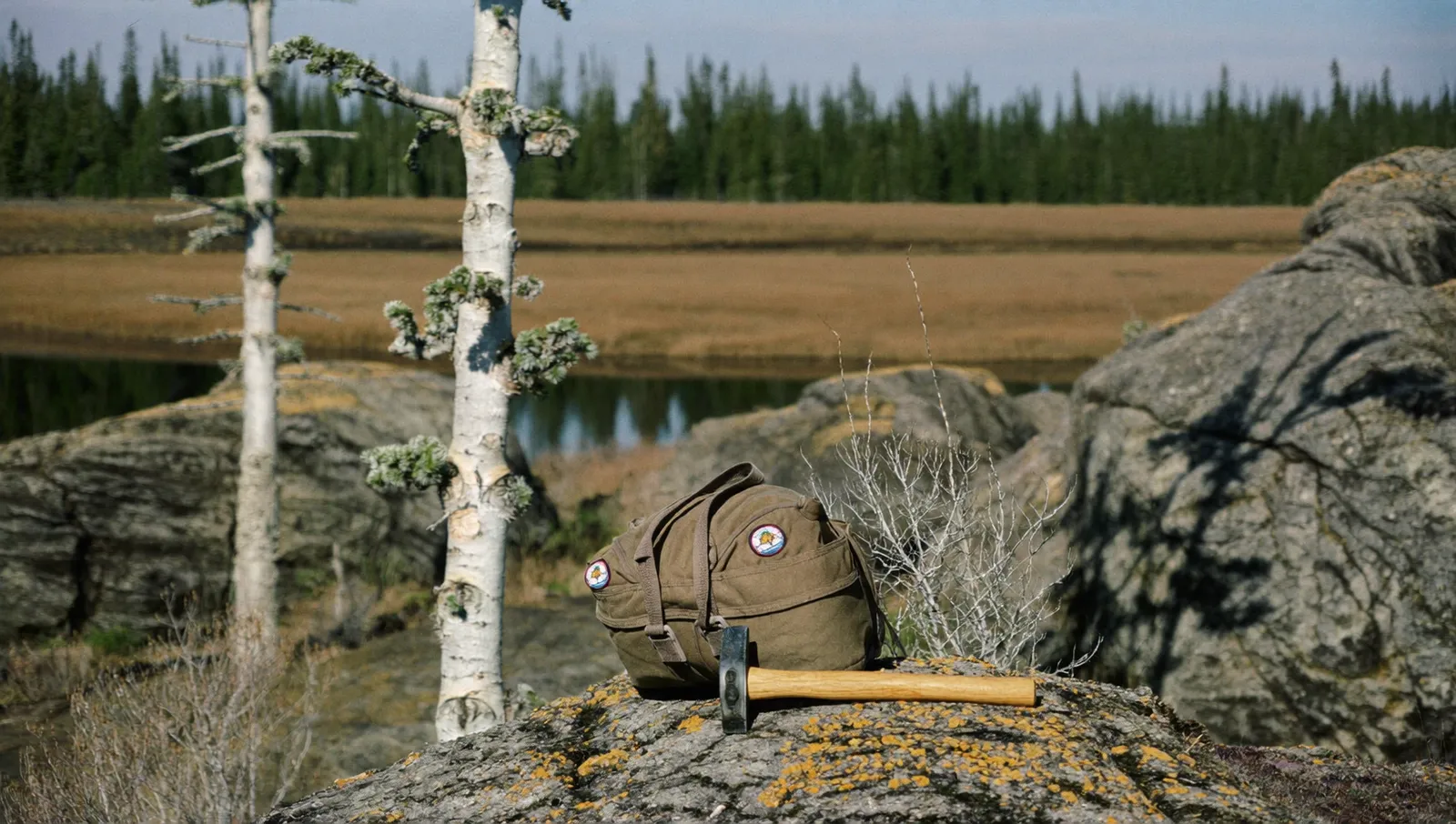
Stefan Michalak — the record also carries him as Stephen — was fifty-one, Polish-born, and by trade an industrial mechanic. His hobby was prospecting. He took the bus out from Winnipeg on 19 May 1967, checked into a motel on the Trans-Canada Highway near Falcon Lake, and was in the bush of Whiteshell Provincial Park early the next morning, chipping at quartz veins in the Canadian Shield granite and hoping for silver.
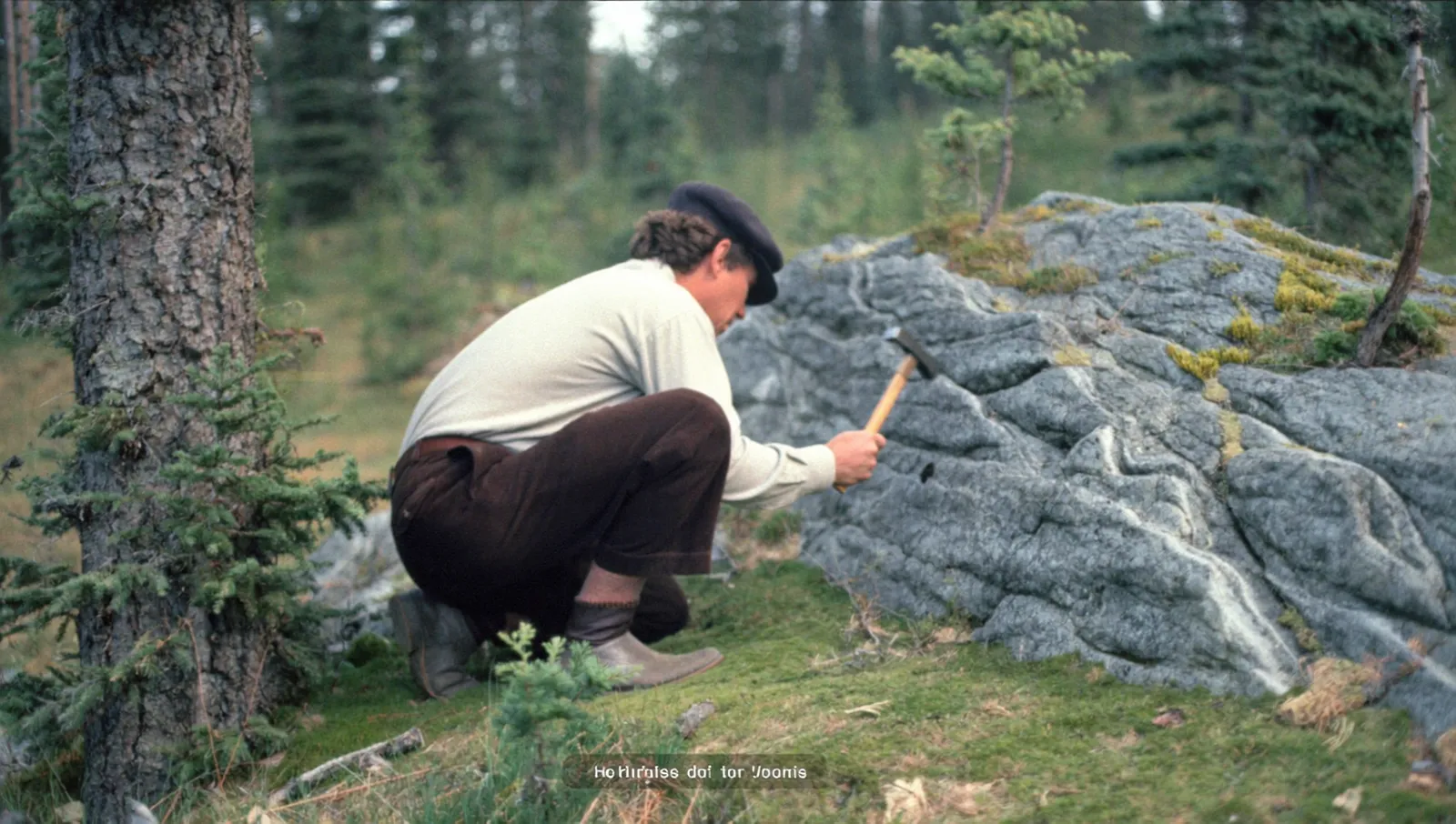
This matters more than it sounds. He was carrying the kit of a man who breaks rocks for fun: a hammer, gloves, and welding goggles with a flip-down visor for chip protection. Those goggles turn up later in the story, and they are the sort of mundane detail a fabricator does not usually think to include.
At about a quarter past twelve, by his account, a commotion among some geese made him look up.
Two objects, and one that landed
He described two glowing objects descending — elongated, with a hump or bulge in the middle, glowing red. One held off and departed. The other came down and settled on a flat slab of exposed rock about fifty metres from where he was working.
Michalak did not run. He watched it for around half an hour and sketched it, which is why the case has a drawing at its centre rather than a description. What he drew was a domed disc: roughly eleven or twelve metres across — accounts differ — and about three metres thick, with a low cupola on top, apparently seamless, its colour shifting as it cooled from a glowing red to what he called the look of hot stainless steel with a golden cast.
A hatch opened in the side. Violet light poured out, bright enough that he snapped the visor down on his goggles. Warm air came with it, carrying a sulphurous smell, and a whirring, hissing note underneath. He said he heard muffled voices from inside — two of them — and, taking the thing for an American experimental craft, called out. English first. Then, getting no answer, other languages he had: the accounts vary on the exact list, but Russian, Polish and German are in most of them.
Nothing answered. He walked up to the opening, looked in at what he described as a mass of lights, and put a gloved hand on the hull. The glove scorched.
The grid on his chest
Then the craft rotated. A panel of vents or holes swung round to face him, and a blast of hot gas hit him full in the chest. His shirt and undershirt caught fire. He tore them off, burning his hands, and stood in the smoke while the object lifted and went.
The burn is the single most important physical fact in the case, because of its pattern: a rough grid of marks across his chest and upper abdomen, matching the arrangement of the vents he described. Not a splash, not a scald, not a single contact mark — a grid. His burnt shirt, cap and glove went into the evidence record.
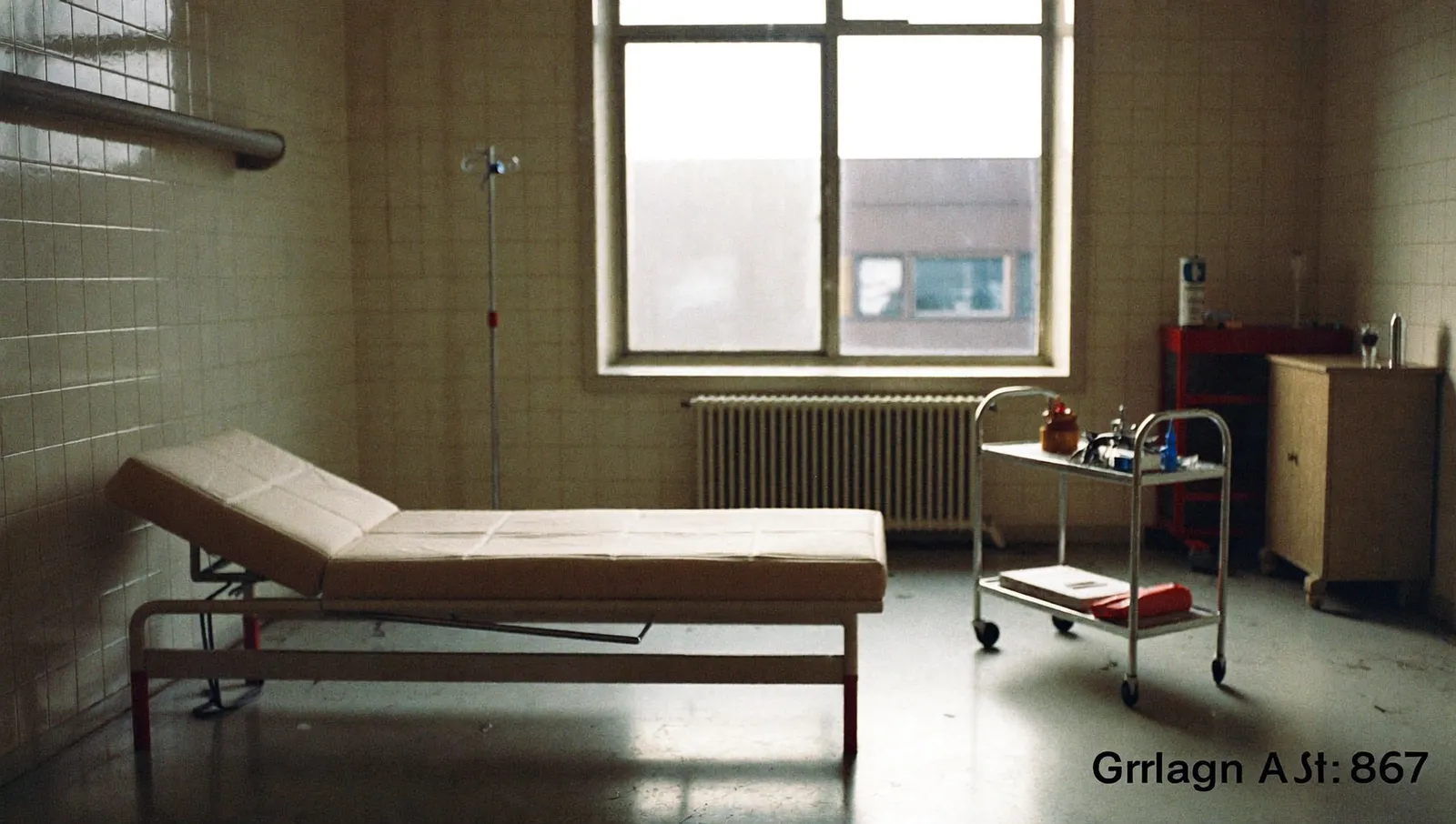
He was immediately, badly unwell. Vomiting, headache, disorientation. He got himself back towards the highway; people who encountered him that day reported a strong sulphurous smell coming off him. He caught the evening bus back to Winnipeg and reached the depot around 10.15 that night, where his son was waiting and drove him straight to Misericordia Hospital. He was treated as an outpatient for first-degree burns.
The weeks that followed
The illness did not stop when the burns scabbed over. Michalak logged his own weight falling from around 180 pounds to 158 by 27 May — roughly a stone and a half in a week. He had diarrhoea, recurring headaches, blackouts he had never experienced before, and a rash that came and went for years afterwards.
The bloodwork is where careful reading is required, because this is the part most often oversold. His blood lymphocyte count did drop — reported at 25 per cent falling to 16 — and returned to normal within about four weeks. That is consistent with a radiation dose, and also consistent with a great many other insults to the body. Against it: a radiologist examining him on 23 May found no sign of radiation injury, and a whole-body count at the Whiteshell Nuclear Research Establishment on 30 May came back normal. A figure of 100 to 200 röntgens circulates in the retellings; it comes from Horace Dudley, a radiologist at the University of Southern Mississippi advising APRO, who read the symptom sequence as a classic whole-body exposure. It does not sit comfortably with two negative tests, and we would not lean on it.
He kept going back for answers, and paid for it himself — including a trip to the Mayo Clinic in Minnesota. On 6 August 1968 a psychiatrist there wrote a line that has been quoted by both camps ever since: that despite his lesions having been diagnosed as “obviously factitial”, the examiner could find “no overt evidence of significant mental or emotional illness”. Factitial means self-inflicted. Two things need saying about it. The lesions the Mayo examiner was looking at were the ones Michalak was carrying in August 1968 — a recurrence, not the burns treated at Misericordia fifteen months earlier, which no doctor who saw them fresh described that way. And the sentence still contains the case in miniature: what he presented with looked self-made, and the man did not look like someone who would make it.
The site, the soil and the radium problem
Finding the spot again in dense bush took weeks. On 28 July, Michalak and RCMP officers identified a semicircular area about 4.5 metres across on the rock face where the moss had been stripped away. Soil was collected and tested for radioactivity, and the tests came back positive.
That is where the case gets genuinely interesting, and genuinely messy. An RCMP crime laboratory report measured activity in the soil, identified the source as radium-226, and flagged it as a possible health hazard — for a short period officials weighed whether the area needed cordoning off. Other analyses did not agree. Later analysis at the University of Manitoba, duplicating a 1968 test at the Whiteshell Nuclear Research Establishment, reported natural uranium activity and no radium. The readings were localised to a fault line in the rock across the middle of the landing spot, with nothing in the moss and grass around the perimeter.
Radium-226 is a naturally occurring isotope, and it was also all over mid-century industry — luminous dial paint, medical sources, radioactive waste. Finding it on a rock in Manitoba is strange; it is not extraterrestrial. Officials ultimately concluded the levels posed no danger to the public.
Silver in the crevice
In 1968, roughly a year on, Michalak went back to the site with an associate and a Geiger counter, and found metal wedged in a fissure inside the landing circle: two W-shaped bars around 11 centimetres long, plus smaller irregular pieces.
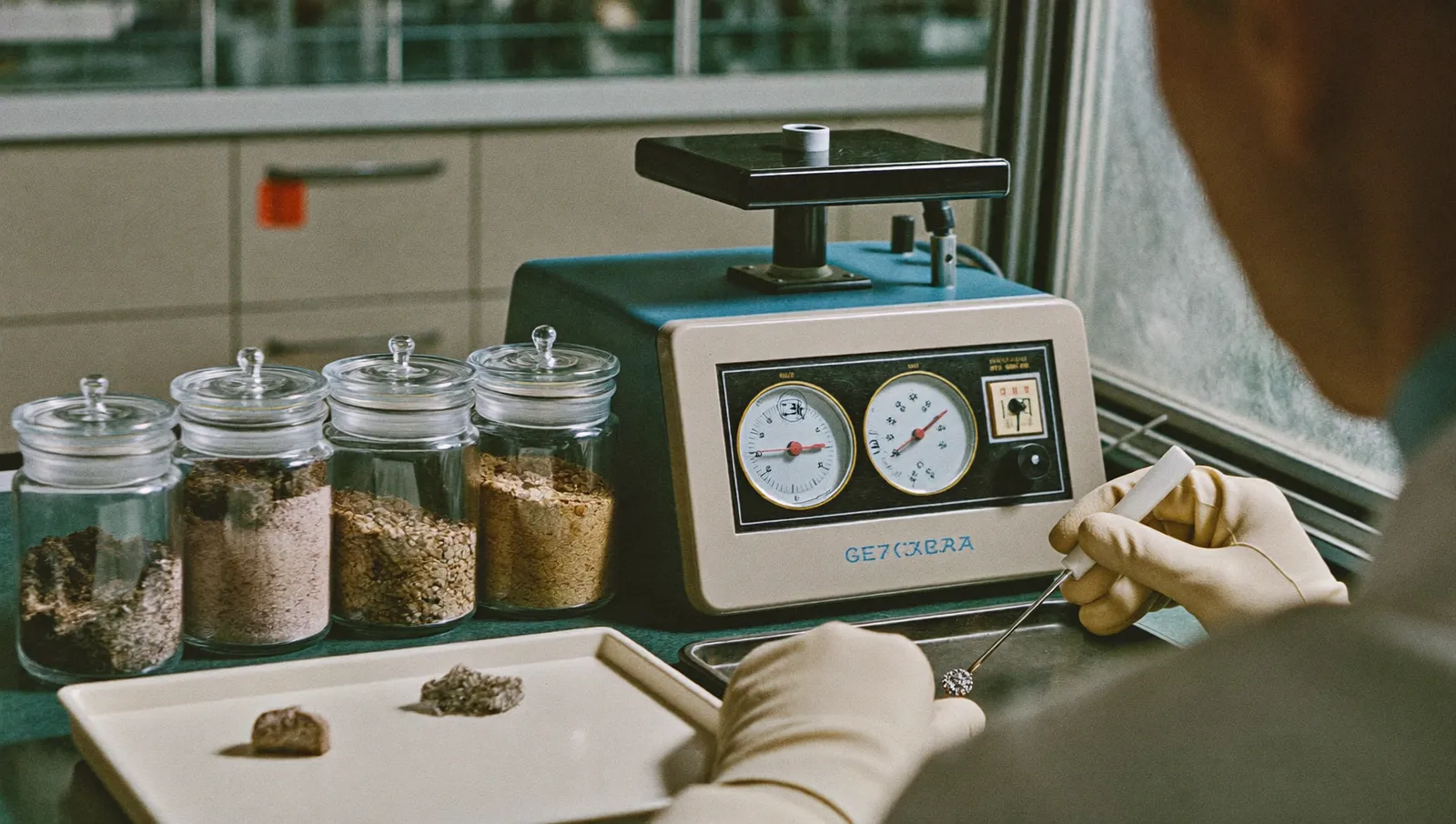
The analyses, summarised by the Colorado project’s Roy Craig, are the least helpful thing in the file for anyone hoping for exotic technology. One fragment was 93 per cent silver, the other 96, both with copper and cadmium — a composition close to commercial sterling or sheet silver. The metal itself was not radioactive. The activity sat in a loosely adhering surface layer of fine-grained uranium-bearing minerals.
Read that plainly and it says: ordinary silver, dusted with radioactive dirt, recovered a year later by the witness himself from a place he had every opportunity to visit unobserved. That is not proof of a hoax. It is, however, exactly the pattern a hoax would produce, and the chain of custody is bad enough that the fragments cannot carry weight in either direction.
Putting the sceptics’ case at its highest
Start with the structural problem: one witness. No corroboration, no second pair of eyes, no radar track, nothing. Everything downstream — the burns, the site, the samples — flows from a single man’s account of what caused it.
The RCAF’s investigating officer, Squadron Leader Paul Bissky, was frankly hostile to the story and told researchers in later years that he did not believe in UFOs. His inquiry kept circling back to drink: Michalak had had five beers at the motel bar the night before he went into the bush, and on a later trip out with investigators — who took him back to that same bar — accepted several ryes. Bissky privately floated the theory that he had got drunk and burned himself on a barbecue grill — which would account rather neatly for a grid.
Weigh that fairly and it is thinner than it first looks. The theory never appeared in any official report, and by Bissky’s own account it rested on a witness who would not come forward publicly. An anonymous source, an unfiled theory and a man who had a few drinks is not a debunking; it is a suspicion. But a suspicion held by the officer who actually walked the ground is not nothing either, and the Mayo Clinic’s “factitial” reading points the same way.
Roy Craig, investigating for the University of Colorado UFO Project, reached a comparable place by a different road. His write-up became Case 22 of the Condon Report, and his conclusion was that attempts to establish the physical reality of the event had turned up too many inconsistencies — including disagreement over which way the object departed — and that the case offered no probative information about unconventional craft. He framed the stakes honestly: if it were physically real, he wrote, it would show the existence of alien flying vehicles in our environment. He did not think the evidence got there.
What the files actually say
Here is the part that keeps the case alive. Nobody who investigated it produced a mechanism.
An undated Department of National Defence memo recorded that the samples were radioactive, that the origin of the radioactivity was undetermined, and that neither the DND nor the RCMP investigation had produced evidence disputing Michalak’s story. Bissky, for all his scepticism, conceded in his own filing that the illness, the burns and the very evident circle at the site remained unexplainable. The USAF’s Project Blue Book closed its file as unexplained. Craig declined to endorse the case but did not solve it either.
The RCMP reports, the military correspondence and the radiation memoranda now sit at Library and Archives Canada, a good deal of it digitised and readable by anyone. CBC News has called Falcon Lake “Canada’s best-documented UFO case”, and on paperwork alone that is hard to argue with. The most thorough civilian treatment is by the Winnipeg science writer Chris Rutkowski, whose When They Appeared (2018) was co-written with Stefan’s son Stan Michalak and reprints Stefan’s own contemporary account. In 2018 the Royal Canadian Mint issued a $20 glow-in-the-dark silver coin commemorating the incident, mintage 4,000 — the state that could not explain it eventually monetised it.
The UAP Times take
Falcon Lake earns an Unconfirmed rating, three out of five on our scale, and the rating is doing more work than usual. On the evidence a single witness can generate, this is close to the ceiling: a man with documented injuries in a distinctive pattern, a documented illness, a physical site, samples in real laboratories, and five separate bodies unable to close it out. Almost no other single-witness case has that much behind it.
His body, the ground and the metal all went to laboratories — and it stayed unexplained anyway.
What holds it at 3 rather than 2 is that every strand traces back to Michalak. He described the vents that match his burns. He found the metal. He led investigators to the circle. Remove his testimony and you have an injured man, an odd patch of rock and some radium of uncertain provenance — evidence of something, but nothing that points anywhere in particular. And the two most awkward facts in the file are awkward for the believers: sterling-grade silver recovered a year late by the witness, and a Mayo Clinic examiner calling his 1968 lesions “factitial”.
Our reading is that Falcon Lake is honestly unresolved and likely to stay that way, and that its real value is as a stress test. It shows how much physical follow-up a UFO report can actually attract when the institutions bother — and how, even with a body, a site and a laboratory, a case with one witness at its root can absorb all of that investigation and still come out the other side unexplained. That is either the most frustrating thing about the case or the most important one, depending on what you wanted from it.
Further reading: for the other 1967 Canadian case that went into the official files, see Shag Harbour. For a landing that a government science agency sampled within a day, see Trans-en-Provence, and for the other great physical-injury case, Cash-Landrum. For the American single-witness case with the fastest-documented ground traces on record, see Socorro, 1964. Michalak’s shirt and a soil sample from the site are now held by the private New Mexico archive the Pentagon is trying to buy a subscription to. Michalak’s object was a domed disc; it’s on the sightings map.
Source: RCMP, RCAF and Department of National Defence files held at Library and Archives Canada; the USAF Project Blue Book file; the Condon Report (University of Colorado UFO Project); Chris Rutkowski and Stan Michalak, 'When They Appeared'
Follow the file
Every new dispatch from the UAP desk, in your inbox. Sourced, sceptical, and no more than one email a week.