
Almost every famous UFO case is made of testimony and, if you are lucky, a photograph. Trans-en-Provence is made of soil samples. It is the case most often cited as the best “physical trace” event on record, not because the sighting itself is spectacular — it is quite modest — but because of the rare thing that followed it: a government scientific agency turned up within days, treated a landed-UFO report as a forensic problem, and came away with laboratory findings it could not fully explain. That is a very different kind of evidence, and it deserves a careful look.
A quiet afternoon, an unquiet field
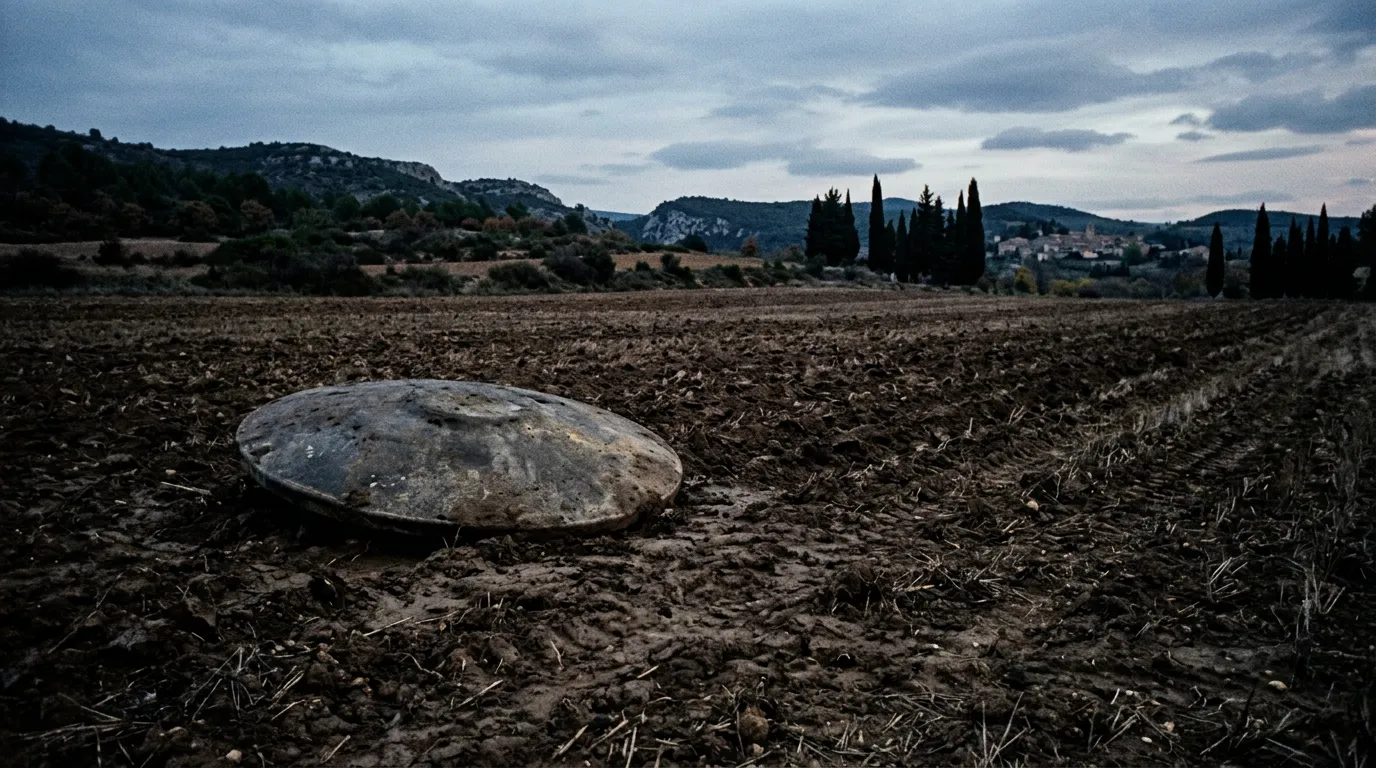
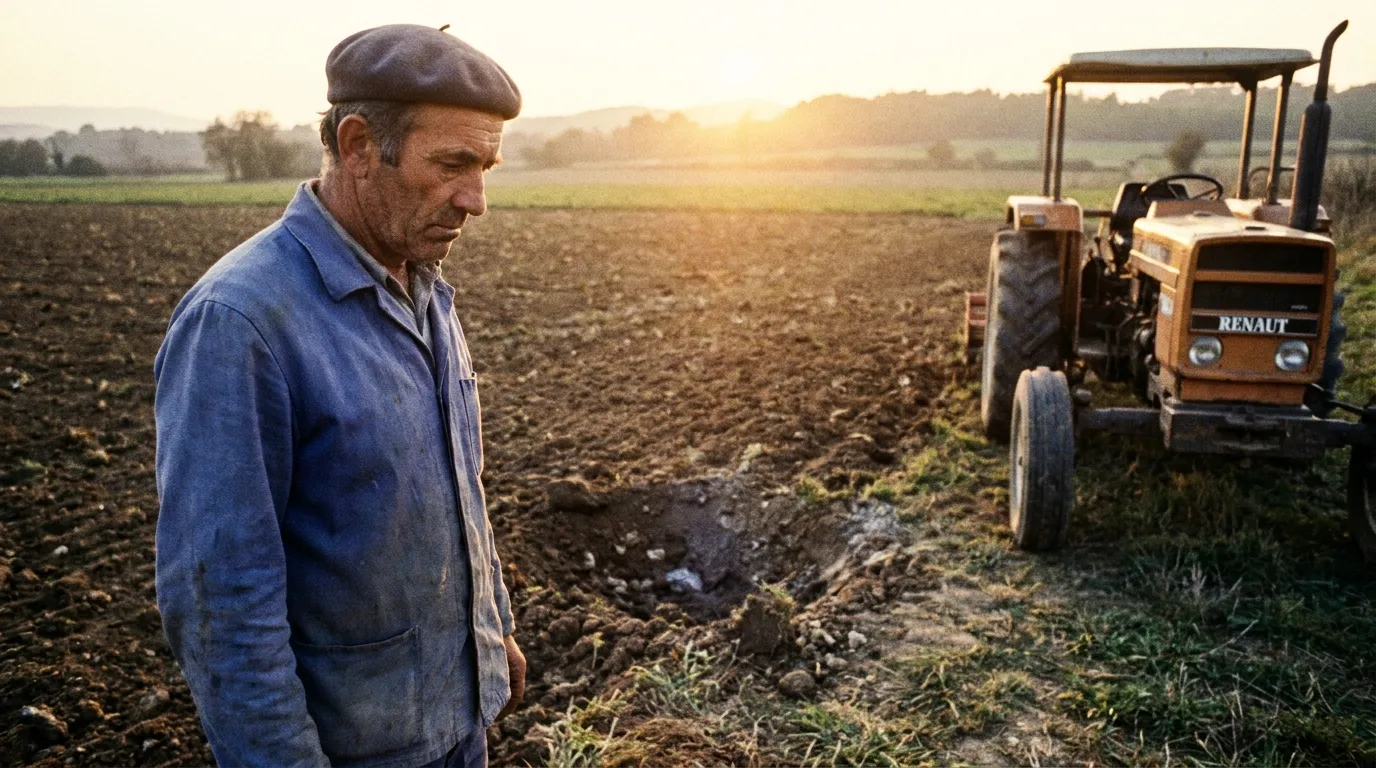
On 8 January 1981, a farmer named Renato Nicolai was working on his property above the village of Trans-en-Provence, in the south of France. He reported hearing a faint whistling and seeing a dull, leaden-grey object, shaped roughly like two saucers joined at the rim, descend and settle briefly on a terrace of his land, before rising and departing.
It is a single-witness sighting, and a brief one — the kind that normally goes nowhere. What made it different was that Nicolai reported it to the local gendarmes, who took it seriously enough to pass it up the chain to the one place in the world institutionally set up to handle exactly this.
What Nicolaï actually described
The detail of his account matters, because almost everything that followed hangs off it. It was late afternoon, around five o’clock, and Nicolaï — 55 years old, usually described in English accounts as a farmer, though a mason by trade, working that day on his own land — was at the bottom of his garden building a small shelter. He said he heard a low whistling, looked up, and saw an object descending onto a flat terrace roughly thirty metres below where he stood.
He described it as the colour of lead: a dull grey, metallic, about two and a half metres across and something over a metre high, shaped like two shallow saucers joined at a rim that ran all the way round. Underneath, he reported two circular protrusions that he took for landing feet, and two dark circles that he read as hatches.
It sat there for a matter of seconds. Then it rose, the protrusions apparently retracting as it went, and departed with the same faint whistle. Nicolaï’s own first interpretation was not exotic at all: he assumed he had watched some sort of military experiment, and went down to look at where it had been.
What he found was a circular mark about two metres across, pressed into the ground with a faint raised crown around it. He told his wife, and it was a neighbour who pushed him to report it. That reluctance is worth noting; witnesses who set out to invent something rarely need persuading to go public.
The state sends its scientists
France, uniquely, had a government body for studying unexplained aerial phenomena: GEPAN, a unit created in 1977 inside the national space agency CNES and based in Toulouse. The gendarmerie from nearby Draguignan reached Nicolaï’s terrace the following morning, 9 January, photographed the mark, lifted soil and plant samples themselves, and wrote it up. GEPAN’s own team, led by the engineer Jean-Jacques Velasco, arrived on 17 February — some forty days after the event.
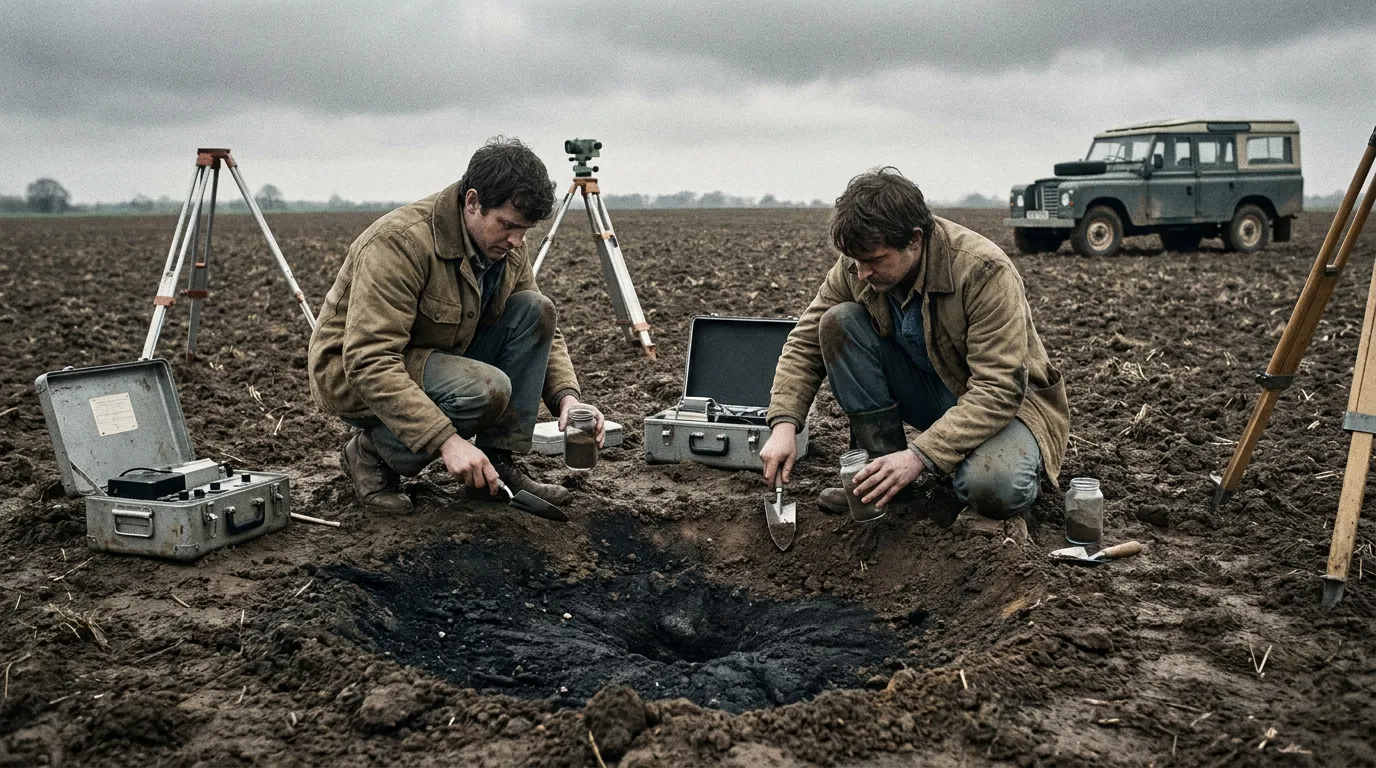
This is what sets the case apart. The evidence was collected fast, by police officers following an official sampling protocol, and then sent to laboratories for analysis rather than argued about in a magazine. Soil went to state laboratories; the plant material went to researchers including the biochemist Michel Bounias of the Institut National de la Recherche Agronomique.
That six-week gap between the gendarmes’ visit and GEPAN’s own is the first thing a fair account has to flag. The best samples in the case are the ones taken by police officers on day one, not by scientists. Everything GEPAN gathered itself came from a patch of ground that had by then been rained on, walked over and looked at by a great many people.
What the laboratory found
The findings were genuinely odd. The soil in the ring showed signs of having been compressed and heated to a moderate temperature. More strikingly, the analysis of the plants — young alfalfa — reported biochemical changes: alterations in pigments and other markers consistent with the plants having been stressed, as if prematurely aged, with the effect strongest nearest the mark and fading with distance.
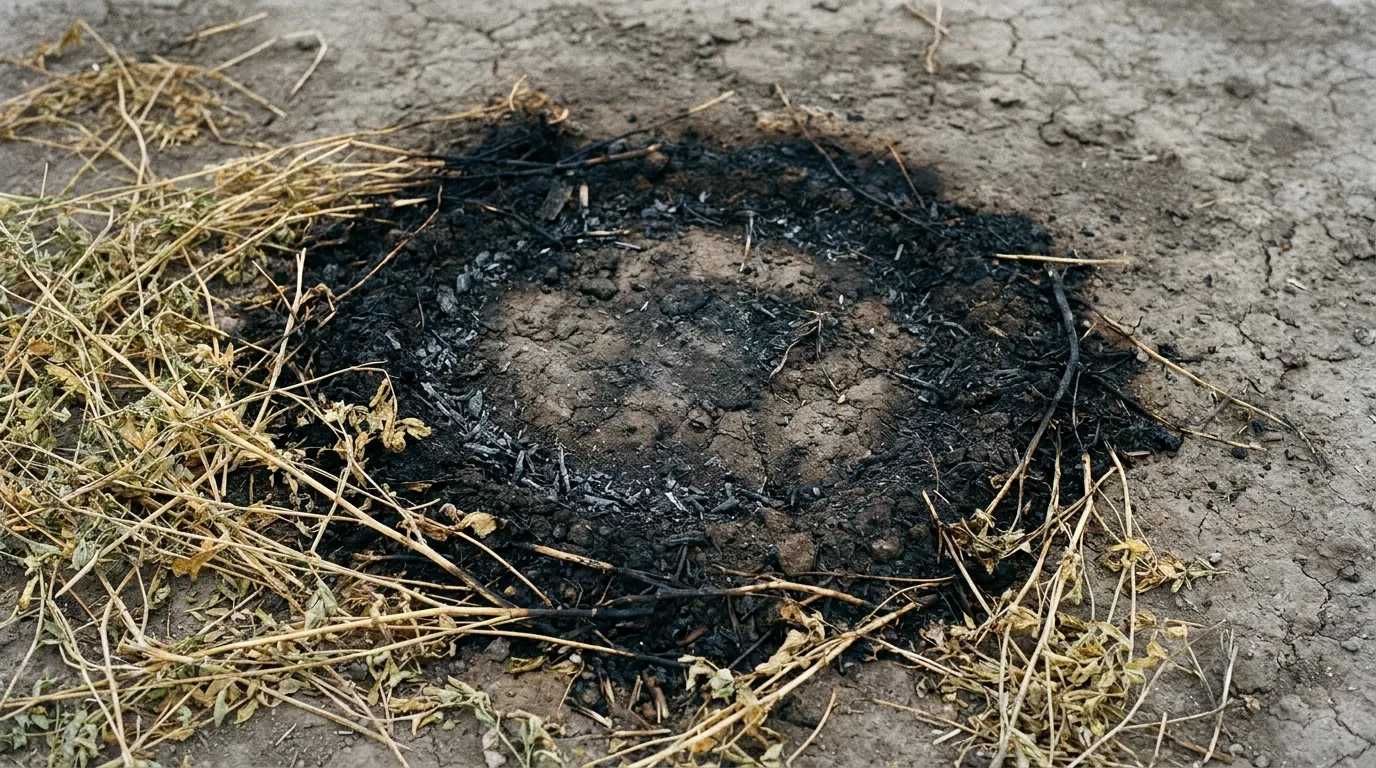
The numbers are what people remember. The soil analysis was read as indicating mechanical loading of the order of four to five tonnes, and heating to somewhere in the range of 300 to 600 °C — though not sustained heating, since nothing had vitrified or turned to ash. Trace quantities of phosphate and zinc turned up in the sampled material.
Bounias’s plant work is the part most often quoted. He reported photosynthetic pigment losses of roughly 30 to 50 per cent in leaves taken closest to the mark, tailing off with distance, and — the detail he clearly found most arresting — young leaves that “had all the characteristics of their age, but they presented the biochemical characteristics of leaves of an advanced age.” The affected plants, he said, recovered over the following months.
Bounias was careful about what that did and did not mean. He proposed that a strong electromagnetic field was the sort of thing that could plausibly produce the pattern, drawing on his own background in plant trauma after radiation exposure. He did not claim to have identified what produced the field.
What Note Technique 16 actually said
GEPAN published its findings on 1 March 1983 as Note Technique No. 16, an analysis of the trace under the case reference 81/01. It is the document the whole case rests on, and it is a good deal more restrained than its reputation.
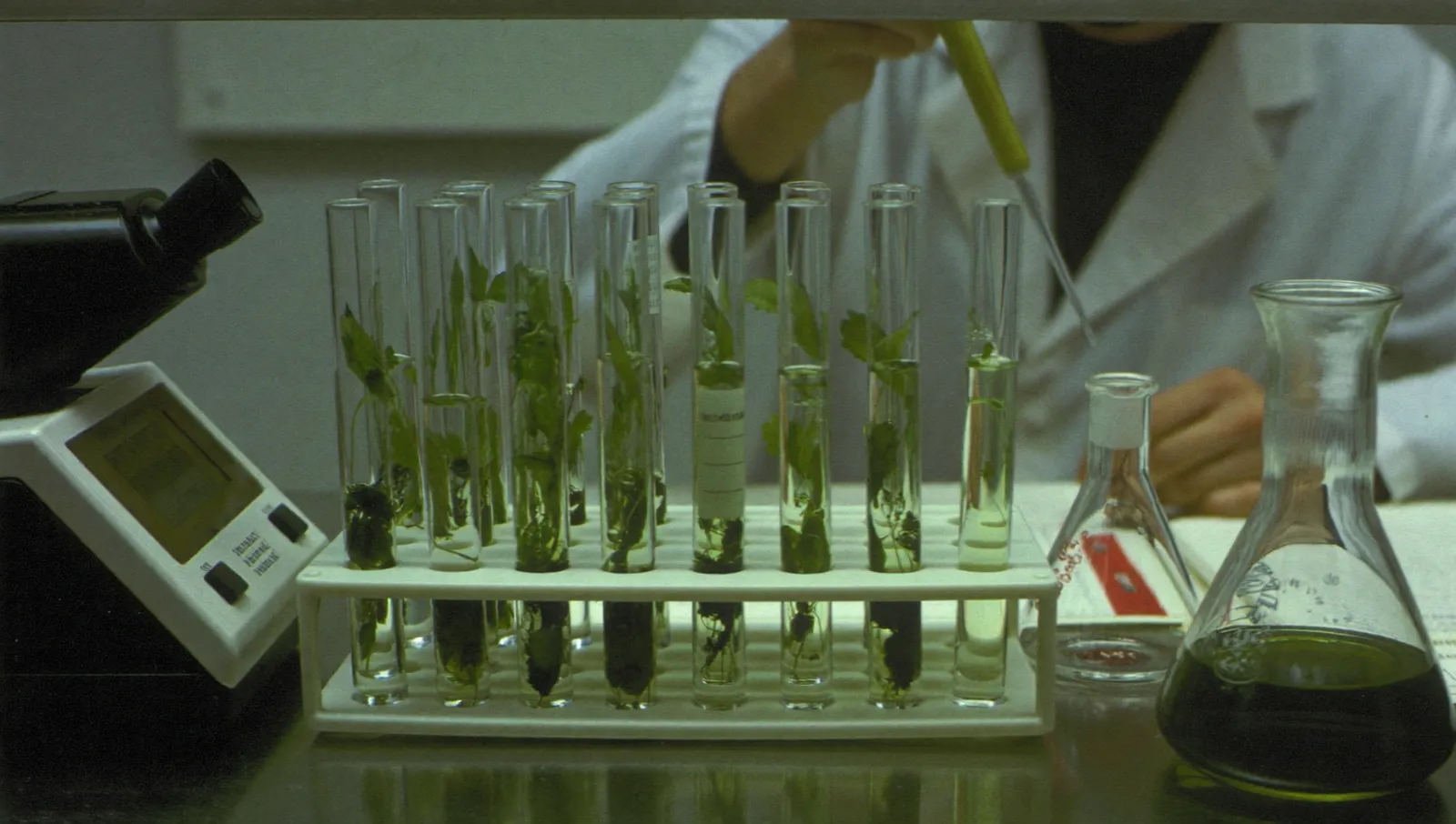
Its conclusion was that it had been possible to show, qualitatively, that an important event had occurred on the site — one involving mass and mechanical deformation of the terrain, a heating effect, and possibly certain transformations and deposits of trace minerals. GEPAN filed the case as type D: observed, physically evidenced, and unidentified.
Read that sentence again and notice what is missing. There is no craft in it. There is no propulsion system, no extraterrestrial hypothesis, no estimate of anything’s mass beyond the loading on the soil. GEPAN said that something heavy and hot had briefly been there, and that it could not say what.
The organisation itself outlived the case. GEPAN became SEPRA in 1988 under Velasco, and in 2005 was reconstituted as GEIPAN, which publishes its case files publicly. In 1990 both Velasco and Bounias published accounts of the analysis in the Journal of Scientific Exploration — and that is a caveat, not a credential. The JSE is a specialist venue for anomalies research, not a mainstream soil-science or plant-physiology journal. The work has never had the kind of hostile peer review that would settle it.
The sceptics’ case, at its strongest
The French sceptical community has never accepted the case, and its argument is more specific than “the witness made it up”. The core of it comes from the Observatoire Zététique and, in book form, from David Rossoni, Éric Maillot and Éric Déguillaume in Les OVNI du CNES: 30 ans d’études officielles (2007), a chapter-by-chapter dismantling of the agency’s own greatest hits.
Their reading of the mark is mundane and, once you hear it, uncomfortably plausible. The trace is consistent with a vehicle: a wheel, or a small cement mixer, turning and skidding on damp earth. Nicolaï was a mason. There was building work going on. Building sites have heavy round things that get dragged across the ground and leave compressed circular scars with raised edges.
Maillot also poses the awkward physical question that the pro-anomaly reading has never really answered. What object, sitting on the ground, could heat the soil beneath it towards 600 °C — and leave no thermal damage whatsoever on the plants growing in that same soil? Scorch the ground and you scorch the vegetation. Trans-en-Provence has stressed alfalfa and unburnt alfalfa in the same place at the same time.
The Zététique critique goes further, arguing that GEPAN broke its own stated methodology in handling the case — that the agency’s investigative protocol, written to prevent exactly this, was not followed once a promising trace was in front of it.
The samples, and what they can carry
Set the two camps aside and look at the physical evidence as an evidence problem, because that is where the case actually lives.
The chain of custody is unusually good for ufology and merely ordinary for forensics. Gendarmes sampled within about eighteen hours, which is genuinely fast. But they were gendarmes, not soil scientists; the site was open ground; and the scientific team that would interpret the results did not see it for another six weeks.
The control samples are the harder problem. Bounias’s design compared plants near the mark with plants further away, and found a gradient. A gradient with distance is exactly what an energetic event at a point would produce — and it is also exactly what soil chemistry, drainage, shade, grazing and plant age produce across any twenty metres of a hillside terrace. Alfalfa at one metre and alfalfa at twenty metres are not the same plant moved; they are different plants that grew in different dirt.
Nor can any of it be re-run. The samples are long gone, the terrace has had forty-five years of weather, and the analysis survives only as reported in documents from 1983 and 1990. Whatever weight you assign to Trans-en-Provence, you assign on the strength of other people’s method.
Why the case is still cited
Trans-en-Provence keeps its place in the literature for a reason that has little to do with alfalfa. It is the only well-documented instance of a national government treating a landing report as a laboratory problem, on the public record, with a named agency, a case number and a published technical note — and then not liking its own answer enough to close the file.
That is a low bar, and almost nobody else has cleared it. The United States has never had a trace-forensics capability of the kind GEPAN briefly ran; AARO’s remit is sensors, airspace and archives, not soil chemistry. Compare the American handling of the physical and medical effects reported at Cash-Landrum in 1980, where the witnesses ended up suing the government rather than being sampled by it.
The UAP Times take
Trans-en-Provence earns an Unconfirmed rating, three out of five on our scale, and it occupies an unusual spot on our scale: weak on the sighting, unusually strong on the process. The eyewitness component is exactly the sort we treat with caution — one person, briefly, alone. But the response is close to a model of how these things should be handled: rapid, official, scientific, documented, with physical samples analysed in real laboratories rather than adjudicated by argument.
Our reading is that Trans-en-Provence is genuinely valuable not as proof of a craft but as a demonstration of method. Something compressed and heated that patch of ground, and stressed those plants; whether it was an exotic craft or a mundane farm event that a good investigation happened to document in forensic detail is unresolved and probably unresolvable. Maillot’s question about the unburnt plants sitting in soil supposedly heated to hundreds of degrees is the strongest single objection in the file, and nobody on the other side has answered it properly.
A state agency looked hard at a landing report and could not explain what it found. That is the case, and it is smaller and more interesting than the legend.
The case’s real legacy is the road not taken: it shows what a serious, state-backed scientific response to a landing report can produce — and how rarely the rest of the world has bothered to try it.
Further reading: for a landing case built on witnesses rather than samples, see Rendlesham Forest. For a case where the alleged physical effects were on people rather than plants, see Cash-Landrum and Falcon Lake, where the witness’s own body went in for examination alongside the soil. GEIPAN remains the only state-funded unit of its kind in the EU, which is rather the point of the argument now running in Brussels. For the case where the traces were sampled within minutes rather than days, see Socorro, 1964. For the modern American equivalent — a national laboratory handed a metal fragment instead of soil — see what Oak Ridge found in the Ohio specimen. Trans-en-Provence’s object was a classic disc; it’s on the sightings map.
Source: GEPAN/CNES investigation report; analyses by Michel Bounias and others
Follow the file
Every new dispatch from the UAP desk, in your inbox. Sourced, sceptical, and no more than one email a week.