There is a particular kind of government document that tells you more than any press conference, and it is almost always a procurement filing.
On Tuesday, DefenseScoop’s Brandi Vincent reported that the Pentagon has posted a notice of intent to award a sole-source contract to a nonprofit in Rio Rancho, New Mexico. The All-domain Anomaly Resolution Office wants to buy a commercial data subscription. The data in question is the pre-1990 holdings of the National UFO Historical Records Center — a private collection of civilian UFO case files, assembled over decades by one man, currently housed in two portable classrooms behind an elementary school.
The Pentagon is not seizing it, subpoenaing it or declassifying it. It is trying to subscribe to it.
What the notice actually says
The drama is entirely in the paperwork. A sole-source notice is what a federal agency files when it intends to buy without competition, and it obliges the contracting office to justify why nobody else could do the job. AARO’s justification is unusually flat: “Market research conducted to date indicates that no other organization possesses the historical depth, volume of unique records, and specialized analytical expertise to meet the government’s minimum needs.”
The notice describes NUFOHRC as holding “the world’s largest private collection of UAP-related historical records, including hundreds of thousands of unique case files that exist exclusively within its archives and are not available in any other public or private repository”, and credits its staff with “unparalleled, specialized expertise in analyzing this specific data”.
The structure is a one-year base period with four optional renewals. The Department of War declined to give DefenseScoop a figure, offering instead a line that says almost nothing while sounding cooperative: “AARO continues to work with a wide range of partners to identify, analyze, and contextualize both historical and contemporary UAP records.”
Note what that amounts to. It is the United States government, in a document written to survive a protest from a competitor, formally certifying that the best historical record of American UFO reports is not in its own possession.
The archive in the portable classroom
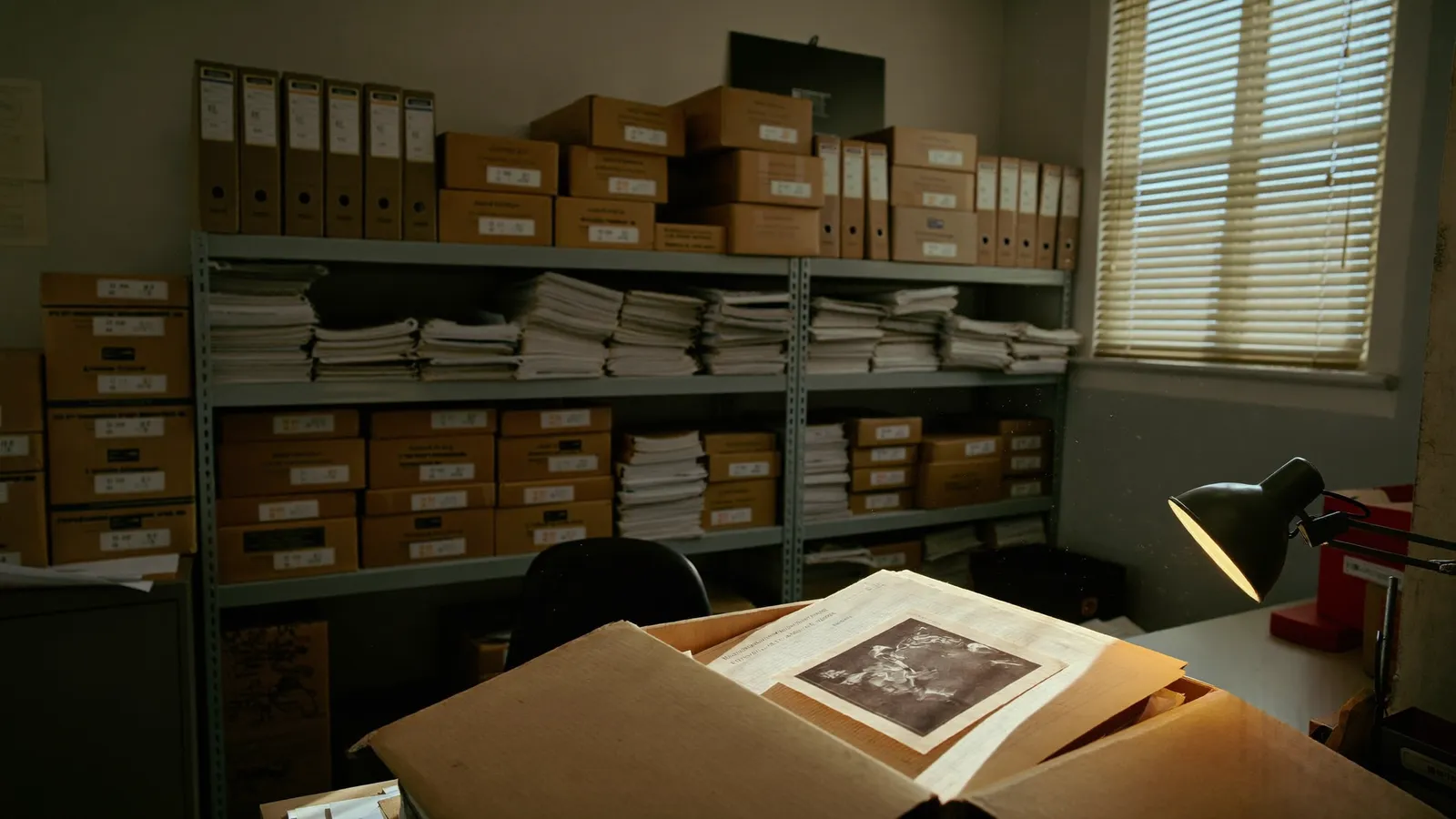
The collection belongs to David Marler, a UFO historian who spent decades and a good deal of his own money buying up the paper trail of civilian ufology as its founding generation died off and their estates were cleared. NUFOHRC opened its public facility in October 2024 under a five-year partnership with Rio Rancho Public Schools, which gave it two portable classrooms at Martin Luther King Jr. Elementary; a $40,000 state appropriation paid for touchscreens so school parties could use it.
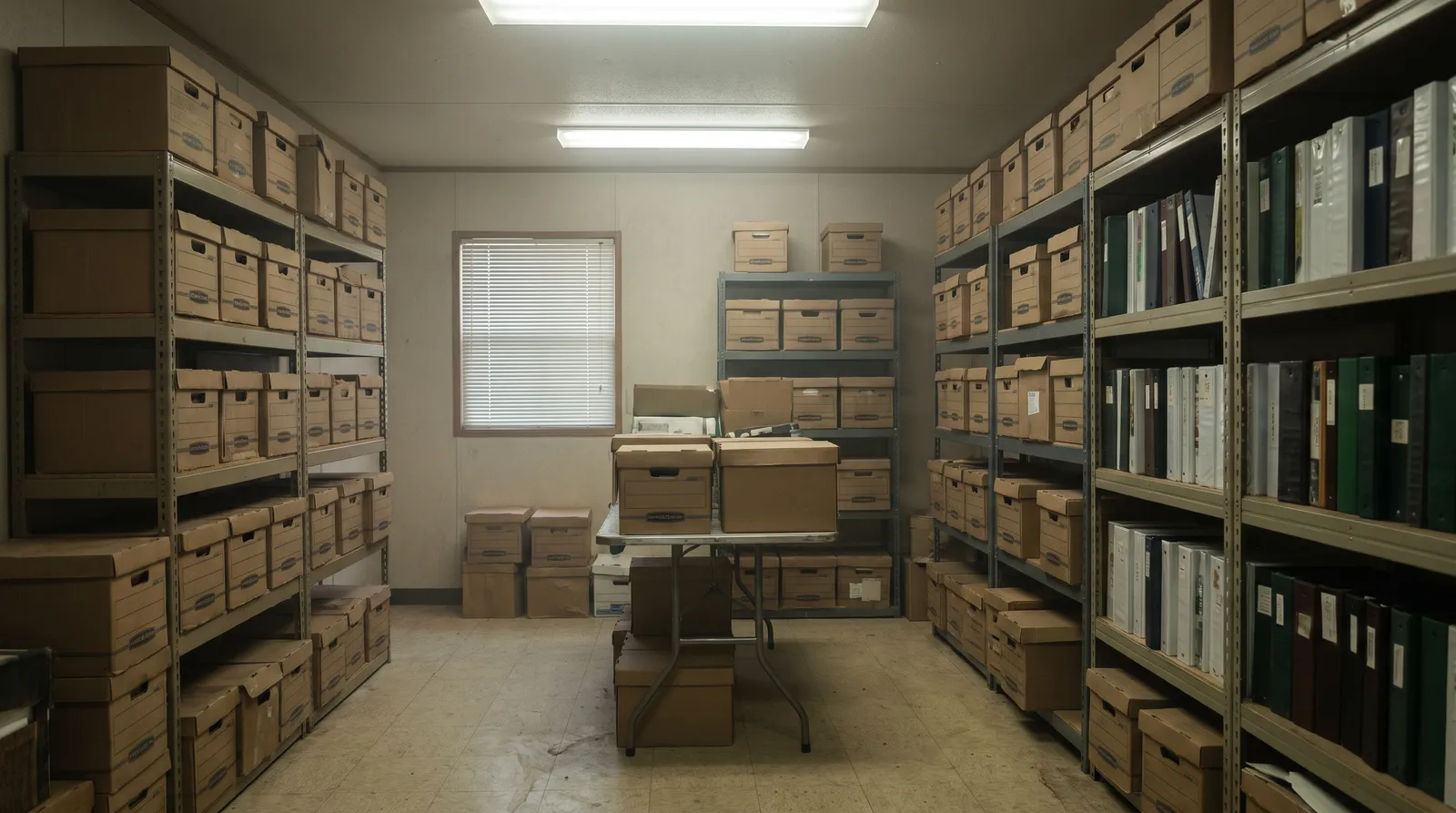
What is in there is genuinely unusual. Marler holds unsanitised Project Blue Book case files that came down through J. Allen Hynek, the astronomer the Air Force hired to explain sightings away and who ended up the field’s most credible convert. He holds the files of the Aerial Phenomena Research Organization, one of the two big civilian investigation groups of the mid-century. There are 2,000-odd books, periodicals going back to the 1920s, police reports, pilot reports, original photographs — and roughly 150 banker’s boxes nobody has catalogued yet.
There are also objects. The centre holds Stefan Michalak’s burnt shirt and a soil sample from the site where, in 1967, he walked into a Manitoba clearing and came out with a grid of burns across his chest. If you read our account of Falcon Lake, the physical evidence that made that case impossible to file away is now sitting in a portable classroom in New Mexico, and the Pentagon would like a login.
Why the government has not got this already
The obvious question is how the world’s best-resourced military ended up needing a subscription to a schoolyard archive. The answer is that it made a decision in 1969 and stuck to it.
The Air Force announced the termination of Project Blue Book on 17 December 1969; the project ceased operating in January 1970 and its files went to Maxwell Air Force Base, then the National Archives. That was the end of the United States systematically collecting civilian UFO reports. For the next fifty-odd years the only people building a continuous record were amateurs, enthusiasts and a handful of serious researchers working out of their own houses — which is exactly why Hynek kept personal copies of the cases he had worked, and why those copies matter now.
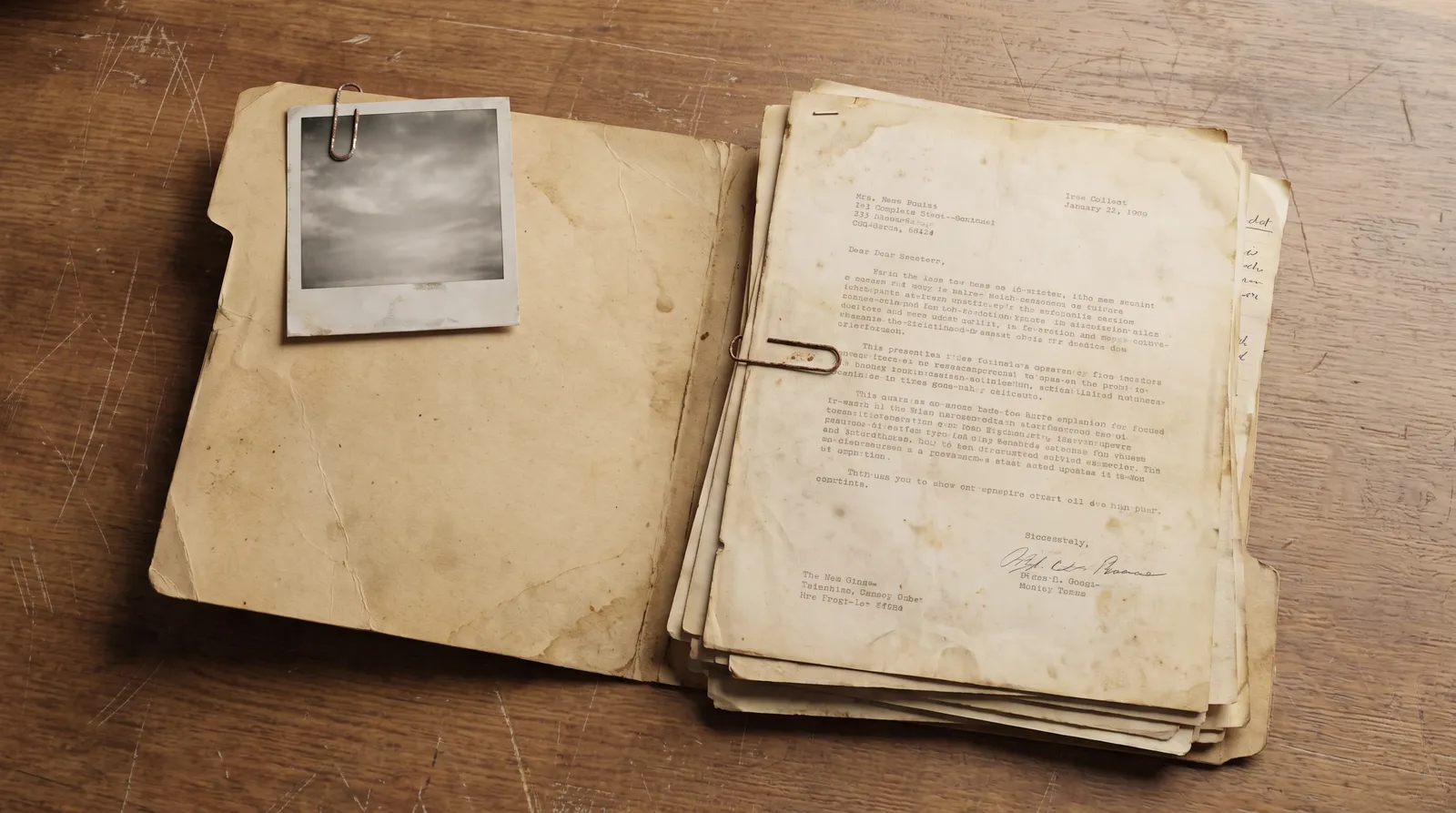
The government did not lose this material. It declined to gather it, on the explicit grounds that there was nothing worth gathering. AARO is now paying for fifty years of unfunded record-keeping it chose not to do.
The mandate that made it necessary
This is not curiosity. Section 6802 of the Fiscal 2023 National Defense Authorization Act directed AARO to compile and report the historical record of all US government involvement with UAP going back to 1945 — a scope Congress chose deliberately, and the reason the notice specifies pre-1990 material.
Volume I of that report landed in March 2024. It found no evidence the government had recovered non-human craft or reverse-engineered alien technology, attributed much of the mythology to misidentified classified programmes, and was received by the disclosure community roughly as you would expect. Volume II — meant to cover the research conducted after Volume I closed — has missed every informal window it was given and remains unpublished more than two years on.
So the sequence reads: Congress orders a review back to 1945, AARO publishes the first half, the second half stalls, and the office quietly moves to buy the outside archive that would let it finish.
The same week, a library bought the other half
There was a second archive story this week, and the pairing is instructive. On 1 September the Huntington Library in San Marino announced — via Anthony Solorzano in the Los Angeles Times — that it had acquired an extensive archive on the Integratron, the metal-free dome George Van Tassel built in the Mojave in 1960 after claiming telepathic contact with a Venusian called Solganda.
It is the Huntington’s first major ufology purchase: an architectural model and blueprints, nearly 630 photographs, negatives and slides, more than 250 audio recordings, 8mm film and ephemera running from the 1910s to the 1990s. It came from Donald and Dayle McKinney of Landers, California, who had kept Van Tassel’s things in their home for years. “We weren’t looking for it,” the Huntington’s associate curator of architecture and photography, Erin Chase, told the paper, “but when we viewed the archive… we knew it had to come here.”
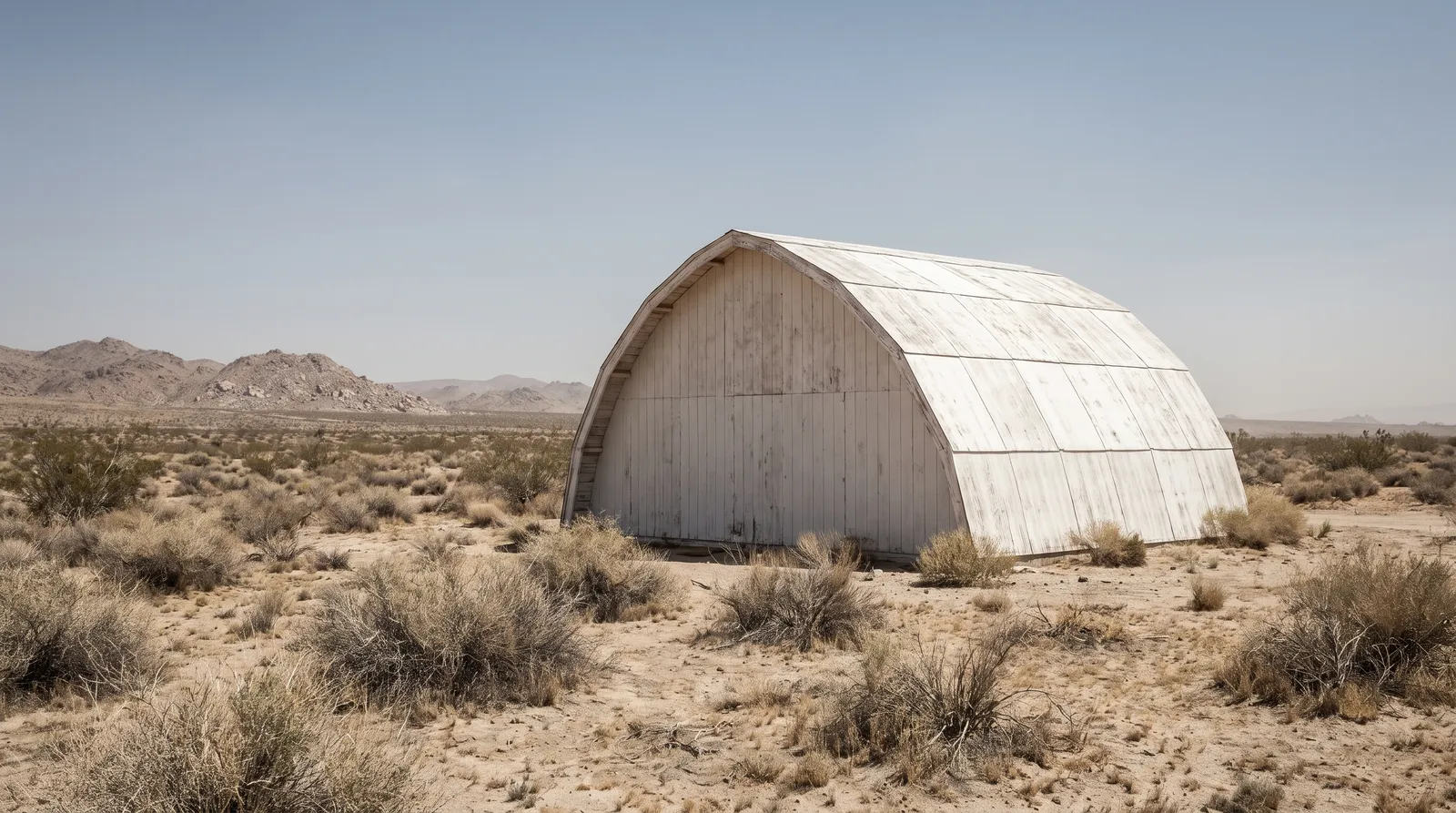
Nobody at the Huntington thinks Van Tassel met a Venusian; that is not the point of collecting him. The contactee movement and its Giant Rock conventions are a real chapter of post-war American cultural history, and the primary sources for it sat in a private house in the desert until somebody wrote a cheque.
Two institutions, one week, the same discovery: the archive of this subject has been in private hands the whole time, and is now being bought — by the Pentagon for intelligence purposes and by a research library for scholarly ones.
The sceptic’s read
Now the cold water, because “Pentagon buys UFO archive” is going to be read this week as an admission, and it is not one.
First, a sole-source justification is a legal instrument, not an appraisal. Its superlatives — “unparalleled”, “exist exclusively within its archives” — are written by the buying office to defeat a hypothetical protest from a competitor who thinks they could have bid. They establish that AARO wants this vendor and can defend the choice. They are not an independent audit of what is in the boxes, and nobody outside has done one; roughly 150 of those boxes are uncatalogued by the centre’s own account.
Second, the material is civilian and unclassified: clippings, sighting reports, correspondence, periodicals and photographs — the paper record of what members of the public and the odd pilot said they saw. It is a superb resource for pattern analysis over eighty years. It contains, by definition, no classified programme records, and buying it moves the government not one inch closer to the crash-retrieval claims that dominate the disclosure argument.
Third, the pessimistic reading of the timing is reasonable: an office with an overdue statutory report and a live congressional interest in its performance has just procured a large body of new material to analyse. That is either diligence or a very well-documented way of being busy, and the filing cannot tell you which.
Fourth — and this should trouble enthusiasts more than it will — historical case files do not generally survive contact with a competent analyst. They mostly turn into aircraft, balloons, Venus and honest mistakes, which is what happened to most of Blue Book’s 12,000 cases and happens to most of AARO’s modern caseload. Handing a records archive to the office that resolved a third of last year’s reports to balloons and satellites is not obviously a win for the extraterrestrial hypothesis.
What would make this matter
Watch for three things. Whether the contract is actually awarded, or dies quietly at the notice stage as government intentions sometimes do. Whether the material shows up in Volume II — the pre-1990 scope maps precisely onto the volume that is late, which is the strongest hint the filing gives about its purpose. And whether any of it comes back out, or whether the public only ever sees the conclusions drawn from it.
That last one is the pattern this site keeps running into. The PURSUE tranches proved the Department of War can publish; what they have not published is the measurement data that would let anyone outside settle an argument. A subscription is structurally the same shape of problem — access flowing one way, into the building. The smaller version is a 1952 Lincoln Laboratory tape still sitting on its reel because nobody has paid for the transfer. That is the real condition of this field’s history: not suppressed, mostly just unfunded.
The UAP Times take
This one earns a Well-sourced rating, five out of five on our scale, for an unglamorous reason: the story is a published government document. No anonymous insider, no leaked slide deck, no sensor blob to argue about — a sole-source notice on SAM.gov, a named reporter who read it, quoted justification language, an on-record departmental statement, and a separately reported library acquisition in the LA Times. Every load-bearing fact is checkable by anyone with a browser.
What it means is smaller than the headline and stranger than it looks. The Pentagon has conceded nothing about non-human craft. It has conceded something about itself: that having decided in 1969 civilian UFO reports were not worth collecting, it now has a statutory duty to review them, and no choice but to rent the record back from the people who kept it. The state walked away from this subject and a collector in New Mexico did not, and the procurement system has just certified, in writing, that his boxes are better than theirs.
Whether anything comes out of those boxes is a separate question, and history suggests mostly balloons. But somebody with resources is finally going to read them properly, which is more than the last fifty years managed.
Further reading: the physical evidence from Falcon Lake is in the archive AARO wants to subscribe to, and the 1949 Los Alamos green fireball transcript is the kind of pre-1990 New Mexico record this contract is aimed at. For the other half of the government’s record problem, see what five PURSUE tranches have and have not published.
Follow the file
Every new dispatch from the UAP desk, in your inbox. Sourced, sceptical, and no more than one email a week.