
There is a particular kind of UAP story that never trends, because it contains no craft, no metal and nobody’s sworn testimony. It is the kind where you find out what the Pentagon’s UFO office does on an ordinary Tuesday. This week produced one, and it is better than it sounds.
A batch of records released to The Black Vault under Freedom of Information Act case 26-F-1773 fills in the administrative detail behind AARO’s invitation-only UAP research workshop — the working agenda, who spoke, who sat on the panels, where it actually happened. And tucked inside the same release is the bit nobody had: on the day before the workshop opened, AARO hosted representatives of Uruguay’s official air force UFO commission at the Pentagon, with reciprocal briefings, lunch with senior staff and a private tour of the building.
No little grey men. Just the quiet, unannounced business of a US government office building an international network — which, set against what the same office tells Congress it cannot provide, is a story in itself.
What the release actually is
The paper trail starts with a scoop. On 16 March 2026, DefenseScoop’s Brandi Vincent reported that AARO had set up and sponsored a private, invite-only workshop on UAP research — an event the Department of Defense had not announced, published a participant list for, or otherwise mentioned. John Greenewald, Jr., who has run the FOIA archive at The Black Vault for close to three decades, filed his request the following day.
What came back — six months after the request, thirteen months after the event — is not a revelation, and Greenewald does not sell it as one. It is the administrative record: correspondence, planning email, a working agenda with names on it. Its value is precisely in the ordinariness — it shows what the office was doing when it thought nobody was watching, and that turns out to be roughly what it said it was doing, plus one thing it never mentioned.
The workshop, and who was in the room
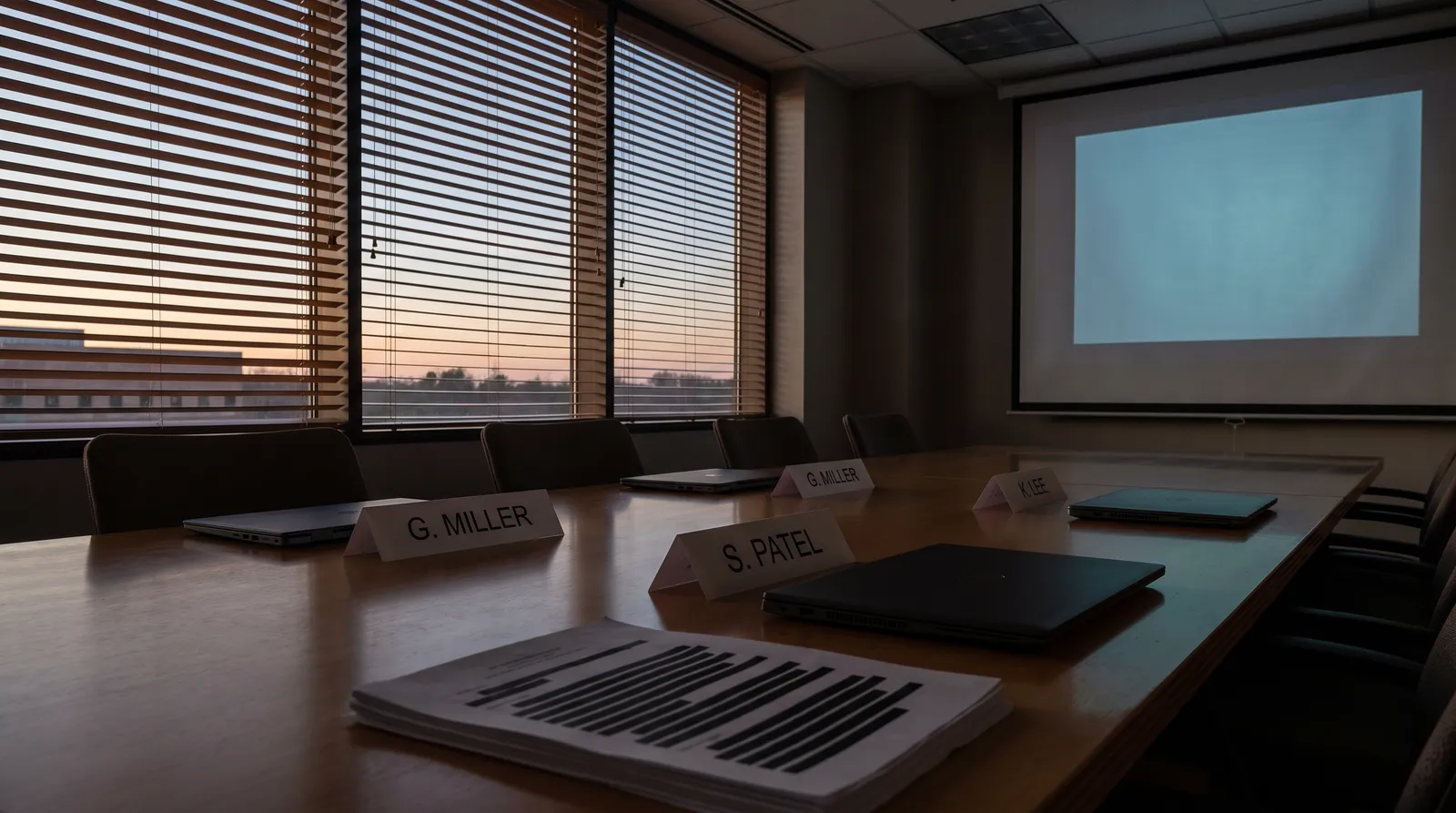
The event was the 2025 UAP Workshop: Narrative Data, Infrastructures, and Analysis, held on 5 and 6 August 2025. AARO sponsored it; Associated Universities, Inc. hosted it, at AUI’s headquarters in Vienna, Virginia — a conference room in the Washington suburbs, not a Nevada hangar. Around forty people attended, drawn from government, academia and independent research organisations. It was organised by Dr Gretchen Stahlman of Florida State University and Dr Tim Spuck of AUI, with the resulting paper a collaboration between AARO, AUI and FSU. AARO covered lodging and most meals; attendees paid their own travel.
The subject was not craft. It was data hygiene — specifically narrative data, which is the polite term for what everybody else calls eyewitness reports. Witness accounts arrive from military channels, civilian hotlines, decades-old archives and social media, in different formats, with different terminology and wildly different levels of documentation. The workshop was about whether those records can be standardised, linked across databases, and processed at scale with machine learning without turning into mush.
The keynote came from Robert Powell of the Scientific Coalition for UAP Studies, under the title “Setting the Stage: Importance of Good UAP Data”. The National UFO Reporting Center attended and said so publicly. Amanda Focke, who heads special collections at Rice University’s Fondren Library — home of the Archives of the Impossible — argued against writing witness accounts off as mere anecdote, on the grounds that reflexive dismissal has cost the field as much as credulity has.
AARO published a white paper on the proceedings in February 2026, six months after the fact, and The Debrief covered it on 26 February. That paper is on AARO’s own website and remains the best single account of what was discussed. What it does not do is name most of the people who did the discussing — which is the gap this FOIA release closes.
The day before: Uruguay at the Pentagon
Here is the part that had not been reported. Among the released correspondence is a July 2025 email from an AARO partner-engagement officer proposing a meeting at the Pentagon on 4 August 2025 — the day before the workshop began. The stated purpose was mutual briefings on the work of CRIDOVNI and AARO: what data each office analyses, what analysis each performs, and how the two might collaborate going forward. The agenda also ran to lunch with senior AARO personnel and a private tour of the building.
The Uruguayan side said yes, and said more than yes. Per the records, its representatives expressed particular interest in establishing a continuing working relationship with AARO and in exchanging information and experience.
Note the choreography. Foreign officials arrive in Washington, get a day at the Pentagon, and the next morning a forty-person workshop convenes twenty minutes down the road. The trip was clearly built around both. Nothing in the public account of the workshop mentioned any of it.
Who CRIDOVNI actually are
This is not a fringe group with a letterhead. CRIDOVNI — the Commission for the Reception and Investigation of Complaints of Unidentified Flying Objects — was established by the Uruguayan president in 1979 as an official department of the Uruguayan Air Force. It was the first official UFO body in South America and, having run continuously since, is among the longest-serving government UFO investigation units anywhere in the world. It takes reports, investigates them as routine air force business, and has never been coy about treating an extraterrestrial explanation as a hypothesis worth naming.
For the Pentagon, that makes Uruguay an unusually attractive partner: a small, stable ally with nearly fifty years of methodically filed cases and no political need to pretend the subject does not exist. Foreign UAP liaison at this level is not unprecedented — the CBC reported Canada attending what it called a first-of-its-kind UFO briefing at the Pentagon a few years ago — but it has stayed rare, and rarer still is any public record of it. Compare this with the two other bilateral threads we have followed: Japan pressing Washington for a UAP information-sharing agreement and the UK’s determined silence inside the Five Eyes. An office with a Uruguayan working relationship it never advertised sits oddly beside an allied ministry that will not say whether it holds anything at all.
What the records do not settle
Separate reporting — the ASIRP Global UAP Intelligence Brief, in February — says the August 2025 Pentagon meeting produced a draft CRIDOVNI–AARO cooperation pre-agreement slated for signature in March, that AARO offered hardware and software support, and that a hemispheric workshop was floated with invitations to every official Latin American investigation office and Uruguay as host. CRIDOVNI’s long-time head, Col. (ret.) Ariel Sánchez, is quoted there on the aim of unifying investigation criteria across the region.
Treat that tier differently. It rests on a single secondary brief rather than on a released document, no follow-up has surfaced, and the status of any signature is unconfirmed. If it was signed, it would be AARO’s first formal bilateral UAP arrangement in Latin America — which is exactly why it should not be reported as done on the strength of one summary. What the FOIA records support is narrower and still notable: the meeting happened, collaboration was explicitly the point, and the Uruguayans were keen.
The workshop that may or may not have happened
The records also show AARO discussing a follow-on data workshop for early 2026, and gathering contact details for research organisations to invite. That discussion was under way before the first workshop had even taken place, which suggests the office saw this as a programme rather than a one-off.
Whether it happened is unclear. Asked in March, Pentagon spokesperson Sue Gough told DefenseScoop that AARO hoped to convene further workshops and collaborations “as needed”, but had nothing to announce. The released material does not establish what became of the early-2026 event. Given that the first one only became public knowledge through a reporter and then a FOIA request, the absence of an announcement is not evidence of an absence of workshops.
The sceptic’s read, which lands a real hit
The strongest objection is not about secrecy. It is that this workshop was about the weakest evidence class in the field. AARO’s own annual reporting says its central constraint is a lack of timely, actionable sensor data — and its response has been to convene forty people to standardise witness statements. Standardise anecdote and you get tidier anecdote. No amount of schema design turns a 1978 phone call about a light into a measurement.
That is fair, and it is not the whole picture. You cannot retrofit radar onto seventy years of paper, and the choice is between a badly organised historical record and a well-organised one. Consistent metadata, provenance and de-duplication are what let you spot that a “wave” was one report copied across four databases — which is a debunking tool at least as much as a discovery tool. It is also worth saying plainly: nothing in this release suggests anyone in that room discussed recovered craft, exotic material or non-human intelligence. It is a workshop about databases, and a foreign liaison meeting. Anyone reading a smoking gun into it is reading something that is not there.
The sharper criticism is about the default. An office created to restore public confidence held a taxpayer-funded research workshop it did not announce, published an anonymised summary half a year later, and hosted a foreign government’s UFO commission without mentioning it at all. Meanwhile the House Oversight task force chaired by Anna Paulina Luna has called AARO’s answers to its questions less than adequate, and spent a spring writing letters and threatening subpoenas to get forty-six videos out of the building. Both things are true at once, and the second is why the first grates.
The UAP Times take
This one earns a Well-sourced rating, five out of five on our scale, and it is worth being precise about which parts carry that weight. The spine is documentary: a named FOIA case number, an AARO white paper published on a .mil domain, named organisers at a named host institution, a named keynote speaker, an on-record Pentagon spokesperson and two working journalists with long track records. The Uruguay meeting comes from AARO’s own correspondence. The pre-agreement, the hardware offer and the regional workshop come from one secondary brief and are flagged above as exactly that.
What it adds up to is not a disclosure story. It is an accountability one. The Pentagon’s UAP office is doing something fairly sensible — trying to fix the data problem it keeps complaining about, and talking to the one allied government with half a century of continuous case files — and it is doing it in a way that requires a journalist and a FOIA request to discover. That is a choice, not a leak risk. There is nothing in a Virginia conference room agenda or a Pentagon lunch invitation that needed to be prised out by statute.
The useful thing to watch is whether the Uruguay thread turns into anything: a signed arrangement, a regional workshop, a joint methodology. If AARO is quietly assembling a hemispheric standard for how governments handle UAP reports, that matters more to the long run of this subject than any single video. If it was a pleasant lunch and a tour, that is worth knowing too — and either way, we should not be finding out thirteen months late.
Further reading: the same office is trying to buy a subscription to a private UFO archive because it stopped keeping the record itself in 1970, and Japan has been asking Washington for a UAP sharing agreement of its own. For the sensor-data problem the workshop could not solve, see AARO’s latest annual report.
Follow the file
Every new dispatch from the UAP desk, in your inbox. Sourced, sceptical, and no more than one email a week.