
For eight years the most senior person in the American government whose actual job was unidentified flying objects said almost nothing in public. Last Tuesday he published 300-odd pages and went on two television networks, and the UAP field has not stopped arguing since.
Jay Stratton’s memoir Out of the Shadows: Revealing the Truth About Non-Human Intelligent Life came out on 13 October from William Morrow, an imprint of HarperCollins. In it, and in interviews with Bret Baier on Fox News and Jake Tapper on CNN, Stratton says the United States and its defence contractors hold craft of non-human origin; that he has personally seen non-human craft and non-human beings; that the 1947 Roswell crash was real and included bodies; and that an undeclared “Legacy Program” has been hiding all of it from presidents, admirals and the public for about eighty years.
This is the most credentialed person ever to say those sentences with his name attached. It is worth being precise about what that does and does not change.
Who Stratton actually is
The credential is the story’s load-bearing wall, so check it first. Stratton’s publisher describes him as a co-founder of the Defense Intelligence Agency’s Advanced Aerospace Weapons System Application Program — AAWSAP, the Robert Bigelow-contracted effort whose paperwork the DIA has spent years failing to produce in any usable form — a contributor to its successor AATIP, and the director of the Unidentified Aerial Phenomena Task Force, the Navy-led body that collected the Nimitz and Roosevelt material and handed the problem on to AARO in 2022.
That is not a retired colonel with a podcast. That is the man who ran the file. Whatever you make of his conclusions, he is describing rooms he was demonstrably in, which is a materially different proposition from the average crash-retrieval claim.
It is also, on its own, not evidence of anything. A senior official’s sincere belief is testimony about a belief. The field keeps collapsing those two things into each other, and the collapse is where most of the nonsense lives.
What the book says
The claims arrive in two distinct tiers, and the book is reasonably honest about which is which — more honest, in places, than the coverage of it has been.
First tier: things Stratton says he saw. He told Tapper, in a line already doing laps of the internet, that he has seen non-human beings and non-human craft with his own eyes. He also describes orbs and dark figures turning up at his own house while he was investigating UAP for the government, and told Tapper it was as though the door to his home had become a blockade between two realms.
Second tier, and much larger: things Stratton says he was told. The claim that defence contractors currently hold at least a dozen retrieved craft across the United States comes from briefings and sources, not from Stratton walking into a hangar. So does the Roswell material — the 1947 crash with non-human remains, some of whom he says survived the impact and later died refusing food or contact. He does not claim to have witnessed any of that. According to PARADIGM, which has covered the book closely, Stratton says he learned of Legacy Program activity from at least three separate sources, one of them the late Senate Majority Leader Harry Reid, who he says once received a briefing on it by mistake.
Reid died in December 2021. That is not Stratton’s fault, but it does mean the single most checkable link in the chain cannot be checked.
The submarine, and the two admirals
The passage that got the most airtime is operational rather than extraterrestrial, and it is the most interesting thing in the book precisely because it is testable in principle.
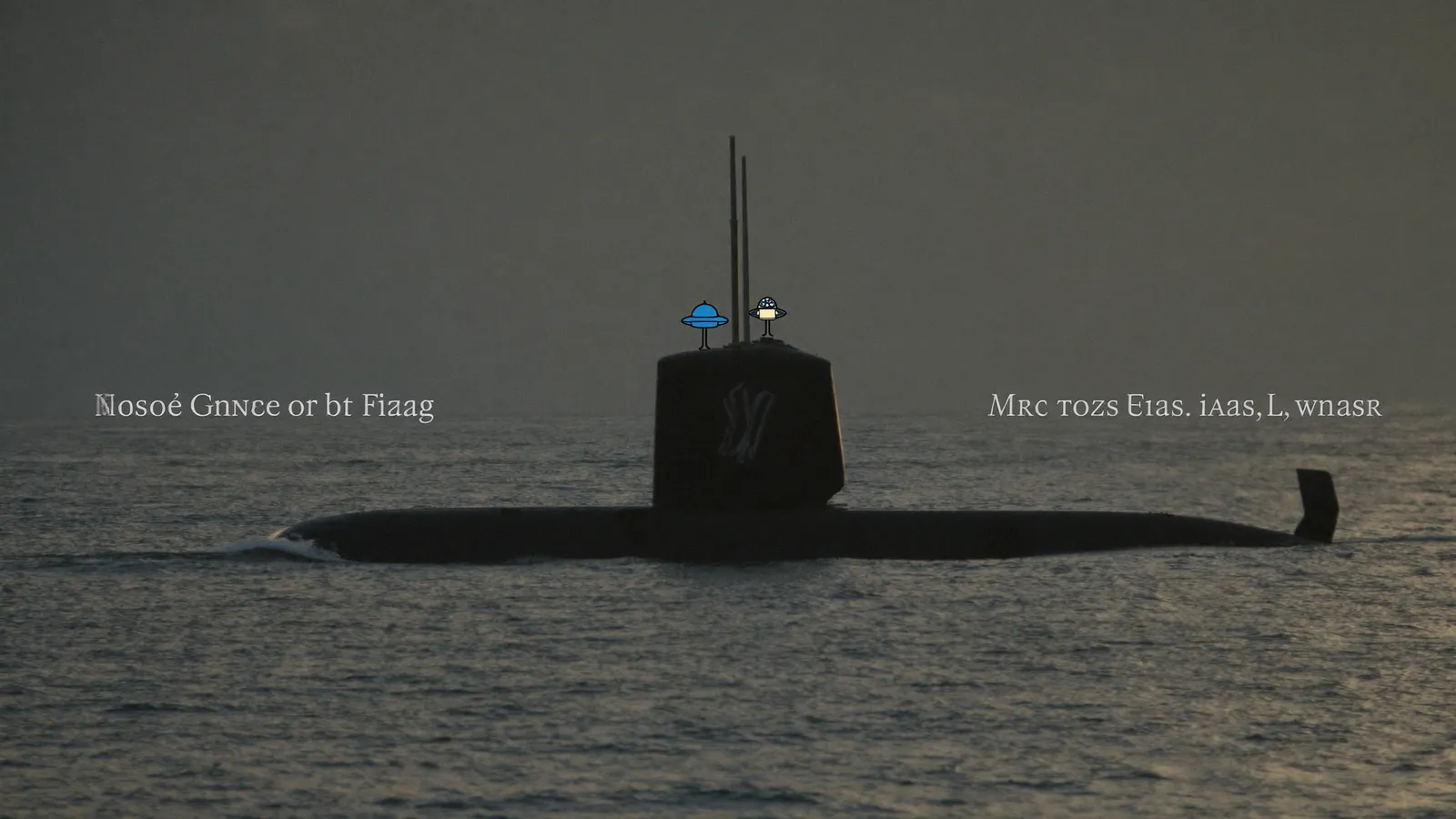
Baier read it out on Special Report: “Our bait would be a nuclear submarine. Draw a UAP in close enough to monitor, track, and if possible, capture or recover.” Stratton’s account is that the Task Force proposed using a submarine as a lure to pull an object into a prepared tracking box. One summary of the interview has the boat positioned off the East Coast.
If a US Navy submarine was ever tasked as bait for an unidentified object, that tasking exists on paper somewhere.
That is the point. Operations leave records — message traffic, tasking orders, deconfliction notices, a line in somebody’s command history. A specific, dated, named operation is the kind of claim a congressional committee or a determined FOIA requester can actually go and look for, which is more than can be said for a hangar full of saucers at an unnamed contractor.
The same goes for the other concrete item: Stratton says two Navy admirals were blocked from reporting a UAP sighting. Who, when, by whom, and on what authority are all answerable questions. Nobody has answered them yet.
The man he accuses, and the man he didn’t answer
Stratton names a target, and the target has hit back. The book alleges that Sean Kirkpatrick — the physicist who ran AARO from 2022 to 2023 and who concluded publicly that there was nothing to any of this — was compromised and controlled by the Legacy Program, and covered up a reverse-engineering effort.
Kirkpatrick’s reply, given to PARADIGM, was “That’s the most absurd thing I’ve heard today,” and he accused Stratton of breaking an unspecified national security law. Two former heads of the US government’s UFO investigation are now publicly accusing each other of serious misconduct. The subject has had stranger weeks, but not many.
Then there is the invitation. Avi Loeb, who chairs the White House UAP Science Advisory Council, says he asked Stratton to brief the council after the two met at PhenomeCon in Utah, and that Stratton did not reply — not to him, and not when the request was repeated by council member Dr Tim Gallaudet, a retired rear admiral and former acting NOAA administrator. Loeb’s summary of the claims is the cleanest sentence anyone has written about them: they “are not corroborated by publicly verifiable data.”
Loeb also makes the sharpest procedural point available. The Pentagon opened a waiver earlier this year specifically so that current and former personnel bound by non-disclosure agreements could hand UAP information to the government without legal jeopardy. The mechanism Stratton would need in order to turn testimony into evidence now exists. He has not, as far as anyone can show, used it.
Twenty-one agencies read it. That is not a confirmation
One number from the publicity run deserves careful handling, because it is already being misreported.
Stratton’s representative told People that the manuscript was reviewed by 21 government agencies and departments before it was cleared for release. True or not, that is a prepublication security review: a check that the text discloses no classified information. It is emphatically not a finding that the contents are accurate. A reviewer clearing a sentence about recovered alien craft is telling you the sentence is not classified. Those are opposite conclusions, and the gap between them is where “the Pentagon has confirmed” headlines get manufactured.
The sceptic’s read
The prosaic case here is not that Stratton is lying. It is that he is a sincere senior official who, over years inside a programme built to take this seriously, came to believe things the available record does not support.
Mick West, writing in Skeptical Inquirer in 2024 after appearing on a podcast with him, described Stratton as an “experiencer” — someone who believes they have had a close encounter with UFOs or non-human entities. That framing is not an insult, and it explains a great deal about the home-visitation passages, which read less like an intelligence assessment than like something deeply felt.
Michael Shermer’s response to an earlier version of the same claim, in November 2025, remains the whole sceptical position in four words: anecdotes are not evidence. Show the craft, show the bodies.
And the official record still says no. AARO’s March 2024 historical review found no verifiable evidence that any US government agency or private company has ever possessed or reverse-engineered non-human technology, and its FY2025 annual report repeated that no evidence suggests any entity has captured or exploited UAP-derived material. Stratton’s answer is that AARO was compromised, which is internally consistent and unfalsifiable in the same breath.
The UAP Times take
This is the strongest version of the insider-testimony story the field has produced, and it still does not get over the line. Stratton’s standing is real and checkable; his central claims are neither. The extraordinary material — craft at contractors, bodies at Roswell, an eighty-year programme — is relayed from sources, one of whom is dead, and arrives with no document, no sample, no facility and no programme name a reader can pull on.
So it earns an Unconfirmed rating, three out of five on our scale: a genuine open question raised by a genuinely credentialed man, thinly evidenced. Not thinner than that, because the submarine tasking and the two blocked admirals are specific enough to be chased, and someone with subpoena power should chase them. Not stronger than that, because a waiver now exists for exactly this purpose, a scientific council has asked twice, and the proof has not moved.
Eighty years in, the story is still arriving as a sentence from a person who says they know. We will upgrade the rating the day it arrives as a thing on a bench.
Further reading: The Pentagon Now Has a Procedure for Handling Recovered UAP Material and Avi Loeb’s secondhand Pentagon claim.
Follow the file
Every new dispatch from the UAP desk, in your inbox. Sourced, sceptical, and no more than one email a week.