
Varginha is the case we have to be honest about in two directions at once. It is enormously important as a cultural phenomenon — the “Brazilian Roswell,” a story that gripped a nation and never let go — and it is, by the standards this site tries to hold, very weak as evidence. Both statements are true, and pretending otherwise in either direction would be a disservice. So here is the story, and here is why it earns one of the lowest credibility ratings on our map despite being one of the most famous cases on it.
A creature in the streets
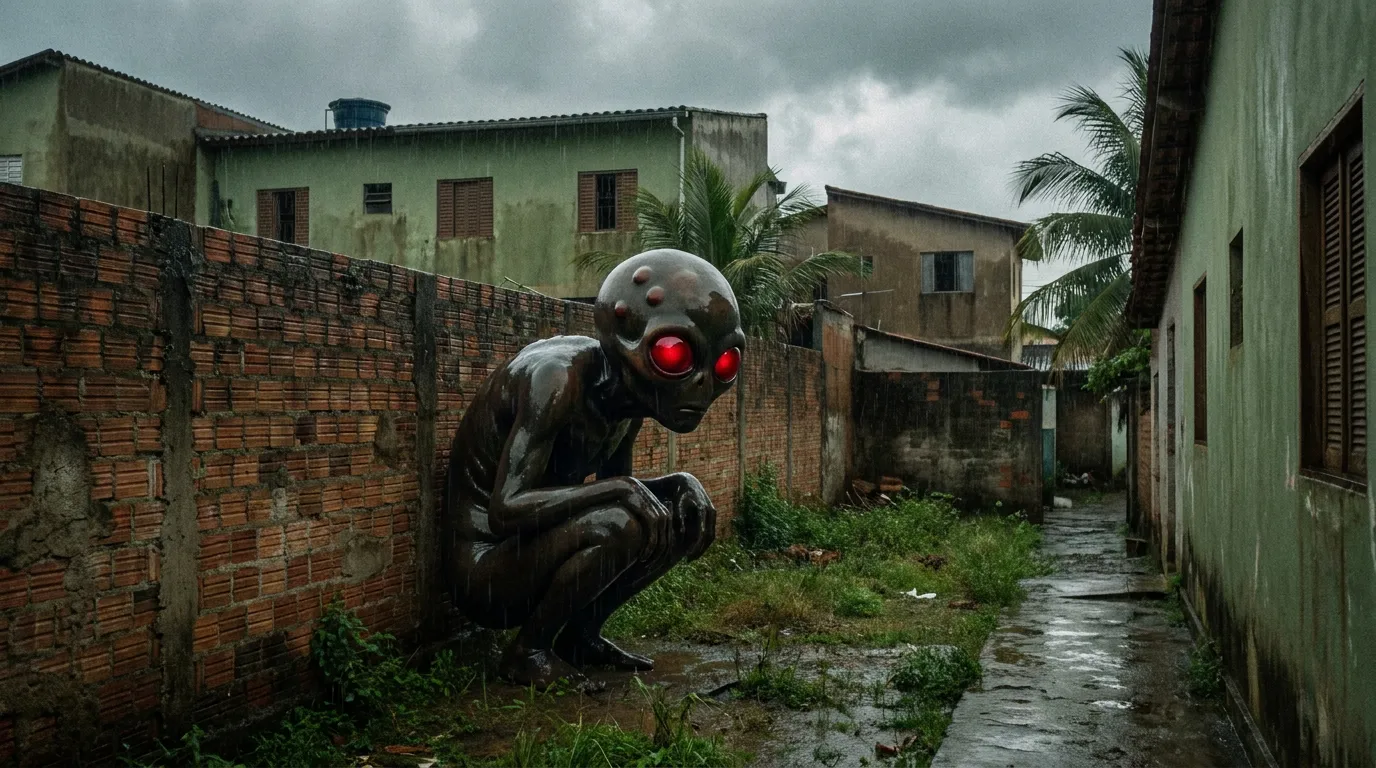
On 20 January 1996, in the town of Varginha in the Brazilian state of Minas Gerais, three young women — sisters and a friend, walking through a vacant lot — reported coming upon a strange creature crouched by a wall. They described it as roughly humanoid but distinctly not human: brown or oily-dark, with a large head, thin body, and prominent red eyes, and, in some accounts, small protrusions on its head.
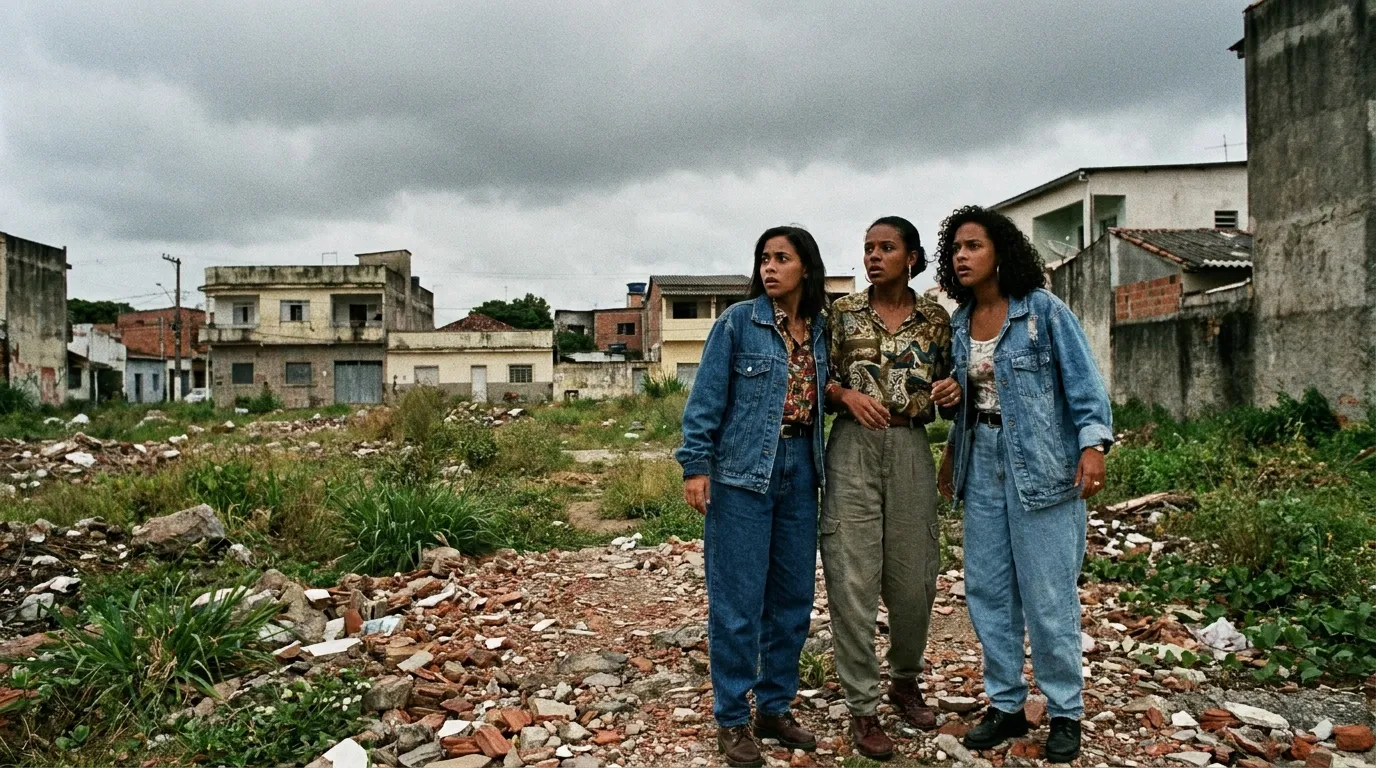
The three were the sisters Liliane and Valquíria Silva, both teenagers, and their friend Kátia Andrade Xavier, in her early twenties. They were cutting home through waste ground in the Jardim Andere district in the middle of a wet summer afternoon. They fled in terror, and their account — delivered with obvious and, to those who met them, convincing distress — lit the fuse.
Liliane’s mother went back with them to the lot and found nothing there. That is the whole of the primary encounter: three frightened young women, one empty patch of ground, and no physical trace whatsoever. Everything else in the Varginha story is built on top of it.
What else the town said happened that week
It did not stay a single strange encounter for long, because Varginha in late January 1996 produced a cluster of other claims, and the story people tell today is a composite of all of them.
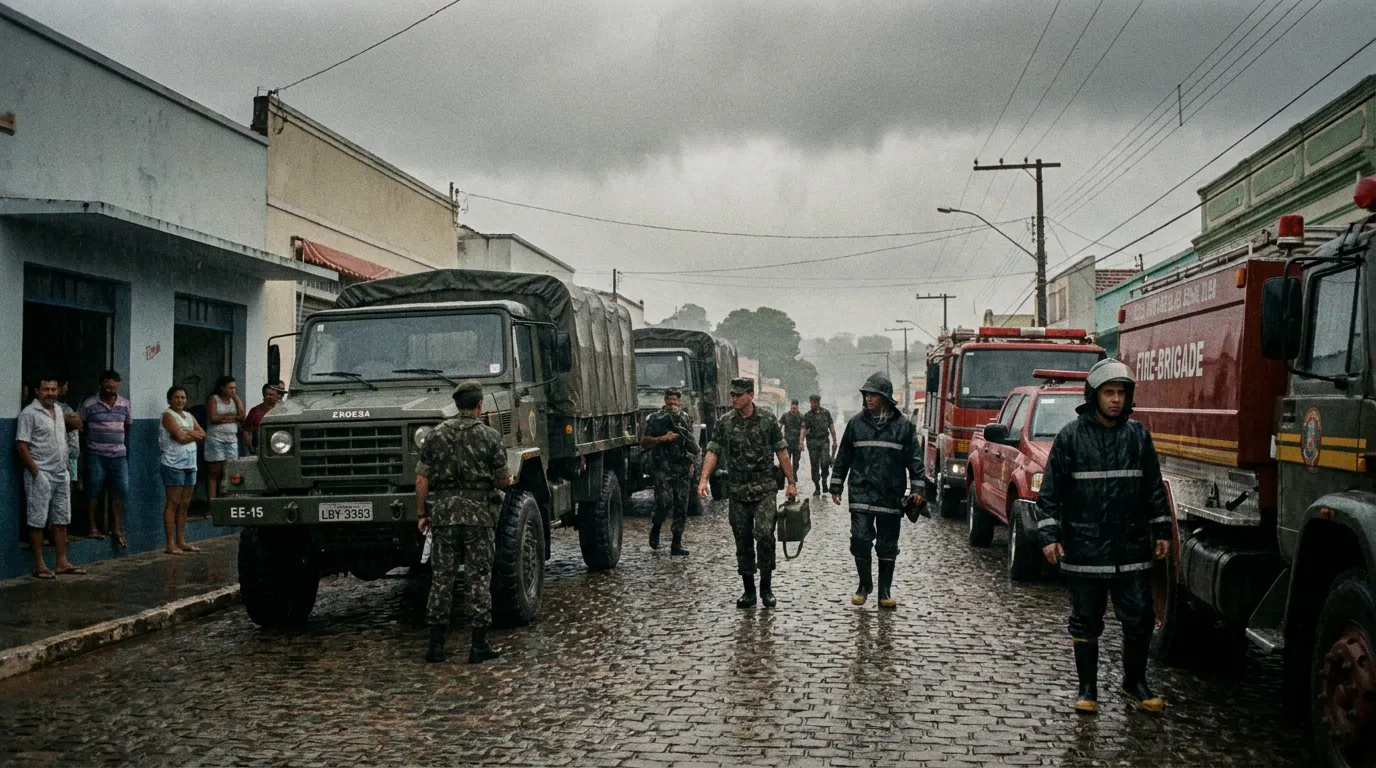
A local farmer said he had seen a large, silent object low over his land in the early hours of the same day, trailing smoke. Residents reported an unusual density of army and fire-brigade vehicles moving around the town on the 20th and in the days after. And there were persistent accounts — never from a named official, always at one or two removes — of an earlier capture that morning in scrub near the same neighbourhood, and of a second creature taken later.
None of those threads has a document behind it, and it is important to see how the composite forms. A sighting, a convoy and a rumour occurring in the same town in the same week do not corroborate one another; they are three separate claims that happen to share a postcode. Ufology has a bad habit of adding them together and calling the total evidence.
The rumour of a capture
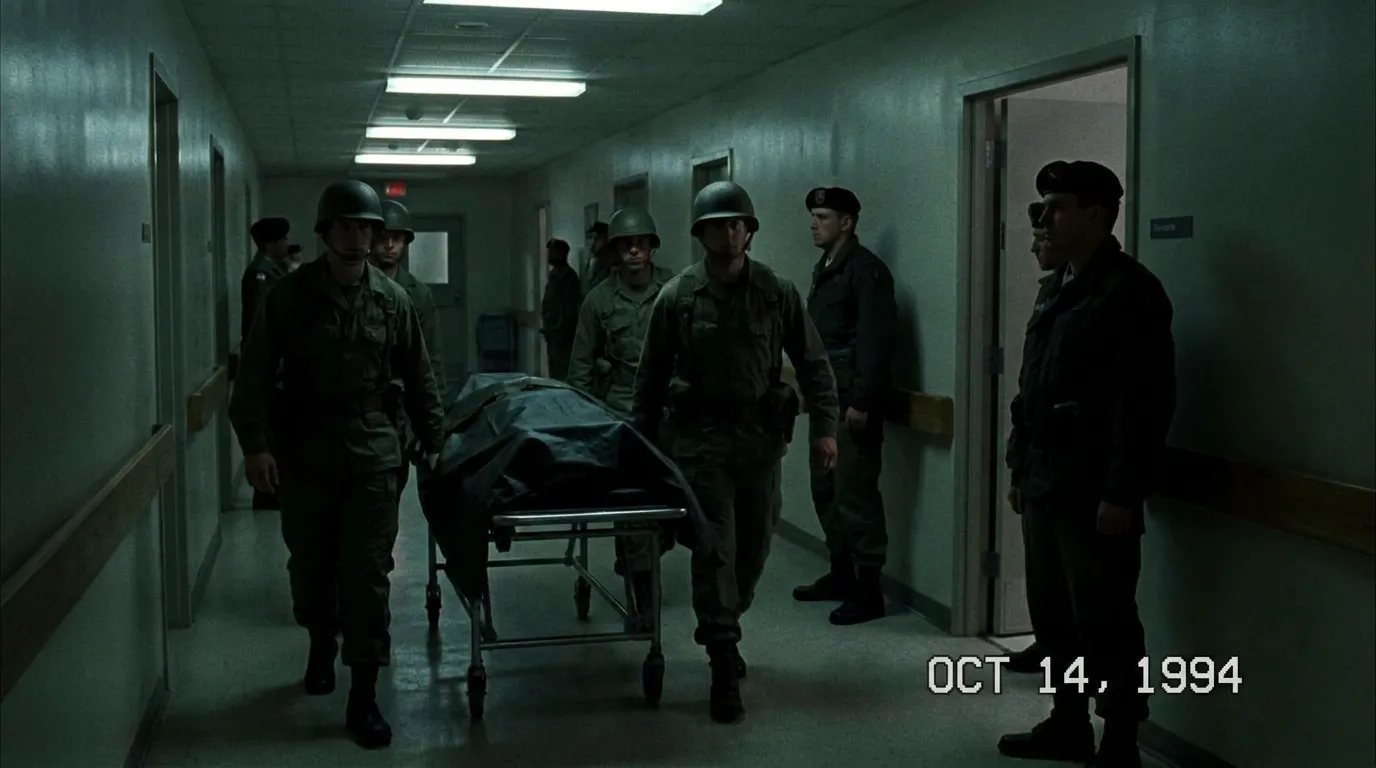
Around the same window, the town filled with further reports and, crucially, with rumour: that the local fire brigade and the military had been mobilised, that one or more such creatures had been captured alive or dead, and that the bodies had been spirited away to a hospital and then to a university or military facility for secret study.
The story gained a tragic anchor when it was later claimed that a young military police officer who had handled the creature, Marco Eli Chereze, fell ill and died some weeks afterward — a detail that, for many Brazilians, transformed the tale from a curiosity into something darker and more human. His death was real; whether it had anything to do with the alleged creature is entirely unestablished.
What the evidence actually is
And here is the problem, stated plainly. Strip Varginha down and what remains is testimony — a great deal of it, sincerely given, but testimony nonetheless. There is no creature, living or preserved. There is no photograph of the being. There is no documented, verifiable chain of military custody. The capture is rumour layered on rumour, and the official response was flat denial.
Sceptics have offered mundane candidates: that the “creature” was a sick or injured local man, disoriented and unclothed; or an escaped, mangy animal; or simply a fear that snowballed through a town primed by a hot summer, a slow news week, and a rich Brazilian folklore of the strange. None of these is proven either — but they don’t need to be, because the burden runs the other way, and Varginha never meets it.
The death of Marco Eli Chereze
The Chereze thread deserves its own space, because it is the emotional core of the case and because it is where the temptation to overreach is strongest.
Chereze was 23 and served in the Minas Gerais military police. He died on 15 February 1996, less than a month after the events, of an infection that overwhelmed him rapidly. The official account is that he had undergone surgery for a cyst under his arm — a procedure his family were told had been planned before 20 January — and that a hospital-acquired infection killed him.
The version that circulates in the case literature is different: that he had physically handled the creature, that a greasy residue clung to his skin and would not wash off, that he complained of a smell like ammonia, and that the illness followed. Those details come from family and from researchers who spoke to them, not from any medical record in the public domain.
A young man died of sepsis in a Brazilian hospital in February 1996. That is a fact, and it is a sad one. Everything connecting it to a creature is testimony gathered after the fact by people who already believed a creature existed, and no independent pathology has ever been produced. Sepsis after minor surgery was not rare in 1996; a fatal outcome in a healthy 23-year-old was uncommon but not extraordinary.
Treating that death as evidence — as a great deal of the coverage does — requires you to assume the very thing under dispute.
The people who built the case
Varginha did not become a national story by itself; it was assembled, and the assemblers matter.
The central figure is Ubirajara Franco Rodrigues, a Varginha lawyer who began interviewing witnesses within a day of the encounter and has stayed with the case for three decades. He has said he holds a substantial body of recorded video testimony — by his own count around fifteen accounts, from both military and civilian witnesses — kept anonymous, he says, for the witnesses’ protection.
That is the case’s greatest asset and its central weakness in one sentence. Rodrigues is a lawyer, he was there early, and he took statements properly. But testimony that cannot be examined is not evidence anyone else can weigh; it is a claim about evidence. Thirty years is a long time to hold a sealed file.
Around him grew the wider apparatus: A. J. Gevaerd, editor of Revista UFO and the most prominent ufologist in Brazil, who has championed the case internationally; the late Roger Leir, the American podiatrist better known for his “alien implant” surgeries, whose involvement lent the case an association most serious researchers would rather it did not have; and, in 2022, the filmmaker James Fox, whose documentary Moment of Contact put Varginha in front of a large English-speaking audience for the first time and brought fresh witness interviews with it.
Fresh interviews are not fresh evidence. Twenty-six years on, memory has had time to conform to a story the whole country knows by heart — and that is not an accusation of dishonesty, it is how memory works.
The sceptical case, at its strongest
The prosaic explanation is more specific than sceptics usually get, because in this instance the authorities named a person.
The official finding was that the young women most likely encountered Luiz Antônio de Paula, known locally as “Mudinho” — a man with disabilities, familiar in the neighbourhood, often seen crouched against walls. On a wet afternoon, in dirty clothes, seen for a few seconds at a distance by three frightened people who then ran, he is a candidate that costs nothing extra to believe.
Researchers reject the identification, and their objection has some force: local people knew Mudinho by sight and say the description does not match. But test the two accounts against the same standard. One requires a misidentified man in the rain. The other requires a crashed craft, two live non-human beings, a military recovery, a hospital transfer, a university dissection and a thirty-year silence held by hundreds of people in a country with a vigorous free press.
The other rumours got mundane answers too. The military and fire-brigade movements were attributed to routine tasks and civil-defence work; a cluster of animal deaths at the local zoo, folded into the legend as evidence of contamination, was put down to toxins or recorded as undetermined. Those answers are unglamorous and largely unverifiable in their own right. They are also the sort of answers reality usually gives.
The official record, and what 2022 actually released
Brazil has produced more paperwork on Varginha than the popular version suggests — it simply isn’t the paperwork people hoped for.
The Army opened an internal investigation in May 1996, run out of its sergeants’ school at Três Corações, the nearest large garrison. A formal Military Police Inquiry followed in January 1997. Between them they produced a substantial file, and their conclusion was unambiguous: no evidence of Army involvement or of any military operation connected to the alleged creature, and the extraterrestrial explanation rated as unlikely.
You are entitled to distrust an institution investigating itself. You are not entitled to treat that distrust as evidence for the opposite conclusion.
The other pillar of the disclosure case is the document release. From 2022, the Brazilian Air Force transferred decades of UFO material to the National Archives, and Senator Eduardo Girão pushed the subject into a Senate hearing the same year. Campaigners have kept up the pressure since, and the thirtieth anniversary in January 2026 brought another round of demands and another press conference.
What the released files show is a state that logged sightings diligently for forty years. What they do not show is a recovered body, a captured entity, or a Varginha operation. Material from the 1990s has lagged behind the earlier decades, which leaves room for hope; it is not, on its own, a reason for it.
The UAP Times take
Varginha earns a Thin rating, two out of five on our scale, and it is important to say why so directly, because its fame invites a higher grade than the evidence can support. This is not a sensor case, a radar case, or a multiple-professional-witness case. It is a beloved, deeply felt, culturally enormous story built almost entirely on eyewitness accounts and rumours of a cover-up, with no recoverable physical evidence and an official record of denial.
Our reading is that the young women who first raised the alarm very probably saw something that genuinely frightened them — their distress reads as real. But the vast edifice built on top of that moment, the captured aliens and the secret autopsies and the dead soldier, is exactly the kind of structure that folklore builds beautifully and evidence never supports.
Thirty years, two official inquiries, a national archive opened, and still the best physical evidence in the case is an empty vacant lot.
Varginha belongs on the map as what it is: a monument to how a community can will a legend into being. It deserves affection and study as a social phenomenon. As proof of a visiting creature, it deserves the sceptical eye we give it here.
Further reading: for the American case Varginha is named after, see Roswell 1947. For a stronger creature-and-craft encounter built on many witnesses, see The Ariel School Encounter. For another retrieval legend where the official record and the rumour never meet, see Kecksburg 1965. For the Brazilian case where the air force’s own field notes survive and undercut the legend, see Colares 1977 and Operação Prato. Varginha is on the sightings map.
Source: Witness testimony collected by Brazilian researchers; local press; military denials
Follow the file
Every new dispatch from the UAP desk, in your inbox. Sourced, sceptical, and no more than one email a week.