Most famous UFO cases are famous because of what witnesses said. Colares is famous for something rarer: a national air force believed the reports were worth four months of fieldwork, sent officers to sit on a riverbank in the Amazon with cameras every night, wrote it all down — and, thirty years later, put the paperwork in a state archive where anyone can read it. That does not make the lights over the Marajó Bay extraterrestrial. It does make Colares one of the very few cases where you can argue about a government’s own field notes rather than about a rumour of them.
An island at the mouth of the Amazon
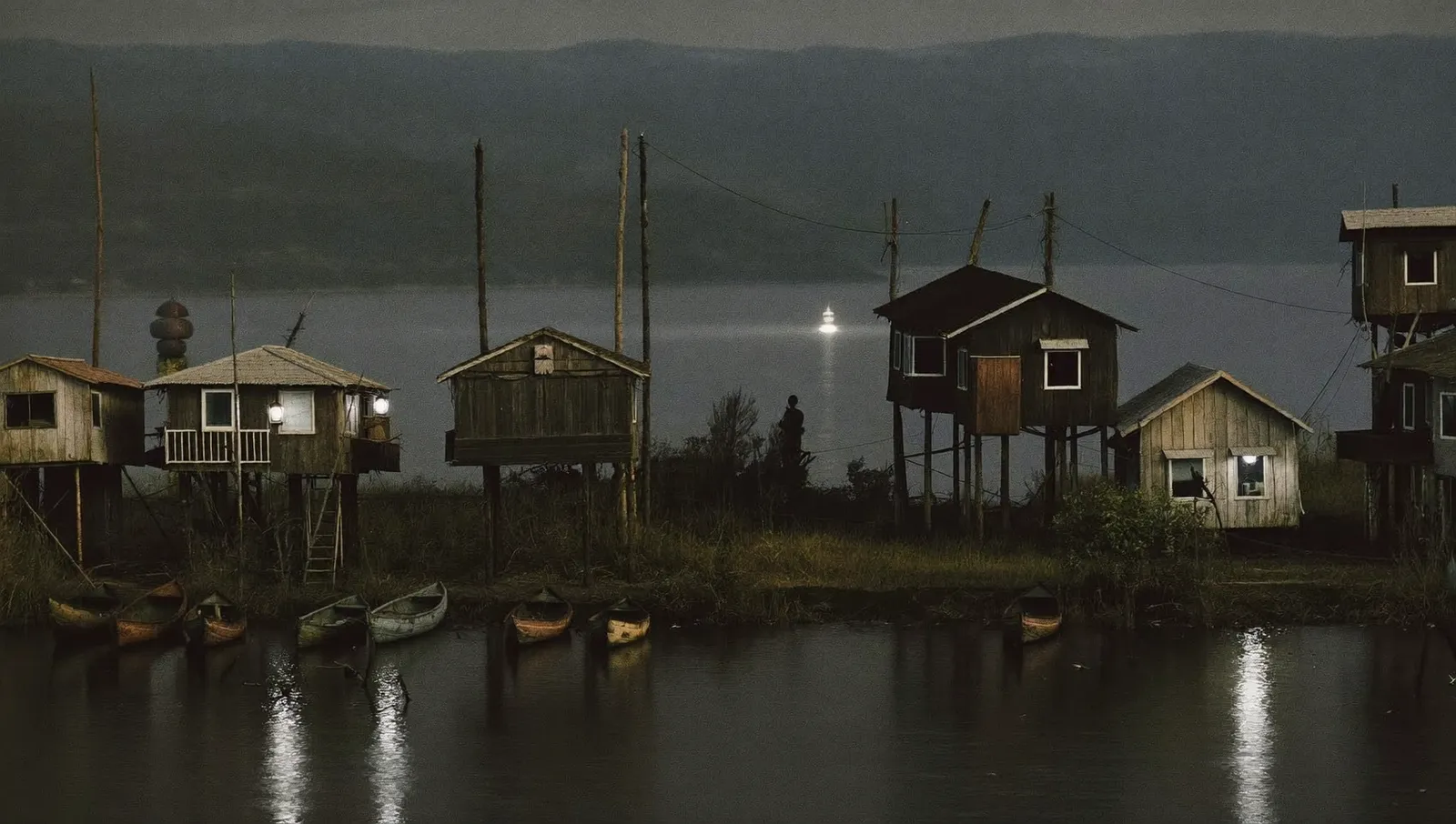
Colares is a small municipality on the Ilha de Colares, in the state of Pará in northern Brazil, roughly 60 kilometres north of Belém as the crow flies and a good deal further by road and ferry. It sits on Marajó Bay, where the Amazon system empties into the Atlantic — a landscape of brown water, mangrove, stilt houses and boats. Even now the population is only around 12,000. In 1977 it was a fishing community with limited electricity, reached mainly by river.
That geography matters twice over. It is the reason the story took the shape it did — people out on the water at night, houses of thin timber and palm, no streetlights to wash out the sky — and it is the reason the sceptical reading has teeth, as we will get to.
The chupa-chupa
From roughly the middle of 1977, and intensively from late August through December, residents of Colares and the surrounding riverside villages began reporting small luminous objects flying low — a few metres above the ground or the water — and, crucially, doing something to people.
The reports were consistent in an unsettling way. A narrow beam of light would fix on someone, often at close range and often at night, often while they were in bed or on the water. Witnesses described heat, a sensation of pressure or of something being drawn out of them, weakness, dizziness and temporary paralysis. Afterwards there were burns and small puncture-like marks.
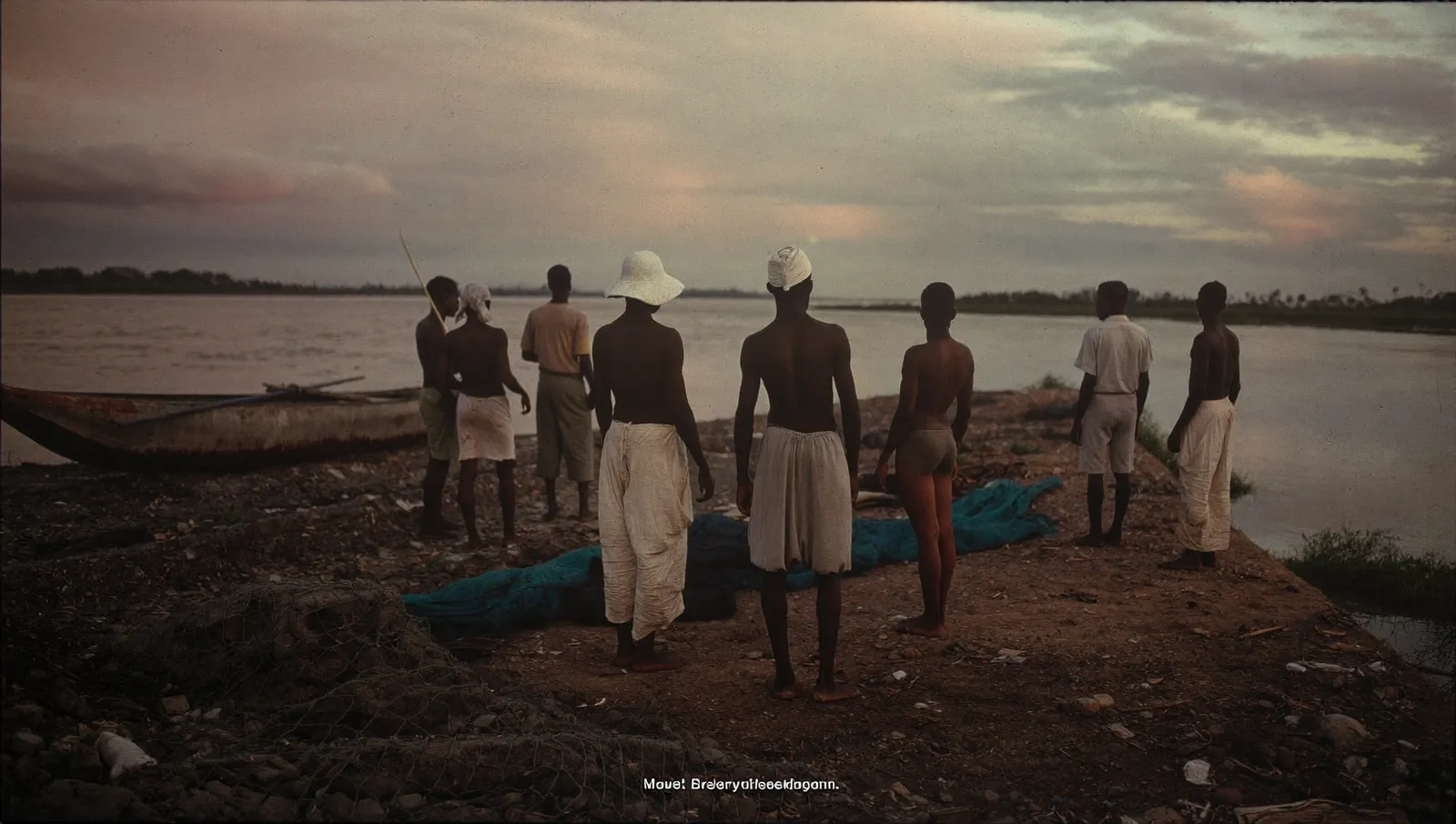
Locals named the things chupa-chupa — literally “suck-suck” — because of the near-universal belief that the lights were drawing blood. The name stuck, and it has done the case no favours in the decades since: “vampire UFOs” is a headline, not a hypothesis.
Reports eventually came in from Colares and around thirty other communities north of Belém. Estimates of how many people claimed to have been touched by the lights run into the hundreds, though nobody ever produced a properly compiled, independently checkable count.
The Air Force goes to Colares
In September 1977 the Brazilian Air Force — the Força Aérea Brasileira — quietly stood up an operation to investigate. Its codename was Operação Prato, “Operation Dish” or, as it is usually rendered in English, Operation Saucer. It was run out of the FAB’s base at Belém and led by Captain Uyrangê Bolívar Soares Nogueira de Hollanda Lima.
This was not a desk exercise. From roughly October 1977 to January 1978, intelligence personnel deployed into the region, interviewed hundreds of witnesses across Colares and the neighbouring villages, kept nightly observation watches, and photographed and filmed whatever they could see.
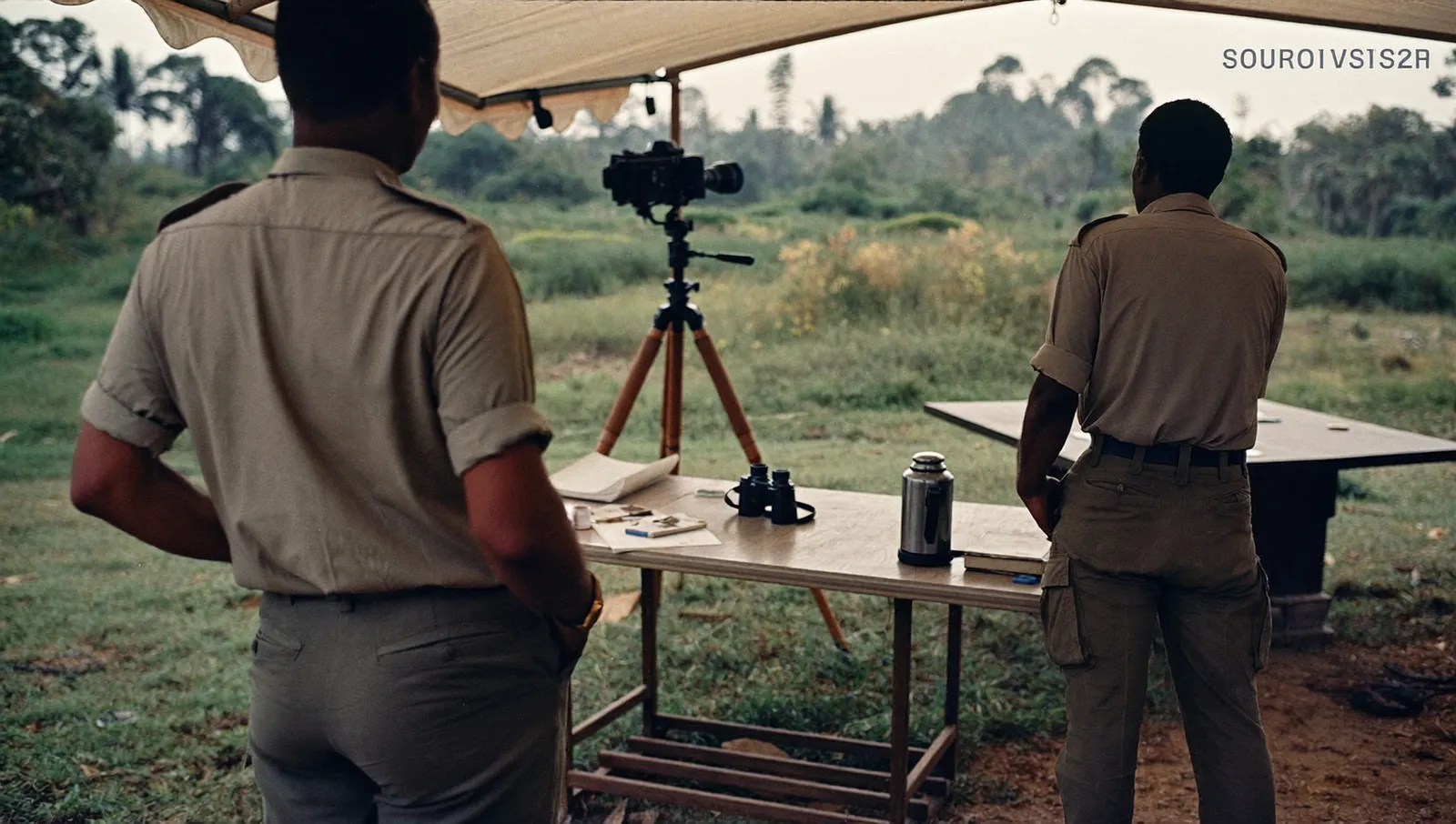
It is worth pausing on the context. Brazil in 1977 was under military rule, in a period of censorship and internal-security paranoia. An air force that mobilised for four months over lights in the sky was not doing it to indulge folklore; something about the volume of reports, or their effect on the population, was judged to warrant a look.
Then, in early 1978, it stopped. The operation wound up, the material was classified, and nothing was said publicly. The report as presented at the time recorded no evidence of extraterrestrial activity — a conclusion that, as we will see, its own commander would later contradict.
The doctor at the health post
The medical thread runs through one person: Dr Wellaide Cecim Carvalho, the physician then in charge of the health unit at Colares. She is the clinician closest to the story — the one who saw the largest number of claimed victims while the flap was running — and almost everything anyone believes about the physical side of Colares traces back to her. She was not the only doctor involved: Dr Orlando Zoghbi examined three claimed victims in Belém that November at the request of the newspaper A Província do Pará, and Operação Prato’s own file contains a medical report. But Carvalho is the one with the volume and the record.
By November 1977 she had reportedly seen around 35 patients who said the lights had touched them; other accounts of her testimony put the eventual number at forty or more. In an account widely translated and republished by researchers, she described what she found:
All of them had suffered lesions to the face or the thoracic area. The lesions, looking like radiation injuries, began with intense reddening of the skin in the affected area.
Two men are reported to have died during the flap. Carvalho has also said, in later interviews, that the Air Force pressed her to tell her patients they were victims of a collective hallucination — a claim worth noting precisely because it tells you what the official position was.
Here is where care is required. The blood-loss element — the part that gave the phenomenon its name — is not clean in the record. Some accounts of Carvalho’s testimony describe low haemoglobin consistent with blood loss; others state flatly that no cases of anaemia were found. Those cannot both be right, and we have not seen the underlying notes. No laboratory reports or tissue samples from Colares have ever been published for independent examination. There is a medical report among the released Operação Prato papers, but nothing that lets an outsider check a diagnosis against a result. Everything we have about the injuries is testimony about testimony.
What the released files actually contain
The material began coming out because of a campaign, not a leak. In 2004 the Brazilian ufologist Ademar José Gevaerd, editor of Revista UFO, launched a freedom-of-information push aimed at the FAB. In 2005 Gevaerd and six other researchers were permitted to examine Air Force UFO files, including Operação Prato material.
The transfer to public custody followed. Brazil’s Arquivo Nacional received its first tranche from the Air Force documentation centre in October 2008, covering 1952 to 1969; further batches arrived in April 2009, and those included the first Operação Prato documents. Since a 2010 Air Force ordinance made the practice standing policy, the FAB has periodically released more through the same route. The archive’s UFO fund — the Fundo Objeto Voador Não Identificado — now holds several hundred digitised items: operational reports, witness statements, completed forms, maps, sketches, press cuttings, photographs and audio recordings.
Some of it is genuinely interesting to work with. The reports include hand-drawn sketches with trigonometric working — attempts to derive distance and speed from observed bearings — and logged flight paths as the observers described them.
And then there are the photographs, which are the problem. What survives is overwhelmingly small, featureless points and blobs of light against a night horizon over the bay. They establish that the observers were photographing something luminous. They do not establish shape, size, distance or structure, and no amount of enlargement will make them do so.
Hollanda’s last interview
In 1997, two decades on and by then retired, Hollanda gave his first public account of the operation to Gevaerd and fellow researcher Marco Antônio Petit. It is the single most quoted source on Colares, and the single most difficult to weigh.
He told them the operation had produced more than 500 photographs, over sixteen hours of Super-8 and Super-16 film and some 2,000 pages of reports. He also described personal close encounters, including humanoid occupants seen through binoculars — small figures, he said, in something like diving suits. Accounts of the interview differ on the objects’ size, which is itself telling.
That last part is where the interview stops being a document and starts being a claim. It contradicts the operation’s own contemporaneous conclusion, which recorded nothing extraterrestrial. It is not corroborated by the released paperwork — of the documents that have surfaced, only a handful mention burns or injuries at all, let alone occupants. And it arrived twenty years later, with the other participants dead.
On 2 October 1997, weeks after the interview, Hollanda was found hanged at his home. His death was ruled a suicide. The timing has been made to carry an enormous amount of insinuation over the years, and it is worth recording that the researcher who conducted the interview declined to carry it: Gevaerd told BBC Brasil that he did not believe in witness elimination or conspiracy in this instance, and noted that Hollanda had attempted suicide before. When the ufologist with the most to gain from a sinister reading rejects it, that is about as close to settled as this kind of thing gets.
The sceptical case, at full strength
Start with the strongest point, which is not a debunker’s: the Brazilian Air Force ran the investigation, had every operational advantage, and concluded at the time that it had found no evidence of extraterrestrial activity. The official explanation offered in the region was mass hysteria — social contagion in a dispersed, isolated riverine population with limited electricity, limited news media and a rich local tradition of the strange. Once “the chupa-chupa is coming” is in the air, every distant light and every unexplained mark on the skin gets recruited to the story. Carvalho’s complaint that she was leaned on to sell that line does not make the line wrong.
Second, the environment. Pará lies in one of the most lightning-intense regions on Earth; the Amazon basin’s storm activity is extraordinary, and atmospheric electricity is a real, powerful, poorly-appreciated hazard. Lightning and near-strike injuries produce burns, punctate marks, temporary paralysis and disorientation — the exact symptom cluster reported. Ball lightning, whatever its physics, is reported worldwide as a low-flying luminous ball that behaves oddly and occasionally hurts people. Neither is a clean fit — Belém’s storm season peaks later in the year than the flap did, and neither explains every account. Both are the sort of thing that seeds a legend.
Third, the mundane sky. Belém is a regional air hub; aircraft on approach, navigation lights, satellites and Venus low over the water account for a great deal of what gets reported as a low, slow, following light — and a light seen over water at night, with no horizon reference, is close to impossible to range by eye.
Fourth, the dictatorship. Brazil in 1977 was flying military traffic it did not advertise. Covert aviation, flares, or a search or survey operation over the estuary would be neither surprising nor announced.
Fifth, and decisive: there is no physical evidence anyone outside the story can examine. No preserved sample, no published lab result, no radar trace with a chain of custody, no photograph resolving anything but a light. The sceptical forum Metabunk, founded by Mick West, has picked over the case at length and keeps landing on the same wall — the images cannot bear the weight the narrative puts on them.
Why Colares still matters
Take all of that seriously, and something is still left over, and it is not the lights.
It is the file. Blue Book is the usual reference point for a state investigating UFOs, and France’s GEPAN is the usual reference point for one doing it with scientific method. Operação Prato belongs in that small company: a national air force that deployed people into the field for months, generated a documentary record, and whose record is now in a public archive rather than in a rumour. Whatever the officers on that riverbank were photographing, they were doing observational work that most governments have never bothered to do at all, and Brazil eventually let us read it.
The UAP Times take
Colares earns an Unconfirmed rating, three out of five on our scale, and it sits there for a very specific reason: the investigation is real and documented, and the phenomenon is not.
What is solid is the institutional layer. Operação Prato happened. It ran for about four months out of Belém under Captain Hollanda. It produced reports, sketches, photographs and statements, and a meaningful portion of that material is in Brazil’s Arquivo Nacional today because Gevaerd and others spent years asking for it. Anyone can go and look, which is more than can be said for most of the field’s cherished cases.
What is not solid is everything the case is famous for. The injuries reach us entirely second-hand, through one doctor’s recollection, with the crucial blood-loss detail contradicting itself between accounts and no clinical record published. The photographs are lights. Hollanda’s spectacular 1997 testimony conflicts with his own operation’s conclusion and with the surviving documents, and its author is not here to be questioned — a fact that deserves sympathy rather than innuendo. And the prosaic candidates on offer, from an electrically violent sky to a frightened population talking to each other, are unusually strong here.
Our reading is that something real was going on over Marajó Bay in 1977 — enough of it, and troubling enough, to move an air force under a military government to act. What that something was remains genuinely open, and the honest answer is that the surviving evidence is not good enough to close it in either direction. Colares is a case about how a state investigates, and on that narrow question it is one of the most valuable files in the field.
Further reading: for Brazil’s other great unresolved case, see The Varginha Case and, for the photographs the Brazilian Navy stood behind, Trindade 1958. For a state investigation that did recover physical evidence, see Trans-en-Provence; for the best-known claim of injury by a UAP, see Cash-Landrum. The Colares objects were reported as spheres / orbs; the case is on the sightings map.
Source: Brazilian Air Force Operação Prato material held in the Fundo OVNI at Brazil's Arquivo Nacional; Revista UFO's 1997 interview with Uyrangê Hollanda; Brazilian press reporting
Follow the file
Every new dispatch from the UAP desk, in your inbox. Sourced, sceptical, and no more than one email a week.