
The administrator of NASA was asked about UFOs, and he gave the answer a scientist is supposed to give. Stay open-minded. Don’t rule things out before the evidence is in. And if it does turn out to be aliens, NASA ought to be in the room.
It is a perfectly good answer. The awkward part is that NASA already arranged to be in the room three years ago, appointed somebody to sit in the chair, and has produced almost nothing from it since — and the man who held the post left the agency over a year ago without a publicly named successor.
What Isaacman actually said
Jared Isaacman — the payments-industry billionaire and private astronaut who became NASA’s fifteenth administrator on 18 December 2025, after a first nomination was pulled and a second one stuck — was interviewed by Blake Burman for NewsNation’s The Hill on 25 September. The UAP section of that interview went round the world at the start of this month.
“My position going into every one of these: one, be open-minded. I mean, it is kind of our job to go out and try to answer the question ‘are we alone?’ And I said look, if it’s aliens, I think NASA should have a seat at the table in this for sure.”
Read the whole passage, though, and the headline undersells how sober he was. Isaacman did not say alien craft were the likely explanation. He leaned instead towards unusual natural phenomena, or advanced technology built here on Earth — and he reached for a specific and rather uncomfortable analogy: that the rise in UAP reports could be a Sputnik moment, with somebody out there testing stealthy or next-generation hardware in full view of sensors that cannot quite resolve it.
That is not a flying-saucer position. It is a national-security position, and on the record it is the most interesting thing a NASA administrator has said about this subject in years.
He has been consistent about it, too. In May, when the first PURSUE tranches landed, Isaacman’s line on them was that the files contained genuine unexplained sensor imagery and no alien bodies or craft whatsoever. “We don’t know what it is” is a sentence the field hears as a tease. From the head of a science agency, it is closer to a confession about instrumentation.
The seat NASA already has
Here is the bit the coverage keeps leaving out.
On 14 September 2023, NASA published the final report of its Unidentified Anomalous Phenomena Independent Study Team — sixteen outside experts chaired by the astrophysicist David Spergel, working deliberately with unclassified data only, so that the result could be checked by anyone. The panel found no evidence that any UAP sighting was extraterrestrial, and identified the real problem as data: poorly calibrated, uncurated, collected by sensors built for something else entirely.
Its recommendations were concrete. Point NASA’s existing and planned Earth-observing assets at the local conditions around events detected by other means. Lean on the commercial remote-sensing industry and its high-resolution satellite constellations. Apply machine learning to the resulting archives. Build a smartphone app so that public sightings arrive in a structured form instead of as a story.
And on the same day, acting on the panel’s advice, NASA created a Director of UAP Research. The agency initially refused to name the appointee, citing the harassment the study team members had received, then reversed itself within days and identified him: Mark McInerney, previously NASA’s liaison to the Pentagon’s All-domain Anomaly Resolution Office.
That is the seat. NASA did not need to ask for one. It built one, named someone to it, and told the world it had a scientific vision for UAP research to implement.
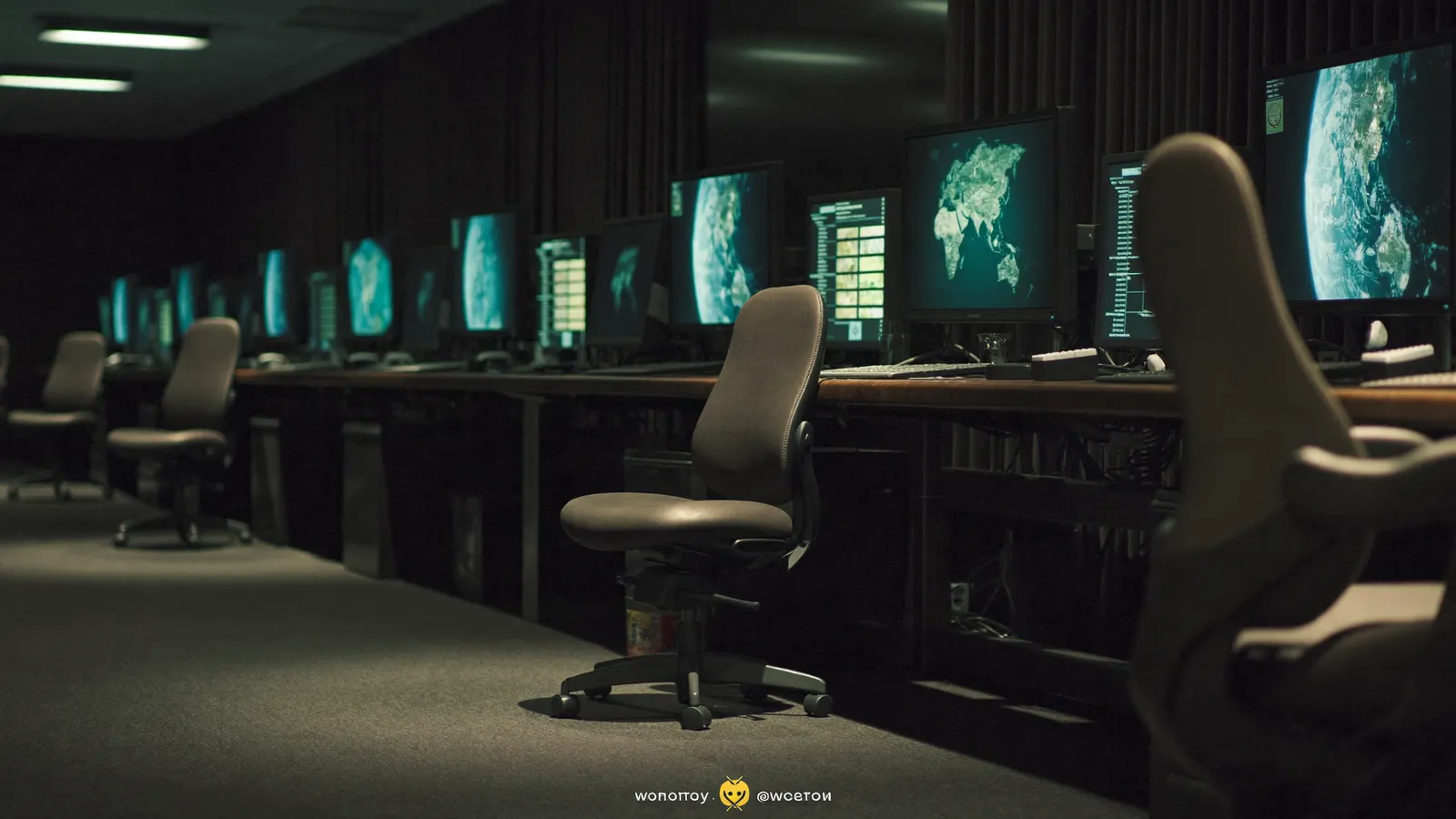
The chair appears to be empty
McInerney retired from NASA in July 2025, taking the agency’s second deferred-resignation offer during that year’s workforce reductions.
We can find no public announcement of a successor since. NASA has not said the post has been abolished, and we are not asserting it has — this is a gap in the public record rather than a confirmed vacancy, and we would happily correct it if the agency says otherwise. But a role created with a livestreamed briefing and a press release is not usually refilled in silence, and the agency’s own statements have gone quiet in step. The last substantive public line we can find is from June 2024, when a NASA spokesperson said the agency “continues to review the unidentified anomalous phenomena (UAP) independent study team’s report recommendations and determine next steps.”
That was over two years ago. The Debrief noted the same silence as the report’s anniversary came round. Of the panel’s specific recommendations — the Earth-observing assets, the commercial satellite partnerships, the machine-learning pass, the reporting app — none has produced a public NASA data product that we can point you at.
So when the administrator says NASA should have a seat at the table, the honest follow-up question is not whether it deserves one. It is what happened to the one it already had.
What a seat at the table is actually for
It is worth being precise about what NASA could contribute that nobody else can, because “NASA should be involved” is the kind of sentiment everyone agrees with and nobody costs.
NASA is not an intelligence agency and should not try to be one. What it owns is calibration. It flies instruments whose response is characterised to a fraction of a percent, archives the raw frames, publishes the pipelines, and lets strangers re-reduce the data and contradict the result. That culture is the single thing this subject has always lacked.
Compare what the field gets instead. The Pentagon’s disclosure programme has published photographs and video while withholding the frame numbers and telemetry that would let anyone resolve them — including, in one tranche, NASA’s own thirty-year-old shuttle imagery. The FAA now has a UAP reporting rule whose same order deletes the corroborating radar after 45 days. The White House’s own UAP Science Advisory Council has fifteen scientists, no budget and no clearances, and is restricted to material the government has already chosen to release. The most serious instrumentation work going on anywhere is privately funded, by a Harvard professor writing essays about an observatory he has not yet raised the money to build.
Every one of those is the same failure in a different uniform: plenty of institutional interest in UAP, almost no new, well-characterised data. A NASA that took the Spergel recommendations seriously would be the cheapest available fix. It would also be the least glamorous — most of what it produced would be null results, which is precisely why it keeps not happening.
The ‘Sputnik moment’ needs the same data the aliens do
Isaacman’s stealth-technology hypothesis deserves the test he would apply to anyone else’s.
Mick West, the field’s most persistent sceptic, has made the point sharply about the European and New Jersey drone flaps: the alarm rested overwhelmingly on eyewitnesses, the video rarely showed anything unambiguous, and where radar was invoked the data were never released. The same logic cuts through the Sputnik framing. “Someone is testing next-generation hardware over our bases” is a strong claim about a capable adversary, and on the public record it rests on much the same material as the exotic claims do: trained observers, imperfect sensors, and an absence of released measurements.
AARO’s own numbers make the point without drama. Its FY2025 consolidated report, published in July, logged 319 new UAP reports and resolved 114 of them as balloons, drones, satellites and similar prosaic objects. Acting director Tim Phillips’s summary was that the office has “found no verifiable evidence that any UAP sighting has represented extraterrestrial activity”.
That is what the resolved pile looks like when someone does the work. The unresolved pile is mostly unresolved because the data were never good enough to settle it either way — and a large and growing share of what crews are reporting turns out, when checked, to be something with a launch manifest.
Why this matters more than another hearing
Congressional UAP hearings produce testimony. Testimony has been the field’s primary output for eighty years, and it has resolved nothing.
An agency with calibrated instruments and an open archive produces something testimony cannot: a measurement someone else can check, and a result that can be wrong. Isaacman, to his credit, sounds like a man who understands the difference — he talked about open-mindedness and about evidence in the same breath, which is the right pairing and a rarer one than it should be.
The test is now procedural rather than philosophical. Does NASA name a Director of UAP Research again, or say plainly that it has dropped the post? Does a single Spergel recommendation turn into a funded line of work? Is there an archive, a pipeline, a paper — anything a stranger could download and argue with?
Until one of those appears, “NASA should have a seat at the table” describes an intention, not a programme.
The UAP Times take
This one earns a Credible rating, four out of five on our scale. Everything load-bearing here is on the record: a named, accountable official speaking in a broadcast interview, a published NASA report, a press release creating the post and a documented retirement. It is four rather than five because the hinge is a single interview that we have read in reputable second-hand accounts rather than watched in full, and because the status of the Director of UAP Research post is an absence of announcements rather than a confirmed vacancy. We have flagged that gap rather than filled it with a conclusion.
What we would say is that the administrator’s instincts are sound and his agency’s follow-through is not visible. The Sputnik-moment framing is the most useful thing in the interview, because it is the hypothesis most amenable to being tested and the one that carries real consequences if true. Testing it requires exactly the boring apparatus NASA already specified for itself in 2023: characterised sensors, curated archives, published methods, and the institutional nerve to announce that the anomaly was a balloon.
A seat at the table is not a camera position. It is a chair someone has to sit in, do unglamorous work from, and publish out of. NASA made one. The interesting question is not whether it gets another.
Further reading: for the panel doing this work without clearances or a budget, see the White House UAP Science Council; for the instrument a private project wants to build in the gap NASA left, the orb imager; and for what happens when NASA imagery is published with the metadata removed, three frames from Columbia.
Follow the file
Every new dispatch from the UAP desk, in your inbox. Sourced, sceptical, and no more than one email a week.