
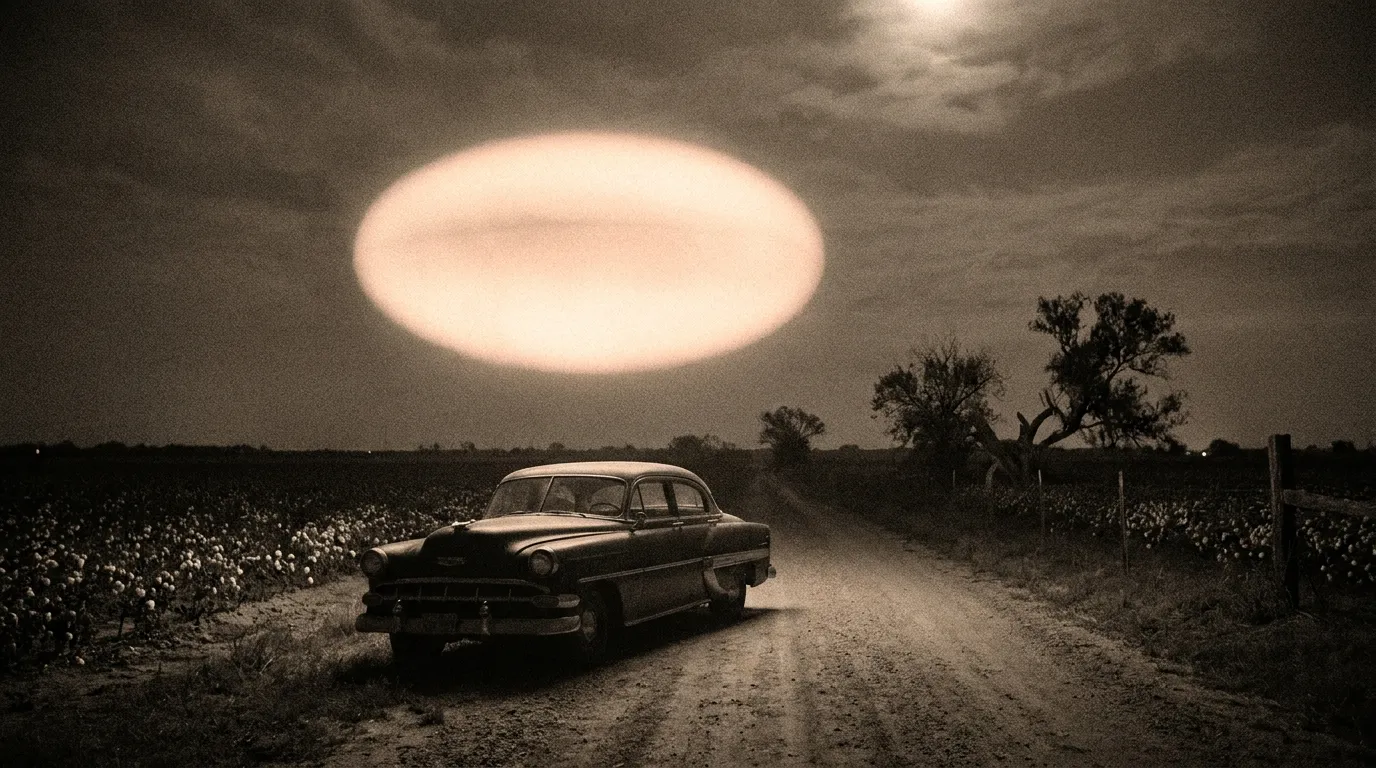
The Levelland case has a feature that most sightings lack and that is very hard to fake by accident: a physical effect, reported independently, by people who had not spoken to each other, over the same few hours. On the night of 2–3 November 1957, driver after driver in the flat farm country around Levelland, Texas, called the police to report the same bizarre experience — a glowing object, and a car that died as it approached. It is one of the strongest electromagnetic-interference cases in the record, and it turns on repetition, not spectacle.
The calls start coming in
It began late in the evening when a farmhand reported that a large, glowing, egg-shaped object had risen from a field, and that as it did so his truck’s engine and lights had cut out. The sheriff’s office logged it and, reasonably, thought little of it. Then another call came. Then another.
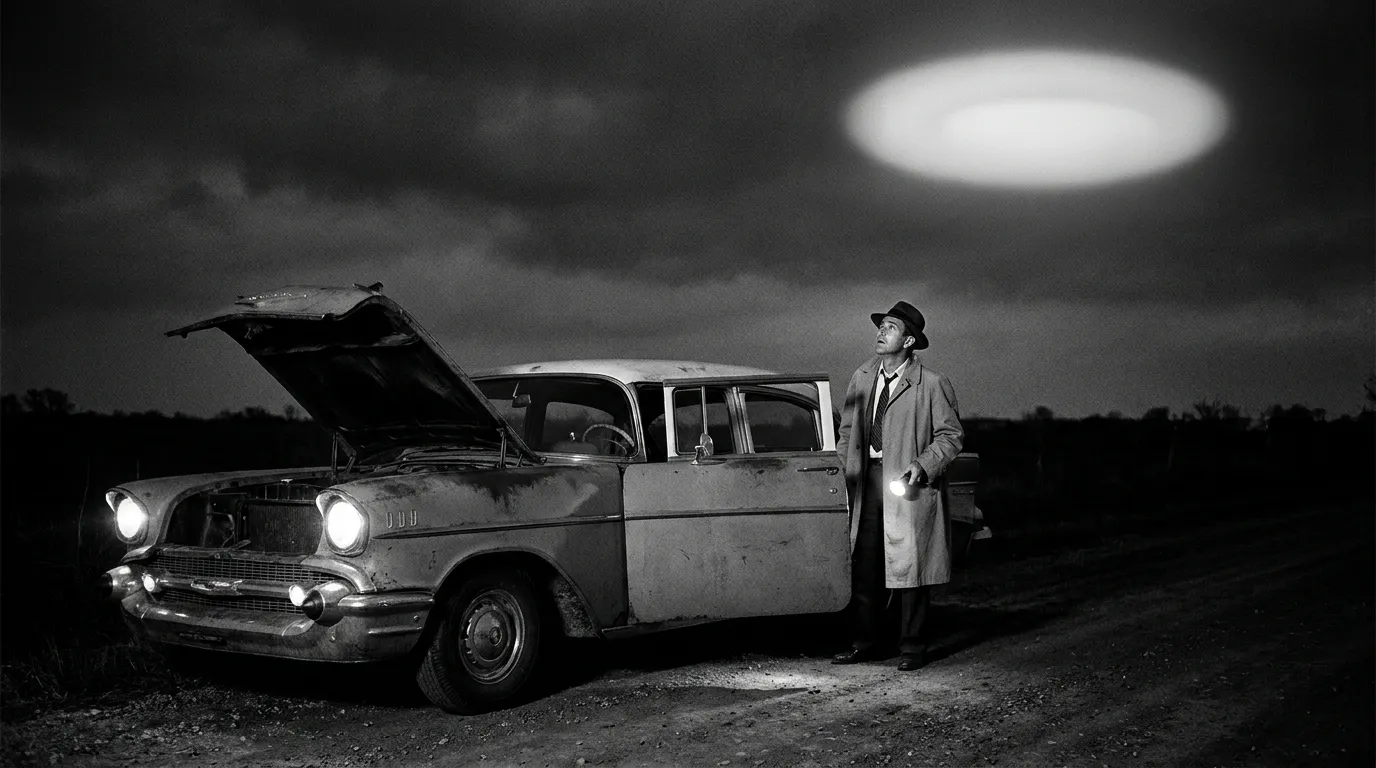
Over the next few hours, roughly a dozen separate motorists, at different points on the roads around Levelland, phoned in near-identical accounts. Each described a brilliant oval or egg-shaped object, low over or on the road; each described their vehicle’s engine cutting out and headlights dimming or dying as the object drew near; and each said that once the object left, the car started again normally.
The night, hour by hour
The sequence is worth laying out, because the case is the sequence. Levelland is a small town in Hockley County, in the cotton country west of Lubbock, and the roads in question run out into flat, dark, sparsely populated farmland.
The first call reached the police station at around eleven o’clock. Pedro Saucedo and Joe Salaz had been driving on Route 116 west of town when, they said, a blue flash appeared beside the road, their truck’s engine and lights failed, and a long torpedo- or rocket-shaped object passed low overhead with heat and a roar. The engine restarted once it had gone. The officer on the night desk, patrolman A. J. Fowler, did not take it especially seriously. There is no reason he should have.
Then the pattern started. Around five past midnight, Jim Wheeler reported a glowing egg-shaped object sitting on the road east of town; his engine and lights died and came back when it lifted away. Ten minutes later Frank Williams, a farmer, described an object whose glow pulsed — and whose pulses, he said, matched the failures of his engine. Newell Wright, a student at Texas Technological College, was driving ten miles east when his ammeter swung to discharge, the motor cut out and the headlights faded; he got out and saw a large luminous ovoid on the road ahead.
Around a quarter to one, Ronald Martin reported a glowing object on Route 116 that changed from blue-green to red as it sat there. James Long called at about a quarter past one. By half past one the sheriff himself, Weir Clem, was out on the roads with a deputy and reported seeing a brilliant red object crossing the sky. A quarter of an hour after that, Levelland’s fire chief, Ray Jones, reported the same combination — an object, and a vehicle that faltered.
Fowler logged something like fifteen UFO-related calls that night. His summary of the callers has survived and is more useful than any of the descriptions: everybody who called, he said, was very excited.
The pattern is the point
The power of Levelland is entirely in that consistency. A single driver with a stalled car and a bright light is nothing — a flat battery and a planet. A dozen drivers, scattered across the roads of one county, who had no way to coordinate, all reporting the same specific combination of a glowing egg and simultaneous electrical failure, is a different order of thing.
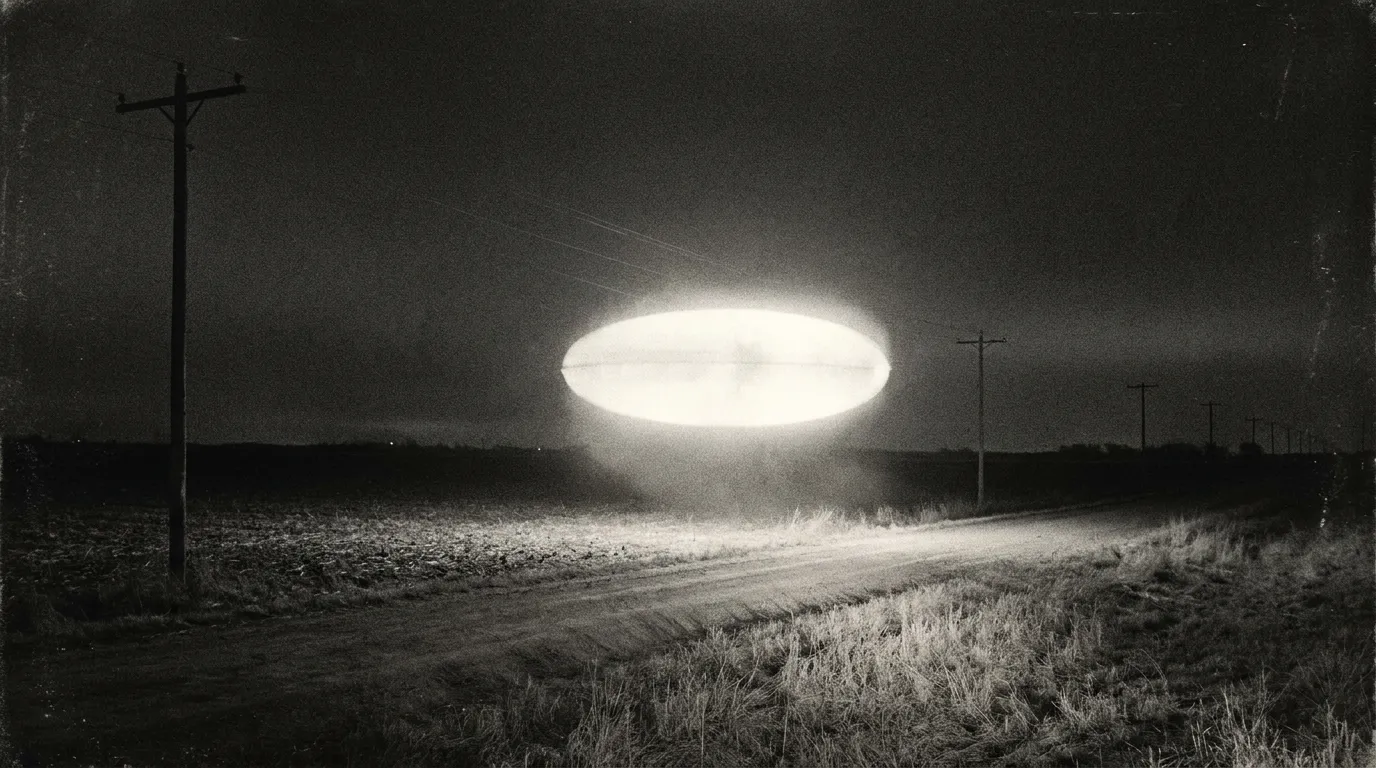
The witnesses were ordinary and, notably, independent — farmhands, a college student, travellers passing through — and several were sufficiently rattled to flag down police. The county sheriff himself and other officers went out that night and, by some accounts, saw a light as well. The reports were close enough in detail that invention or contagion is a strain to argue across so many separate calls in so short a window.
The detail that lifts it above an ordinary flap is the class of witness distribution. These were not people at a public event looking at the same patch of sky; they were individuals alone in vehicles, several miles apart, each experiencing the event privately and each phoning a police station that had not yet told the press anything. Vehicle failure was reported in something like nine or ten of the encounters — not as a spooky aside, but as the thing that made them stop and get out.
Ball lightning and the Air Force
The US Air Force’s Project Blue Book looked at Levelland and reached for a natural explanation: ball lightning or a related electrical phenomenon, possibly tied to weather in the area that night. Ball lightning is a real, if poorly understood, phenomenon — luminous spheres that can appear during electrical storms — and severe electrical activity can, in principle, disrupt a car’s ignition.
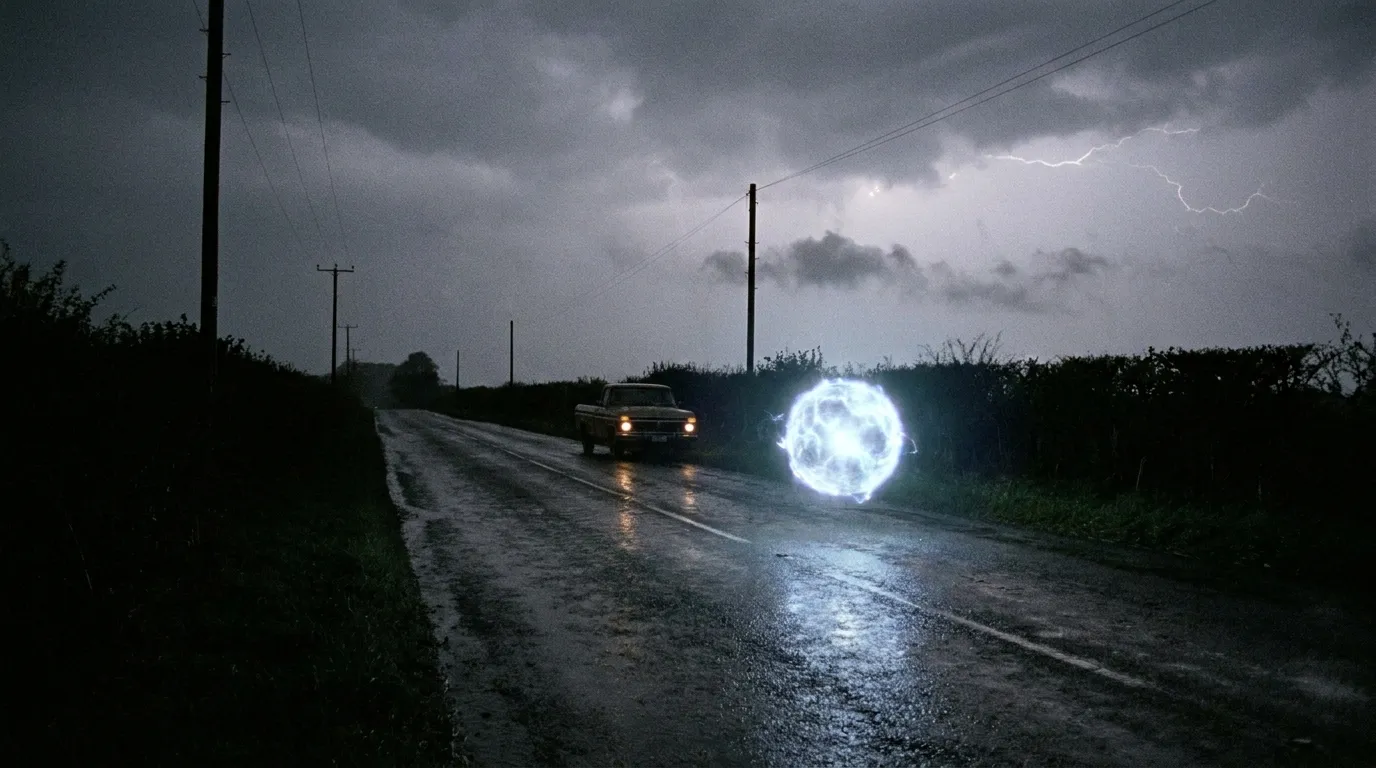
The explanation has an obvious appeal and an obvious problem. Ball lightning is small, brief, rare, and typically associated with active thunderstorms — not a large, egg-shaped, brilliantly-lit object seen at close range by a dozen people across hours on what most accounts describe as a fairly calm night. It is the kind of answer that fits the electrical half of the case and ignores the object half. Sceptics reasonably note that 1957 was the height of a UFO wave and expectation runs high; defenders note that expectation does not stall a dozen unrelated engines.
Seven hours in Hockley County
The Blue Book investigation itself is the part of the story that most damages the Air Force’s conclusion, and it is a matter of record rather than interpretation.
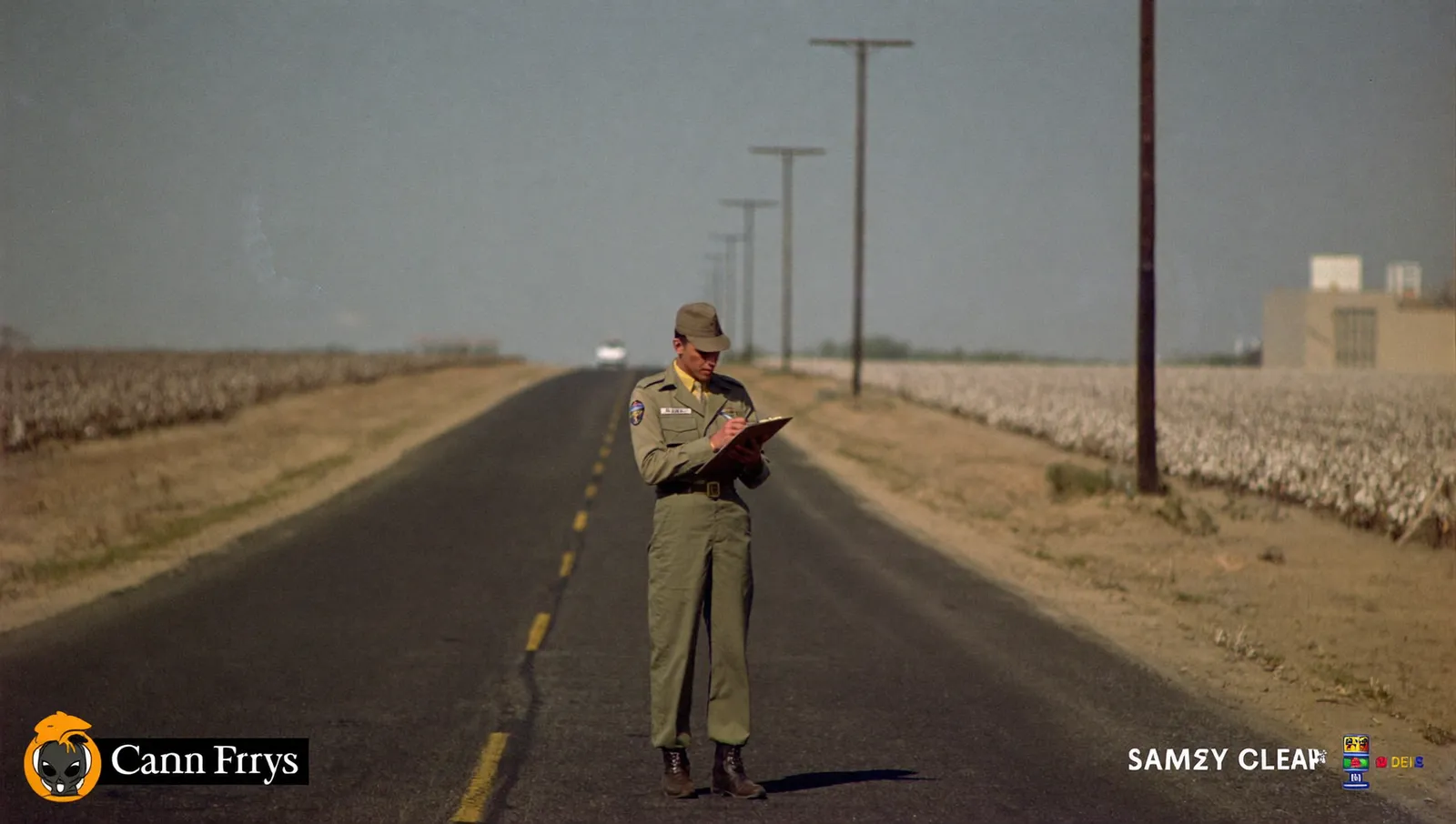
Blue Book sent one man: Staff Sergeant Norman P. Barth, who reached the Hockley County sheriff’s office on 5 November, three days after the event. He interviewed Sheriff Clem and three of the witnesses — Saucedo, Wheeler and Newell Wright — and was gone. Accounts differ on the exact hours, but every version amounts to about one working day on the ground, some of it spent in Lubbock rather than Levelland.
So the Air Force interviewed a quarter of the callers, three days late, and then published a determination covering all of them. Whatever you think happened on those roads, that is not an investigation; it is a filing decision.
The weather claim underneath it is worse. The ball-lightning verdict rested on the premise that an electrical storm had been in progress. When researchers went back to the records, that premise did not survive. The atmospheric physicist James E. McDonald, who reinvestigated the case in the mid-1960s, reported that there had been no thunderstorm at all — a trace of rain, and nothing more.
The sceptics’ case, at its strongest
Put the Air Force’s homework aside and the prosaic reading still has real force, and it is not the one Blue Book filed.
Start with what a stalled car in 1957 actually means. Points-and-condenser ignition systems were temperamental, damp weather fouled them routinely, and a night of mist on the high plains would have produced stalls with or without anything overhead. Several of the reported failures involved lights dimming rather than dying — a symptom shared with a tired generator and a corroded battery terminal.
Then there is contagion. The first call went out on a police radio net local people could listen to, and the town had the story within hours. November 1957 was already a national UFO wave. Once the frame exists — glowing object, dead engine — a driver whose car coughs on a dark road has a ready-made explanation and a number to call.
The most serious version of the physical case came later, from the aviation journalist Philip Klass, who built an entire early theory of UFOs around atmospheric plasmas in his 1968 book UFOs—Identified. Plasmas near power lines, on his account, could produce both a luminous object and electrical interference. It was a genuine attempt at a mechanism rather than a label. The Harvard astronomer Donald Menzel, the era’s most committed debunker, later defended his own variant of the electrical explanation.
The trouble with all of it is scale and shape. Nobody has demonstrated a plasma or a ball-lightning event a hundred to two hundred feet long, sitting on a road, described as a solid ovoid with a defined edge, recurring across a county for three hours. The sceptical explanations are individually reasonable and collectively insufficient.
Hynek’s retraction and McDonald’s fight
Levelland’s afterlife is really an argument between three scientists, and it is the most interesting thing about the case.
J. Allen Hynek was the Air Force’s own astronomical consultant in 1957, and he signed off on the ball-lightning verdict at the time. Fifteen years later, in The UFO Experience (1972), he took it back in print and in unusually plain language — writing that he was not proud of having hastily concurred in an evaluation of ball lightning on the basis that an electrical storm had been in progress, and noting that this “was shown not to be the case.”
That is about as close to a formal retraction as the Blue Book era ever produced from the inside, and it is the single strongest reason to keep Levelland on the table.
James McDonald was blunter. An atmospheric physicist at the University of Arizona — and, importantly, a specialist in exactly the sort of weather phenomena being invoked — he called the ball-lightning explanation completely inadequate and put Levelland at the centre of his testimony to the House Committee on Science and Astronautics in July 1968.
His sharpest complaint was procedural. The University of Colorado study that produced the Condon Report in 1969 — the document that closed Blue Book and told American science the subject was not worth its time — had staff who looked at Levelland, and the final report did not discuss it. A case with a dozen independent witnesses and a repeated physical effect was examined and then simply left out of the book that buried the field. Similar frustrations attended the Air Force’s handling of the Malmstrom missile shutdowns a decade later.
Sputnik, and why nobody remembers
There is one more reason Levelland never became Roswell, and it has nothing to do with evidence.
The Soviet Union launched Sputnik 2 on 3 November 1957 — the same night, carrying the dog Laika, a month after Sputnik 1 had already knocked the United States sideways. A small Texas town’s stalled cars stood no chance of the front page against that. Levelland arrived in the middle of the most intense American UFO wave of the decade and the most intense American space panic of the century, and was flattened by both.
That collision has been read both ways ever since. Some argue the space anxiety generated the sightings; others, that the sightings were merely lost inside it. The dates make the first reading harder than it looks — the Levelland calls were being logged before Sputnik 2 was announced.
What survived is a police blotter, a thin Air Force file, and witness accounts nobody with authority ever properly took. Compare the 1952 Washington radar flap, where the phenomenon had the good sense to appear over the capital.
The UAP Times take
Levelland earns an Unconfirmed rating, three out of five on our scale, and it is a better case than its modest fame suggests. Its strength is structural: multiple independent witnesses, a specific and physical reported effect, and a tight time window that makes coordinated invention implausible. Its weakness is the usual one for 1957 — no instruments, no photographs, only testimony and a police blotter.
Our reading is that something genuinely odd rolled through the roads around Levelland that night. The ball-lightning label is not absurd, but it is a poor fit for a large luminous object seen at close quarters by so many, and it leans on a phenomenon nearly as mysterious as the one it is meant to explain. It also, crucially, rested on a weather claim that turned out to be false — which is why the Air Force’s own consultant disowned it in print.
Blue Book spent about a working day on Levelland. Hynek spent fifteen years regretting it.
Levelland won’t ever be proven, for want of a single sensor. But as a demonstration that many separate, unremarkable people can independently report the same unremarkable-sounding-yet-inexplicable thing — and as a case study in how thinly the official investigation was actually done — it remains one of the quietly strongest cases on the map.
Further reading: for the modern radar-and-witness benchmark, see The Tehran Dogfight. For another case of reported interference with hardware that mattered, see Malmstrom 1967. For a modern interference claim that doesn’t survive the same scrutiny, see the Pentagon’s “time warp” wristwatch. For the wave that did make the front pages, see Washington 1952. The Levelland object was the classic egg / ovoid; it’s on the sightings map.
Source: Contemporary police and press reports; Project Blue Book file
Follow the file
Every new dispatch from the UAP desk, in your inbox. Sourced, sceptical, and no more than one email a week.