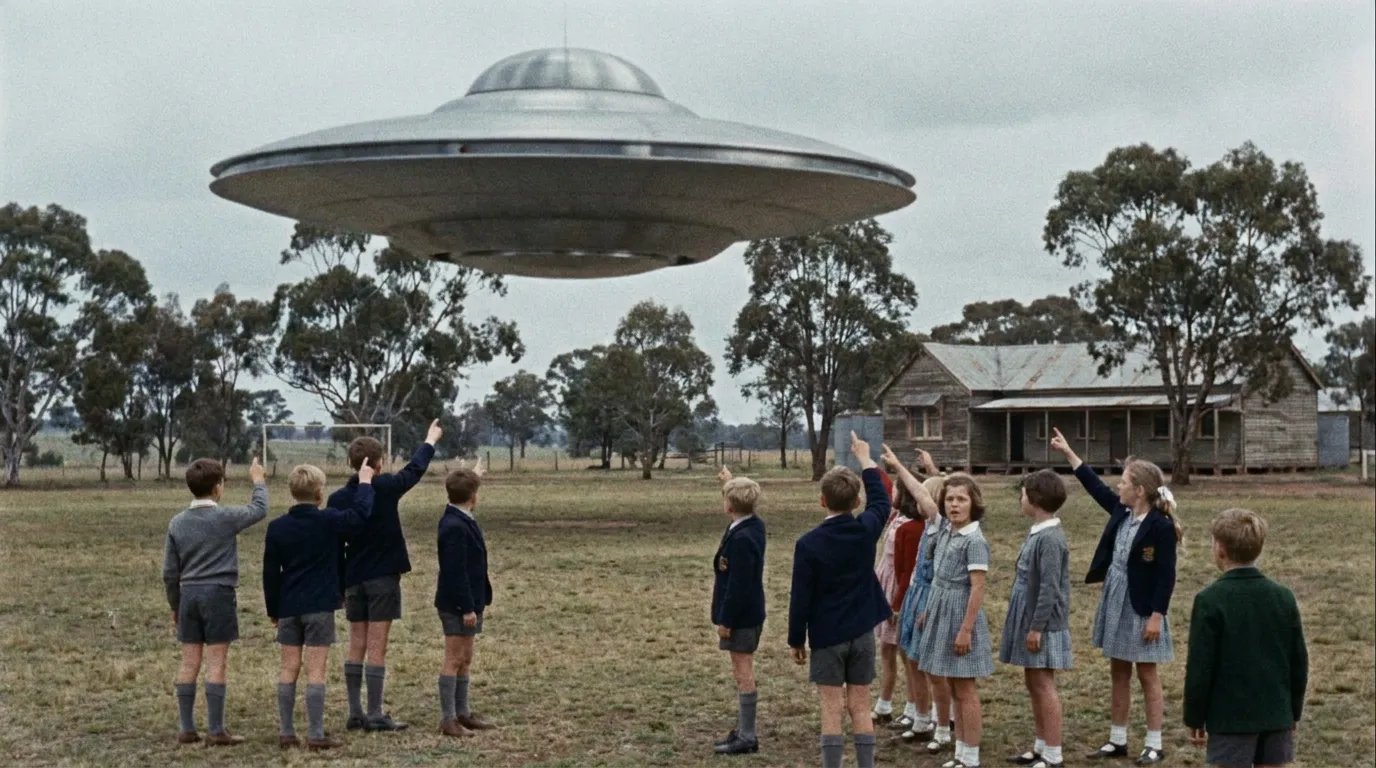
The great weakness of most UFO cases is the shortage of witnesses. Westall has the opposite problem, in the best possible way: on the morning of 6 April 1966, something was watched by an estimated two hundred people — students, teachers and locals — over a suburban school in Melbourne, Australia, in broad daylight. Mass hallucination is not a serious explanation for two hundred people. Something was there. What it was is the question that has never been answered to anyone’s satisfaction.
The oval empties
It was mid-morning on the Wednesday before Easter, somewhere around eleven o’clock, at Westall High School in the suburb of Clayton South. A physical education class had just finished on the sports oval. Some of those pupils were still outside when they caught sight of a silver-grey object over the open ground to the south of the school.
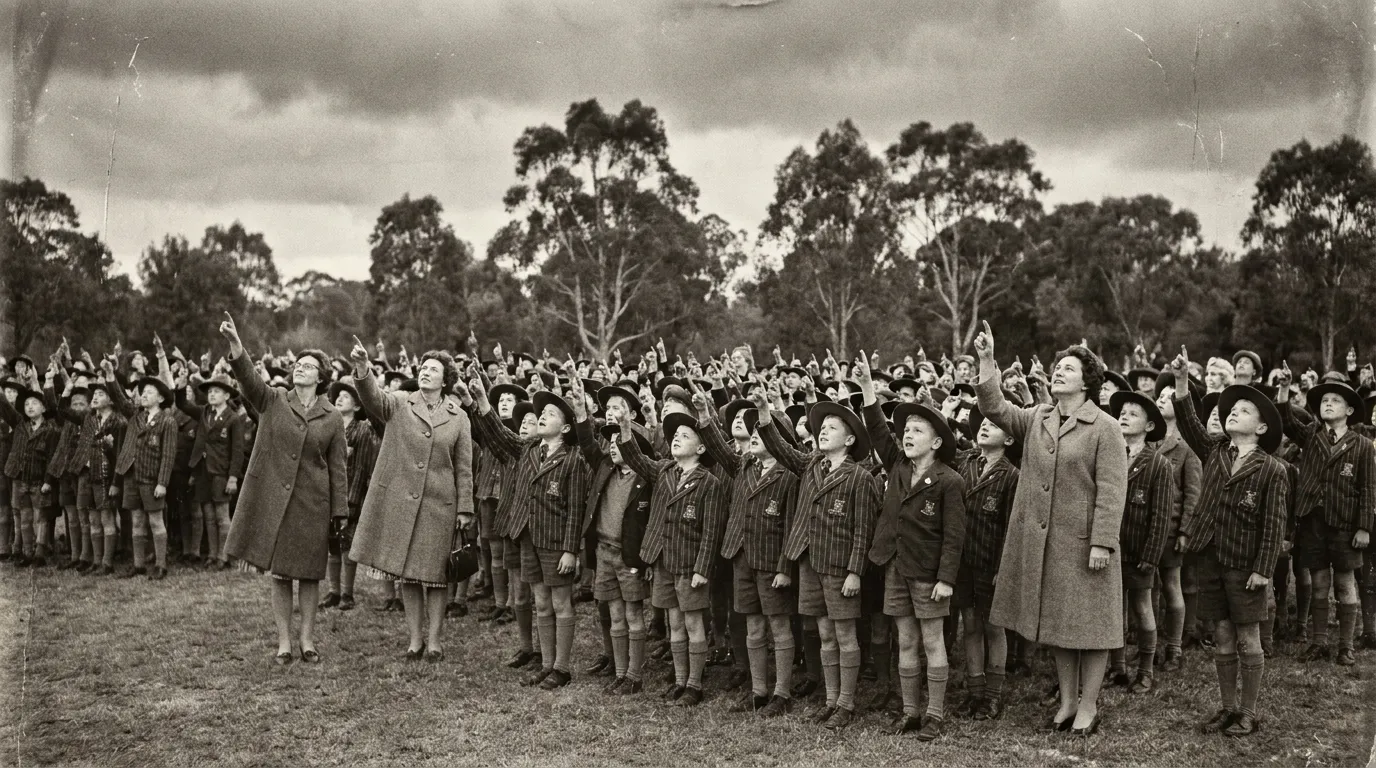
Word spread, classrooms emptied, and before long a large crowd — the figure usually given is around two hundred, with some accounts running higher — was watching the object together. Pupils and staff from the neighbouring Westall State School, the primary school on the same site, and people in nearby houses, saw it too.
That detail is the whole point of Westall. This was not a lone motorist on a dark road. It was a daylight event with a crowd of witnesses who knew each other, compared notes on the spot, and in many cases have told the same story consistently for the rest of their lives.
What the witnesses actually described
The accounts are not identical, and the honest version of Westall says so up front. The most common description is a grey or silver-grey disc, roughly domed, about the size of two family cars — an odd but useful yardstick from a generation of Australian schoolchildren who knew exactly how big a Holden was.
The most valuable single account came from Andrew Greenwood, a science teacher at the school, whose testimony matters because he was an adult, trained in observation, and gave it to a newspaper within days rather than decades. He described the object as silver-grey and said it seemed at times to “thicken” — the way a disc appears to when it tilts and shows you its underside. That is a specific optical observation, not a flying-saucer trope, and it is the sort of thing witnesses rarely invent.
Other witnesses depart from that. Some, including former pupil Colin Kelly, recall not one object but three — a larger one flanked by two smaller. Some remember a low buzzing; at least one recalls a sensation of heat. Some place the whole thing over in a matter of a minute or two, others describe twenty minutes of it.
The spread is what you would expect from two hundred people looking up at different moments from different corners of a school ground. It is also exactly the kind of variation that makes a single tidy explanation hard to fit and easy to argue about.
Down among the trees
The object, witnesses said, descended behind a stand of pine trees in open grassland beyond the school known as The Grange, appeared to touch down or hover very low for a short time, then rose and departed at speed. Several reported that small aircraft — light planes, described by some as Cessnas, and by some accounts as many as five of them — appeared and seemed to circle or pursue it before it left.
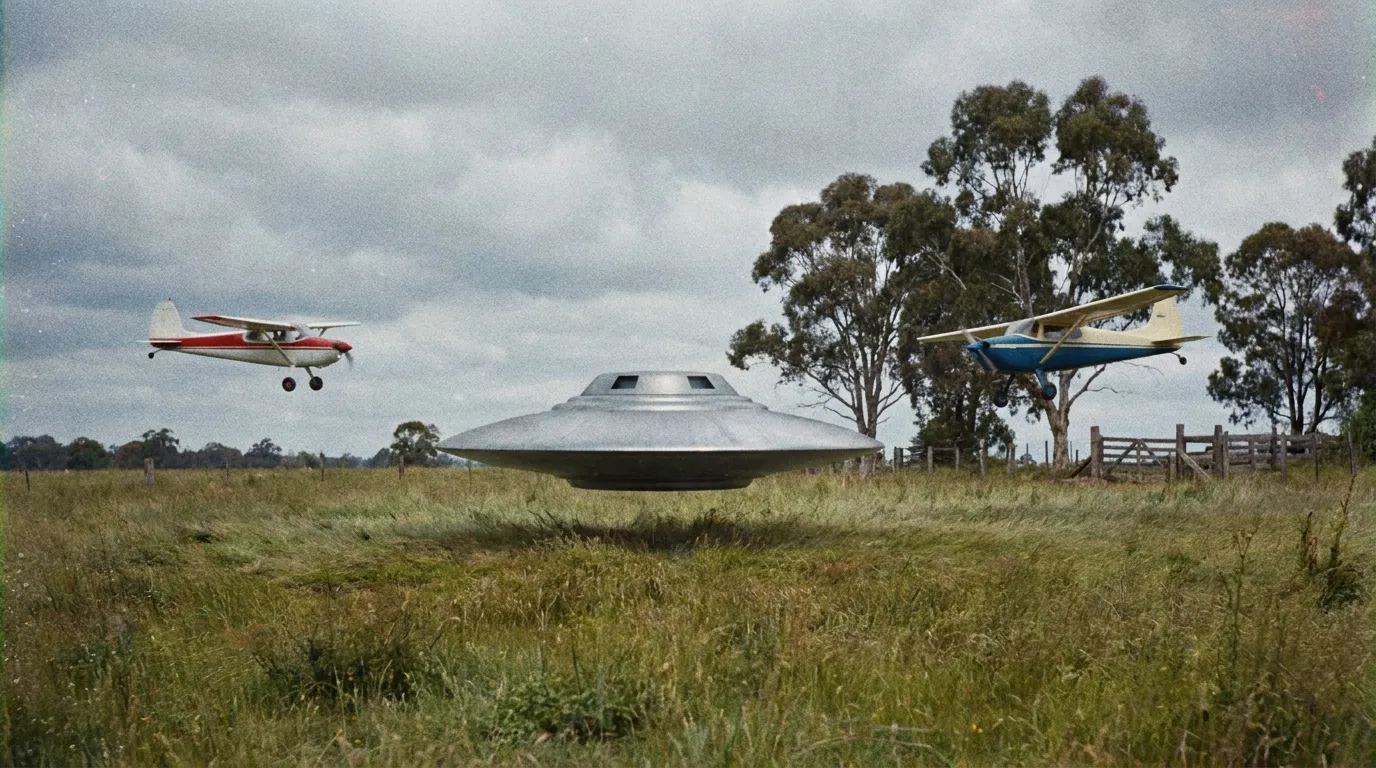
The aircraft are an underrated element. A saucer is a claim; several light aircraft over a Melbourne suburb on a Wednesday morning is a checkable fact — and one that no one has ever satisfactorily traced to an operator, a flight plan or a purpose.
The order to say nothing
What happened next at the school is the part that turned an odd morning into a grievance that lasted sixty years. The headmaster, Frank Samblebe, came out, ordered everyone back inside after about half an hour, and then called an assembly at which pupils were told to stop talking about what they had seen.
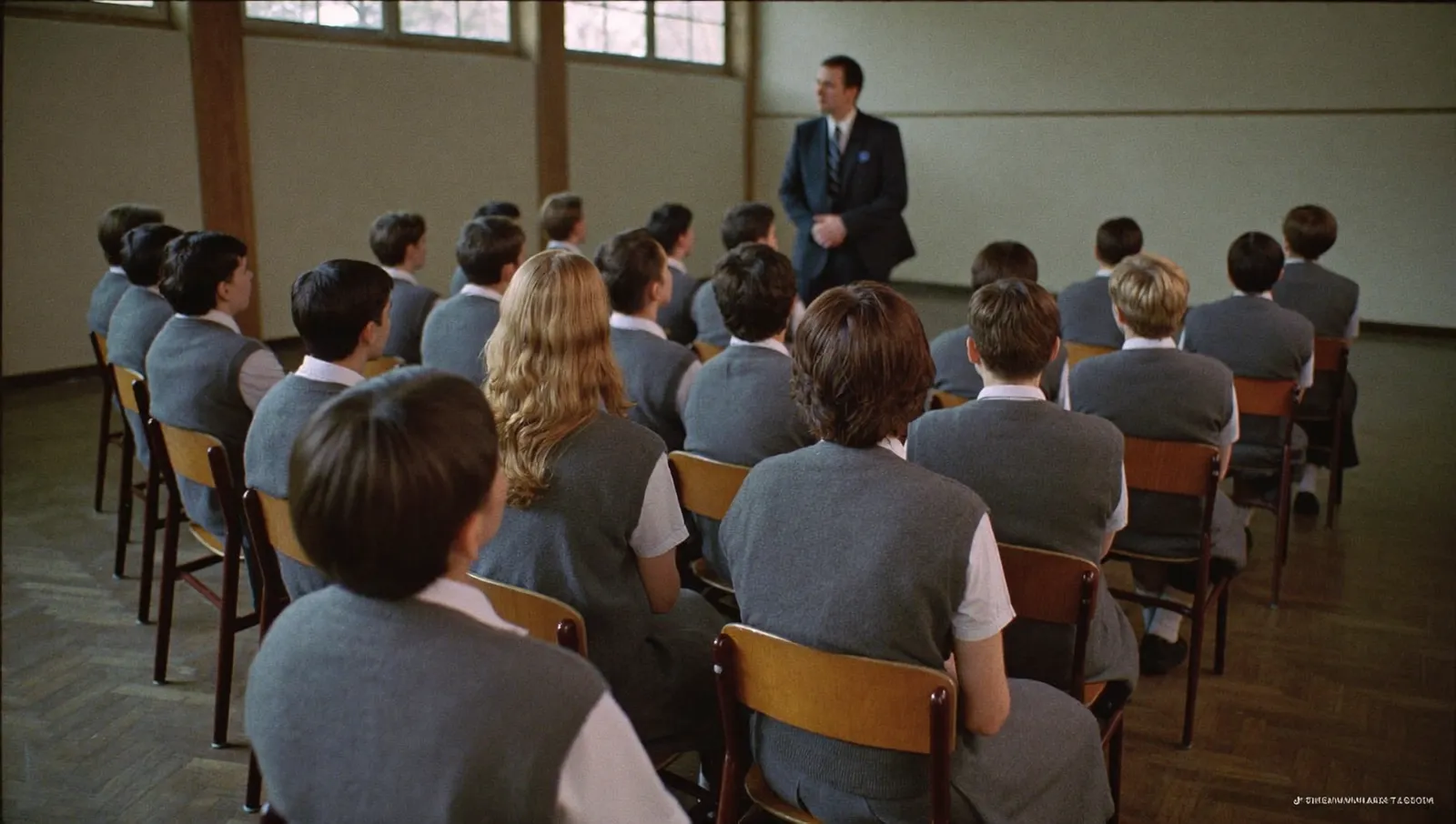
Only one newspaper carried the story as it happened: the local Dandenong Journal, which ran Greenwood’s detailed account and reported that students and staff had been instructed to “talk to no-one” about the incident. That phrase, printed at the time rather than remembered later, is the single hardest piece of contemporary documentation the suppression claim has.
Greenwood himself said years afterwards that he had been warned off by two men — one a senior air force officer in uniform, the other in a civilian suit. That account rests entirely on his memory and cannot be corroborated, and it should be weighted accordingly. But there is a less exciting reading of the whole business that fits the printed record just as well: a suburban headmaster in 1966, facing a school that had abandoned its lessons and reporters at the gate, telling everyone to be quiet is not evidence of a cover-up. It is evidence of a headmaster.
The paddock nobody sampled
Afterwards, witnesses described a circle of flattened or scorched grass at The Grange, roughly where they said the object had come down. Here the case had its one chance at physical evidence, and lost it comprehensively.
On 9 April, three days later, air force personnel and civilian UFO enthusiasts went to the field and reported finding nothing of interest. Not long after, the landowner burned the paddock off — an ordinary enough thing to do with dry grass and a steady stream of trespassers, and fatal to any prospect of analysis.
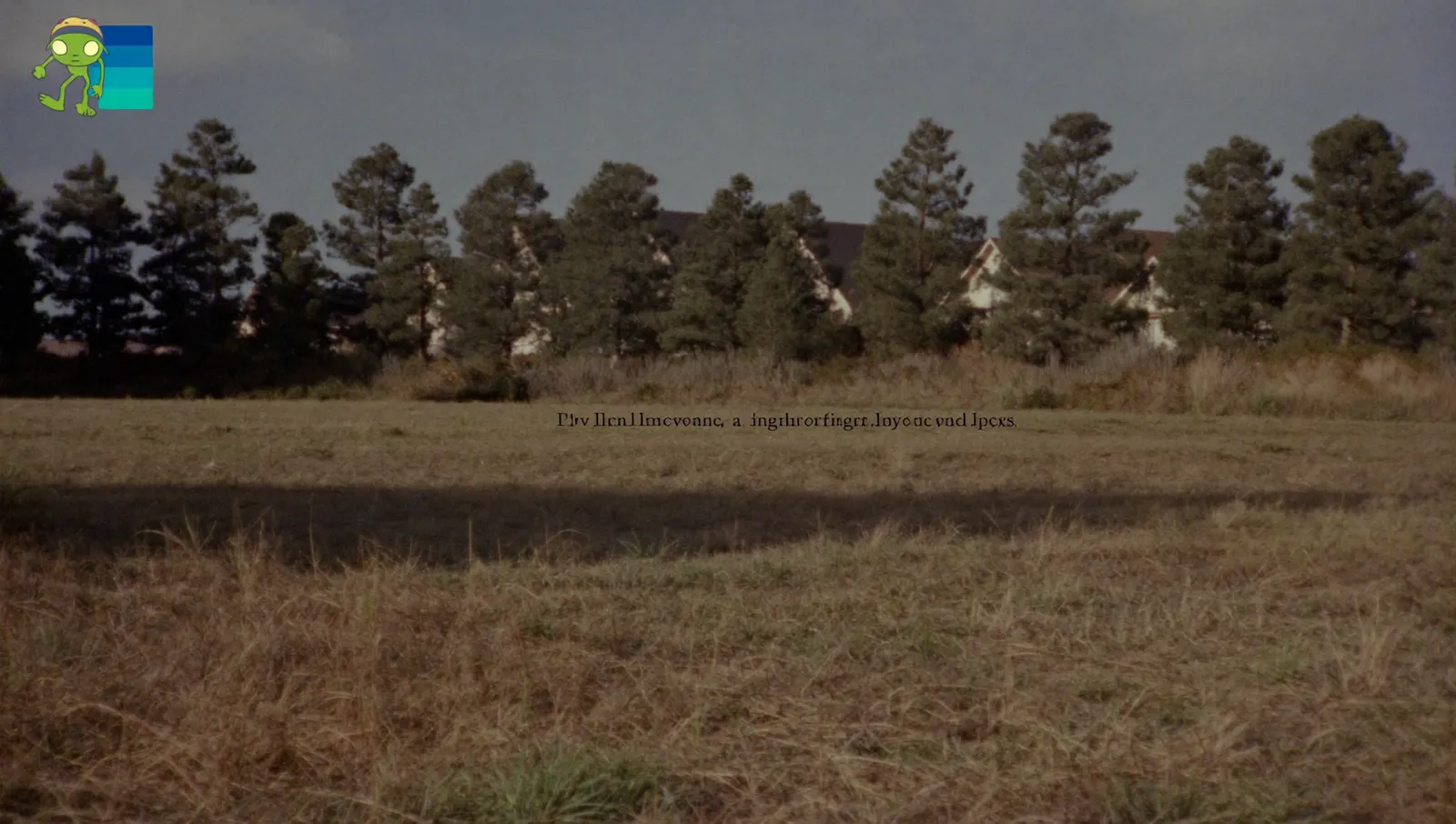
So there is no soil sample, no vegetation analysis, no photograph of the circle, no measurement of it. Everything about the landing trace comes to us as recollection. Compare that with a case like Trans-en-Provence, where a national laboratory got to the soil within days and produced numbers people are still arguing about, and you can see precisely what Westall is missing.
The balloon on the table
The leading conventional explanation is a HIBAL balloon. Between 1960 and 1969, a joint Australian–US programme flew large high-altitude balloons carrying instrument packages to sample the upper atmosphere for radioactivity — fallout monitoring in the aftermath of the British nuclear tests at Maralinga. Launches were made from Mildura, in north-western Victoria.
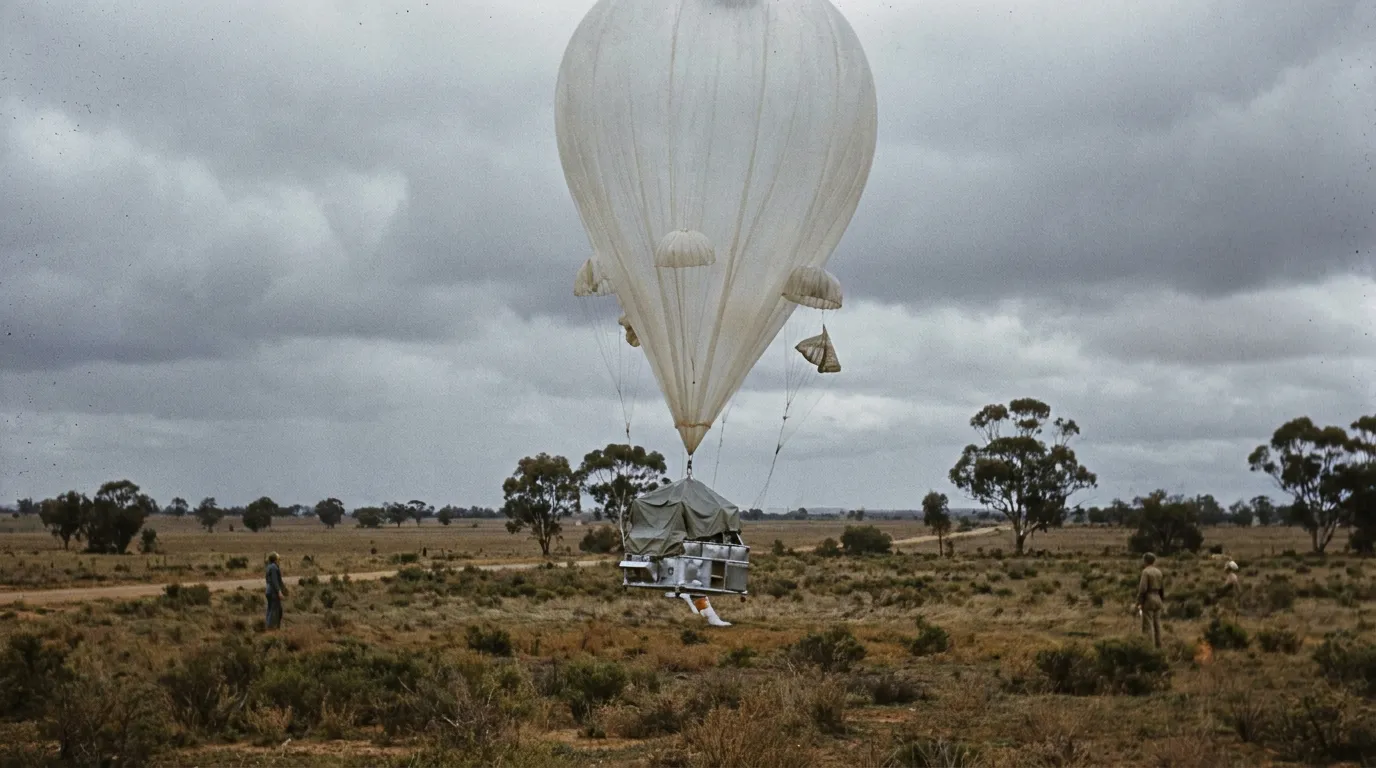
The fit is better than sceptics usually get. These were big silvery balloons with a payload of the order of 180 kilograms, and — crucially — the descent was not a passive drift. A chase aircraft followed the flight and triggered the parachute release by radio. A silver object descending under a canopy, with light aircraft circling it, and men arriving afterwards to recover an instrument package, accounts for a startling amount of what Westall’s witnesses describe, including the official presence.
The researcher who did most to build this case is Keith Basterfield, working through freedom-of-information requests and the National Archives. He found documentation indicating that a HIBAL balloon launched from Mildura could have been blown off course and come down in the Clayton South area.
The missing flight, and the archive that isn’t there
And then the paper trail stops, in a way that is either the tidiest coincidence in Australian ufology or the most interesting thing about the case.
Basterfield tracked down the logbook of the chase-plane pilot, by then deceased. It contains an entry for flight 291 and an entry for flight 293. There is no entry for flight 292. Separately, the routine departmental reporting for the April 1966 launches — the memoranda that exist for other months — appears to be lost or destroyed. There is no summary of the four launches scheduled for that month.
Nor is there anything on the other side of the ledger. Despite the RAAF’s role at the time as the official recipient of Australian UFO reports, there is no Westall file in the National Archives of Australia, and no Army or RAAF record of it; the air force denied knowledge of unusual aircraft activity that day. For the largest mass sighting in the country’s history, the official archive is empty.
You can read that two ways, and intellectual honesty requires holding both. Records get lost, especially records of a routine programme nobody expected to matter. Or: the absence is patterned, always falling on the one day people are asking about.
Not everyone finds the balloon persuasive even so. The Australian researcher Bill Chalker has argued that a balloon simply cannot do what the witnesses describe — the changes of direction, the apparent purposefulness, the fast climb-out — and called the theory a big stretch. That is the crux. A balloon under a parachute descends. It does not hover among trees and then leave at speed.
Sixty years of tracing witnesses
Westall did not survive as a case because of documents. It survived because people kept finding the witnesses. Shane Ryan spent years locating former pupils and staff, one at a time, building a body of testimony that did not exist in 1966; Rosie Jones’s 2010 documentary Westall ‘66: A Suburban UFO Mystery was assembled from interviews with more than a hundred of them. A commemorative park was later opened near the site.
What that effort produced is a peculiar and instructive thing: a very large, very consistent, very late witness base. It is impressive, and it is also the single biggest reason to be careful. Testimony gathered forty years after an event, from people who have since read about it, watched documentaries about it and talked to each other at reunions, is not the same evidential object as testimony gathered on the day — however sincere every one of them is.
The UAP Times take
Westall earns an Unconfirmed rating, three out of five on our scale, and it is one of the most frustrating cases in this entire file — not because the evidence is thin, but because the witness base is so unusually strong and the physical follow-up so weak. Two hundred daylight witnesses is extraordinary. A total absence of a photograph, a soil sample or a surviving official file is, at a 1960s suburban school, sadly ordinary.
Our reading is that something real and physical was over Clayton South that morning — the witness numbers make that close to certain — and that the honest answer is a genuine “unidentified”. The HIBAL balloon is a serious candidate, better than most conventional explanations get, and the chase aircraft and recovery party do real explanatory work. The gap in the flight records is genuinely odd; it is not, on its own, proof of anything but bad filing.
Where the balloon strains is exactly where the best witnesses are most specific: a descent, a low hover among the trees, and a fast departure. Westall is the case that proves witnesses alone, however many and however credible, can establish that something happened without ever establishing what — and that the window for finding out closes within days, in a burned paddock, while everyone is still being told to talk to no-one.
Further reading: for another daylight mass event with an official shrug, see The O’Hare Disc. For the other great schoolyard case, and the same problem of testimony revisited decades later, see Ariel School 1994. The Westall object was a classic disc / saucer; it’s on the sightings map.
Source: Contemporary witness accounts; later investigations and documentaries; HIBAL balloon records
Follow the file
Every new dispatch from the UAP desk, in your inbox. Sourced, sceptical, and no more than one email a week.