
Eleven days ago, the White House told the press it had freed America’s UFO witnesses from their nondisclosure agreements. There was no published text, no memorandum anyone could read, and no procedure — just senior administration officials describing a directive to reporters on background. We said at the time that an unpublished directive relayed by unnamed officials was a materially weaker thing than it sounded.
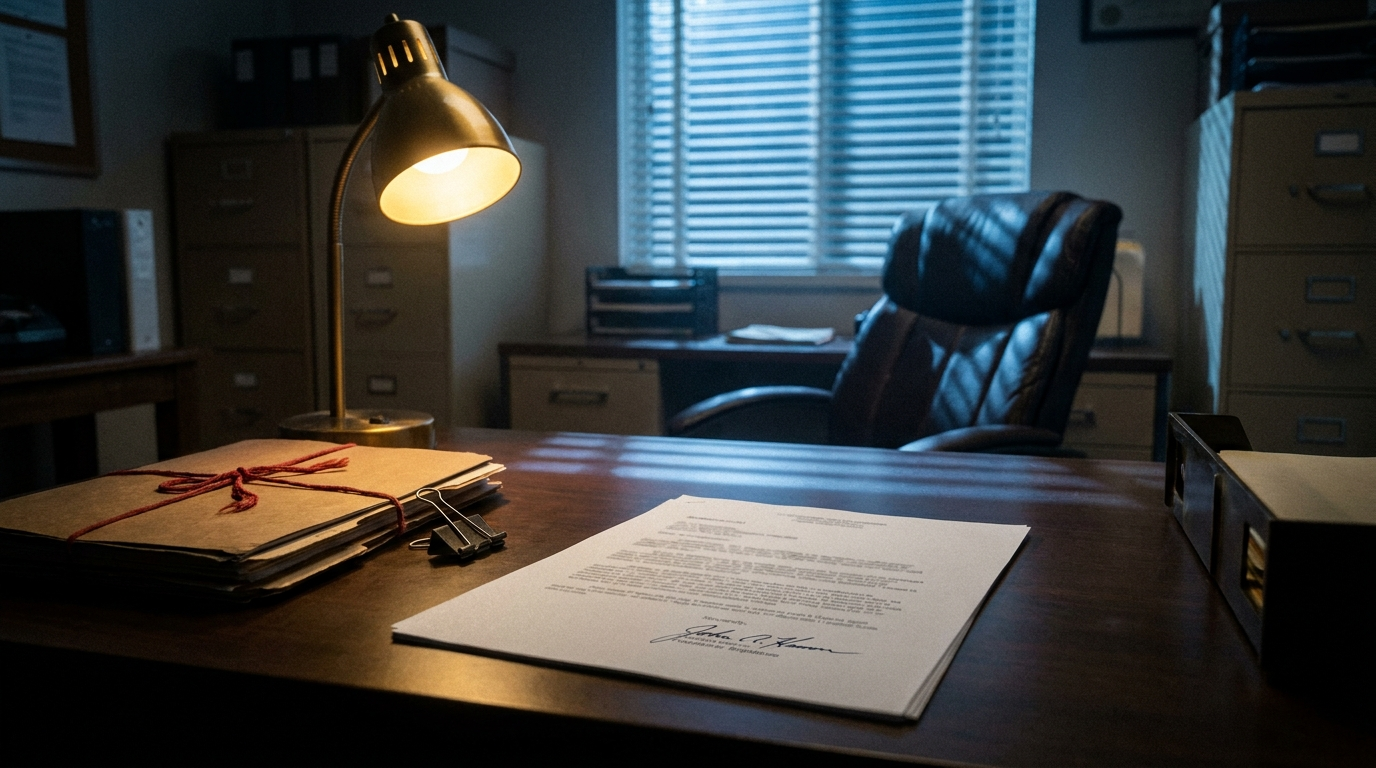
On Friday 31 July, that changed. Aaron Lukas, the Principal Deputy Director of National Intelligence, signed an unclassified memorandum instructing the entire US intelligence community on how the President’s directive is to be implemented. It is short, it is boring, and it is the most consequential document this subject has produced in months — for one reason that almost every write-up has skipped past.
It does not say intelligence officers may now discuss UAP. It says they should report.
What the memorandum actually does
Per the guidance as reported, three things happen.
First, every element of the intelligence community — the sixteen-odd agencies from the CIA and NSA down to the service intelligence branches — must coordinate with the Office of the Director of National Intelligence to designate a PURSUE designee: a named, appropriately cleared official who acts as the receiving point for UAP information inside that agency. PURSUE is the Presidential Unsealing and Reporting System for UAP Encounters, the interagency declassification effort running since May.
Second, each agency must inform its own workforce that any previous or existing NDA prohibiting disclosure to the President, or to designees such as PURSUE, is no longer in force.
Third, anyone with knowledge of UAP information should report all such information to AARO or to an authorised PURSUE representative.
All of this carries a 30-day clock from receipt, with detailed reporting procedures to be disseminated to IC components inside the same window. The memorandum was signed on 31 July. On the plainest reading, the designees exist and the workforce has been told by roughly the end of August.
Permission is not the same word as obligation
Read those three provisions again and notice the grammatical shift, because it is the whole story.
The 21 July directive, as briefed to reporters, was permissive. It removed a legal barrier. A former official who had spent twenty years believing they would lose their pension or their clearance for describing what they saw could now describe it, to the right person, without jeopardy. That is a meaningful repair to a genuine problem: fear of consequence has demonstrably kept people quiet in this field, and no amount of congressional theatre had fixed it.
The Lukas memo goes further. “Should report” is the language of a duty, not a dispensation. Applied to a serving intelligence officer, that is not an invitation to unburden themselves — it is an instruction, routed through their own chain of command, to hand over anything they hold.
The astrophysicist Avi Loeb — who chairs the government’s own UAP science advisory council, and who flagged the memo publicly over the weekend — put it as a single sentence: disclosure is no longer optional. He is right about the wording. What is worth sitting with is that “no longer optional” cuts in a direction the disclosure movement has not much considered. A reporting duty owed to the executive branch is a mechanism for the executive branch to find out what it does not know. Whether the public ever finds out is governed by an entirely separate set of rules, none of which this memo touches.
The channel, and its walls
Here is the shape of the thing, stated without decoration.
A witness comes forward. They meet a cleared official at AARO or a PURSUE designee, in a secure facility. Their NDA is waived for the purposes of that conversation. What they say is written down. It then enters the existing declassification review process — conducted by agencies which may include the one the testimony embarrasses — and emerges, if it emerges, at a time and in a form those agencies determine.
A senior administration official was blunt with reporters on 21 July that this is “not a declassification directive.” That caveat has survived into the implementing guidance intact. Nothing in the Lukas memo obliges anyone to publish anything, sets a deadline for publication, or creates an appeal if an agency declines.
So: a real barrier has come down, and it is the barrier witnesses have complained about for a decade. It is also true that the barrier came down on the inside of the building. The government has made it much easier for people to tell the government things. It has made it no easier at all for the government to tell you.
Burlison’s objection is the sharpest one available
The most useful criticism has come not from debunkers but from the directive’s loudest supporter.
Representative Eric Burlison, the Missouri Republican whose UAP Disclosure Act cleared the House floor on 22 July, had been publicly demanding exactly this NDA waiver for years. He welcomed it, offered his office’s help to anyone wanting to come forward, and then raised the question nobody in the administration has answered: does the abrogation apply to testimony given to Congress?
Because the memo, as described, waives NDAs for disclosure “to the President, or designees like PURSUE.” Congress is a co-equal branch of government. It is not the President, and it is not a presidential designee. On a literal reading, a witness who walks into a congressional office rather than a PURSUE intake room is exactly as exposed as they were in June.
Burlison’s practical advice was correspondingly cautious: anyone speaking to the executive branch under this directive should request that he or another member of Congress be present, alongside a lawyer. He has also called on ODNI to publish its guidance openly rather than circulating it internally. That is a reasonable ask about a document that is, by every account, unclassified — and the fact that the field is currently reconstructing its contents from secondary reporting rather than reading it is itself a small demonstration of the problem.
Set that beside the row that consumed the community last week over whether one of its own most prominent insiders was running a managed disclosure, and a pattern emerges. The documented, checkable complaint — the guidance has not been published, and Congress may not be covered — is available, winnable and dull. It has attracted a fraction of the attention.
The sceptic’s read
Take the least generous interpretation seriously, because it is not far-fetched.
An administration under sustained pressure to disclose has created a process in which every witness is routed into a cleared room, every account is captured by the agencies being asked about, and every output is subject to review by those same agencies. Compare that with the statutory route — a National Archives collection and an independent Review Board empowered to overrule agencies, modelled on the JFK Records Act. One of those designs assumes the holder of the secret cannot be trusted to adjudicate it. The other assumes it can.
The executive track is moving fast and the legislative track is stuck in the Senate. That is not evidence of bad faith, but it is the arrangement an institution would choose if it wanted the appearance of transparency with the mechanics of containment. Chris Mellon, the former Deputy Assistant Secretary of Defense for Intelligence and about as establishment a proponent as this field has, called the directive “clearly a historic development” while noting that “classification barriers, institutional caution, and bureaucratic foot-dragging are real headwinds.” Both halves of that sentence are load-bearing.
There is also the possibility nobody enjoys discussing: that agencies will comply fully, designees will be appointed, staff will be briefed, and almost nothing will come in — because the extraordinary thing being kept from the public was never there. A reporting duty that returns an empty inbox is a result too. It would be the most informative outcome available, and it is the one this process is genuinely capable of producing.
Three things to watch, in order
Does ODNI publish the guidance? It is unclassified. Publishing it is a keystroke. A memo about transparency that circulates only internally is a self-answering question, and the 30-day window makes end of August the honest deadline.
Are the designees named? Sixteen agencies, sixteen appointed officials. If the list exists but is withheld, the process cannot be audited from outside — and an unauditable intake channel is indistinguishable from a filing cabinet.
Does anything reach daylight that an agency resisted? Every PURSUE tranche so far, from the 8 May opening release to the 1996 Columbia shuttle frames filed as unresolved, has been material the holding agency chose to release. The test of the new duty is the first account that survives review over an agency’s objection. Nothing yet has.
The UAP Times take
Credibility 2, and the rating is about the memo, not about UFOs.
That a memorandum was signed on 31 July by a named senior official, containing a 30-day deadline and a designee requirement, is well attested and consistently described across sources. It is a shade off a 1 only because we have not read the text ourselves — nobody outside the intelligence community has, which is the point Burlison is making. If ODNI publishes it this month, it becomes a 1 and we will say so.
What the memo is not is evidence about anything in the sky. It tells you the US government has built a formal intake pipe for a category of information it believes some of its people are sitting on. It does not tell you that they are, or what it is.
Still — this is the first time in the modern era that an American intelligence officer has been told, in writing, that staying silent about this subject is not the safe option. For sixty years the incentive ran precisely the other way, and the whole architecture of the mystery rests on that fact. Reversing it matters, even if the pipe leads somewhere you cannot see.
Watch the last week of August. Either the designees are named and the guidance is posted, or this was a memo about writing memos.