
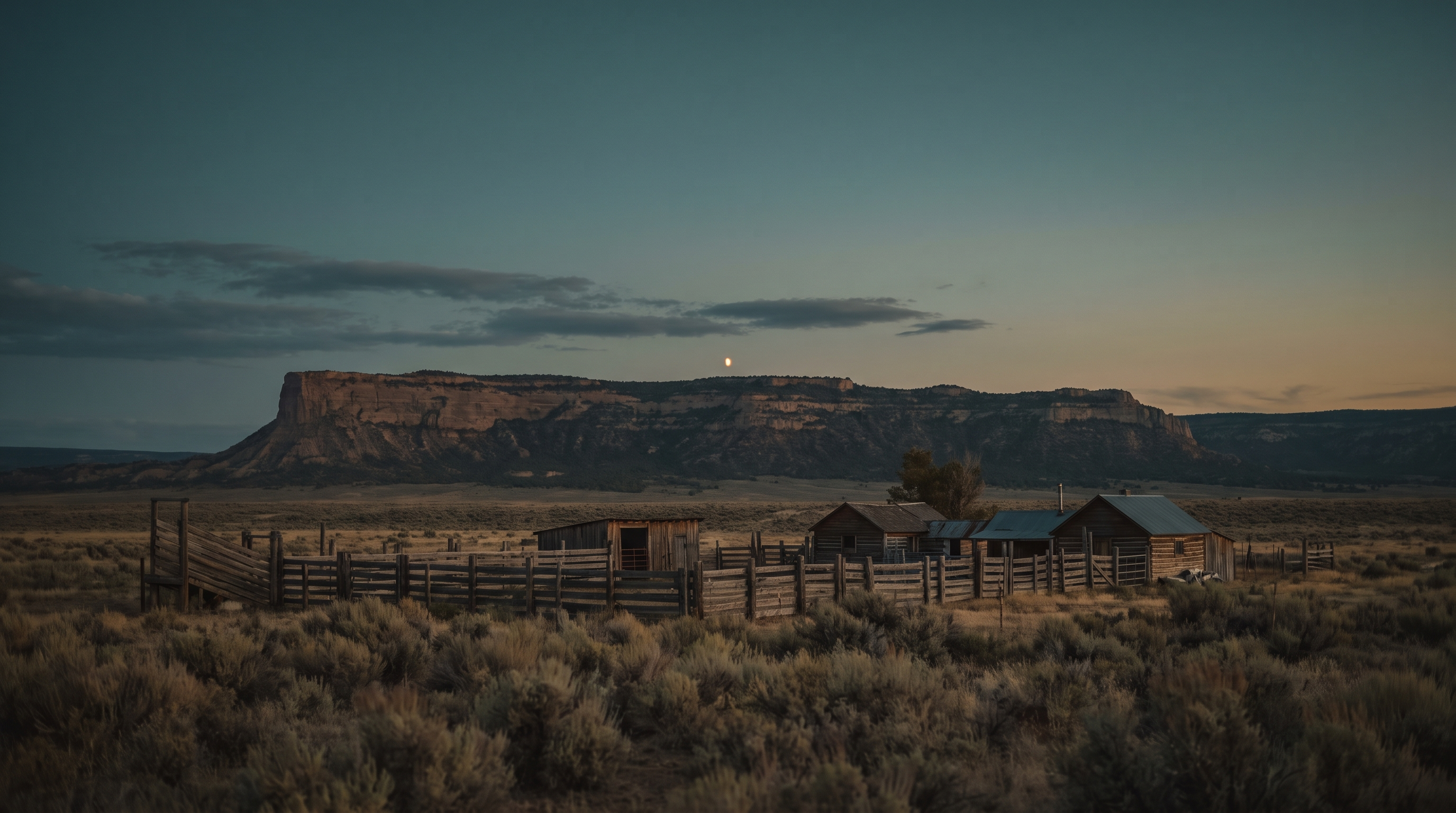
There is a flat-topped mesa in eastern Utah that, depending on who you ask, is either the most important 512 acres in the study of the unexplained or the most expensive confirmation-bias machine ever built. Skinwalker Ranch has been watched by a billionaire’s surveillance team, funded through a Pentagon intelligence contract, and filmed for seven seasons of prime-time television. And after three decades of cameras, sensors and cash, it has produced a great many stories and almost nothing you could hand to a hostile physicist.
That gap — between how much has been claimed here and how little has been demonstrated — is the whole story. So let’s do the thing the ranch’s coverage rarely does, and separate the parts that are solidly documented from the parts that are television.
A ranch with a reputation
The property sits in the Uinta Basin near Ballard, Utah, on the fringe of the Ute reservation — high desert, sagebrush, big empty sky. The name borrows from Navajo yee naaldlooshii lore, the shape-shifting “skinwalker,” though the local Ute association is more the point: this is a corner of the country with a long oral tradition of strange lights and things that shouldn’t be there.
Members of the neighbouring Ute community have long regarded the land warily; in some tellings it sits on a boundary the living are meant to leave alone. Whether that folklore seeded the later reports or merely coloured how newcomers interpreted them is itself part of the puzzle — and a reminder that a place can be “known” to be strange long before anyone points an instrument at it.
The modern legend starts in 1994, when Terry and Gwen Sherman bought the ranch and — by their own account — began losing cattle to bizarre mutilations, seeing UFOs, and encountering animals that didn’t behave, or die, like animals should. The Shermans went to the press in 1996. Whatever else you make of it, the reports were specific, distressing and consistent enough to attract the attention of someone with the money to do something about them.
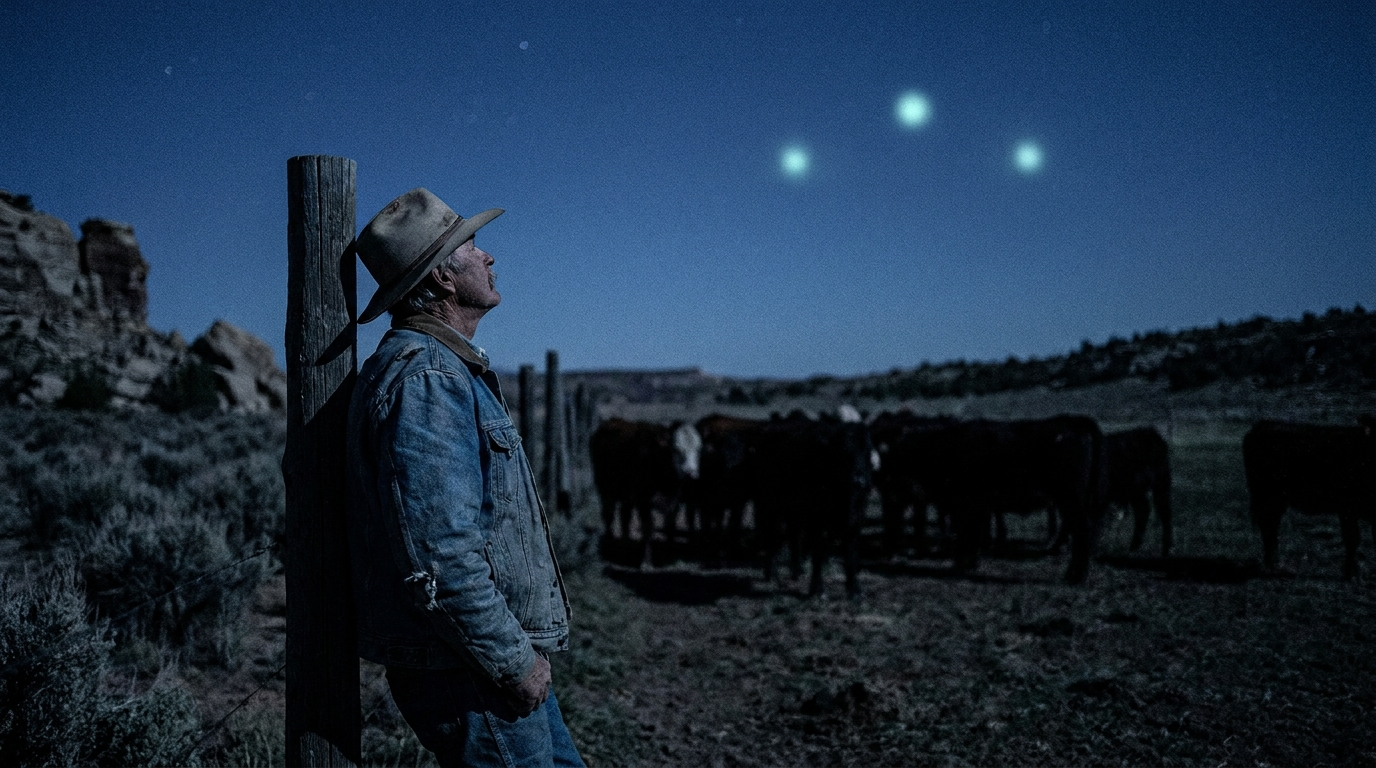
That is the honest state of the “early” ranch: vivid first-hand testimony, no physical evidence that survived contact with an outside investigator. It is exactly the evidential tier of every good campfire case — compelling to hear, impossible to check.
Enter the billionaire
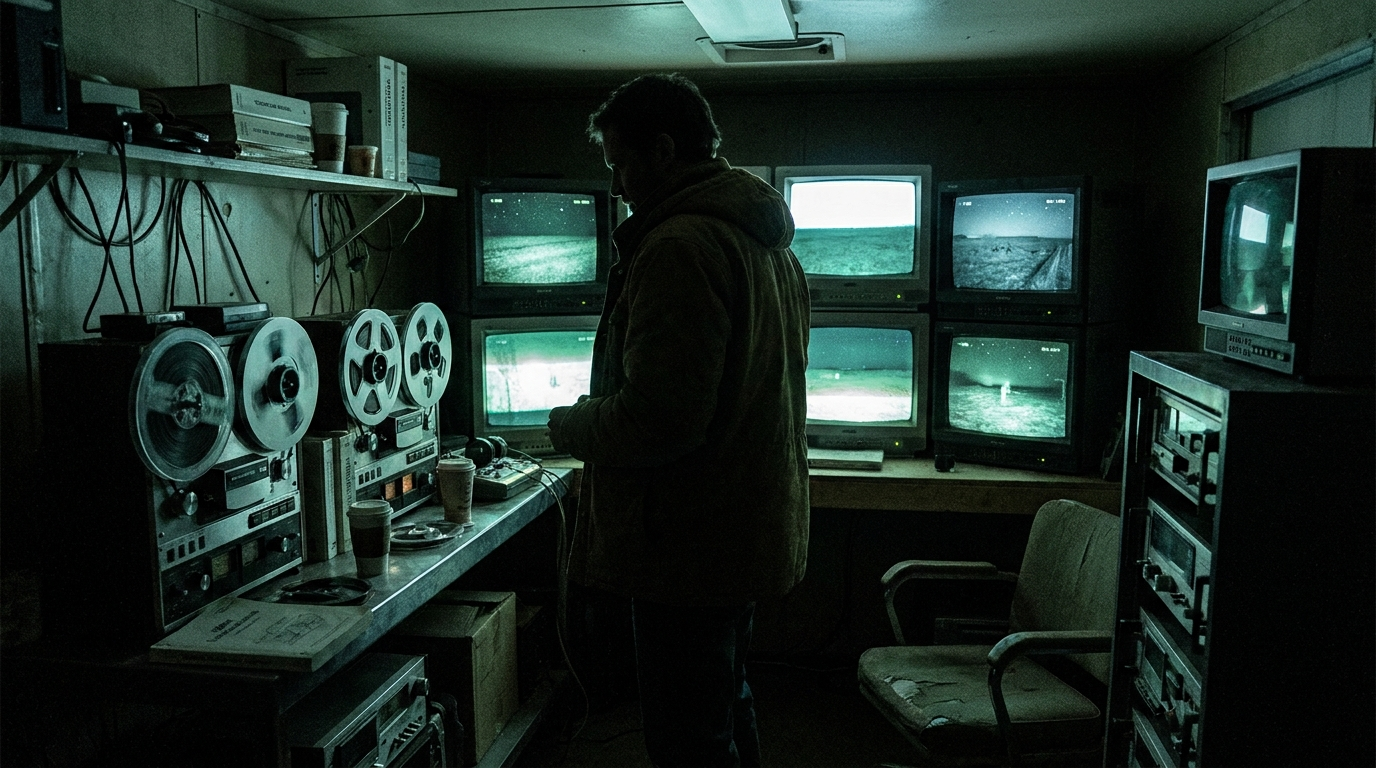
In 1996 the Nevada real-estate and aerospace magnate Robert Bigelow bought the ranch for a reported $200,000 and turned it into a laboratory. His National Institute for Discovery Science (NIDS) installed round-the-clock monitoring, cameras and a rotating cast of scientists, and set about trying to catch the phenomenon in the act.
It didn’t work — at least not in any way that satisfied science. NIDS generated internal reports and a great deal of anecdote, but the anomalies had an almost taunting habit of happening just off-camera, or of degrading equipment that would otherwise have recorded them. The effort wound down around 2004 with no publishable smoking gun.
What NIDS did produce was a book. In 2005 the institute’s biochemist Colm Kelleher and the investigative journalist George Knapp published Hunt for the Skinwalker, which remains the source text for most of what people “know” about the place. It is a serious, readable account by two named and accountable people — and it is also, unavoidably, a collection of witness reports rather than a dossier of measurements. Knapp, to his credit, has always been candid about that limit.
The Pentagon thread
Here the story acquires something most UFO tales never get: a paper trail through the federal government.
In 2008 the Defense Intelligence Agency awarded a roughly $22 million contract — the Advanced Aerospace Weapon System Applications Program, or AAWSAP — to Bigelow’s company, BAASS. Publicly it was framed as advanced-aerospace research, and it was the sister effort to AATIP, the programme the New York Times exposed on 16 December 2017 alongside the Navy’s now-famous gun-camera footage. That reporting is also what put the Tic Tac encounter in front of a mass audience.
The part less often mentioned: AAWSAP didn’t just study aircraft. Under DIA official James Lacatski, it used Skinwalker Ranch as a field site, and BAASS staff logged the same menu of orbs, cryptids and equipment failures the Shermans had described. Kelleher coined a name for the effect visitors reported taking home with them — the “hitchhiker effect,” the claim that whatever haunts the ranch follows people back to their houses. It is, needless to say, not a testable proposition.
AAWSAP left real paperwork behind: dozens of “Defense Intelligence Reference Documents” commissioned on exotic-propulsion and related topics, later partially released, and a 2021 book, Skinwalkers at the Pentagon, co-written by Lacatski, Kelleher and Knapp, which argues the ranch’s phenomena were the programme’s true quarry. Officials who later inherited the subject have made the opposite case — that spending intelligence money on a “haunted” ranch is precisely the sort of thing that discredits the sober, more defensible study of unidentified craft.
So the documented fact is genuinely striking: the US government paid, with intelligence money, to have this specific ranch investigated. What that fact does not establish is that anything paranormal was found. A contract is evidence of official curiosity, not of little grey men. Those are wildly different evidential tiers, and most breathless coverage of the ranch quietly slides from the first to the second.
Fugal, cameras and the “Triangle”
In 2016 Bigelow sold up. The buyer, revealed in 2020, was the Utah commercial-property mogul Brandon Fugal — and Fugal did the opposite of everything Bigelow had done. Where NIDS was secretive, Fugal put the whole thing on television.
The Secret of Skinwalker Ranch premiered on the History channel in 2020 and, seven seasons on, is still running. Its recurring cast — astrophysicist Travis Taylor, principal investigator Erik Bard, superintendent Thomas Winterton — spend each episode aiming instruments at a patch of sky above the mesa they call the “Triangle,” where drones malfunction, balloons pop, rockets misbehave and radiation meters occasionally spike. Metal samples pulled from the mesa were sent to the University of Utah; cast members have reported burns, nausea and, in one much-discussed sequence, medical after-effects following work near the site.
The show’s greatest hits are specific and colourful: drill bits that reportedly failed or overheated when the team tried to bore into the mesa; metal fragments said to resemble the heat-shielding on a spacecraft; drones and balloons that die on cue over the Triangle; livestock and staff falling ill. Each makes a superb cold open. None, so far, has been published in a form another laboratory could take apart and re-run — which is the only form that would move any of it from “startling” to “established.”
This is where the ranch earns its ratings and loses its rigour in the same breath. The show’s format is genuinely fun, and Taylor and Bard are not obviously charlatans. But television is a machine for manufacturing “there it is!” moments, and almost none of the on-screen anomalies come with the boring apparatus that would make them evidence: pre-registered protocols, controls, raw data released for outside analysis, independent replication. When a meter spikes and a scientist says “that’s not supposed to happen,” you are being shown a reaction, not a result.
2026: does any of it reach the lab?
The current season keeps the anomalies coming, and the ranch’s team periodically announces “results” — a metals analysis here, a claimed detector reading there. What has conspicuously not happened, after thirty years and a fortune in equipment, is the arrival of a dataset that mainstream scientists, working independently, can reproduce and stand behind.
The most authoritative government word on all this is unglamorous. When the Pentagon’s All-domain Anomaly Resolution Office published Volume 1 of its Historical Record Report in 2024, it addressed the AAWSAP–Skinwalker link directly — and was pointedly unimpressed, treating the paranormal framing as a distraction that muddied the serious study of aerial phenomena rather than advanced it. When even the office set up to take UAP seriously reads your marquee case as noise, that is worth sitting with.
A contract is evidence of official curiosity, not of little grey men.
The sceptic’s ranch
There is a prosaic reading of Skinwalker Ranch, and it deserves real room. Journalist Steven Greenstreet, who has covered the property closely, keeps returning to the obvious question: after decades of people carrying cameras across this land, where are the clear photographs? His much-quoted jab — why did nobody think to photograph the 150-pound “dino-beaver” that supposedly ambled past — lands because it points at the central weakness. The phenomenon is always just out of frame.
Add the ordinary explanations and the picture gets greyer still. The Uinta Basin has heavy air traffic, oil-and-gas flaring, wildlife, and a testing-range neighbour — a rich supply of lights, sounds and readings for a primed observer. Expectation does the rest: tell a film crew a patch of sky is cursed, hand them sensitive instruments, and every stray return becomes a portent. None of this requires anyone to be lying. Confirmation bias, a landscape full of prosaic stimuli, and a broadcast format that rewards drama will manufacture a haunted ranch on their own.
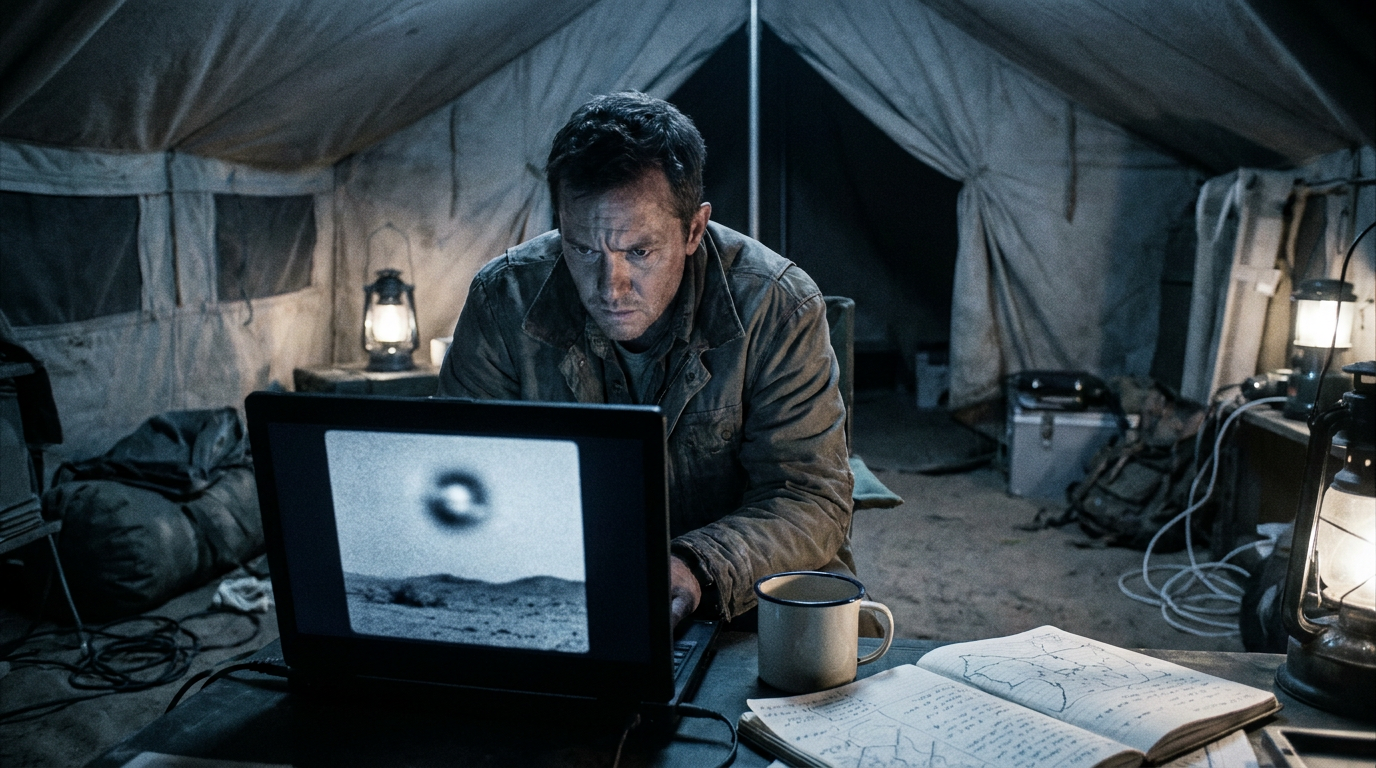
The honest counter to the sceptics is narrower than believers would like, but it isn’t nothing. The government funding is real. The witnesses include people with reputations to lose. And “we can’t yet reproduce it” is not the same as “it’s definitely mundane.” Those points keep the case from being closed. They just don’t come close to opening it.
The UAP Times take
Skinwalker Ranch earns a Thin rating — two out of five on our scale. Not because nothing interesting has ever been reported there, but because after thirty years, two owners, a Pentagon contract and a television crew, the extraordinary claims still rest almost entirely on unrepeatable testimony and unreleased footage. The one genuinely solid fact — that US intelligence money was spent studying this exact property — is a statement about the government’s curiosity, not about the ranch’s contents.
Hold two things at once. First, the paper trail is real and the witnesses are not all cranks; something about this place has persuaded serious, well-funded people to keep looking. Second, “persuaded people to keep looking” is a description of an unsolved mystery, not of a discovery — and the ranch has spent three decades generating the former while promising the latter. Like Rendlesham, it is a case that grows barnacles faster than facts, and like Bob Lazar’s story, it asks you to weigh vivid testimony against a conspicuous absence of the hard evidence that should, by now, exist. Until a dataset leaves that mesa that an outside lab can reproduce, Skinwalker Ranch remains the most heavily instrumented question mark in the field — and still, stubbornly, only a question mark.
Further reading: for the programme that first dragged the ranch into the Pentagon’s orbit, see the Tic Tac encounter, explained; and for how strong-sounding cases accumulate detail over time, two nights in Rendlesham Forest.